


Vacuum Pump Filter
In industrial vacuum systems, the integrity of the process depends heavily on the purity of the vacuum environment and the protection of the pumping equipment. A vacuum pump filter is not merely a peripheral component but a critical engineering safeguard designed to manage contaminants, protect internal pump mechanisms, and ensure environmental compliance. For engineers and procurement specialists, selecting the correct filtration solution requires a deep understanding of gas dynamics, material compatibility, and the specific demands of the industrial application.
Industrial vacuum pumps, whether rotary vane, screw, scroll, or liquid ring, are precision-engineered machines with tight tolerances. The introduction of particulates, liquid droplets, or corrosive vapors can lead to catastrophic mechanical failure, increased maintenance costs, and significant downtime. By implementing robust stainless steel filtration solutions, facilities can optimize performance and extend the service life of their vacuum infrastructure.
The Crucial Role of Filtration in Vacuum Systems
Filtration in a vacuum circuit serves two primary directions of protection: upstream (inlet) and downstream (exhaust). Each serves a distinct purpose in maintaining system equilibrium.
Inlet Protection
At the inlet, the vacuum pump filter acts as a barrier against process-born contaminants. In industries such as woodworking, chemical processing, or powder handling, the intake of solid particles can cause abrasive wear on rotors and vanes. Furthermore, in pharmaceutical or food processing, preventing cross-contamination is paramount. A high-quality inlet filter ensures that only clean gas enters the pump chamber, maintaining the efficiency of the vacuum pull and preventing internal damage.
Exhaust and Environmental Safety
For oil-sealed vacuum pumps, the exhaust phase often carries oil mist or aerosols. Without effective exhaust filtration, these oils are released into the workspace or the atmosphere, creating safety hazards and violating environmental regulations. Exhaust filters, often utilizing high-efficiency coalescing media or fine stainless steel mesh, capture these oils and allow them to be returned to the pump's reservoir or safely disposed of.
Types of Vacuum Pump Filters and Their Functions
Understanding the different configurations of filtration components is essential for optimizing a vacuum system. Depending on the stage of the process, different filter types are employed.
Inlet Dust Filters
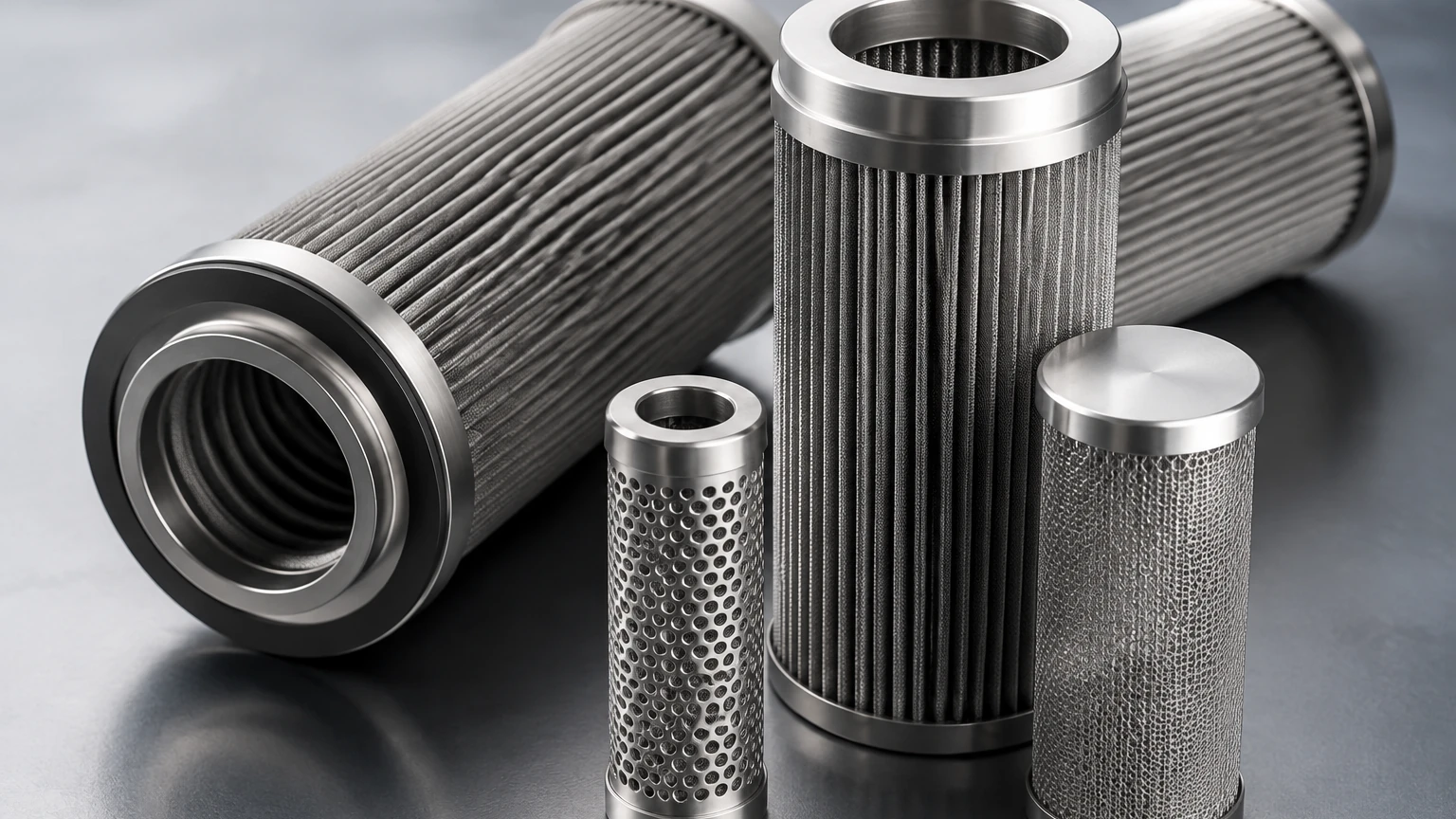
These are typically housed in a canister and positioned directly before the pump inlet. For heavy-duty industrial applications, stainless steel wire mesh elements are preferred due to their ability to withstand high pressure differentials without collapsing. They are designed to capture bulk solids and fine dust that could otherwise seize the pump.
Oil Mist Eliminators
Commonly found on the exhaust side of oil-lubricated pumps, these filters separate oil from the exhausted air. While many standard units use disposable micro-glass fibers, specialized industrial applications often require custom-designed metal housings and internal components to handle high-temperature or corrosive exhaust gases.
Trap Filters (Liquid and Condensate)
In processes involving high humidity or condensable vapors, liquid traps are used to prevent "slugs" of liquid from entering the pump. These often incorporate a stainless steel baffle or a coarse mesh filter to encourage droplet formation and collection at the bottom of the housing.
Material Engineering: Why Stainless Steel is Superior
When evaluating a vacuum pump filter, the choice of material is the most significant factor in determining the component's durability and chemical resistance. Kaifil specializes in custom stainless steel filtration solutions, which offer several technical advantages over plastic or paper alternatives.
Corrosion Resistance
Industrial vacuum processes often involve the movement of aggressive chemicals or solvent vapors. 304 and 316L stainless steel provide excellent resistance to oxidation and chemical attack, ensuring the filter element does not degrade or introduce its own contaminants into the process. This is particularly vital in chemical processing and semiconductor manufacturing.
Thermal Stability
Vacuum pumps can generate significant heat during continuous operation. Unlike synthetic materials that may soften or off-gas at high temperatures, stainless steel maintains its structural integrity. This allows for filtration in high-temperature vacuum drying or heat treatment processes without the risk of filter failure.
Mechanical Strength and Pressure Differential
Under high vacuum or during sudden pressure changes, filter elements are subjected to intense physical stress. Stainless steel wire mesh and sintered metal components possess the mechanical strength to resist deformation. This ensures that the filtration gap remains consistent, providing reliable micron-rated performance throughout the filter's life cycle.
Technical Selection Criteria for Engineers
Selecting the right vacuum pump filter involves more than matching port sizes. Engineers must consider several technical parameters to ensure the filter does not become a bottleneck in the system.
1. Micron Rating: This defines the size of particles the filter will capture. It is important to distinguish between "nominal" and "absolute" ratings. For critical pump protection, an absolute rating ensures that no particles above a specific size pass through the mesh.
2. Flow Rate and Conductance: Every filter introduces a degree of flow resistance. In vacuum systems, this is referred to as a loss of conductance. The filter must be sized appropriately so that the pressure drop across the element does not significantly reduce the effective pumping speed at the process chamber.
3. Connection Types: Standard industrial connections include ISO-KF, ISO-K, and NPT threads. Ensuring a leak-tight seal is critical, as any air ingress at the filter housing will degrade the ultimate vacuum level achievable by the pump.
4. Filter Media Structure: Options include plain weave mesh, twilled dutch weave, or sintered metal fiber. Each offers a different balance between filtration fineness and flow capacity. For example, a dutch weave provides a tortuous path for better fine-particle retention while maintaining high strength.
For more detailed technical specifications and to explore various configurations, engineers can visit the Main Page to review product options and application support.
Application-Specific Filtration Challenges
Different industries present unique challenges that dictate the design of the vacuum pump filter.
Chemical and Pharmaceutical Processing
In these sectors, filters must often be compatible with Clean-in-Place (CIP) or Sterilization-in-Place (SIP) protocols. Stainless steel filters are ideal here because they can be steam-sterilized or cleaned with aggressive solvents without losing their filtration properties. Furthermore, they must be designed to prevent the accumulation of hazardous residues.
Food and Beverage Production
Vacuum is used for packaging, degassing, and freeze-drying. Filters in these applications must be food-grade and resistant to organic acids. Stainless steel's non-leaching properties ensure that the vacuum process does not introduce metallic tastes or toxins into the food supply chain.
Hydraulic and Heavy Industrial Systems
In large-scale hydraulic power units, vacuum dehydrators are used to remove water and air from hydraulic oil. The filters used in these systems must handle high-viscosity fluids and capture fine wear particles. The durability of metal mesh is essential here to handle the pulsations and high-flow conditions common in hydraulic circuits.
Maintenance, Cleaning, and Total Cost of Ownership
One of the primary advantages of a stainless steel vacuum pump filter is its cleanability. While paper or fiberglass filters are "consumables" that must be replaced and disposed of, stainless steel elements can often be regenerated.
Cleaning Methods
Depending on the contaminant, stainless steel filters can be cleaned using:
* Ultrasonic Cleaning: High-frequency sound waves in a cleaning solvent dislodge fine particulates from deep within the mesh.
* Backwashing: Reversing the flow through the filter to push out trapped debris.
* Chemical Cleaning: Using specific solvents or acids to dissolve accumulated residues (common in chemical processing).
Total Cost of Ownership (TCO)
While the initial purchase price of a stainless steel filter is higher than a disposable one, the TCO is often significantly lower. By eliminating the recurring cost of replacement elements, reducing waste disposal fees, and minimizing the risk of pump damage due to filter bypass or collapse, stainless steel provides a superior return on investment over the life of the vacuum system.
Custom OEM Solutions for Complex Vacuum Requirements
Many industrial systems require filtration components that do not fit standard off-the-shelf profiles. Whether it is a unique housing geometry, a specific micron rating for a proprietary process, or a need for specialized flange connections, custom OEM manufacturing is often the best path forward.
Kaifil works closely with engineering teams to develop bespoke filtration components. This process involves material selection based on the specific gas chemistry, engineering the mesh structure to meet flow requirements, and precision manufacturing to ensure the component integrates perfectly into the existing vacuum architecture. By focusing on precision metal filtration, Kaifil ensures that even the most demanding vacuum applications have reliable, high-performance protection.
Conclusion
The vacuum pump filter is a fundamental component in the reliability and efficiency of industrial vacuum processes. From protecting the pump's internal components to ensuring environmental safety, the choice of filter has long-term implications for operational costs and system uptime. By prioritizing high-quality materials like stainless steel and considering the technical nuances of micron ratings and flow conductance, engineers can build more resilient systems. For those seeking specialized guidance or custom-manufactured solutions, consulting with a professional manufacturer ensures that the filtration strategy aligns perfectly with the technical requirements of the application.
