


Filter Bags Manufacturer
In industrial liquid filtration, the selection of a filter bags manufacturer is a critical decision that impacts process efficiency, product purity, and operational costs. Bag filtration is one of the most versatile and cost-effective methods for removing contaminants from liquid streams in industries ranging from chemical processing and water treatment to food and beverage production. However, the performance of these systems is heavily dependent on the manufacturing quality of the filter media and the precision of the bag construction.
For engineers and procurement professionals, understanding the technical nuances of bag production—such as material compatibility, seam integrity, and micron rating accuracy—is essential. While many facilities rely on standard disposable bags, high-demand applications often require a more robust approach, integrating precision metal components or transitioning to permanent stainless steel filtration solutions. As a professional manufacturer, Kaifil specializes in these high-performance alternatives, ensuring that the filtration infrastructure supports the rigorous demands of modern industry. For a comprehensive look at precision metal filtration options, engineers can refer to the Main Page for technical specifications and product ranges.
Key Evaluation Criteria for a Filter Bags Manufacturer
When vetting a filter bags manufacturer, technical capability must take precedence over unit price. A low-quality filter bag can lead to bypass, fiber migration, or premature failure, all of which result in significant downstream costs. The following criteria are essential for evaluating a potential supplier:
Material Traceability and Quality Control
Industrial filtration requires strict adherence to material specifications. A reliable manufacturer must provide traceability for the polymers or fibers used, ensuring they meet the chemical resistance and thermal stability requirements of the application. For food and pharmaceutical applications, compliance with FDA or USP Class VI standards is non-negotiable. Quality control processes should include batch testing for micron retention and physical strength.
Manufacturing Techniques: Sewn vs. Welded Seams
The method used to join the filter media significantly affects performance. Sewn bags are traditional and cost-effective but introduce needle holes that can allow bypass of particles larger than the rated micron size. High-precision applications typically require welded seams. Ultrasonic or thermal welding creates a seamless bond that eliminates the risk of bypass and prevents thread migration into the filtrate.
Seal Ring Precision
The seal between the filter bag and the housing is the most common point of failure. Manufacturers offer various ring types, including galvanized steel, stainless steel, and molded plastic (such as polypropylene or polyester snap-collars). A precision-engineered ring ensures a 360-degree seal, preventing unfiltered liquid from bypassing the media. Engineers should confirm that the manufacturer’s ring designs are compatible with their existing housing brands.
Material Science in Bag Filtration
The choice of media is the primary factor in filtration efficiency. A filter bags manufacturer typically works with several core materials, each suited to specific environmental conditions:
* Polypropylene (PP): The most common material due to its wide chemical compatibility and low cost. It is ideal for aqueous solutions, acids, and alkalis, though it is limited to temperatures below 90°C (194°F).
* Polyester (PE): Offers higher temperature resistance (up to 150°C/300°F) and excellent tensile strength. It is commonly used in oil and solvent filtration where polypropylene might degrade.
* Nylon Monofilament: Used primarily for surface filtration. The fixed aperture of the mesh provides precise straining for large particles and is easily cleaned for limited reuse in specific applications.
* Specialty Media: For extreme environments, manufacturers may use Nomex for high-temperature gas filtration or PTFE for aggressive chemical environments.
Understanding the interaction between the fluid chemistry and the bag material is vital. For instance, while polyester is strong, it can undergo hydrolysis in the presence of high-temperature steam or strong bases. A technical manufacturer will provide compatibility charts to guide these selections.
Engineering the Filter Housing and Support
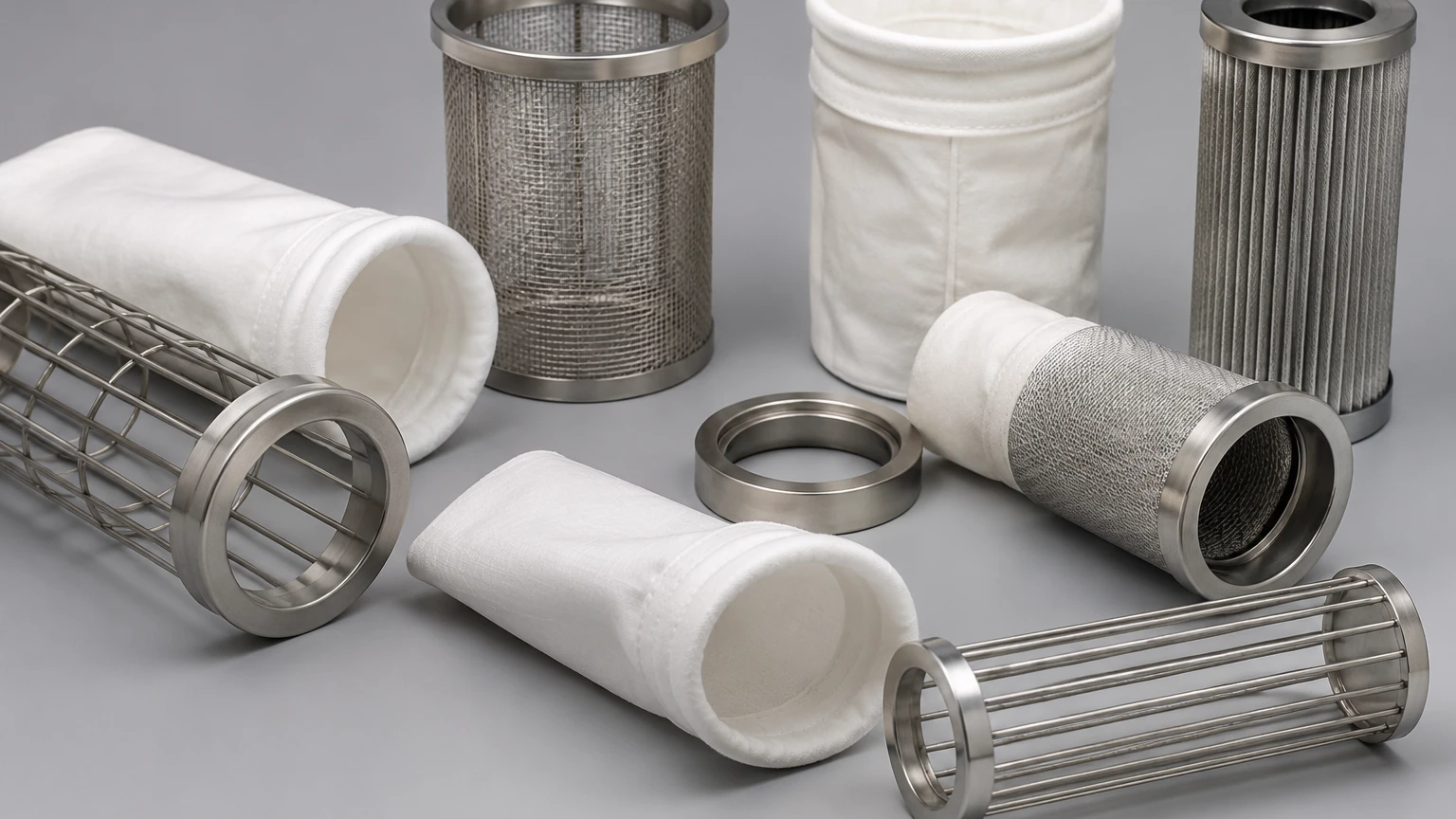
A filter bag is only as effective as the system that holds it. In most industrial configurations, the bag is placed inside a perforated or wire mesh support basket within a pressure vessel. The relationship between the bag and the basket is a critical engineering consideration.
If the bag does not fit the basket perfectly, the pressure of the fluid flow can cause the bag to stretch or burst. Furthermore, the interior surface of the support basket must be smooth to prevent mechanical abrasion of the bag media. Kaifil provides high-precision stainless steel filter components, including custom-designed support baskets that optimize the flow distribution and structural integrity of bag filtration systems. By ensuring a precise fit, the risk of mechanical failure is minimized, and the service life of the disposable bag is maximized.
Customization and OEM Requirements
Standard off-the-shelf filter bags do not meet the needs of every industrial process. A capable filter bags manufacturer must offer OEM and customization services to address unique challenges. Customization often involves:
1. Non-Standard Dimensions: Designing bags for proprietary housings or unique vessel geometries.
2. Multi-Layered Construction: Combining different micron ratings in a single bag to create a graduated density effect, which increases dirt-holding capacity and extends the interval between change-outs.
3. Integrated Handles and Pull-Tabs: Enhancing the ease of maintenance for operators, which reduces downtime during bag replacements.
4. Surface Treatments: Options like singeing or glazing the outer surface of felt bags to prevent fiber migration into the clean-side fluid.
For engineers developing new equipment, partnering with a manufacturer that understands both the textile and the mechanical aspects of filtration is essential. This collaborative approach ensures that the filter element and the housing work in tandem to achieve the target ISO cleanliness levels.
Performance Metrics and Replacement Cycles
To maintain process integrity, engineers must monitor specific performance metrics. A filter bags manufacturer should provide data on:
* Clean Pressure Drop: The initial resistance to flow when the bag is new.
* Dirt-Holding Capacity: The total mass of contaminants the bag can retain before reaching the terminal pressure drop.
* Efficiency Ratings: Distinguishing between nominal (approximate) and absolute (99.9%+) retention efficiency.
In practice, filter bags are typically replaced when the differential pressure (Delta P) reaches a predetermined limit, often between 15 and 25 psi, depending on the pump capacity and housing design. Operating beyond this limit risks "blind-off," where the flow is completely obstructed, or "breakthrough," where the pressure forces contaminants through the media or causes the bag to rupture.
Transitioning from Bags to Permanent Metal Filtration
While disposable filter bags are excellent for many applications, they present challenges in terms of waste generation and recurring costs. In high-temperature, high-pressure, or highly aggressive chemical environments, many facilities are transitioning toward permanent stainless steel filtration solutions.
As a specialist in stainless steel filtration, Kaifil provides wire mesh filters and stainless steel filter cartridges that can often replace bag systems. The advantages of moving to metal filtration include:
* Durability: Stainless steel can withstand extreme mechanical stress and thermal shock that would destroy synthetic fibers.
* Cleanability: Unlike felt or fleece bags, stainless steel mesh can be backwashed or ultrasonically cleaned, significantly reducing the total cost of ownership over the life of the system.
* Precision: Metal filters offer absolute micron ratings with high structural stability, ensuring consistent performance even under fluctuating flow conditions.
For facilities currently using a filter bags manufacturer for high-volume processes, evaluating a switch to a permanent metal solution can lead to improved sustainability and reduced long-term operational expenses. The engineering team at Kaifil works with clients to determine if a custom stainless steel cartridge or a reinforced wire mesh element is a more viable solution for their specific technical requirements.
Conclusion: Making an Informed Selection
Selecting a filter bags manufacturer requires a balance of material science, mechanical engineering, and supply chain reliability. By focusing on seam integrity, material compatibility, and the precision of the sealing mechanism, purchasing teams can ensure they receive products that protect their downstream equipment and maintain product quality.
Whether your process requires standard disposable bags or high-performance stainless steel filtration components, understanding the technical boundaries of each technology is key to optimization. For further technical resources and to explore customized filtration components, visit the Main Page to connect with engineering experts who can assist in refining your filtration strategy.
