


Hydraulic Filter Housings
In industrial hydraulic systems, the integrity of the fluid is directly proportional to the longevity of the machinery. Hydraulic filter housings serve as the critical structural interface between the filtration media and the fluid circuit. These components are more than mere containers; they are engineered pressure vessels designed to withstand systemic stresses while ensuring that the filter element performs at its peak efficiency. For engineers and procurement specialists, selecting the correct hydraulic filter housings requires a deep understanding of fluid dynamics, material science, and the specific mechanical demands of the application environment.
As a specialized manufacturer of stainless steel filtration solutions, Kaifil emphasizes the importance of housing design in maintaining system stability. Whether in chemical processing, hydraulic power units, or water treatment, the housing must provide a leak-proof, high-pressure environment that facilitates easy maintenance and reliable contaminant capture.
Fundamental Roles of Hydraulic Filter Housings
The primary function of a hydraulic filter housing is to direct the flow of hydraulic fluid through a filter element. However, its technical responsibilities extend far beyond simple containment.
Firstly, the housing must maintain structural integrity under varying pressure conditions. Hydraulic systems often experience pressure spikes and pulsations that can fatigue inferior materials. A robust housing prevents external leakage and internal bypass, ensuring that 100% of the fluid is subjected to the filtration media.
Secondly, the housing design influences the flow pattern. Internal geometries are engineered to minimize turbulence and pressure drop (ΔP). Excessive turbulence within the housing can lead to aeration of the fluid or mechanical erosion of the housing walls over time. By optimizing the transition from the inlet port to the filter surface, engineers can maximize the service life of both the fluid and the filter element.
Categorizing Housings by System Placement
Hydraulic filter housings are generally classified based on where they are installed within the hydraulic circuit. Each position demands different structural specifications:
Suction Side Housings
Located before the pump, these housings are designed to protect the pump from large contaminants. Because they operate under vacuum or very low pressure, the primary engineering concern is preventing air ingress and minimizing flow restriction to avoid pump cavitation. These are typically larger to allow for high flow rates with minimal resistance.
Pressure Line Housings
Positioned downstream from the pump, pressure line housings must withstand the full operating pressure of the system, which can often exceed 3,000 to 6,000 PSI. These housings are usually constructed from heavy-duty materials like high-grade stainless steel or forged carbon steel. They protect sensitive components like servo valves and actuators from wear particles generated by the pump.
Return Line Housings
These are situated at the end of the circuit before the fluid returns to the reservoir. While they handle lower pressures than pressure line housings, they must manage high flow surges. Return line housings are critical for capturing the "wear debris" generated by the system's moving parts, preventing these contaminants from settling in the tank.
Critical Engineering Parameters for Selection
When specifying hydraulic filter housings for an OEM project or a system upgrade, several technical variables must be confirmed to ensure compatibility and performance.
1. Operating and Burst Pressure
It is essential to distinguish between the nominal operating pressure and the maximum allowable working pressure (MAWP). For high-cycle applications, the fatigue rating of the housing is paramount. Stainless steel housings are often preferred in these scenarios due to their superior tensile strength and resistance to stress-corrosion cracking.
2. Fluid Compatibility and Material Selection
While many hydraulic systems use mineral-based oils, others require fire-resistant fluids, water-glycols, or high-purity chemicals. The housing material and the internal seals (O-rings) must be chemically compatible with the medium. 304 or 316L stainless steel housings offer the broadest range of compatibility, particularly in the pharmaceutical and food and beverage sectors where corrosion resistance and cleanliness are non-negotiable.
3. Flow Rate and Porting
The housing must be sized to handle the maximum system flow without exceeding the recommended clean pressure drop. Port sizes (threaded NPT, SAE, or flanged) must align with existing piping to avoid unnecessary adapters that introduce potential leak points. Engineers should also consider the orientation of the ports—inline, offset, or T-type—to optimize the physical footprint within the machinery.
The Advantages of Stainless Steel in Filtration Infrastructure
In demanding industrial environments, the choice of housing material significantly impacts the total cost of ownership. While aluminum or plastic housings may suffice for light-duty applications, stainless steel remains the standard for high-performance industrial filtration.
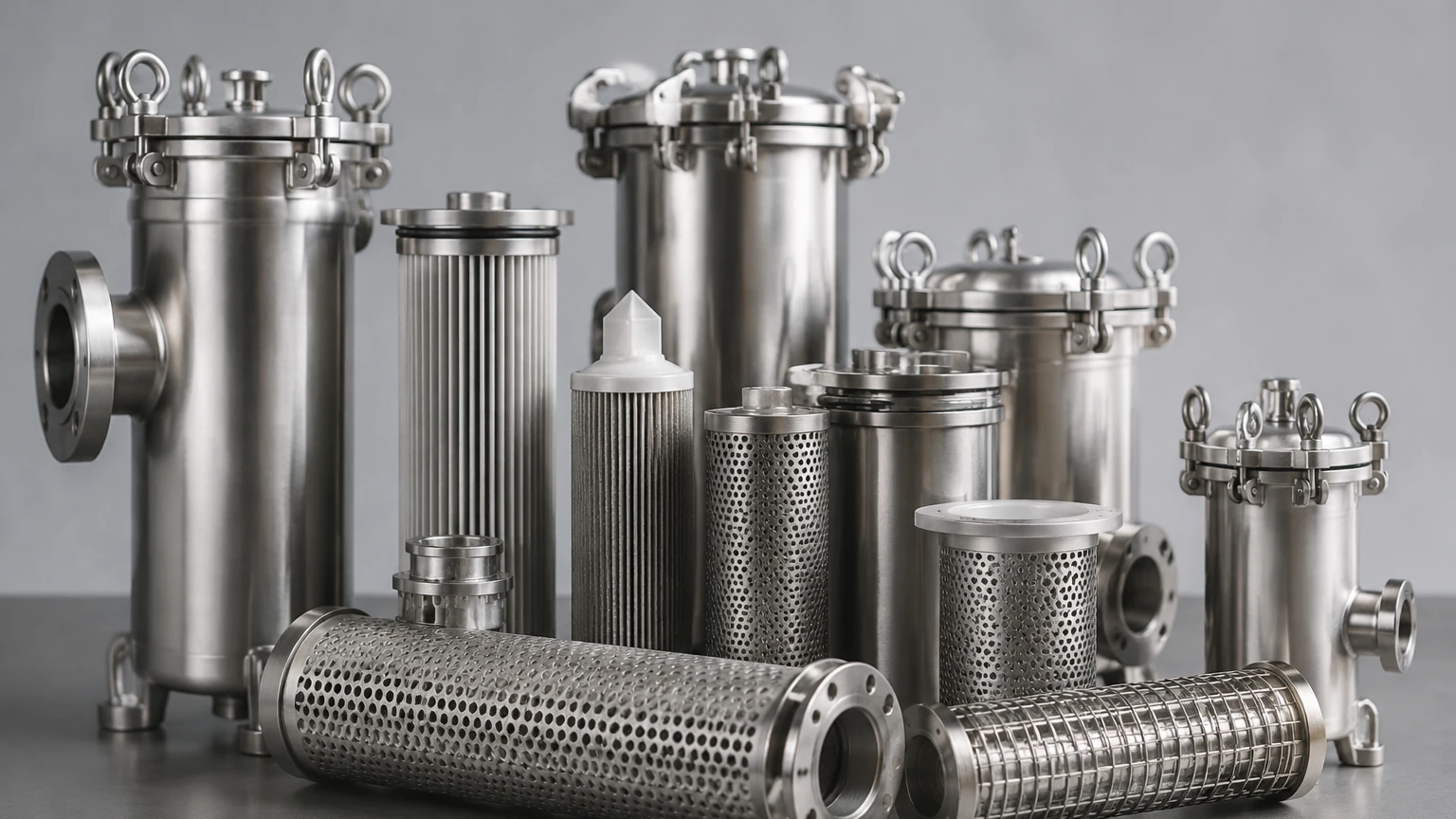
Stainless steel hydraulic filter housings provide exceptional durability against mechanical impact and environmental corrosion. In offshore oil and gas applications or chemical processing plants, the external environment is often as harsh as the internal fluid. Stainless steel resists oxidation and maintains its structural properties across a wide temperature spectrum. Furthermore, the smooth internal surface finish of stainless steel prevents the accumulation of biofilm or particulate buildup, which is vital for maintaining the high-purity standards required in precision metal filtration.
Understanding Pressure Drop and Bypass Mechanisms
A critical feature of most hydraulic filter housings is the bypass valve. As the filter element captures contaminants, the resistance to flow increases, leading to a higher pressure differential between the inlet and outlet. If this differential exceeds a certain threshold, the bypass valve opens to allow fluid to circumvent the element, preventing the element from collapsing or the system from starving of oil.
However, a well-designed housing allows for the integration of differential pressure indicators. These sensors provide visual or electrical signals when the element is nearing saturation. By monitoring the "Delta P," maintenance teams can replace elements based on actual condition rather than arbitrary time intervals, optimizing the balance between component protection and operational cost.
Customization and OEM Integration
Standard off-the-shelf housings do not always meet the spatial or functional requirements of complex industrial machinery. This is where custom manufacturing becomes essential. Customization options for hydraulic filter housings include:
* Specialized Porting: Manifold-mounted designs or custom flange configurations to reduce assembly time.
* Multi-element Configurations: High-flow applications may require a single large housing containing multiple filter cartridges to maintain a compact footprint.
* Integrated Sensors: Pre-machined ports for temperature sensors, sampling valves, or electronic pressure transducers.
* Surface Treatments: Electropolishing or specialized coatings for enhanced chemical resistance or aesthetic requirements.
At Kaifil, the focus is on providing these tailored solutions. By working closely with global customers, manufacturers can develop filtration components that are perfectly tuned to the specific hydraulic demands of the application, ensuring that the Main Page of the technical specification is met with precision-engineered hardware.
Maintenance and Long-Term Reliability
The design of the housing significantly influences the ease of maintenance. Top-loading housings with swing-bolt lids or quick-release clamps allow for rapid element changes, reducing system downtime. Furthermore, the inclusion of drain plugs and vent ports is a technical necessity for safely depressurizing the housing before service.
Engineers should also evaluate the sealing mechanism. High-pressure hydraulic filter housings typically utilize redundant O-ring seals to ensure zero leakage. During routine maintenance, these seals should be inspected for compression set or thermal degradation. Using high-quality housing units ensures that the sealing surfaces remain true over years of service, preventing the bypass of unfiltered fluid that could lead to catastrophic component failure downstream.
Conclusion: Making Informed Procurement Decisions
Selecting hydraulic filter housings is a strategic decision that affects the reliability and efficiency of the entire hydraulic circuit. By focusing on factual engineering data—such as pressure ratings, flow dynamics, and material compatibility—purchasing teams can avoid the risks associated with under-specified components.
Stainless steel solutions offer the durability and versatility required for the most demanding industrial sectors. When evaluating suppliers, it is vital to confirm their manufacturing capabilities, quality control standards, and ability to provide customized designs that meet unique operational challenges. A well-chosen housing not only protects the filter element but serves as a long-term asset in the quest for system purity and mechanical longevity.
