


Environmental Dust Control Booth
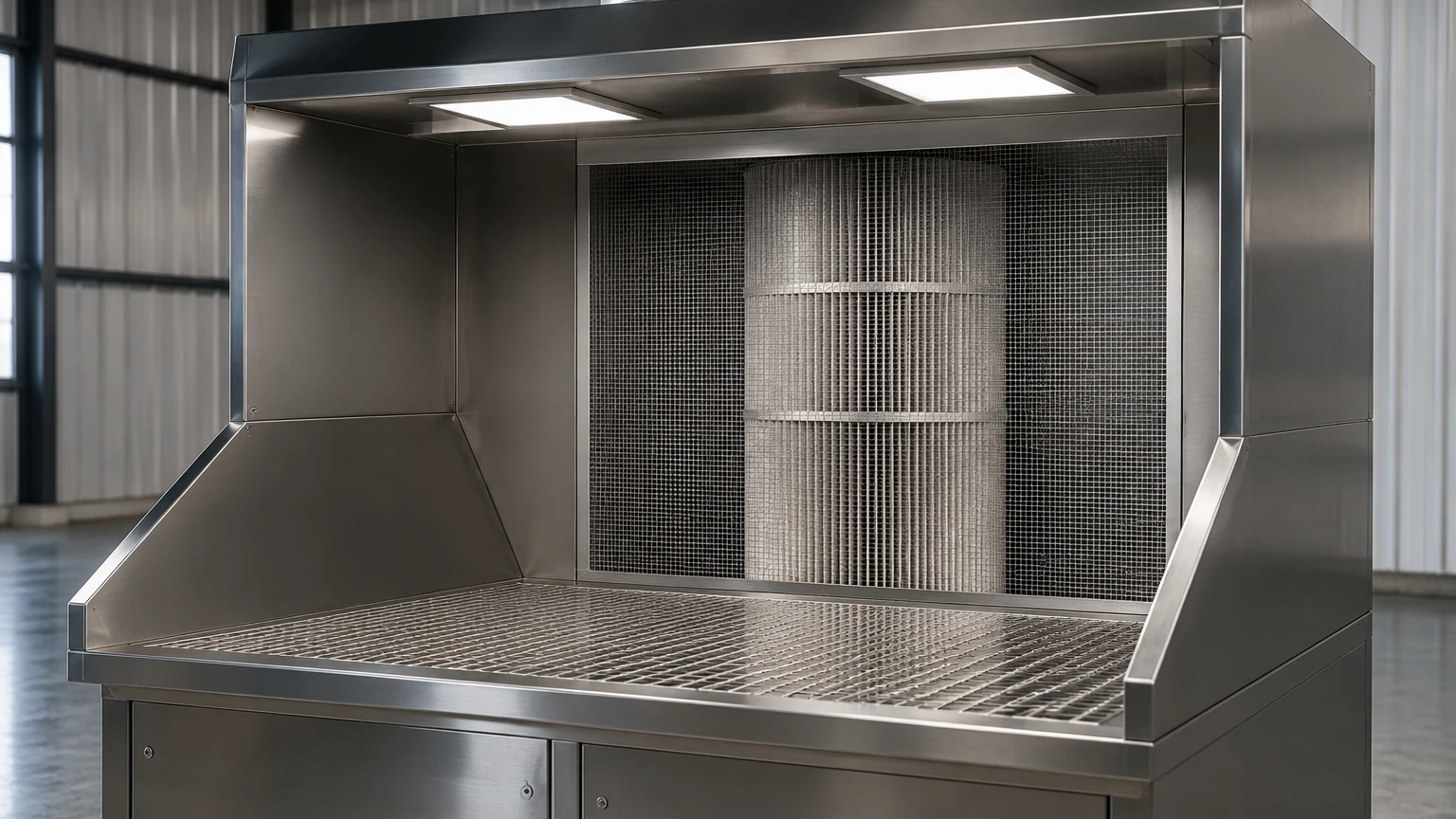
In modern industrial environments, managing airborne particulates is not merely a matter of housekeeping; it is a critical requirement for worker safety, environmental compliance, and equipment longevity. An environmental dust control booth serves as a localized containment system designed to capture dust, smoke, and fumes at the source before they can migrate into the wider facility or the external atmosphere. While the structural design of these booths is vital, the efficiency of the system is ultimately determined by the performance of its internal filtration components.
For engineers and facility managers, selecting the right filtration media—specifically stainless steel filter cartridges and wire mesh components—is essential to ensuring that the booth operates at peak efficiency while maintaining a low total cost of ownership. As a specialist in custom stainless steel filtration, Kaifil provides the technical components necessary to support these demanding air quality applications.
Engineering Principles of the Environmental Dust Control Booth
The primary function of an environmental dust control booth is to create a controlled airflow pattern that draws contaminants away from the operator's breathing zone and into a filtration bank. This is typically achieved through a combination of high-velocity intake and a series of high-efficiency filters.
Airflow Dynamics and Containment
Engineering a booth requires a deep understanding of CFM (Cubic Feet per Minute) requirements and face velocity. If the velocity is too low, heavy particulates will settle before reaching the filters; if it is too high, it may create turbulence that pushes dust back toward the operator. A well-designed booth utilizes laminar airflow to move air in a uniform direction, ensuring that even sub-micron particles are successfully entrained in the air stream.
The Role of the Primary Filter Bank
Inside the booth, the primary filter bank is the first line of defense. In many heavy-duty industrial applications, standard fabric or paper filters are insufficient due to the abrasive nature of the dust or the presence of moisture and chemicals. This is where stainless steel filtration solutions become indispensable. By utilizing robust metal media, the system can handle higher temperatures and more aggressive cleaning cycles than synthetic alternatives.
The Advantage of Stainless Steel Filtration in Dust Control
When specifying components for an environmental dust control booth, material selection is a primary engineering consideration. Stainless steel, particularly grades 304 and 316L, offers several distinct advantages over traditional media.
1. Durability and Mechanical Strength: Industrial dust collection often involves abrasive particles such as metal shavings, silica, or ceramic dust. Stainless steel wire mesh filters resist abrasion and maintain their structural integrity under high pressure differentials.
2. Chemical and Corrosion Resistance: In chemical processing or pharmaceutical environments, the dust being captured may be corrosive. Stainless steel provides the necessary resistance to prevent premature filter failure caused by chemical degradation.
3. Thermal Stability: Many industrial processes, such as grinding or welding, generate hot sparks or high-temperature fumes. Unlike synthetic media, which can melt or ignite, stainless steel filter cartridges are inherently fire-resistant and stable at elevated temperatures.
4. Cleanability and Reusability: One of the most significant advantages of stainless steel media is that it can be cleaned and reused. Whether through ultrasonic cleaning, backwashing, or chemical baths, these filters can be restored to near-original performance levels, significantly reducing waste and long-term replacement costs.
For more information on high-performance filtration components, visit the Main Page.
Selecting the Right Filter Media for Specific Particulates
Not all dust is created equal, and the filtration media must be matched to the specific particulate profile of the application. Engineers must evaluate the particle size distribution, shape, and concentration to determine the optimal filter specification.
Micron Ratings and Filtration Accuracy
In an environmental dust control booth, the goal is often to capture a broad range of particle sizes. Kaifil offers custom wire mesh filters with precise micron ratings. For coarse dust, a coarser mesh may be used as a pre-filter to protect more sensitive downstream components. For fine particulates, multi-layered sintered mesh or pleated stainless steel cartridges provide the high surface area and fine filtration required to meet stringent air quality standards.
Pleated vs. Cylindrical Designs
* Pleated Cartridges: These are used when a high surface area is required in a compact footprint. Pleating the stainless steel mesh increases the available filtration area, which lowers the face velocity and extends the time between cleaning cycles.
* Cylindrical Filters: These are often used for heavier dust loads where a robust, easy-to-clean surface is required. They are typically easier to integrate into pulse-jet cleaning systems, where a burst of compressed air is used to dislodge the dust cake from the filter surface.
Operational Challenges: Pressure Drop and Pulse Cleaning
A critical metric in the operation of an environmental dust control booth is the pressure drop (delta P) across the filter bank. As dust accumulates on the filter surface, the resistance to airflow increases. If the pressure drop becomes too high, the fan must work harder, increasing energy consumption and potentially reducing the effective airflow at the booth intake.
Managing the Dust Cake
In many systems, a "dust cake" is allowed to build up on the surface of the filter, which actually improves filtration efficiency for fine particles. However, this cake must be managed. Stainless steel filters are ideally suited for pulse-jet cleaning systems. The rigidity of the metal mesh allows for a forceful pulse of air to be applied from the clean side of the filter, effectively shedding the dust cake without damaging the media. This process ensures consistent airflow and prolongs the life of the filter.
Replacement Cycles and Monitoring
While stainless steel filters are designed for longevity, they are not infinite. Engineers should confirm the expected replacement cycles based on the specific dust load and cleaning frequency. Monitoring the pressure drop via a differential pressure gauge is the standard method for determining when a filter requires cleaning or replacement. By selecting high-quality OEM components, facilities can ensure that these cycles are predictable and manageable.
Customization and OEM Solutions for Industrial Booths
Every industrial facility has unique spatial and process requirements. Standard off-the-shelf filters may not always fit the specific dimensions or performance criteria of a custom-built environmental dust control booth. Kaifil specializes in the development of customized filtration solutions, working closely with engineers to design components that meet exact specifications.
Tailored Material Selection
Depending on the environment, we can provide filters in various alloys. For example, 316L stainless steel is preferred for marine environments or highly acidic processes, while 304 stainless steel is a cost-effective choice for general industrial dust control. Additionally, specialized coatings or surface treatments can be applied to enhance the release of sticky or hygroscopic dust.
Integration with Existing Systems
For OEMs manufacturing dust control booths, the ability to source precision-engineered filter cartridges that integrate seamlessly into their housing designs is paramount. This includes custom end-cap configurations, gasket materials (such as EPDM, Viton, or Silicone), and internal support cores to withstand high vacuum pressures.
Key Evaluation Criteria for Purchasing Teams
When evaluating suppliers for environmental dust control booth filtration components, purchasing teams should look beyond the initial unit price and consider the total cost of ownership (TCO). Key factors to confirm before procurement include:
* Filtration Efficiency: Does the filter meet the required MERV or HEPA-equivalent standards for the specific application?
* Structural Integrity: Will the filter withstand the mechanical stresses of pulse cleaning and high-velocity airflow?
* Compliance: Do the materials meet industry-specific regulations, such as FDA compliance for food processing or USP standards for pharmaceuticals?
* Lead Times and Support: Can the manufacturer provide consistent quality and technical support for custom designs?
By focusing on these technical parameters, organizations can ensure that their environmental dust control booth provides a safe, compliant, and efficient workspace for years to come.
Conclusion
The effectiveness of an environmental dust control booth is fundamentally linked to the quality of its filtration system. Stainless steel filter cartridges and wire mesh components offer the durability, chemical resistance, and cleanability required for the most demanding industrial environments. By partnering with a specialized manufacturer like Kaifil, engineers can access the technical expertise and customized solutions needed to optimize air quality and operational efficiency.
For further technical specifications and to explore our range of custom filtration solutions, please visit our Main Page.
