


Tube En Bronze
In the landscape of industrial fluid handling and filtration, the selection of materials determines the longevity, efficiency, and safety of a system. While stainless steel is often the primary choice for high-purity applications, the tube en bronze (bronze tube) remains a critical component in specific industrial environments, particularly where sea water corrosion, thermal conductivity, and anti-frictional properties are required. For engineers and procurement specialists, understanding the technical nuances of bronze alloys is essential for optimizing filtration assemblies and structural components in demanding sectors such as marine engineering, chemical processing, and heavy machinery.
As a specialist in custom filtration solutions, Kaifil recognizes that industrial systems often integrate various metal components to achieve the best performance-to-cost ratio. Whether utilized as a housing material, a support structure, or a specialized sintered filter medium, the bronze tube offers unique metallurgical advantages that complement high-performance stainless steel systems. You can explore our full range of filtration capabilities on our Main Page.
Technical Composition and Material Grades
Bronze is an alloy consisting primarily of copper, usually with tin as the main additive. However, modern industrial bronze tubes are often complex alloys designed for specific mechanical and chemical resistances. Understanding these grades is the first step in technical selection.
Phosphor Bronze (CuSn alloys)
Phosphor bronze is notable for its toughness, strength, and low coefficient of friction. In filtration, phosphor bronze wire mesh or tubing is often used because of its resistance to fatigue and chemical corrosion. The addition of phosphorus increases the wear resistance and stiffness of the alloy, making it suitable for internal support structures in filter cartridges.
Aluminum Bronze (CuAl alloys)
Aluminum bronze tubes are the preferred choice for marine environments. The addition of aluminum (typically 5% to 11%) creates a protective, self-healing oxide layer on the surface. This layer provides superior resistance to corrosion in seawater and prevents biofouling, which is a common challenge in water intake filtration systems. These tubes offer high strength comparable to medium carbon steels.
Sintered Bronze
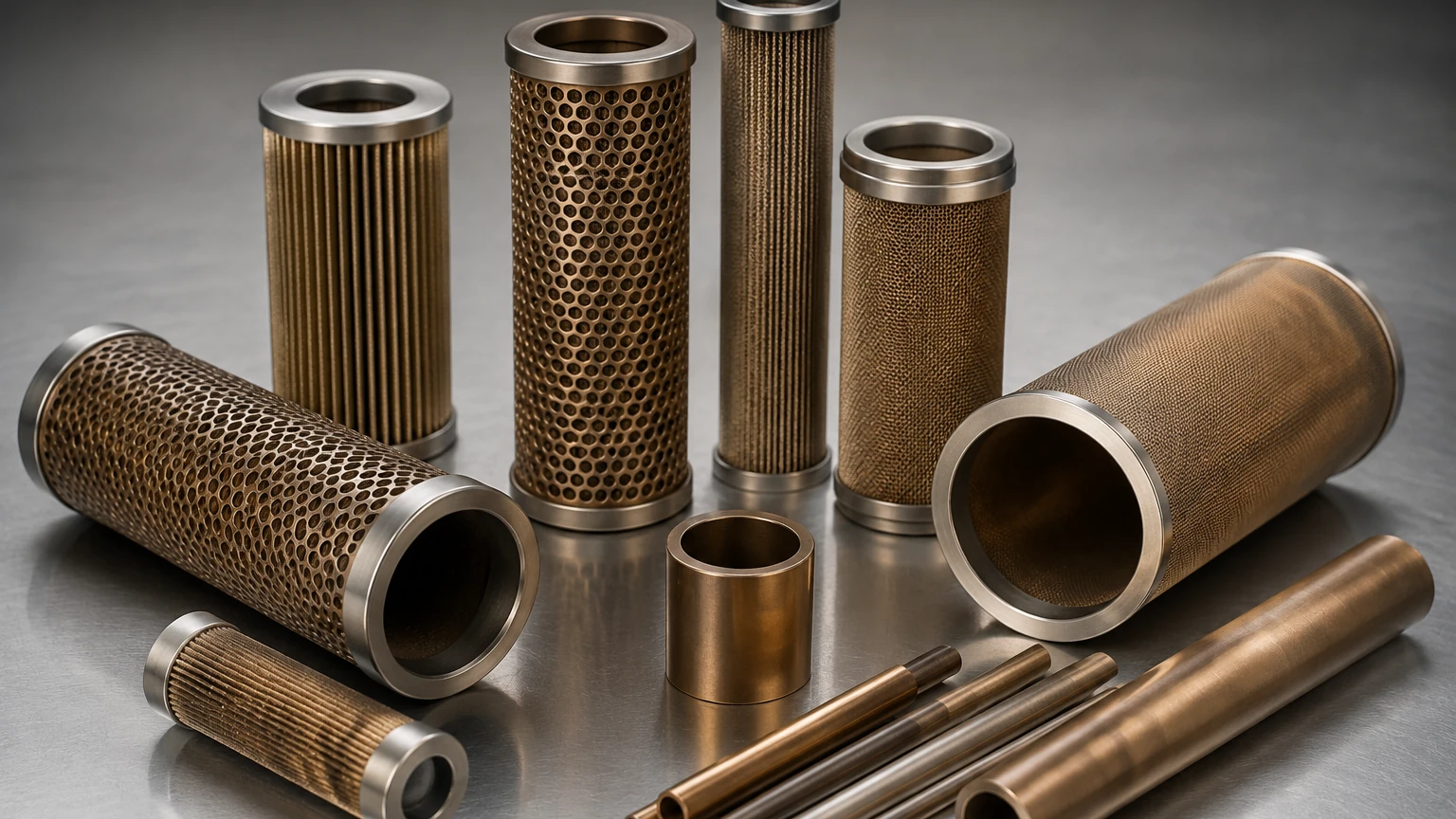
In the context of filtration, the tube en bronze often refers to a porous structure created through powder metallurgy. Sintered bronze filters are manufactured by fusing spherical bronze particles together. This creates a rigid, porous tube that provides depth filtration. These components are valued for their ability to be cleaned and reused, as well as their high thermal stability compared to polymer-based filters.
Engineering Advantages of Bronze in Industrial Filtration
Selecting a bronze tube over other materials involves evaluating the specific operating conditions of the application. The following engineering advantages highlight why bronze remains a staple in industrial design.
1. Corrosion Resistance in Saline Environments
One of the most significant advantages of bronze is its performance in chloride-rich environments. While some grades of stainless steel are susceptible to pitting and crevice corrosion in seawater, aluminum bronze and silicon bronze maintain high integrity. This makes bronze tubes ideal for desalination pre-filtration systems and offshore oil and gas equipment.
2. Thermal Conductivity
Copper-based alloys possess much higher thermal conductivity than stainless steel. In applications where filtration occurs simultaneously with heat exchange, a bronze tube can help maintain temperature stability or facilitate heat dissipation. This is particularly relevant in hydraulic systems where the filter housing or the tube itself may assist in cooling the hydraulic fluid.
3. Anti-Galling and Low Friction
Bronze is naturally "self-lubricating" compared to stainless steel. In mechanical assemblies where a filter tube must slide into a housing or where there are moving parts, the use of bronze prevents galling (cold welding). This ensures that maintenance and replacement cycles are smoother, reducing the risk of damaging expensive equipment during filter change-outs.
Sintered Bronze Tubes for Precision Filtration
When discussing the tube en bronze in a technical B2B context, the focus often shifts to sintered porous media. Sintered bronze tubes are widely used for gas and liquid filtration where high pressure and high temperatures are present.
Filtration Mechanism
Unlike surface filters (such as thin membranes), sintered bronze tubes provide depth filtration. The labyrinthine path created by the fused bronze spheres traps particles throughout the thickness of the tube wall. This allows for a higher dirt-holding capacity and more consistent flow rates over time.
Performance Specifications
Engineers must confirm the following specifications when selecting sintered bronze tubes:
- Micron Rating: Typically ranging from 0.5 to 200 microns.
- Permeability: The measure of how easily fluid passes through the porous structure.
- Maximum Differential Pressure: Sintered bronze is structurally robust, but it is essential to know the collapse pressure, especially in high-viscosity fluid applications.
- Operating Temperature: Sintered bronze can typically withstand temperatures up to 200°C (392°F) or higher, depending on the specific alloy and the presence of oxidizing agents.
Comparison: Bronze vs. Stainless Steel Filtration Components
While Kaifil provides extensive custom stainless steel filtration solutions, we often assist clients in deciding between stainless steel and bronze for their specific needs. The following table outlines the key differences:
| Feature | Bronze (Tube/Sintered) | Stainless Steel (304/316L) |
| :— | :— | :— |
| Corrosion Resistance | Excellent in seawater/brine | Excellent in acids/chemicals |
| Mechanical Strength | Moderate to High | High to Very High |
| Cost | Generally lower for specific alloys | Higher, especially for 316L/904L |
| Food Grade/Pharma | Limited (unless lead-free) | Standard / Preferred |
| Thermal Conductivity | High | Low |
| Cleaning Method | Ultrasonic / Backwash | Chemical / Ultrasonic / High-temp |
For most food, beverage, and pharmaceutical applications, stainless steel is the mandatory choice due to its non-reactive nature and ease of sterilization. However, for industrial hydraulics, pneumatic silencers, and marine water treatment, the bronze tube offers a cost-effective and technically sound alternative.
Critical Selection Criteria for Procurement and Engineering
When sourcing a tube en bronze, purchasing teams and engineers should confirm several factors to ensure the component meets the long-term requirements of the project.
Dimensional Tolerances
In industrial filtration, the fit between the filter element and the housing is critical. Even a minor bypass can compromise the entire system. Ensure that the bronze tube manufacturer provides tight tolerances on the Outer Diameter (OD), Inner Diameter (ID), and concentricity.
Chemical Compatibility
While bronze is resistant to many environments, it can be degraded by certain chemicals, such as ammonia, cyanides, and strong oxidizing acids. A thorough review of the fluid chemistry is necessary. If the fluid contains high concentrations of sulfur, specialized bronze alloys or a transition to stainless steel may be required.
Pressure and Flow Requirements
For porous bronze tubes, the relationship between wall thickness and pressure drop is vital. A thicker wall increases structural strength but also increases the resistance to flow (pressure drop). Engineering teams must balance these two factors to ensure the pump system is not overworked while maintaining the necessary filtration efficiency.
Customization Options
Standard sizes are often insufficient for specialized industrial machinery. Working with a manufacturer that offers customized lengths, diameters, and end-fittings is essential. At Kaifil, we emphasize the importance of tailored engineering to meet specific flow dynamics and spatial constraints. For more information on how we handle custom requests, visit our Main Page.
Common Risks and Mitigation Strategies
Using bronze in industrial systems is not without risks. Being aware of these can prevent premature system failure.
- Galvanic Corrosion: When a bronze tube is in direct contact with a more noble metal (like certain stainless steels) in an electrolyte (like seawater), galvanic corrosion can occur. This is mitigated by using sacrificial anodes or dielectric isolators.
- Dealloying (Dezincification): In some bronze alloys containing zinc (often technically brass but sometimes labeled as bronze), the zinc can leach out, leaving a weakened copper structure. Specifying "Dezincification Resistant" (DZR) alloys or high-tin bronzes prevents this.
- Contamination: In high-purity water systems, trace amounts of copper ions from the bronze tube can leach into the fluid. If the application requires ultra-pure water (UPW), stainless steel or specialized coatings are necessary.
Installation and Maintenance Recommendations
To maximize the service life of a bronze-based filtration component, proper installation and maintenance protocols must be followed.
1. Handling: Bronze is softer than stainless steel. Avoid using heavy serrated tools directly on the tube surface to prevent scoring, which can become a site for stress corrosion cracking.
2. Cleaning: For sintered bronze tubes, regular backwashing can remove surface particulates. If the filter becomes deeply fouled, ultrasonic cleaning in a compatible detergent solution is often effective. Avoid using harsh acidic cleaners that might attack the copper base.
3. Inspection: Periodically check for signs of "green" oxidation (verdigris) or pitting. While a uniform patina is often protective, localized pitting indicates a chemical imbalance in the system that needs to be addressed.
Conclusion
The tube en bronze remains a versatile and essential component in the industrial world, offering specific benefits in thermal management, marine durability, and anti-frictional performance. By understanding the metallurgical properties and the specific demands of the application, engineers can make informed decisions that enhance system reliability.
Whether your project requires the unique properties of bronze or the high-purity performance of stainless steel, selecting the right partner for your filtration needs is paramount. Kaifil provides the technical expertise and manufacturing precision required to develop reliable filtration components for the most demanding industrial environments. For detailed product specifications, application guidance, or to discuss a customized filtration solution, please visit our Main Page.
