


Engineering Guide to Woven Wire Fence Gate Systems in Industrial Environments
In industrial facilities, the integrity of perimeter security and internal safety enclosures depends heavily on the materials used for access points. A woven wire fence gate serves as a critical component in these systems, providing a balance of visibility, ventilation, and physical security. Unlike welded alternatives, woven structures offer unique mechanical properties that are advantageous in demanding environments such as chemical processing plants, food production lines, and pharmaceutical facilities.
Selecting the correct Woven Wire Mesh for a gate application requires a deep understanding of material science, weave patterns, and structural engineering. This guide examines the technical considerations necessary to specify, install, and maintain woven wire gates that meet rigorous industrial standards.
1. Understanding the Role of Woven Wire Mesh in Industrial Gate Systems
The primary function of a woven wire fence gate in an industrial context is to provide controlled access while maintaining the environmental characteristics of the surrounding area. Whether used for a machinery safety cage or a facility perimeter, the mesh must withstand mechanical impacts and environmental stressors without compromising its structural geometry.
Unlike perforated metal or expanded metal, woven wire mesh is manufactured by interlacing wires over and under one another. This process creates a stable, flexible fabric that can absorb energy more effectively than rigid, welded panels. In gate applications, this flexibility translates to better resistance against repeated opening/closing cycles and accidental impacts from forklifts or heavy equipment.
For engineers, the choice of mesh impacts several performance factors:
* Transparency: High open-area percentages allow for clear line-of-sight, which is essential for monitoring automated equipment or maintaining site security.
* Airflow: In areas containing heat-generating machinery or chemical vapors, the mesh allows for natural or forced ventilation.
* Weight-to-Strength Ratio: Woven mesh provides high tensile strength without the excessive weight of solid plating, reducing the load on gate hinges and automated actuators.
2. Material Engineering: Stainless Steel Grades for Fence Gates
The longevity of a woven wire fence gate is dictated primarily by its material composition. In most industrial B2B applications, stainless steel is the standard due to its corrosion resistance and mechanical durability.
SS304: The Industrial Standard
Type 304 stainless steel is the most common material for internal safety gates and partitions. It offers excellent resistance to atmospheric corrosion and is suitable for most general manufacturing environments. It provides the necessary tensile strength to prevent unauthorized entry while remaining cost-effective for large-scale installations.
SS316L: Enhanced Corrosion Resistance
For facilities located in coastal regions or those involving chemical processing, SS316L is the preferred specification. The addition of molybdenum and a lower carbon content (the "L" designation) provides superior resistance to pitting and crevice corrosion, particularly in the presence of chlorides. If a gate is part of a wastewater treatment plant or a pharmaceutical cleanroom where aggressive cleaning agents are used, SS316L ensures the mesh does not degrade or contaminate the environment.
3. Technical Specifications: Mesh Count and Wire Diameter
When specifying a woven wire fence gate, engineers must define the mesh count and wire diameter to ensure the gate meets the specific safety or containment requirements of the project. These two factors determine the "aperture" or the size of the openings.
Mesh Count
Mesh count refers to the number of openings per linear inch. For security gates, a lower mesh count with thicker wires is typically used to prevent cutting or climbing. Conversely, for finger-guard safety gates around moving machinery, a higher mesh count is required to ensure that even small appendages cannot pass through the barrier.
Wire Diameter
The diameter of the wire directly influences the gate's rigidity and impact resistance. In heavy-duty industrial gates, wire diameters often range from 2.0mm to 5.0mm. It is crucial to calculate the total weight of the mesh panel based on the wire diameter to ensure the gate frame and hinges are rated for the resulting load. Over-specifying wire diameter can lead to premature hinge failure, while under-specifying can result in a gate that sags or deforms under its own weight.
For those requiring precise specifications for their projects, it is helpful to Plain, twill and dutch woven wire mesh in SS304/316L — rolls, cut mesh and framed panels. Send mesh count or micron target for a technical quote. to ensure the material meets the intended application's safety margins.
4. Performance Benefits of Woven Wire Mesh in Safety Enclosures
Beyond simple perimeter security, woven wire fence gates are integral to machine guarding and safety enclosures. The mechanical properties of the weave provide several advantages over other materials:
* Energy Dissipation: Because the wires in a woven mesh are not welded at every intersection, they have a small degree of movement. This allows the mesh to dissipate the energy of an impact across a wider area, reducing the likelihood of a permanent dent or breach.
* Dimensional Stability: High-quality weaving processes ensure that the aperture size remains consistent across the entire gate panel. This is critical for compliance with safety standards (such as OSHA or ISO standards) regarding reach-through distances.
* Customizable Weave Types: While plain weave is standard, twill weaves or lock-crimp styles can be used for gates requiring higher stability or a specific aesthetic profile in architectural-industrial applications.
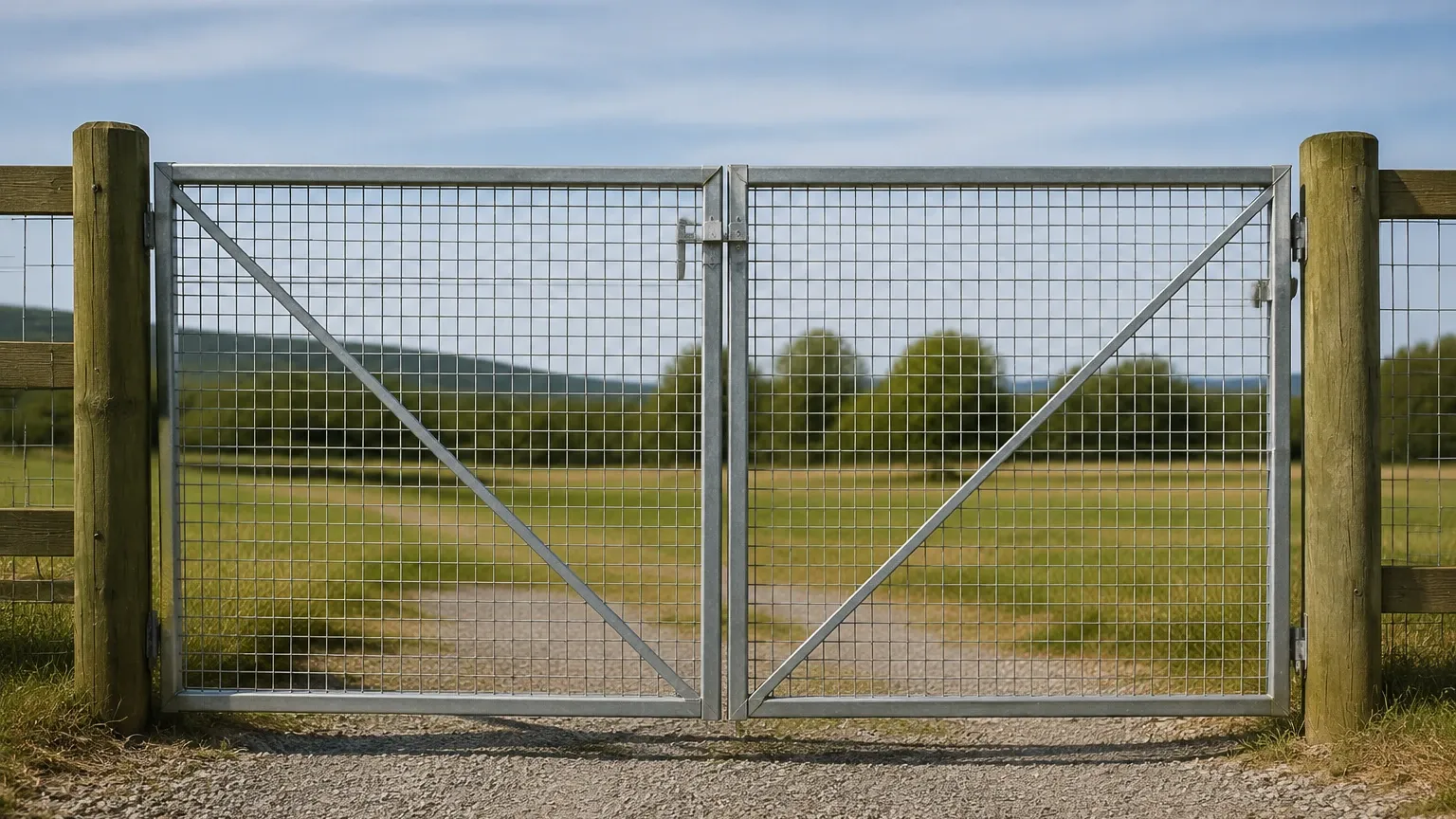
5. Fabrication and Integration: Framing Woven Wire Fence Gates
A woven wire mesh panel is only as strong as its frame. In B2B industrial applications, the method of securing the mesh to the gate frame is a critical engineering decision.
U-Channel Framing
The most common method involves placing the mesh edges into a U-channel frame and welding it securely. This protects the sharp ends of the wires and provides a clean, professional finish. It also ensures that the tension of the weave is maintained across the entire surface of the gate.
Angle Iron and Flat Bar Bolting
For gates that may require mesh replacement due to high-wear environments, bolting the mesh between an angle iron frame and a flat bar allows for easier maintenance. This is often seen in mining or heavy aggregate industries where the mesh may be subjected to abrasive materials.
Welding Considerations
When welding stainless steel mesh to a frame, it is vital to use the correct filler material and welding technique (such as TIG welding) to prevent "carbide precipitation," which can lead to rust at the weld points. Post-weld passivation is often recommended to restore the chromium oxide layer that gives stainless steel its corrosion-resistant properties.
6. Selection Criteria for Industrial Filtration and Containment Gates
In specialized sectors like food and beverage or chemical processing, a woven wire fence gate might also serve a secondary role in filtration or debris containment. For instance, in a wash-down area, a gate might need to allow water to pass through while capturing large particulates.
When selecting mesh for these multi-purpose applications, consider the following:
1. Open Area Percentage: Calculate the required flow rate of air or liquid through the gate to prevent pressure build-up or restricted ventilation.
2. Surface Finish: For food-grade applications, a bright-annealed or electropolished finish reduces surface roughness, preventing bacterial growth and making the gate easier to sanitize.
3. Environmental Exposure: Determine if the gate will be exposed to extreme temperatures or cryogenic conditions, as this may affect the choice of stainless steel alloy.
7. Maintenance and Total Cost of Ownership (TCO)
While the initial cost of a stainless steel Woven Wire Mesh gate may be higher than galvanized steel or plastic alternatives, the Total Cost of Ownership is significantly lower in industrial settings. Stainless steel does not require frequent repainting or coating, and its resistance to physical deformation means fewer repairs over the lifecycle of the facility.
Maintenance protocols should include:
* Periodic Cleaning: Removing accumulated dust or chemical residues to prevent localized corrosion.
* Hinge Lubrication: Ensuring the added weight of industrial-grade mesh does not strain the mechanical pivot points.
* Tension Checks: For larger gates, ensuring the mesh remains taut within the frame to prevent vibration and noise during operation.
Conclusion
Specifying a woven wire fence gate involves more than just selecting a size. It requires a technical evaluation of material grades, mesh geometry, and fabrication methods to ensure the final product stands up to the rigors of an industrial environment. By focusing on high-quality stainless steel Woven Wire Mesh, engineers can create access solutions that offer long-term durability, safety compliance, and operational efficiency. Whether the goal is machinery protection or secure perimeter control, the right mesh selection is the foundation of a reliable gate system.
