


Oil and Gas Filters
In the demanding environments of the energy sector, filtration is not merely a peripheral process but a critical component of operational integrity and equipment longevity. The efficacy of oil and gas filters determines the reliability of downstream equipment, the purity of final products, and the overall safety of the extraction and refining processes. For engineers and procurement specialists, selecting the appropriate filtration solution requires a deep understanding of fluid dynamics, material science, and the specific rigors of high-pressure, high-temperature (HPHT) environments.
Industrial filtration in this sector involves the removal of solid contaminants, water, and chemical impurities from various streams, including crude oil, natural gas, produced water, and completion fluids. Unlike standard commercial filtration, oil and gas filters must withstand corrosive chemical compositions, extreme mechanical stresses, and fluctuating flow rates. As a manufacturer specializing in stainless steel filtration solutions, Kaifil provides the technical expertise necessary to navigate these complexities, ensuring that systems remain online and efficient.
The Engineering Logic Behind Stainless Steel Filtration
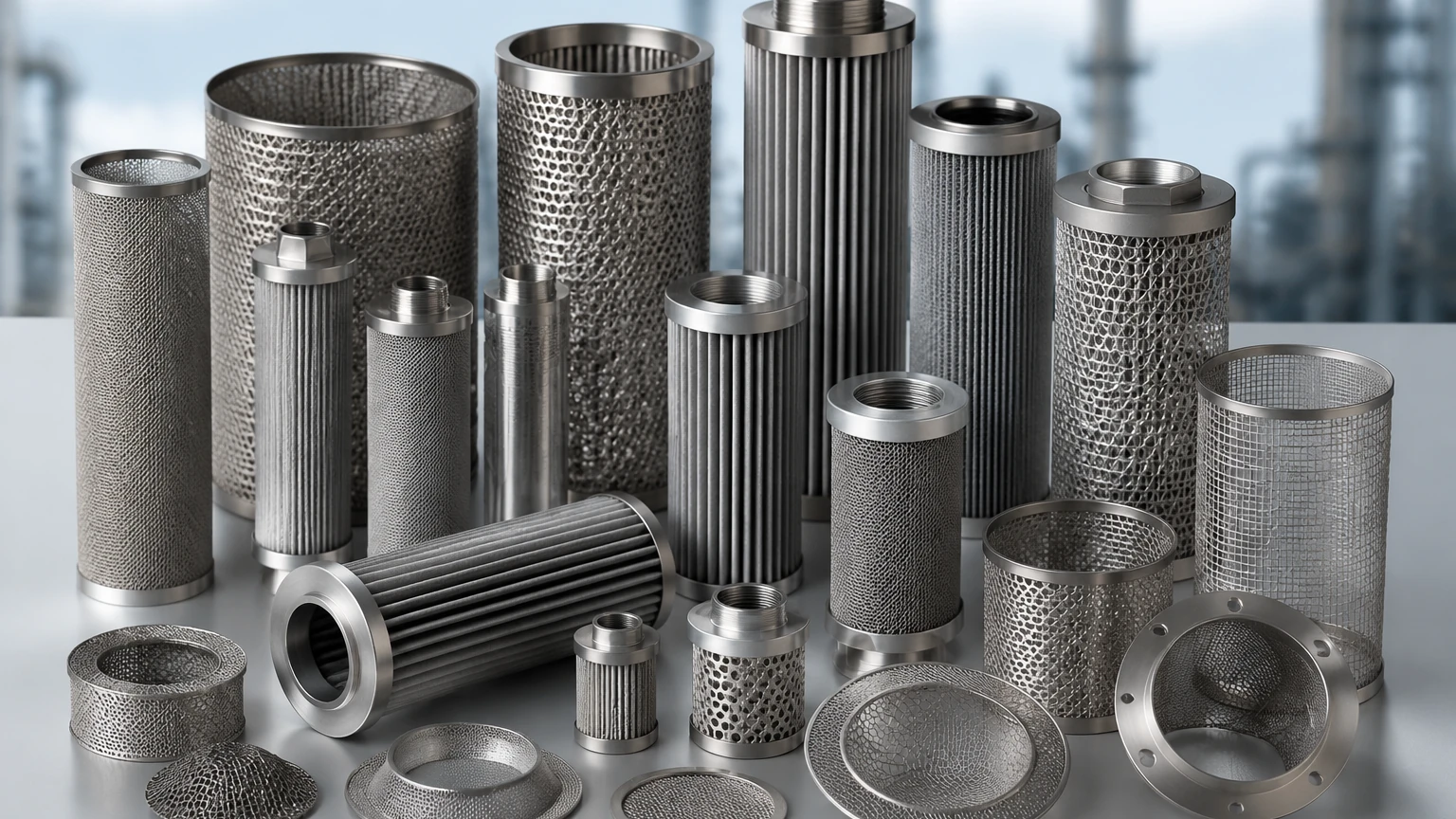
When evaluating oil and gas filters, the choice of filter media is the most significant decision. While disposable polymer or fiberglass cartridges are common in light-duty applications, the oil and gas industry frequently requires the durability of stainless steel. Metal filters, particularly those constructed from wire mesh or sintered metal fibers, offer several engineering advantages that synthetic materials cannot match.
Thermal and Mechanical Stability
Stainless steel filters maintain their structural integrity at temperatures exceeding 500°C, a requirement for many refining and catalytic processes. Furthermore, the high mechanical strength of metal media allows filters to withstand significant differential pressures (ΔP) without collapsing or bypassing. In high-pressure pipeline applications, where sudden pressure surges are common, the rigidity of a stainless steel filter cartridge ensures consistent filtration performance and protects sensitive downstream components like compressors and turbines.
Chemical Compatibility and Corrosion Resistance
The presence of hydrogen sulfide (H2S), CO2, and high chloride levels in many oil and gas streams creates a highly corrosive environment. Standard 304 or 316L stainless steel provides excellent resistance to general corrosion, but for more aggressive "sour" environments, specialized alloys or surface treatments may be necessary. The ability to select specific grades of metal ensures that the filtration system does not become a point of failure due to chemical degradation.
Key Performance Metrics for Industrial Filter Selection
Selecting the right oil and gas filters involves more than matching a micron rating to a particle size. Engineers must consider a holistic set of performance metrics to ensure the filter meets the application's specific demands.
Filtration Accuracy and Beta Ratio
Filtration accuracy is often described by the micron rating, but for industrial applications, the Beta Ratio (β) is a more precise measurement. The Beta Ratio indicates the efficiency with which a filter captures particles of a specific size. For critical systems, such as hydraulic power units or turbine fuel gas lines, an absolute rating (Beta ≥ 1000) is often required to ensure that 99.9% of contaminants are removed. In contrast, nominal ratings may be sufficient for pre-filtration stages where the primary goal is to reduce the load on finer downstream filters.
Dirt Holding Capacity and Flow Resistance
A filter’s dirt holding capacity (DHC) determines its service life between cleaning or replacement cycles. In the oil and gas industry, where downtime is exceptionally costly, maximizing DHC is a priority. This is achieved through pleated designs that increase the available surface area without enlarging the filter housing. However, increasing the surface area must be balanced against the initial pressure drop. A high initial ΔP reduces the operating window before the filter reaches its terminal pressure drop, leading to more frequent maintenance interventions.
Cleanability and Reusability
One of the primary economic drivers for choosing stainless steel oil and gas filters is their cleanability. Unlike disposable cartridges that contribute to waste streams and recurring procurement costs, metal filters can be cleaned via backwashing, ultrasonic cleaning, or chemical soaking. This reusability significantly lowers the Total Cost of Ownership (TCO) over the life of the equipment, particularly in remote offshore locations where logistics for replacement parts are complex.
Critical Applications Across the Value Chain
Filtration requirements vary significantly depending on whether the application is upstream, midstream, or downstream. Understanding these nuances is essential for specifying the correct filter configuration.
Upstream: Produced Water and Injection Well Protection
In upstream operations, produced water—the water extracted alongside oil and gas—must be treated before disposal or reinjection. Filtration is used to remove residual oil droplets and suspended solids that could otherwise plug injection wells or damage disposal pumps. Stainless steel wire mesh filters are ideal here due to their ability to handle high flow rates and their resistance to the abrasive sand often found in produced water.
Midstream: Pipeline and Compressor Station Filtration
Midstream operations involve the transport of gas and liquids over vast distances. Natural gas filters at compressor stations are vital for removing "black powder" (a mixture of iron sulfides and oxides) and liquid aerosols. These contaminants can cause catastrophic failure in high-speed centrifugal compressors. Coalescing filters, which combine fine stainless steel mesh with specialized drainage layers, are frequently employed to separate liquid droplets from gas streams.
Downstream: Refining and Petrochemical Processing
Refineries utilize filtration in almost every stage of production, from crude desalting to final product polishing. High-temperature filtration is particularly critical in catalytic cracking and hydrotreating processes, where filters protect expensive catalysts from solid contaminants. The precision of Kaifil’s manufacturing ensures that these filters meet the exact tolerances required for refinery service.
Material Selection for Harsh Environments
The longevity of oil and gas filters is directly tied to the materials used in their construction. While 316L stainless steel is the industry standard due to its excellent balance of cost and corrosion resistance, certain applications demand more robust solutions.
1. 316L Stainless Steel: The low carbon content helps prevent sensitization during welding, making it the preferred choice for welded filter cartridges used in general oil and gas applications.
2. Duplex and Super Duplex: These materials offer superior resistance to pitting and stress corrosion cracking in high-chloride environments, such as offshore platforms using seawater for cooling or injection.
3. Monel and Inconel: For extremely corrosive or high-temperature applications involving hydrofluoric acid or extreme thermal cycling, these nickel-based alloys provide the necessary durability where stainless steel might fail.
When consulting with a manufacturer, engineers should provide a detailed fluid analysis, including pH levels, chloride concentration, and the presence of sulfur compounds, to ensure the most cost-effective material is selected.
Total Cost of Ownership and Maintenance Cycles
In the B2B procurement process, the initial purchase price of oil and gas filters is often a secondary consideration compared to the Total Cost of Ownership. TCO includes the purchase price, installation costs, energy costs (related to pressure drop), maintenance labor, and the cost of disposal for spent filters.
Permanent vs. Disposable Solutions
While the upfront cost of a stainless steel filter is higher than a disposable polymer version, the long-term savings are substantial. A permanent metal filter can last for years with proper maintenance, whereas disposable filters may need to be changed weekly or even daily in high-load applications. Furthermore, the environmental impact of disposing of oil-soaked cartridges is an increasing concern for energy companies aiming to meet sustainability targets.
Monitoring and Predictive Maintenance
To optimize maintenance cycles, modern filtration systems utilize differential pressure sensors to monitor filter loading in real-time. By analyzing the rate of pressure increase, operators can predict when a filter will reach its terminal ΔP and schedule maintenance during planned shutdowns rather than reacting to an emergency bypass or equipment trip. This proactive approach is essential for maintaining high uptime in 24/7 oil and gas operations.
Customization and OEM Solutions
No two oil and gas operations are identical, and off-the-shelf filtration products often fail to meet the specific spatial or performance constraints of a particular site. Customization is a core strength of Kaifil’s manufacturing process. Whether it is a unique flange connection, a non-standard housing geometry, or a multi-layered mesh structure designed for a specific particle size distribution, customized solutions provide the best performance.
OEM (Original Equipment Manufacturer) partnerships are also vital. By integrating high-quality stainless steel filters into their equipment at the design stage, machinery manufacturers can ensure their systems operate reliably in the field. Kaifil works closely with engineering teams to develop proprietary filtration components that meet the rigorous standards of the energy industry.
Conclusion: Making Informed Filtration Decisions
The selection of oil and gas filters is a technical challenge that requires balancing filtration efficiency, mechanical durability, and long-term economic viability. By prioritizing high-quality materials like stainless steel and focusing on engineering metrics such as Beta ratios and cleanability, companies can protect their assets and optimize production.
For engineers and purchasing managers looking to enhance their filtration strategy, it is essential to partner with a manufacturer that understands the nuances of industrial metal filtration. To explore the full range of custom stainless steel filter cartridges, wire mesh filters, and precision components designed for the energy sector, please visit our Main Page.
Before finalizing a filtration specification, always confirm the following with your technical partner:
* Exact fluid composition and potential for corrosive contaminants.
* Maximum and operating pressure/temperature ranges.
* Desired cleaning methodology and frequency.
* Required certifications (e.g., ASME, ISO) for the specific operating region.
By addressing these factors early in the design or procurement phase, you ensure that your oil and gas filters provide reliable service in even the most demanding industrial environments.
