


Woven Wire Fence Gauge: A Technical Selection Guide for Industrial Applications
In the realm of industrial infrastructure and precision filtration, the specifications of wire components determine the longevity, safety, and efficiency of a system. Among these specifications, the woven wire fence gauge stands as one of the most critical variables. While often associated with perimeter security, the technical principles of wire gauge extend deeply into industrial separation, filtration, and structural reinforcement. Selecting the appropriate gauge requires a balance between mechanical strength, material weight, and the specific environmental demands of the application.
As a specialized manufacturer, Kaifil provides engineering-grade Woven Wire Mesh solutions tailored to rigorous industrial standards. Understanding how wire gauge interacts with mesh count and material properties is essential for engineers and procurement teams tasked with specifying durable filtration or containment systems.
Understanding the Fundamentals of Wire Gauge in Woven Mesh
The term "gauge" refers to the diameter of the wire used in the weaving process. In the context of industrial mesh and fencing, it is vital to recognize that gauge systems are typically inverse: as the gauge number increases, the actual diameter of the wire decreases. For example, a 9-gauge wire is significantly thicker and stronger than a 14-gauge wire.
In North America, the American Wire Gauge (AWG) or the Manufacturers’ Standard Gauge is frequently used, while international projects often specify wire diameter in millimeters (mm) or use the British Standard Wire Gauge (SWG). For industrial applications, relying on decimal inch or millimeter measurements is generally preferred to avoid ambiguity between different gauge systems.
The Inverse Relationship
- Heavy Gauges (6 to 9): These are thick wires used for high-impact industrial fencing, heavy-duty vibrating screens, and structural reinforcement. They offer maximum tensile strength but result in a heavier product.
- Medium Gauges (10 to 14): These are standard for many industrial enclosures and medium-grade filtration supports. They provide a balance between flexibility and structural integrity.
- Fine Gauges (16 and higher): These are used for precision Plain, twill and dutch woven wire mesh in SS304/316L — rolls, cut mesh and framed panels. Send mesh count or micron target for a technical quote. where filtration accuracy and high open area are more important than sheer physical impact resistance.
The Relationship Between Woven Wire Fence Gauge and Structural Integrity
When specifying a woven wire fence gauge, the primary engineering concern is usually tensile strength and the ability of the mesh to withstand external loads. In fencing applications, this might include wind loads, physical impact, or the weight of accumulated debris. In industrial filtration, the "load" may come from high-pressure fluid flow or the weight of a filter cake.
Tensile Strength and Yield
The diameter of the wire directly correlates to its cross-sectional area. Since stress is defined as force divided by area, a thicker wire (lower gauge) can distribute more force before reaching its yield point. For high-security industrial perimeters or high-pressure hydraulic filters, selecting a lower gauge ensures that the mesh does not deform permanently under stress.
Impact Resistance
In environments where mechanical impact is a risk—such as protective machinery guards or perimeter fencing in logistics hubs—the gauge determines the energy absorption capacity of the mesh. A heavier gauge wire can absorb significant kinetic energy without snapping, whereas a finer wire may fail instantly upon impact.
Material Selection and Corrosion Resistance
The effectiveness of a specific woven wire fence gauge is also dependent on the alloy used. At Kaifil, we specialize in stainless steel solutions, which offer superior performance compared to galvanized carbon steel in demanding environments.
Stainless Steel 304 (SS304)
SS304 is the most common industrial stainless steel. It provides excellent corrosion resistance for standard outdoor fencing and most food-grade filtration applications. When choosing a gauge in SS304, engineers must account for the material's work-hardening properties during the weaving process, which adds to the overall stiffness of the finished mesh.
Stainless Steel 316L (SS316L)
For applications involving chemical processing, marine environments, or pharmaceutical production, SS316L is the preferred choice. The addition of molybdenum enhances resistance to pitting and crevice corrosion. Because SS316L is slightly more expensive, optimizing the wire gauge is essential for cost management. Engineers often specify a slightly thinner gauge of 316L if the environmental protection outweighs the need for extreme mechanical thickness, or they may maintain a heavy gauge for maximum longevity in corrosive atmospheres.
Technical Specifications: Mesh Count vs. Wire Diameter
A common challenge in specifying woven wire mesh is the interplay between the mesh count (the number of openings per linear inch) and the wire gauge. These two factors together determine the "Open Area" of the mesh.
Calculating Open Area
The percentage of open area is a critical metric for both airflow in fencing and flow rates in filtration. It is calculated using the formula:
Open Area % = (1 – (Mesh Count × Wire Diameter))² × 100
- High Gauge (Thin Wire): Results in a higher percentage of open area, allowing for better visibility in fencing and higher flow rates in filtration. However, the mesh is more fragile.
- Low Gauge (Thick Wire): Results in a lower percentage of open area. This creates a denser, stronger barrier but increases resistance to fluid or air passage.
For industrial engineers, the goal is to find the "sweet spot" where the woven wire fence gauge is thick enough to provide the required service life but thin enough to allow for efficient operation of the system.
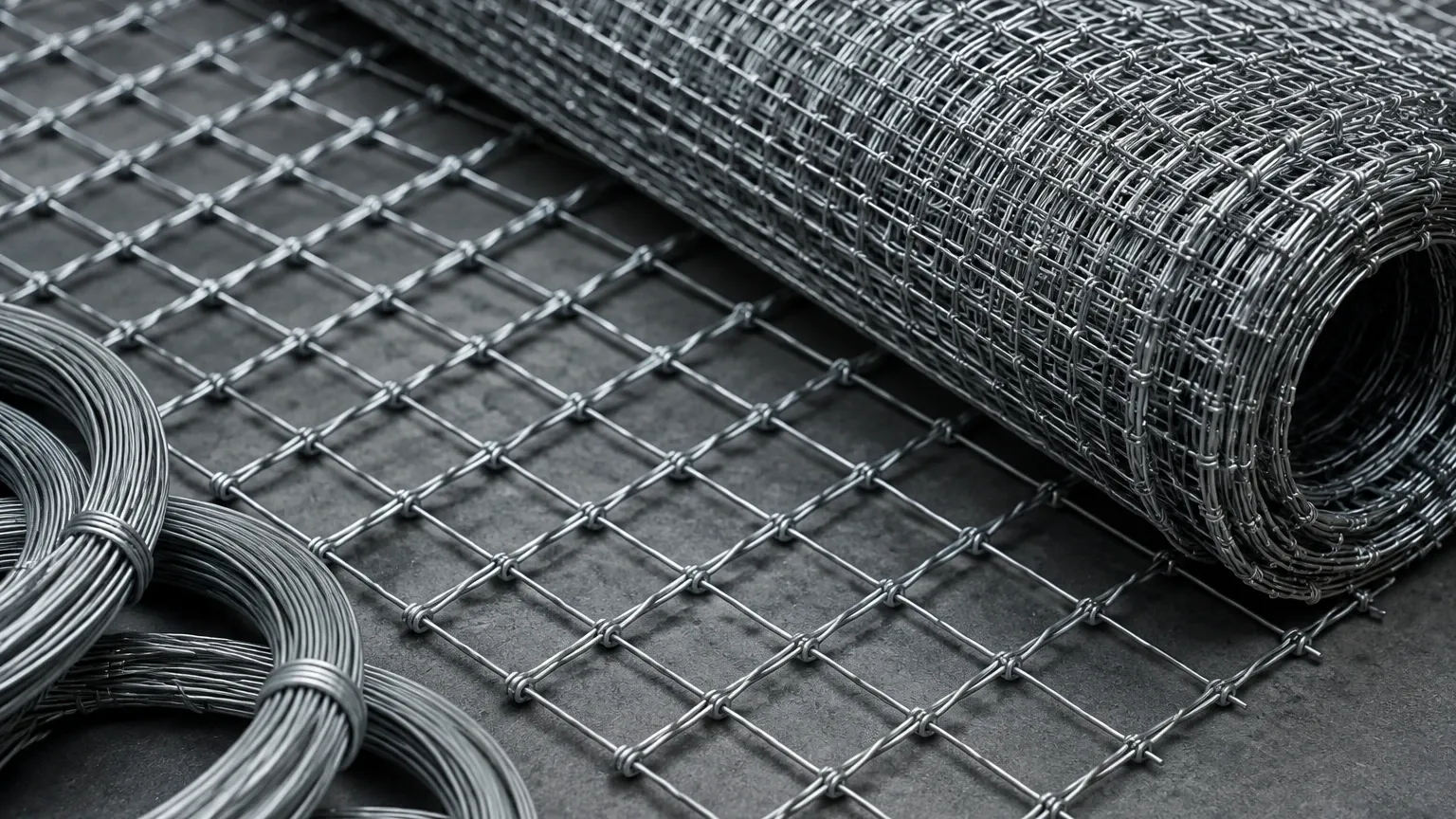
Environmental and Application-Specific Considerations
Selecting the right gauge is not a one-size-fits-all process. Different industries have varying priorities that dictate the specification.
Chemical and Petrochemical Processing
In these sectors, mesh is often used for catalyst support or filtration in highly acidic or basic environments. Here, the wire gauge must account for "corrosion allowance." Engineers may specify a thicker gauge than mechanically necessary to ensure that even after years of gradual surface oxidation, the mesh retains its structural integrity.
Food and Beverage Industry
Hygiene is the priority here. Woven mesh must be easy to clean and resistant to sanitizing chemicals. A medium gauge is often used to ensure the mesh remains rigid during high-pressure washdowns, preventing the wires from shifting and altering the filtration accuracy.
Hydraulic and Water Treatment
In hydraulic systems, the mesh is subject to rapid pressure pulses. A heavy woven wire fence gauge or a specialized Dutch weave (which uses different gauges for the warp and shute wires) is often required to prevent fatigue failure. In water treatment, mesh screens must withstand the constant flow of abrasive particulates, making wire hardness and diameter critical for wear resistance.
Common Risks in Gauge Selection
Failure to accurately specify the wire gauge can lead to several industrial failures:
1. Vibration Fatigue: If the wire gauge is too thin for the span of the mesh panel, harmonic vibrations (caused by pumps or wind) can lead to premature metal fatigue at the contact points of the weave.
2. Blinding and Clogging: In separation tasks, if the wire diameter is too large relative to the opening, the "depth" of the hole can trap particles more easily, leading to clogging.
3. Installation Damage: Thin-gauge mesh is easily creased or dented during installation. For large-scale industrial fencing, using a gauge that is too light can result in a "sagging" appearance over time as the material stretches under its own weight.
Procurement and Customization: Partnering with a Manufacturer
When moving from the design phase to procurement, it is essential to work with a manufacturer that understands the nuances of wire metallurgy and weaving precision. Standard off-the-shelf fencing often uses lower-quality alloys or inconsistent wire diameters, which can compromise industrial projects.
Kaifil supports engineers by offering customized filtration and containment solutions. Whether you require a specific woven wire fence gauge for a high-security perimeter or a precision-engineered mesh for a pharmaceutical filter, our capabilities include:
* Material Certification: Ensuring the use of genuine SS304 or SS316L to meet regulatory and performance standards.
* Custom Weave Patterns: From standard plain weaves to complex twill and Dutch weaves that utilize varying wire diameters for optimized performance.
* Secondary Processing: Providing cut-to-size mesh, framed panels, and cylindrical filter cartridges to simplify the integration into your final equipment.
Conclusion: Confirming Your Specifications
Before finalizing a purchase order for woven wire mesh, technical professionals should confirm the following data points with their supplier:
1. Exact Wire Diameter: Specify in millimeters or decimal inches to avoid gauge system confusion.
2. Mesh Count: Ensure the combination of gauge and mesh count provides the required open area.
3. Alloy Grade: Confirm the material is suitable for the chemical and thermal profile of the application.
4. Tolerances: Define the allowable variance in wire diameter and opening size, especially for precision filtration.
By focusing on the technical realities of the woven wire fence gauge, companies can ensure they are investing in a solution that provides the highest total value through durability, performance, and reduced maintenance cycles. For those seeking expert guidance on material selection and custom manufacturing, Kaifil offers the engineering support necessary to navigate these complex variables.
Explore our full range of Woven Wire Mesh options or contact our technical team to discuss your specific project requirements and receive a detailed quote.
