


Industrielle Luftreinigung
In modern industrial environments, the management of air quality and gas purity is a fundamental requirement for both process integrity and environmental compliance. The term industrielle luftreinigung encompasses a wide range of technologies and methodologies designed to remove particulate matter, aerosols, and gaseous contaminants from industrial air streams. For engineers and facility managers, selecting the appropriate filtration medium is not merely a matter of compliance but a critical decision that impacts machine longevity, product purity, and operational overhead.
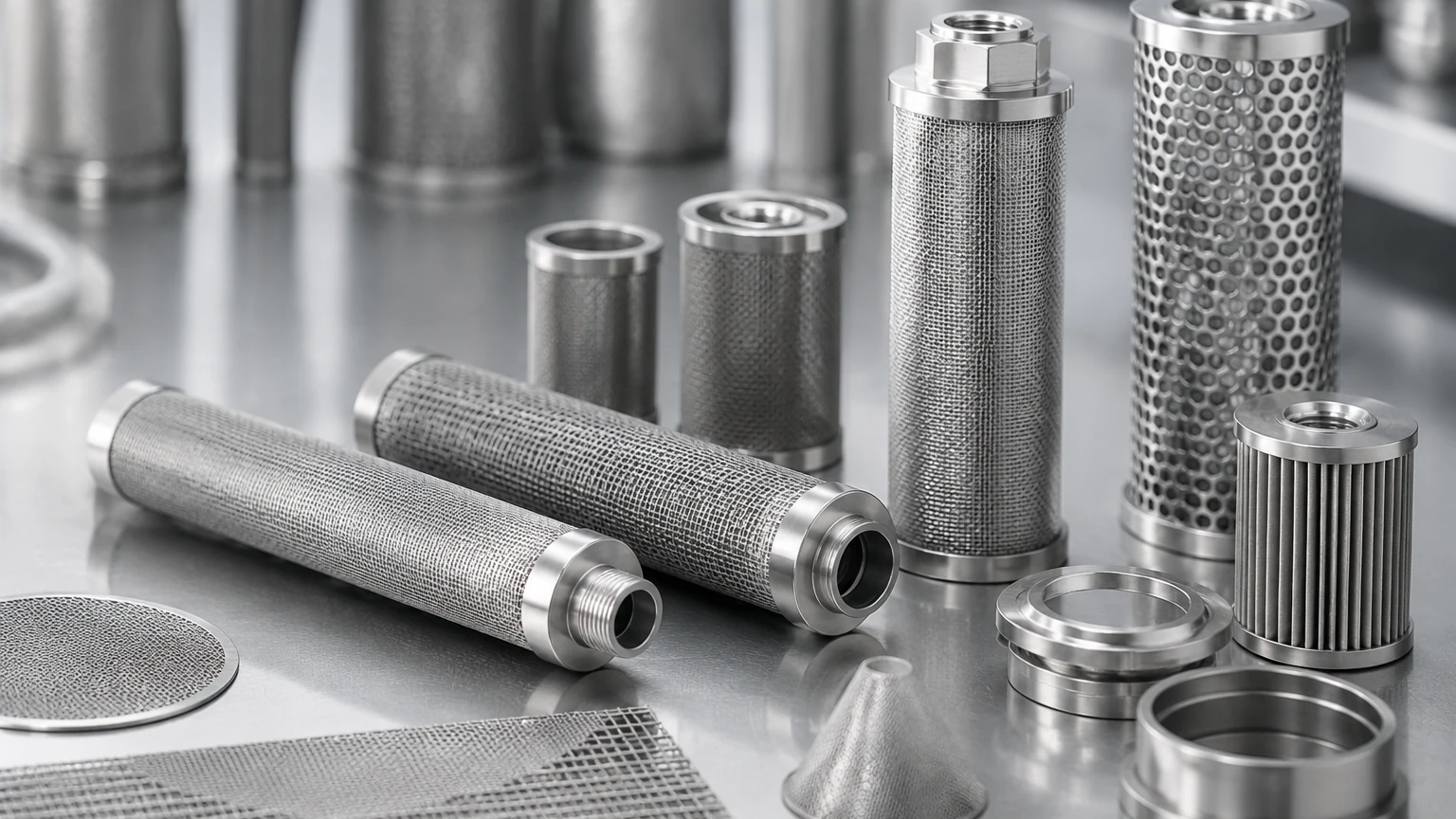
While many general air purification systems rely on synthetic fibers or paper media, heavy-duty industrial applications—particularly those involving high temperatures, corrosive chemicals, or high-pressure differentials—require the robustness of stainless steel filtration solutions. As a specialized manufacturer, Kaifil provides the technical expertise and precision-engineered components necessary to optimize these systems for demanding B2B applications.
Understanding the Role of Metal Filtration in Industrielle Luftreinigung
Industrial air purification systems are often categorized by the environment in which they operate. In sectors such as chemical processing, food and beverage, and pharmaceuticals, the air or gas stream is frequently part of the production process itself. In these scenarios, the filtration media must withstand rigorous conditions that would degrade standard filters.
Stainless steel wire mesh and sintered metal filters are the backbone of high-performance industrielle luftreinigung for several reasons:
1. Thermal Stability: Industrial processes often involve exhaust gases or compressed air at temperatures exceeding 200°C. Stainless steel maintains its structural integrity at temperatures where polymer-based filters would melt or lose efficiency.
2. Mechanical Strength: High-velocity air streams and pressure surges can cause flexible filter media to deform or bypass. Rigid metal filter cartridges provide a stable structure that ensures consistent filtration accuracy.
3. Chemical Inertness: In environments where the air contains acidic or alkaline vapors, 304 or 316L stainless steel offers the necessary corrosion resistance to prevent media migration and contamination of the air stream.
Technical Engineering Considerations for Air Filtration Media
When designing or specifying a system for industrielle luftreinigung, engineers must evaluate the specific characteristics of the filtration media. The choice between woven wire mesh and sintered metal components depends largely on the target particle size and the required flow dynamics.
Woven Wire Mesh Filters
Wire mesh filters are characterized by their precise aperture sizes and high open-area ratios. They are ideal for surface filtration where particles are captured on the upstream side of the mesh. This makes them highly effective for pre-filtration stages or for removing larger particulates from high-volume air flows. The predictability of the weave allows engineers to calculate exact flow rates and pressure drops across the media.
Sintered Metal Media
For applications requiring higher filtration fineness—often down to sub-micron levels—sintered metal filters are preferred. These are created by bonding multiple layers of wire mesh or metal fibers through a high-temperature sintering process. The resulting porous structure provides depth filtration, allowing for high dirt-holding capacity and the capture of fine aerosols and microscopic dust particles common in pharmaceutical and semiconductor manufacturing.
Performance Metrics: Pressure Drop and Flow Rates
A primary concern in the design of any industrielle luftreinigung system is the balance between filtration efficiency and energy consumption. The pressure drop (delta P) across a filter cartridge directly influences the energy required by fans or compressors to move air through the system.
Engineers must consider the "clean pressure drop" and the rate at which the pressure drop increases as the filter loads with contaminants. Stainless steel filters, due to their controlled pore geometry, often provide a lower initial pressure drop compared to dense felt or paper media of similar efficiency. Furthermore, the ability to precisely customize the mesh count and wire diameter allows for the optimization of the filter surface area, effectively extending the service life between cleaning cycles.
Material Selection for Challenging Environments
The efficacy of industrielle luftreinigung is heavily dependent on the material's compatibility with the process environment. Stainless steel is not a singular material but a family of alloys, each suited to different stressors:
* AISI 304: The standard choice for general industrial air filtration. It provides excellent strength and good corrosion resistance for most indoor and non-corrosive outdoor applications.
* AISI 316L: Containing molybdenum, this alloy is essential for air purification in marine environments or chemical plants where chlorides and acids are present. It is also the preferred material for the food and beverage industry due to its superior resistance to pitting and ease of sterilization.
* Specialty Alloys: For extreme conditions involving high concentrations of sulfur or highly oxidizing atmospheres, alloys such as Inconel or Monel can be utilized in the manufacturing of the filter mesh to ensure the longevity of the purification system.
Customization and OEM Solutions for System Integration
Off-the-shelf filtration products rarely meet the specific needs of complex industrial machinery. In the context of industrielle luftreinigung, customization is often a technical necessity. This includes the engineering of specific end-cap configurations, internal support cores for high-pressure applications, and multi-layered media composites designed to target specific particle distributions.
Kaifil works closely with OEM partners to develop filtration components that fit seamlessly into existing housings or new equipment designs. By adjusting parameters such as the sintering duration, layer orientation, and pleating density, it is possible to create a filter that maximizes the effective filtration area within a limited physical footprint. This level of customization ensures that the air purification system operates at peak efficiency without requiring frequent manual intervention.
Maintenance, Cleaning, and Life Cycle Management
One of the most significant advantages of using stainless steel components in industrielle luftreinigung is their cleanability. Unlike disposable filters that must be discarded and replaced once they reach a terminal pressure drop, metal filters can be refurbished multiple times.
Common cleaning methods for industrial metal filters include:
* Ultrasonic Cleaning: Using high-frequency sound waves in a chemical bath to dislodge fine particles trapped within the depth of the media.
* Backwashing/Backpulsing: Reversing the flow of air or fluid to blow contaminants off the surface of the filter.
* Chemical Cleaning: Using specific solvents or detergents to dissolve organic or chemical build-up without damaging the stainless steel structure.
Determining the replacement cycle requires monitoring the pressure drop and inspecting the structural integrity of the mesh after cleaning. While the initial cost of a stainless steel filter is higher than a disposable alternative, the ability to reuse the component hundreds of times significantly reduces the total cost of ownership and the environmental impact of the facility.
Total Cost of Ownership in Industrial Air Systems
When evaluating solutions for industrielle luftreinigung, procurement teams should look beyond the initial purchase price. The total cost of ownership (TCO) includes the cost of the filter, the energy consumed by the system, the labor costs associated with replacement, and the costs of waste disposal.
Stainless steel filters contribute to a lower TCO through:
1. Reduced Downtime: High-strength metal filters are less prone to sudden failure or blow-through, ensuring continuous process operation.
2. Energy Efficiency: Optimized mesh designs maintain lower pressure drops for longer periods, reducing the load on air handling units.
3. Sustainability: Eliminating the constant stream of used disposable filters reduces waste management costs and aligns with corporate sustainability goals.
Engineers should confirm the specific filtration ratings (absolute vs. nominal) and the expected flow velocity before finalizing a selection. Detailed technical documentation and performance testing are essential steps in ensuring that the chosen filtration solution will meet the long-term demands of the application.
For more detailed technical specifications and to explore custom filtration components for your specific requirements, visit the Main Page to review product options and application support. By focusing on precision engineering and high-quality materials, industrial facilities can achieve reliable and cost-effective air purification that stands up to the most rigorous operational challenges.
