


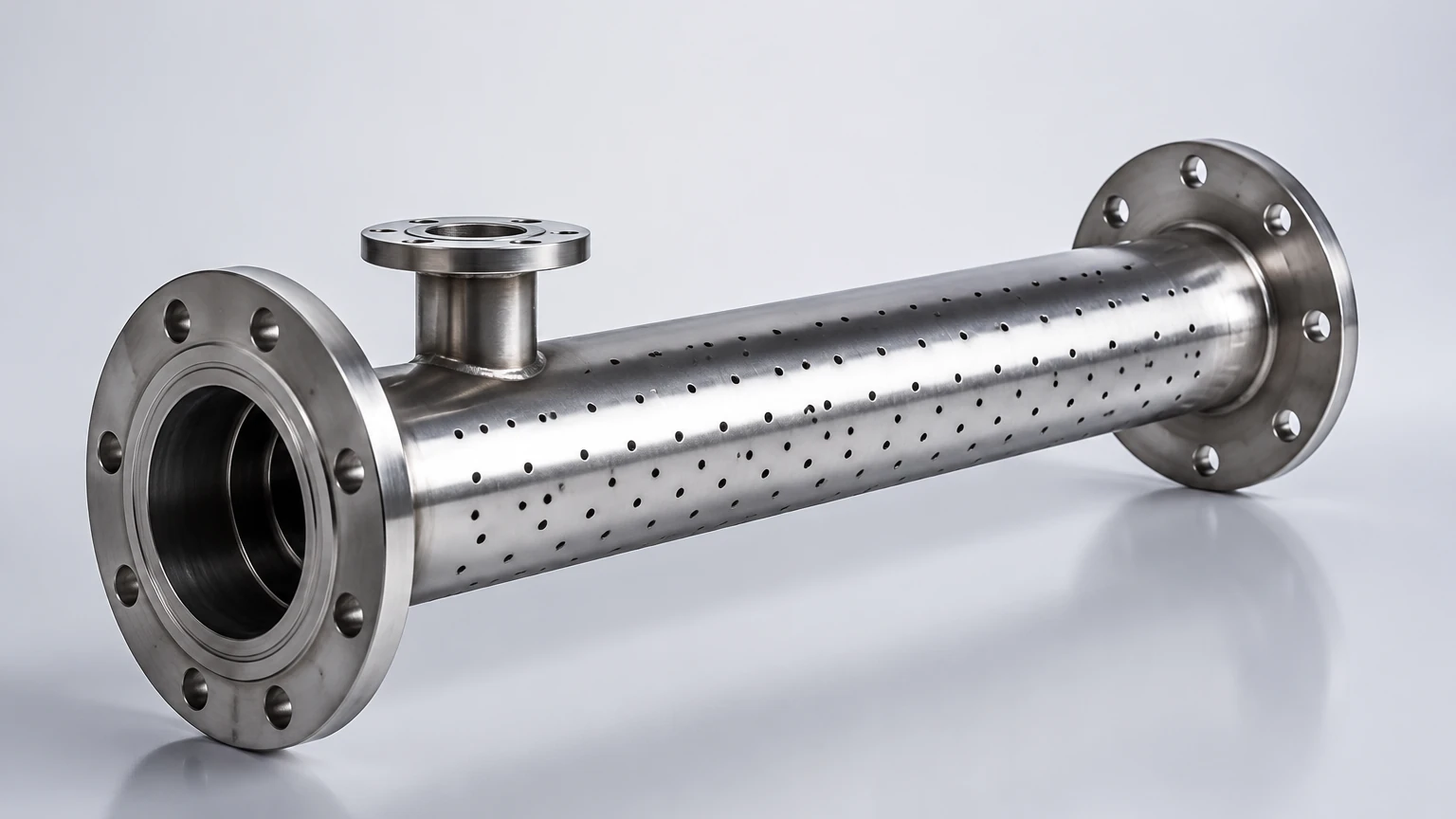
Steam Sparger Pipe
In industrial processing, the efficient transfer of thermal energy and the precise introduction of gases into liquids are critical for maintaining product quality and operational throughput. A steam sparger pipe is a specialized component designed for direct steam injection (DSI) into a process liquid. Unlike indirect heating methods, such as heat exchangers, a steam sparger pipe introduces steam directly into the fluid, providing rapid heating, agitation, and, in some cases, chemical reaction enhancement.
For engineers and procurement professionals, selecting the correct steam sparger pipe involves understanding the fluid dynamics of steam diffusion, the material science of corrosion resistance, and the mechanical requirements of high-pressure industrial environments. Kaifil, as a manufacturer of precision stainless steel filtration and diffusion components, provides the technical expertise necessary to design and implement these systems across various sectors, including chemical processing, food and beverage, and pharmaceutical manufacturing.
The Engineering Principles of Direct Steam Injection
The primary function of a steam sparger pipe is to maximize the surface area contact between the steam and the process liquid. When steam is injected into a cooler liquid, it undergoes a phase change, collapsing from a gas to a liquid. This process releases latent heat, which is the primary driver of temperature increase in the vessel.
If the steam is introduced through a single large opening, it forms large bubbles that rise quickly to the surface. This leads to "steam plume" formation, where the steam does not fully condense before reaching the surface, resulting in energy loss and potential vibration issues known as steam hammer. A precision-engineered steam sparger pipe utilizes porous media or strategically placed micro-apertures to break the steam into millions of tiny bubbles.
Smaller bubbles significantly increase the surface-area-to-volume ratio. This ensures that the steam condenses almost instantaneously within the liquid, leading to 100% thermal efficiency and a much quieter, more stable operation. In applications requiring gas stripping or aeration, the same principle applies: smaller bubbles provide more opportunities for mass transfer between the gas and liquid phases.
Material Selection and Durability
Industrial steam systems operate under demanding conditions characterized by high temperatures, fluctuating pressures, and often corrosive process fluids. Therefore, the material of construction for a steam sparger pipe is a primary consideration for long-term reliability.
Stainless Steel Alloys
Stainless steel is the industry standard for sparger construction due to its mechanical strength and resistance to oxidation.
- Grade 304/304L: Suitable for general-purpose applications where corrosion risk is low, such as heating water or non-acidic food products.
- Grade 316/316L: The preferred choice for chemical and pharmaceutical applications. The addition of molybdenum provides enhanced resistance to pitting and crevice corrosion, particularly in environments containing chlorides.
Sintered Metal Media
Kaifil specializes in sintered metal filtration and diffusion components. In a steam sparger pipe assembly, the use of sintered porous stainless steel allows for much finer bubble distribution than traditional drilled pipes. Sintered media are created by fusing metal powders or fibers without melting them, resulting in a robust, porous structure with a defined pore size. This material can withstand the thermal shock associated with rapid steam injection and is easily cleaned using standard industrial protocols.
Design Considerations for Industrial Efficiency
When specifying a steam sparger pipe, several engineering variables must be calculated to ensure the system meets the process requirements without causing mechanical fatigue or process instability.
1. Pressure Drop ($ΔP$)
The pressure of the incoming steam must be high enough to overcome both the hydrostatic pressure of the liquid in the tank and the resistance (pressure drop) of the sparger media itself. An incorrectly sized sparger can lead to insufficient steam flow or, conversely, excessive velocity that erodes the sparger material over time.
2. Steam Velocity and Noise Reduction
High-velocity steam entering a liquid can create significant noise and vibration. This is often caused by the rapid collapse of large steam bubbles, a phenomenon similar to cavitation. By using a steam sparger pipe with a high density of small pores, the steam velocity at each individual exit point is minimized, which significantly dampens the acoustic energy and protects the structural integrity of the tank and piping.
3. Uniform Distribution
In large mixing tanks or reactors, ensuring a uniform temperature gradient is essential. The layout of the steam sparger pipe—whether it is a single lance, a ring configuration, or a complex manifold—must be designed based on the tank geometry and the viscosity of the fluid. For highly viscous fluids, more aggressive sparging or integration with mechanical agitators may be required to prevent localized overheating.
Applications Across Key Industries
The versatility of the steam sparger pipe makes it a staple in various industrial processes. Each industry has unique requirements regarding sanitation, precision, and chemical compatibility.
Food and Beverage
In the food industry, steam sparging is used for blanching, cooking, and the sterilization of large batches of product. Because the steam comes into direct contact with the food, the steam must be "culinary grade," and the sparger pipe must be designed to sanitary standards. This includes using 316L stainless steel and ensuring the design is free of "dead zones" where bacteria could proliferate.
Chemical Processing
Chemical reactors often use steam spargers to maintain specific reaction temperatures or to strip volatile organic compounds (VOCs) from a liquid. In these environments, the sparger must be resistant to a wide range of pH levels and chemical solvents. The durability of sintered metal spargers is particularly valued here, as they can withstand aggressive cleaning cycles and high-pressure differentials.
Pharmaceutical and Biotech
In bioreactors, steam sparging is frequently used during the Sterilization-In-Place (SIP) process. The sparger must deliver steam evenly to ensure every internal surface of the vessel reaches the required sterilization temperature. Precision in pore size is critical here to ensure that the sparger does not become a source of contamination and can be fully validated for cleanability.
Maintenance, Cleaning, and Replacement Cycles
Like any industrial component, a steam sparger pipe requires regular inspection and maintenance to perform at peak efficiency. The primary challenge in sparger maintenance is "blinding" or clogging. This occurs when particulates from the process liquid or scale from the steam line lodge in the pores of the sparger.
Cleaning Protocols
- Chemical Cleaning: Circulating a cleaning agent (CIP) through the system can dissolve organic or inorganic deposits.
- Ultrasonic Cleaning: For removable sparger elements, ultrasonic baths are highly effective at dislodging trapped particles from deep within the sintered metal matrix.
- Backpulsing: In some systems, a brief pulse of high-pressure gas or liquid in the reverse direction can clear surface accumulation.
Identifying the Need for Replacement
Engineers should monitor the pressure drop across the sparger. A steady increase in $ΔP$ over time, despite regular cleaning, indicates permanent fouling or scale buildup. Additionally, if the time required to reach the target temperature in a vessel increases, it may suggest that the sparger's efficiency has been compromised. Timely replacement of the sparger element is essential to prevent increased energy costs and production delays.
Customization and OEM Solutions
Standard off-the-shelf sparging solutions rarely meet the specific needs of complex industrial setups. Customization is often required to match the specific flow rates, pipe diameters, and mounting requirements of an existing system.
Kaifil provides comprehensive OEM support for the development of custom steam sparger pipes. This includes selecting the appropriate micron rating for sintered elements, designing the manifold geometry, and ensuring the assembly meets relevant industrial standards. By working closely with a manufacturer that understands the nuances of metal filtration and diffusion, engineering teams can optimize their thermal management processes and reduce the total cost of ownership.
When evaluating a provider for filtration and diffusion components, it is important to consider their ability to provide technical documentation and material certifications. For more information on customized filtration and diffusion components, you can Review product options and application support to see how precision engineering can improve your process efficiency.
Conclusion
The steam sparger pipe is a critical, yet often overlooked, component in the industrial thermal management toolkit. By moving beyond simple drilled pipes to precision-engineered sintered metal diffusion systems, operations can achieve higher energy efficiency, lower noise levels, and better product consistency. Whether the goal is rapid heating in a food processing vat or precise temperature control in a chemical reactor, the selection of the right materials and design parameters is the foundation of a successful installation. Understanding the relationship between bubble size, pressure dynamics, and material durability allows engineers to specify sparging solutions that deliver long-term performance in the most demanding environments.
