


Puppet Foam
In the landscape of industrial materials and filtration media, "puppet foam"—technically known as reticulated polyurethane foam—occupies a unique position. While its name originates from its widespread use in the animatronics and theatrical industries due to its exceptional flexibility and structural memory, its engineering properties make it a staple in technical filtration applications. For engineers and procurement specialists, understanding the transition from flexible polymer foams to high-performance stainless steel filtration is essential for optimizing system longevity and process efficiency.
This guide examines the technical characteristics of reticulated foam, its role in industrial processes, and the critical factors that lead organizations to upgrade to precision metal filtration solutions available through the Kaifil Main Page.
Understanding the Engineering of Puppet Foam
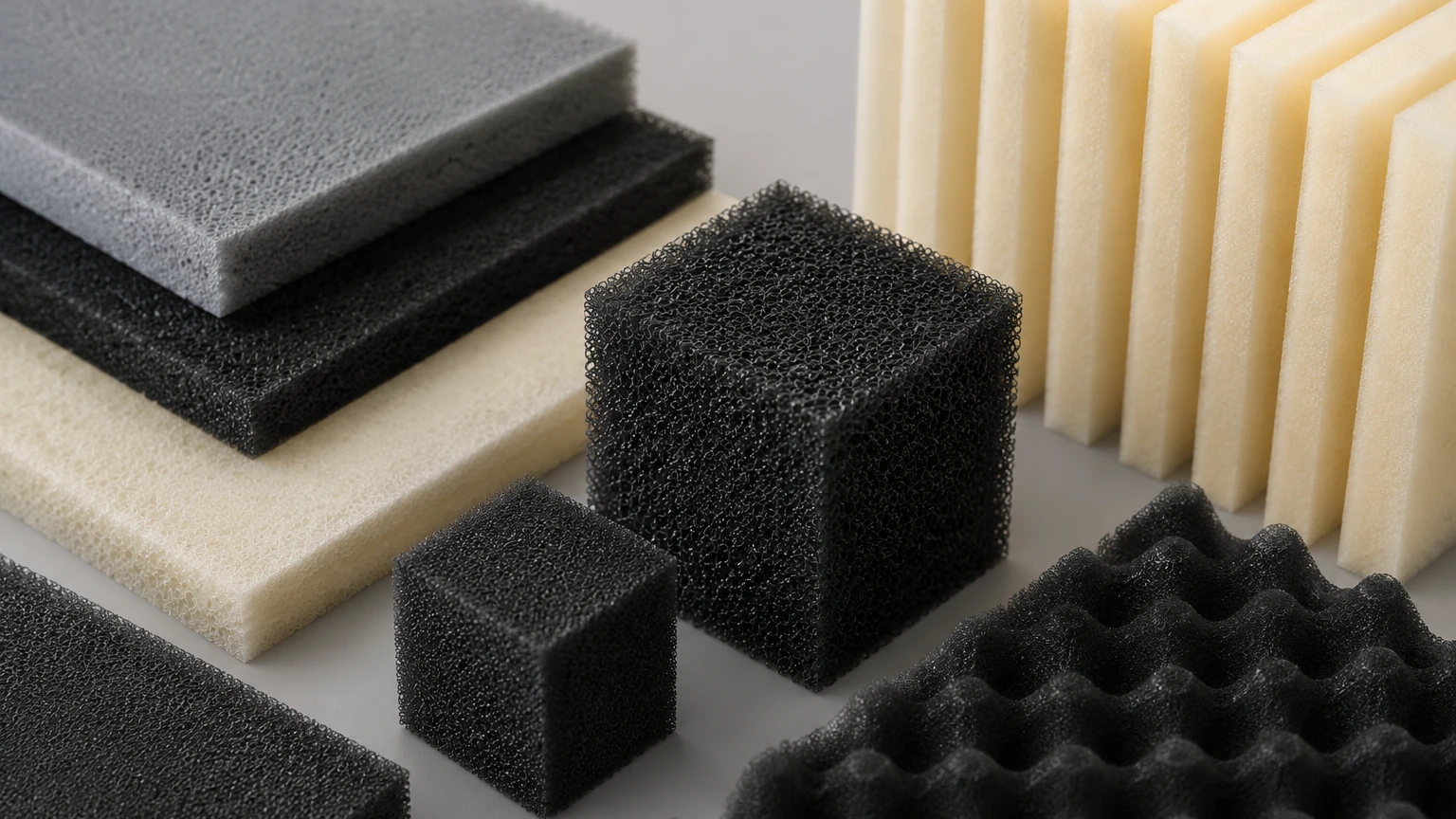
Puppet foam is a specialized type of open-cell foam. Unlike standard foams used in packaging or furniture, which have a mix of open and closed cells, reticulated foam undergoes a process called "quenching" or "zapping." During manufacturing, a standard foam block is placed in a vacuum chamber filled with an explosive gas mixture. When ignited, the flame front travels through the foam, thermal-chemically removing the cell windows (the thin membranes between the struts) while leaving the structural skeleton intact.
Key Material Properties
1. High Porosity: The reticulation process results in a material that is typically 95% to 98% void space. This allows for extremely low pressure drops in air and fluid handling systems.
2. Surface Area: Despite its high void volume, the intricate web of struts provides a significant surface area for depth filtration and impingement.
3. Controlled Pore Size: Industrial foam is measured in PPI (Pores Per Inch). Standard grades range from 10 PPI (very coarse) to 100 PPI (very fine). This predictability allows engineers to specify the exact level of particulate capture required for a pre-filtration stage.
4. Flexibility and Compression Set: The material can be compressed into irregular housings and will return to its original shape, a property highly valued in both puppet construction and industrial gasket-filtration hybrids.
Industrial Applications of Reticulated Media
While the term "puppet foam" highlights its aesthetic and structural versatility, the industrial utility of this media spans several critical sectors. In these environments, the foam serves as a sacrificial or primary barrier against contaminants.
HVAC and Air Handling
In air conditioning and ventilation systems, reticulated foam serves as a permanent, washable filter media. It is particularly effective at capturing large particulates, such as dust and lint, before they can reach more sensitive downstream components like HEPA filters or heat exchanger coils.
Acoustic Damping and Sound Absorption
The open-cell structure is highly effective at dissipating sound energy. In industrial machinery enclosures, layers of reticulated foam are used to reduce decibel levels, protecting workers and ensuring compliance with noise regulation standards.
Fluid Management and Reservoir Baffling
In hydraulic systems and fuel tanks, foam is used to prevent "sloshing" and to suppress explosions. The foam breaks up the surface tension and kinetic energy of the fluid without significantly displacing volume or restricting flow. However, in these demanding environments, the chemical compatibility of the polymer must be strictly monitored.
The Limitations of Polymer Foams in Demanding Environments
Despite the versatility of puppet foam, it faces significant engineering hurdles when applied to heavy industrial or high-precision processes. Engineers must evaluate these limitations when deciding whether a polymer-based solution is sufficient or if a transition to stainless steel is required.
Thermal Degradation
Most polyurethane-based foams have a maximum operating temperature of approximately 90°C to 120°C (194°F to 248°F). Beyond this point, the polymer struts lose structural integrity, leading to pore collapse or, in extreme cases, melting. For steam filtration or high-temperature chemical processing, polymer foams are fundamentally unsuitable.
Chemical Incompatibility
Polyurethane is susceptible to degradation when exposed to strong acids, bases, or certain organic solvents. Over time, the chemical environment can cause the foam to become brittle and crumble—a phenomenon known as "shedding." In pharmaceutical or food and beverage applications, media shedding is a critical failure mode that can contaminate the entire production batch.
Structural Rigidity and Pressure Limits
Because puppet foam is inherently flexible, it cannot withstand high differential pressures. Under heavy load, the foam will compress, effectively closing the pores and causing a rapid spike in pressure drop. This lack of structural rigidity limits its use to low-pressure air or gravity-fed liquid systems.
Transitioning to Stainless Steel Filtration Solutions
When a process outgrows the capabilities of reticulated foam, stainless steel wire mesh and sintered metal filters provide the necessary durability and precision. Kaifil specializes in manufacturing these high-performance alternatives that mirror the benefits of foam (high porosity and depth filtration) while eliminating its weaknesses.
Advantages of Stainless Steel Media
* Extreme Temperature Resistance: Stainless steel filters, such as those found on the Kaifil Main Page, can operate in environments exceeding 500°C, making them ideal for exhaust gas filtration and polymer melt applications.
* Mechanical Integrity: Unlike foam, metal mesh does not compress under pressure. This ensures a consistent micron rating and flow rate throughout the service life of the filter.
* Cleanability and Reusability: While foam can be washed, it eventually degrades. Stainless steel filters can be cleaned via ultrasonic baths, backwashing, or chemical cleaning, offering a much lower total cost of ownership (TCO) over time.
* Zero Media Migration: Precision-woven wire mesh and sintered metal components are engineered to ensure that no particles of the filter media itself enter the process stream, meeting the stringent requirements of the pharmaceutical and food industries.
Engineering Considerations for Filter Selection
When selecting between a flexible media like puppet foam and a rigid media like stainless steel, engineers should confirm several key parameters to ensure the chosen solution meets the application's demands.
Micron Rating vs. PPI
In the foam industry, PPI is the standard metric, but it is a nominal measurement. For precision industrial applications, engineers should look for "Absolute Micron Ratings." Stainless steel wire mesh provides a definitive geometric pore size, ensuring that 100% of particles above a certain size are captured.
Flow Velocity and Pressure Drop
Calculations must account for the viscosity of the fluid and the desired flow rate. While foam offers a low initial pressure drop, the accumulation of contaminants in a depth-loading foam can be unpredictable. Stainless steel mesh offers a more linear and predictable pressure drop curve, allowing for better system monitoring and automated maintenance alerts.
Customization and Housing Integration
One of the primary reasons designers choose puppet foam is the ease of cutting it to shape. However, modern manufacturing allows for the same level of customization in metal. Kaifil provides OEM services to produce custom-shaped stainless steel filter cartridges, discs, and cylinders that fit existing housings perfectly, providing a seamless upgrade path from foam to metal.
Total Cost of Ownership (TCO) Analysis
While the initial purchase price of reticulated foam is lower than that of a custom-engineered stainless steel filter, the TCO often favors the metal solution in B2B environments.
1. Replacement Frequency: Foam filters often require frequent replacement due to clogging or material fatigue. A single stainless steel filter can last for years with proper maintenance.
2. Disposal Costs: Spent polymer filters often end up in landfills, especially if they are contaminated with industrial oils. Reusable metal filters reduce the waste stream and align with corporate sustainability goals.
3. Downtime: Every time a filter is changed, the process must be halted. Reducing the frequency of these interventions through the use of durable metal media significantly increases overall equipment effectiveness (OEE).
Conclusion
Whether an application requires the lightweight, flexible properties of puppet foam for pre-filtration and acoustic damping, or the rugged, high-precision performance of stainless steel for critical process stages, understanding the material science is key. For organizations looking to optimize their filtration systems, move away from disposable media, or develop custom OEM components, selecting a partner with deep technical expertise is the first step.
Kaifil provides a comprehensive range of stainless steel filtration solutions designed to withstand the most demanding industrial environments. From material selection and filtration accuracy to customized designs, our engineering team supports global customers in achieving reliable and cost-effective performance. To explore our full range of products and technical capabilities, visit the Main Page and consult with our specialists on your specific application requirements.
