


Heavy Duty Stainless Steel Woven Wire Mesh Grille: Engineering and Selection Guide
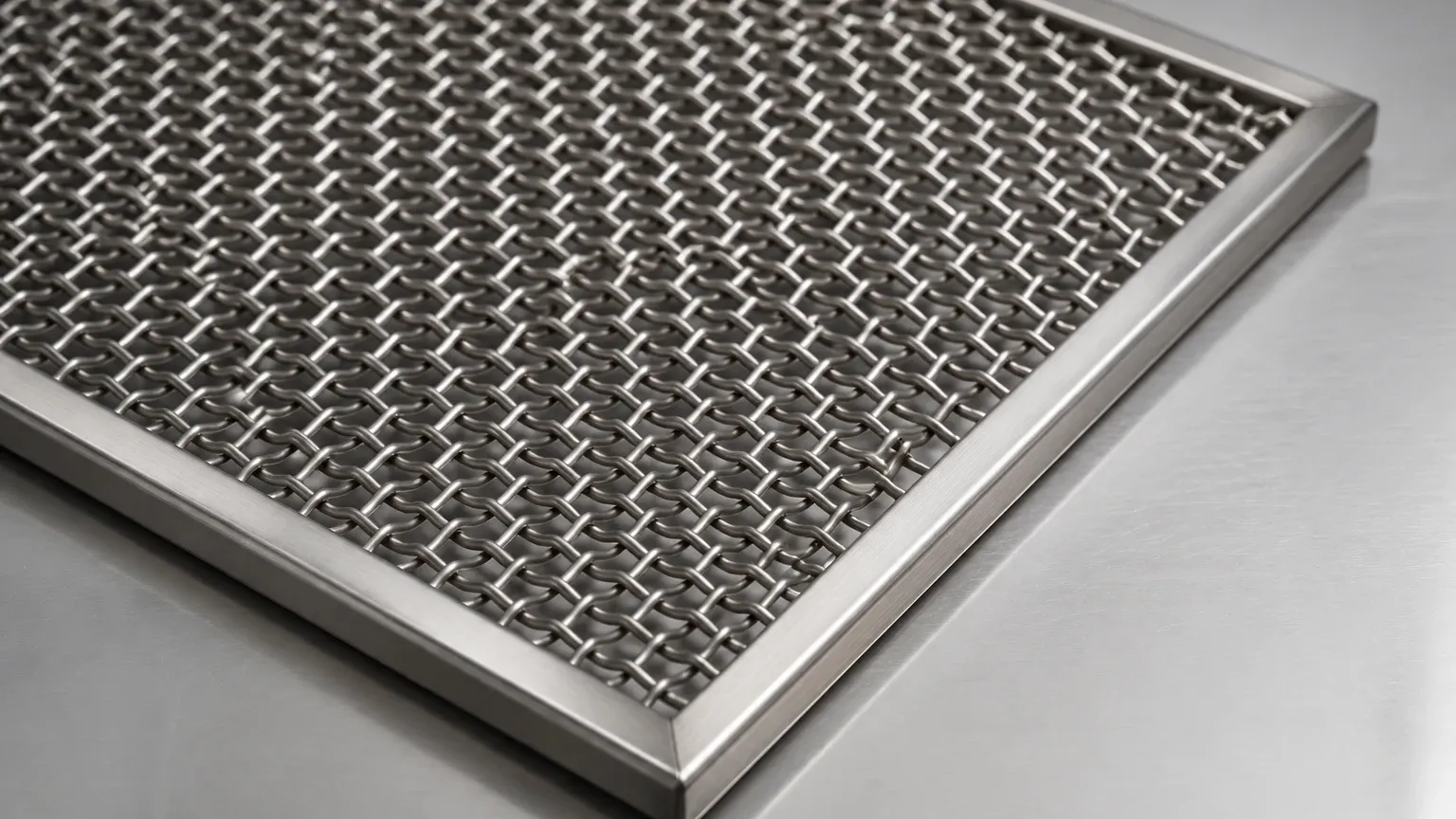
In industrial environments where mechanical stress, high-pressure differentials, and corrosive elements are constant factors, the selection of filtration and separation media becomes a critical engineering decision. The heavy duty stainless steel woven wire mesh grille represents a specialized category of industrial components designed to bridge the gap between fine filtration and structural reinforcement. Unlike standard light-duty meshes used for simple screening, heavy-duty variants are engineered for longevity and structural integrity under demanding operational conditions.
For engineers and procurement professionals, understanding the technical nuances of Woven Wire Mesh is essential for optimizing system performance and reducing the total cost of ownership. This guide examines the material properties, weave structures, and selection criteria necessary for implementing heavy-duty mesh solutions in industrial applications.
The Fundamentals of Heavy-Duty Mesh Construction
A heavy-duty stainless steel woven wire mesh grille is defined by its wire-to-opening ratio. While standard meshes prioritize high open area for maximum flow, heavy-duty versions utilize larger wire diameters relative to the aperture size. This configuration provides the mechanical strength required to withstand physical impact, high-viscosity fluids, and significant pressure drops without deforming.
Material Selection: SS304 vs. SS316L
The choice of alloy is the first step in ensuring the durability of a mesh grille. Stainless steel is the industry standard due to its inherent resistance to oxidation and mechanical wear.
* Stainless Steel 304: This is the most common grade used for general industrial applications. It offers excellent strength and good corrosion resistance in most atmospheric conditions and freshwater environments. It is frequently used for safety guards, intake screens, and basic filtration where chemical exposure is limited.
* Stainless Steel 316L: For more aggressive environments, 316L is the preferred choice. The addition of molybdenum provides superior resistance to chlorides and pitting corrosion. In chemical processing, marine applications, and pharmaceutical manufacturing, 316L ensures that the heavy-duty stainless steel woven wire mesh grille does not succumb to chemical degradation, which could lead to structural failure and process contamination.
Technical Specifications and Weave Variations
The performance of a heavy-duty mesh is dictated by how the wires are interlaced. Different weave patterns offer varying balances of strength, filtration accuracy, and flow capacity.
Plain Weave and Pre-Crimped Structures
In a plain weave, each warp wire passes alternately over and under each weft wire. For heavy-duty applications, these wires are often "pre-crimped" before weaving. Pre-crimping provides additional stability, ensuring that the wires remain locked in place even when subjected to vibration or heavy loads. This is particularly important for grilles used in vibratory separators or as protective barriers in mining and aggregate processing.
Twill Weave
Twill weaving involves passing the wire over and under two successive wires. This allows for the use of heavier wire diameters than a plain weave would permit for the same mesh count. It is often used when a high degree of mechanical strength is required alongside a relatively fine filtration rating.
Dutch Weave (Plain and Twill)
Dutch weaves utilize different diameters for the warp and weft wires. This results in a much denser, stronger mesh with smaller, triangular openings. While often used for fine filtration, "Heavy Dutch" weaves are utilized in high-pressure hydraulic systems and fuel filtration where the mesh must act as a rigid, self-supporting element that can withstand extreme back-pressure during cleaning cycles.
Engineering Considerations for Load and Flow
When specifying a heavy-duty stainless steel woven wire mesh grille, engineers must balance two competing factors: mechanical strength and hydraulic performance.
Load-Bearing Capacity
The ability of a mesh to resist bulging or tearing under pressure is a function of the wire diameter and the unsupported span of the mesh. In many industrial housings, the mesh grille is supported by a perforated metal core or a structural frame. Kaifil specializes in providing customized filtration solutions where the mesh is integrated into a reinforced assembly, ensuring that the component can handle the specific PSI (pounds per square inch) requirements of the application.
Effective Open Area (EOA)
The open area percentage determines the flow rate and pressure drop across the grille. A heavy-duty mesh naturally has a lower open area than a light-duty mesh due to the thicker wires. Engineers must calculate the EOA to ensure that the filtration system does not become a bottleneck in the process. If a high flow rate is required alongside high strength, a larger overall surface area (such as a pleated design or a larger diameter cartridge) may be necessary.
Key Applications for Heavy-Duty Mesh Grilles
Because of their versatility and durability, these components are found across a wide range of sectors:
1. Chemical and Petrochemical Processing: Used as catalyst support grids, reactor internals, and basket strainers for aggressive chemical streams.
2. Food and Beverage Industry: Heavy-duty grilles serve as durable screening media in grain processing, sugar refining, and as protective shields in high-temperature ovens.
3. Water Treatment: Large-scale intake screens utilize heavy-duty woven mesh to prevent debris from entering pumps and turbines, requiring high resistance to both impact and aquatic corrosion.
4. Oil and Gas: In downhole applications and sand control, the mesh must withstand immense geological pressure while maintaining precise aperture sizes.
5. Industrial Machinery: Used as safety guards and ventilation grilles where the material must resist physical damage while allowing for airflow or heat dissipation.
Customization and OEM Capabilities
Off-the-shelf mesh often fails to meet the precise requirements of specialized industrial equipment. Customization is where a manufacturer like Kaifil provides significant value. The ability to specify exact mesh counts, wire diameters, and overall dimensions allows for a perfect fit within existing hardware.
Framing and Finishing
A heavy-duty stainless steel woven wire mesh grille is rarely used as a raw piece of cloth. It usually requires specialized finishing:
* Framing: Adding a U-binding or a welded flange provides a secure mounting point and prevents the edges from fraying.
* Surface Treatments: Passivation can further enhance corrosion resistance, while electropolishing is often required in food and pharmaceutical applications to ensure a smooth, crevice-free surface that is easy to sanitize.
* Sintering: For the most extreme environments, multiple layers of mesh can be sintered (diffusion-bonded) together. This creates a monolithic structure that combines the filtration accuracy of fine mesh with the immense strength of heavy-duty support layers.
Evaluation Criteria for Purchasing Teams
Before finalizing a purchase order for heavy-duty mesh components, purchasing teams should confirm the following technical details with the manufacturer:
1. Mesh Count and Wire Diameter: Ensure both are specified. A "10 mesh" can be made with many different wire sizes, each resulting in a different strength and open area.
2. Tolerances: What are the allowable variations in aperture size? For precision filtration, tight tolerances are non-negotiable.
3. Material Certification: Request Mill Test Reports (MTRs) to verify that the stainless steel meets the chemical composition requirements for 304 or 316L.
4. Pressure Ratings: If the mesh is being used as a filter element, confirm the maximum allowable differential pressure (collapse pressure).
5. Cleaning and Maintenance: Understand the recommended cleaning procedures. Heavy-duty meshes are often designed for reuse; knowing whether they can be ultrasonically cleaned or back-flushed is vital for calculating the lifecycle cost.
Total Cost of Ownership (TCO)
While a heavy-duty stainless steel woven wire mesh grille may have a higher initial purchase price than synthetic or light-duty alternatives, the TCO is often significantly lower. The durability of stainless steel reduces the frequency of replacements and minimizes downtime caused by component failure. In high-stakes industries like pharmaceutical or chemical processing, the cost of a single hour of unplanned downtime far exceeds the investment in a high-quality, custom-engineered filtration component.
Conclusion
The heavy duty stainless steel woven wire mesh grille is more than just a screening tool; it is a critical piece of industrial infrastructure. By selecting the correct alloy, weave, and reinforcement, engineers can ensure that their systems operate efficiently and safely under the most strenuous conditions.
As a professional manufacturer, Kaifil provides the technical expertise and manufacturing precision required to deliver these solutions. Whether you require a specific mesh count for a chemical reactor or a reinforced panel for water treatment, focusing on factual engineering data and material integrity is the key to a successful implementation. For detailed specifications on plain, twill, and dutch weaves in various grades, engineers are encouraged to Review product options and application support to find the optimal balance of performance and durability for their specific project needs.
Download Heavy Duty Stainless Steel Woven Wire Mesh Grille as a PDF
