


Auto Filtration
In the landscape of modern industrial processing, the transition from manual to auto filtration represents a significant shift toward operational efficiency and process stability. Industrial filtration is no longer merely a peripheral utility but a core component of system integrity, particularly in sectors where downtime is prohibitively expensive. Automated systems, powered by precision-engineered stainless steel components, allow for continuous operation by removing accumulated solids without the need for manual intervention or flow interruption. For engineers and facility managers, understanding the technical nuances of these systems—from the mechanics of self-cleaning cycles to the material science of the filter media—is essential for optimizing production output and minimizing the total cost of ownership.
Principles of Industrial Auto Filtration
Auto filtration refers to a system's ability to monitor its own performance and initiate a cleaning cycle once specific parameters are met. The primary objective is to maintain a consistent flow rate and pressure differential across the filter media. Unlike manual systems, which require a technician to stop the process, disassemble the housing, and clean or replace the filter element, automated systems utilize mechanical or hydraulic force to clear the filtration surface while the process remains online.
There are several primary mechanisms used in industrial auto filtration:
1. Backwashing (Back-flushing): This method involves reversing the flow of the filtrate or using an external clean fluid to blow particles off the surface of the filter mesh. This is highly effective for removing non-deformable solids from wire mesh filters.
2. Mechanical Scraping: In applications involving high-viscosity fluids or sticky contaminants, a mechanical scraper or brush moves across the surface of a stainless steel filter element, physically dislodging the cake and pushing it toward a discharge valve.
3. Suction Scanning: A specialized nozzle moves across the interior of a cylindrical filter screen, creating a localized high-velocity vacuum that pulls debris off the mesh and out through a waste line. This method uses significantly less flush water than traditional backwashing.
By automating these processes, plants can ensure that the filtration efficiency remains within a narrow, predictable range, preventing the sudden pressure spikes that often lead to filter bypass or media failure.
Material Science: The Role of Stainless Steel in Automated Systems
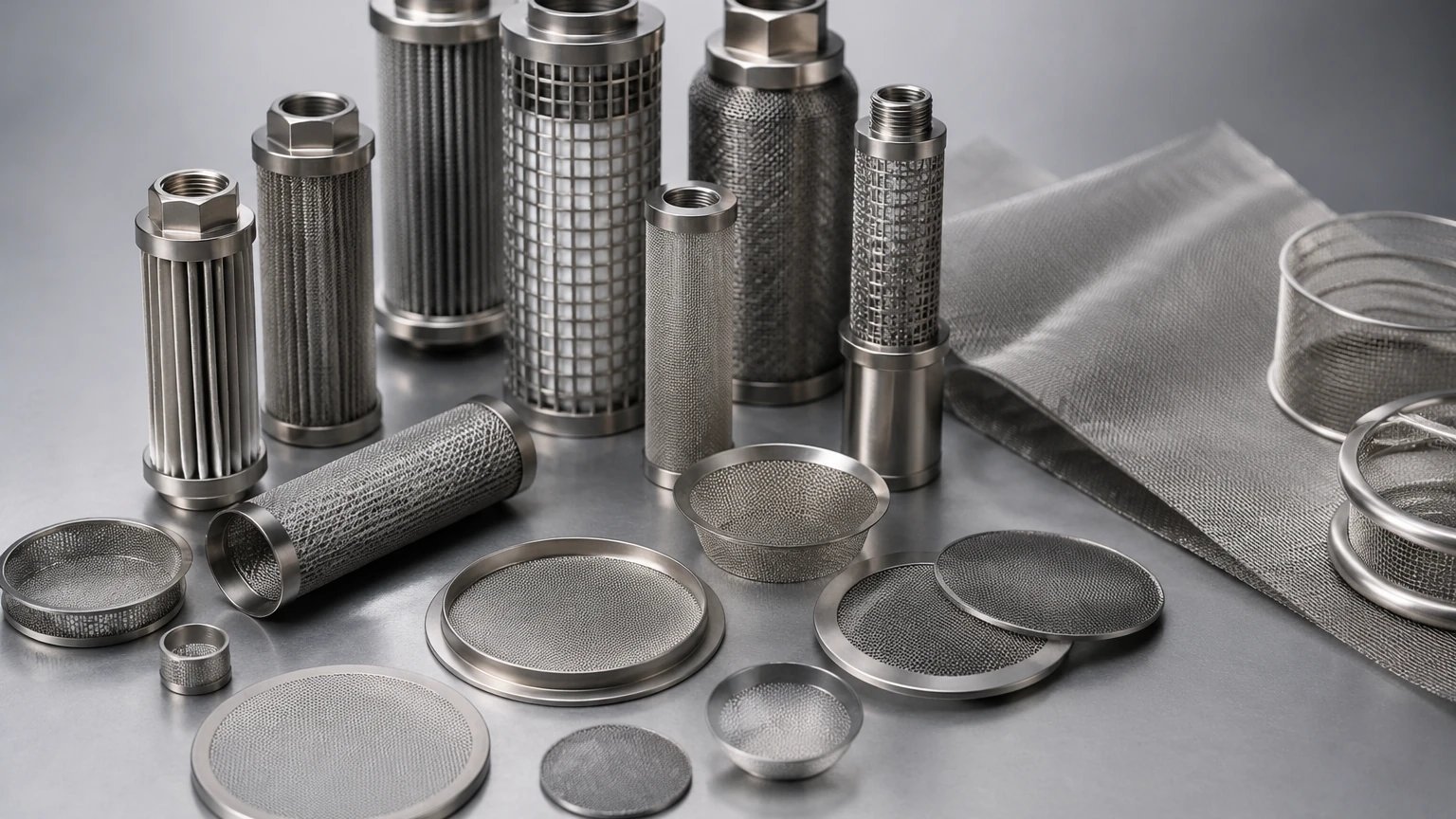
The heart of any auto filtration system is the filter media. Because these systems are designed for high-frequency cleaning cycles and long-term deployment, the materials used must exhibit exceptional mechanical strength and chemical resistance. Stainless steel, particularly grades 304, 316L, and specialized alloys like Duplex or Hastelloy, is the industry standard for these applications.
Stainless steel wire mesh and sintered metal components are preferred for several reasons:
* Structural Integrity: During a backwash or scraping cycle, the filter media is subjected to reverse pressure or mechanical friction. Stainless steel maintains its pore geometry under these stresses, whereas synthetic fibers or paper media would deform or tear.
* Thermal Stability: Industrial processes in chemical refining or steam filtration require media that can withstand temperatures exceeding 200°C. Stainless steel remains stable and does not leach contaminants into the process stream at high temperatures.
* Corrosion Resistance: In water treatment or pharmaceutical applications, the media must resist oxidation and chemical attack. Grade 316L, with its molybdenum content, provides superior resistance to chlorides and acidic environments.
Kaifil specializes in the manufacture of these high-performance components, ensuring that the mesh weave and cartridge structure are optimized for the specific mechanical demands of automated cleaning. For technical teams evaluating their current hardware, reviewing the Main Page can provide insights into the various configurations of stainless steel cartridges and mesh filters available for integration into automated housings.
Engineering Considerations: Micron Rating and Flow Dynamics
Selecting the correct auto filtration component requires a deep dive into the fluid dynamics of the specific application. Engineers must balance the required filtration accuracy (micron rating) with the allowable pressure drop across the system.
Filtration Accuracy and Pore Geometry
In automated systems, the choice between square weave mesh, Dutch weave mesh, or sintered metal depends on the nature of the contaminants. For instance, rigid, spherical particles are easily removed from a surface-loading square weave mesh. However, fibrous or irregular contaminants may require a more robust sintered structure to prevent "particle pinning," where debris becomes wedged so deeply in the pores that the cleaning mechanism cannot remove it.
Pressure Drop (Delta P)
The differential pressure across a filter is a critical metric. In an automated system, the "trigger" for a cleaning cycle is usually a pre-set Delta P. If the filter media is undersized for the flow rate, the system will enter cleaning cycles too frequently, leading to excessive wear on moving parts and increased waste of flush fluid. Engineers must calculate the effective filtration area (EFA) to ensure that the initial clean pressure drop is low enough to allow for a productive run time between cycles.
Flow Velocity
High flow velocities can drive contaminants deeper into the mesh, making them harder to dislodge. Conversely, velocities that are too low may allow solids to settle in the housing rather than on the filter surface. Optimizing the internal geometry of the filter cartridge is essential for maintaining a uniform flow distribution across the entire surface of the media.
Integration and Customization: OEM Solutions for Specific Industries
Generic filtration solutions rarely meet the stringent requirements of specialized industrial sectors. Auto filtration systems must be tailored to the specific environment in which they operate. This is where OEM (Original Equipment Manufacturer) capabilities become vital. Customization allows for the adjustment of flange types, housing dimensions, and, most importantly, the specific characteristics of the filter element.
Chemical and Petrochemical Processing
In these environments, filters must handle aggressive solvents and high pressures. Custom-designed stainless steel filter cartridges with reinforced internal cores prevent collapse during high-differential pressure events. The ability to specify alloy types ensures compatibility with the chemical profile of the process fluid.
Food and Beverage Industry
Filtration in the food industry demands sanitary designs. This includes smooth surface finishes (electropolishing) to prevent bacterial growth and the use of FDA-compliant materials. Automated systems in this sector often utilize "clean-in-place" (CIP) protocols, where the filter media must be compatible with caustic cleaning agents and high-temperature steam sterilization.
Pharmaceutical Manufacturing
Precision is the priority here. The filtration media must have a certified pore size distribution to ensure the removal of specific particulates or microorganisms. Custom metal filter components are often engineered to meet strict validation requirements, providing repeatable performance over thousands of cycles.
Evaluating Performance and Maintenance Cycles
While auto filtration significantly reduces the need for manual labor, it does not eliminate the need for maintenance. A robust engineering strategy includes a schedule for inspecting the mechanical components and the filter media itself.
Replacement Cycles:
The lifespan of a stainless steel filter element in an automated system is significantly longer than that of a disposable filter. However, factors such as abrasive wear (from hard particles) or fatigue (from repeated pressure pulses) will eventually necessitate replacement. Monitoring the "recovery pressure"—the pressure drop immediately after a cleaning cycle—is an excellent way to track the health of the media. If the recovery pressure begins to rise over time, it indicates that the media is becoming permanently fouled and may require ultrasonic cleaning or replacement.
Predictive Maintenance:
Modern automated systems often incorporate sensors that track the frequency and duration of cleaning cycles. An increase in cleaning frequency can signal a change in the upstream process, such as a spike in contaminant loading, or it may indicate that the filter media's surface is becoming compromised. By analyzing this data, engineers can perform maintenance during scheduled shutdowns rather than reacting to an unplanned failure.
Total Cost of Ownership: Manual vs. Auto Filtration
The decision to implement auto filtration is often driven by a Total Cost of Ownership (TCO) analysis. While the initial capital expenditure for an automated system and high-quality stainless steel components is higher than that of a manual bag or cartridge housing, the long-term savings are substantial.
1. Labor Costs: Manual filtration requires staff to monitor gauges, change filters, and clean housings. In large-scale operations, this can equate to hundreds of man-hours per year. Automation reallocates this labor to more productive tasks.
2. Consumable Waste: Disposable filters (polypropylene, paper, etc.) create a constant stream of waste. In many industries, used filters are considered hazardous waste, leading to high disposal fees. Stainless steel elements are cleanable and reusable, drastically reducing the environmental footprint and disposal costs.
3. Product Loss: Every time a manual filter housing is opened, there is a risk of product loss and potential contamination of the environment. Automated systems are closed loops, ensuring that the process fluid remains contained.
4. Downtime: The most significant cost is often the loss of production during filter changes. For a high-volume manufacturing line, even 30 minutes of downtime can result in thousands of dollars in lost revenue. Auto filtration keeps the line running 24/7.
For purchasing teams and engineers looking to justify the transition to automated systems, focusing on these four pillars of TCO provides a clear economic rationale for the investment. Detailed technical specifications and performance data for the underlying filter components can be explored on the Main Page, which serves as a resource for selecting the right hardware to support these cost-saving initiatives.
Conclusion
Auto filtration is a critical technology for any industrial operation seeking to modernize its fluid handling processes. By integrating durable stainless steel media with intelligent automation, facilities can achieve a level of consistency and efficiency that manual systems cannot match. The success of these systems depends on rigorous engineering—selecting the right materials, calculating flow dynamics accurately, and choosing components designed for the rigors of automated cleaning. As industries continue to push for higher productivity and lower environmental impact, the role of precision-engineered, self-cleaning filtration solutions will only continue to grow.
