


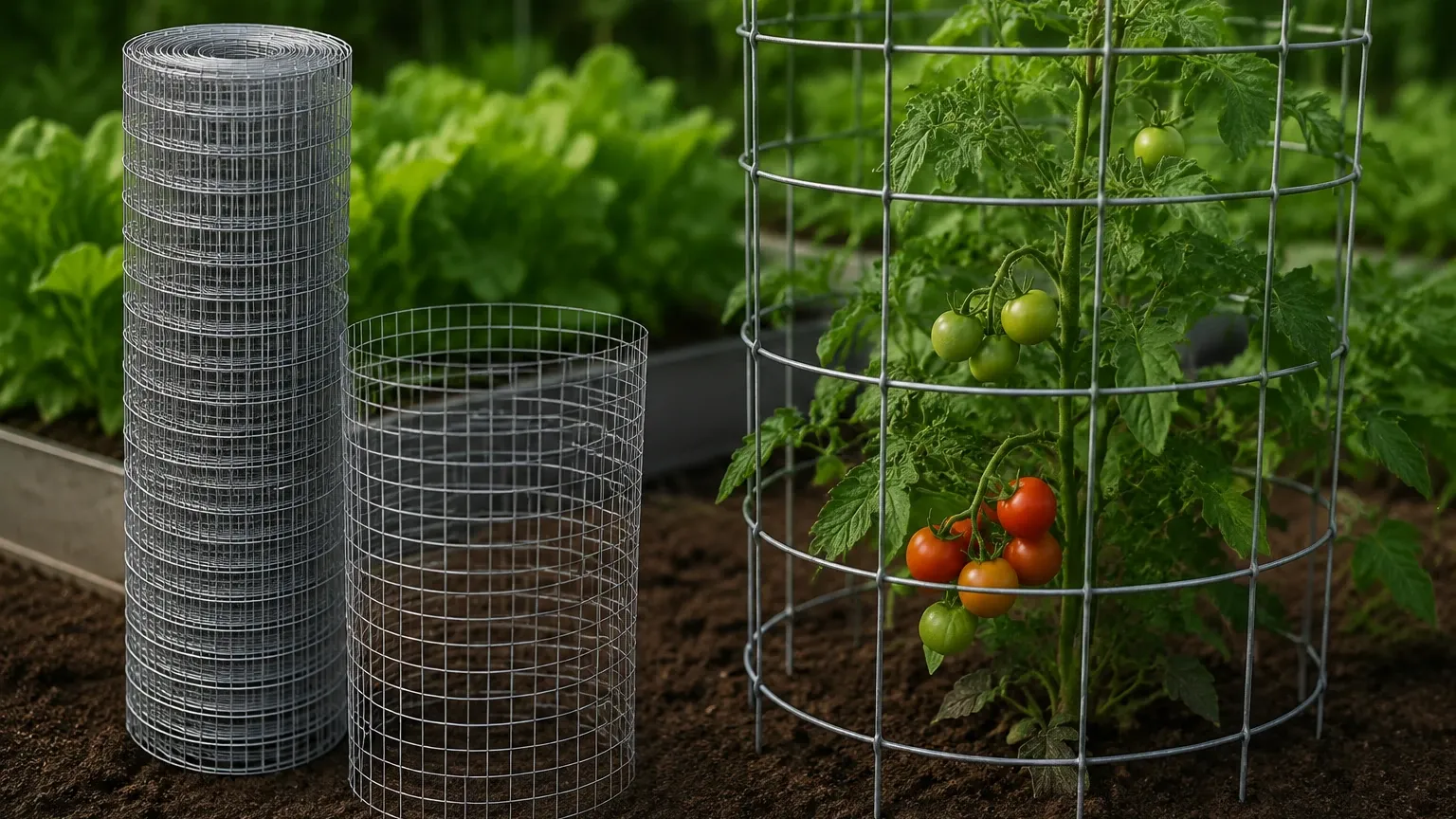
Graduated Mesh Galvanized Woven Wire for Trellis and Tomato Cage
In industrial horticulture and large-scale agricultural operations, the structural integrity of plant support systems is a critical factor in yield optimization and operational efficiency. Among the various materials available for these systems, graduated mesh galvanized woven wire has emerged as a specialized solution. While standard woven wire mesh is often associated with high-precision industrial filtration, its application in structural support—specifically for trellises and tomato cages—requires a deep understanding of material science, corrosion resistance, and mechanical loading.
For engineers and procurement professionals, selecting the right mesh involves more than just choosing a wire diameter. It requires an evaluation of the "graduated" design, the efficacy of the galvanization process, and the long-term performance of the weave under environmental stress. This guide examines the technical specifications and selection criteria for graduated mesh galvanized woven wire in professional agricultural environments.
Understanding the Graduated Mesh Configuration
The term "graduated mesh" refers to a specific design where the aperture (opening) size varies along the height of the roll or panel. Typically, the mesh openings are smaller and more frequent at the bottom, gradually increasing in size toward the top. This design is not merely aesthetic; it serves two primary engineering functions in a trellis or cage system:
1. Structural Load Distribution: The denser mesh at the base provides greater lateral stability and resistance to ground-level impacts. As the plant grows and its weight increases, the lower sections of the cage or trellis bear the cumulative load, necessitating the higher wire density found in graduated designs.
2. Biological Optimization: In tomato cultivation, the smaller lower apertures prevent rodents and small pests from reaching the base of the plant or the root zone. The larger upper apertures allow for easier manual or mechanical harvesting and provide sufficient space for heavy fruit-bearing branches to extend without being constricted by tight wire spacing.
When specifying Woven Wire Mesh for these applications, engineers must confirm the exact graduation pattern to ensure it aligns with the growth habits of the specific crop and the mechanical requirements of the support structure.
The Role of Galvanization in Outdoor Durability
Because trellis and tomato cage systems are exposed to irrigation, fertilizers, and varying weather conditions, corrosion resistance is the most significant factor affecting the total cost of ownership. Galvanized woven wire utilizes a zinc coating to protect the underlying steel from oxidation.
Hot-Dip vs. Electro-Galvanization
For B2B applications, it is essential to distinguish between hot-dip galvanized (HDG) and electro-galvanized wire. Hot-dip galvanization involves submerging the woven mesh into a bath of molten zinc, resulting in a thick, multi-layered alloy coating that is chemically bonded to the steel. This provides superior protection in high-moisture agricultural environments. Electro-galvanization, while providing a smoother finish, often lacks the coating thickness required for multi-season outdoor use.
Zinc Coating Weight
Engineers should specify the zinc coating weight (measured in g/m²). For industrial-grade graduated mesh galvanized woven wire for trellis and tomato cage applications, a higher coating class is recommended to withstand the acidic nature of some fertilizers and the abrasive contact of harvesting equipment.
Mechanical Properties and Weave Integrity
The strength of a tomato cage or trellis system is a function of the wire gauge and the weave type. Unlike welded wire, where the strength is concentrated at the weld points, woven wire mesh distributes mechanical stress across the entire fabric. This is particularly important for "graduated" designs where the spacing changes.
Wire Gauge and Tensile Strength
The wire diameter (often measured in BWG or SWG) must be balanced between structural rigidity and material cost. For large-scale tomato cages, a heavier gauge (e.g., 12 to 14 gauge) is typically used to prevent the cage from buckling under the weight of indeterminate tomato varieties, which can reach heights of over two meters and carry significant fruit weight.
Dimensional Stability
In a graduated weave, maintaining dimensional stability is a challenge. Technical professionals must ensure that the weaving process locks the wires into place to prevent "mesh migration." If the wires shift, the graduation pattern becomes inconsistent, compromising both the aesthetic of the trellis and its functional ability to support the plant.
Material Selection: Galvanized Steel vs. Stainless Steel
While galvanized steel is the industry standard for most agricultural trellises due to its cost-effectiveness, certain high-value crops or permanent installations may require the superior properties of stainless steel.
Stainless steel woven wire mesh, particularly in grades like 304 or 316L, offers near-permanent resistance to corrosion without the need for a sacrificial coating. In pharmaceutical-grade botanical cultivation or food-safe environments where zinc leaching is a concern, stainless steel becomes the preferred material. Kaifil provides extensive options for those requiring high-performance Woven Wire Mesh in various alloys, ensuring that the material selected matches the specific chemical and environmental exposures of the project.
Evaluation Criteria for Industrial Procurement
When sourcing graduated mesh galvanized woven wire for trellis and tomato cage projects, purchasing teams should evaluate suppliers based on several technical KPIs:
* Aperture Accuracy: Ensure the graduation steps are consistent across the entire production run. Variations in aperture size can lead to weak points in a large-scale trellis system.
* Edge Treatment: For tomato cages, the edges of the mesh should be finished (selvaged) or properly trimmed to prevent injury to workers and damage to the plants. Raw, sharp edges are a common risk in lower-quality woven products.
* Roll Flatness: In automated cage-forming processes, the flatness of the mesh roll is critical. "Memory" in the wire can cause the mesh to curl, complicating the manufacturing of uniform cages.
* Compliance with Standards: Verify that the galvanization and wire tensile strength meet international standards (such as ASTM or ISO) to ensure predictable performance in the field.
Common Risks and Mitigation Strategies
The primary risk in utilizing graduated mesh for agricultural supports is premature structural failure due to environmental stress cracking or localized corrosion. This often occurs at the points where the wire is bent to form the cage or attached to the trellis posts.
To mitigate these risks, engineers should:
1. Specify Post-Weave Galvanization: If possible, specify mesh that is galvanized after the weaving process. This ensures that the intersection points of the wires are fully coated, preventing "crevice corrosion" where moisture can be trapped between overlapping wires.
2. Account for Wind Loads: In open-field trellising, the mesh acts as a sail. The graduated design helps by providing more open space at the top to reduce wind resistance while maintaining a strong base.
3. Regular Inspection Cycles: For multi-year installations, establish a protocol for inspecting the zinc coating. Once the sacrificial zinc is depleted, the steel will rust rapidly, leading to potential crop loss if the support fails mid-season.
Customization and OEM Capabilities
Many industrial agricultural projects require custom dimensions that are not available in off-the-shelf hardware cloth or standard fencing. Customization options for graduated mesh include:
* Specific Graduation Ratios: Tailoring the aperture changes to match specific growth stages of specialized crops.
* Variable Widths: Producing rolls that match the exact height of the intended tomato cage or trellis system to eliminate onsite cutting and waste.
* Hybrid Coatings: Combining galvanization with polymer coatings for additional chemical resistance in harsh environments.
As a manufacturer specializing in custom filtration and metal mesh solutions, Kaifil understands the nuances of wire selection and weave precision. Whether the application is a high-precision industrial filter or a robust agricultural support system, the principles of material integrity remain the same.
Conclusion
Graduated mesh galvanized woven wire for trellis and tomato cage applications represents a sophisticated intersection of agricultural needs and industrial manufacturing. By selecting the appropriate wire gauge, ensuring high-quality hot-dip galvanization, and specifying a graduated pattern that supports both plant biology and structural physics, engineers can create support systems that maximize crop yields and minimize long-term replacement costs.
For technical teams looking to optimize their filtration or structural mesh requirements, understanding the capabilities of Woven Wire Mesh is the first step toward a reliable and cost-effective solution. By focusing on factual material performance and engineering standards, procurement professionals can ensure their agricultural infrastructure is built to last.
Download Graduated Mesh Galvanized Woven Wire for Trellis and Tomato Cage as a PDF
