


Foam Air Filter
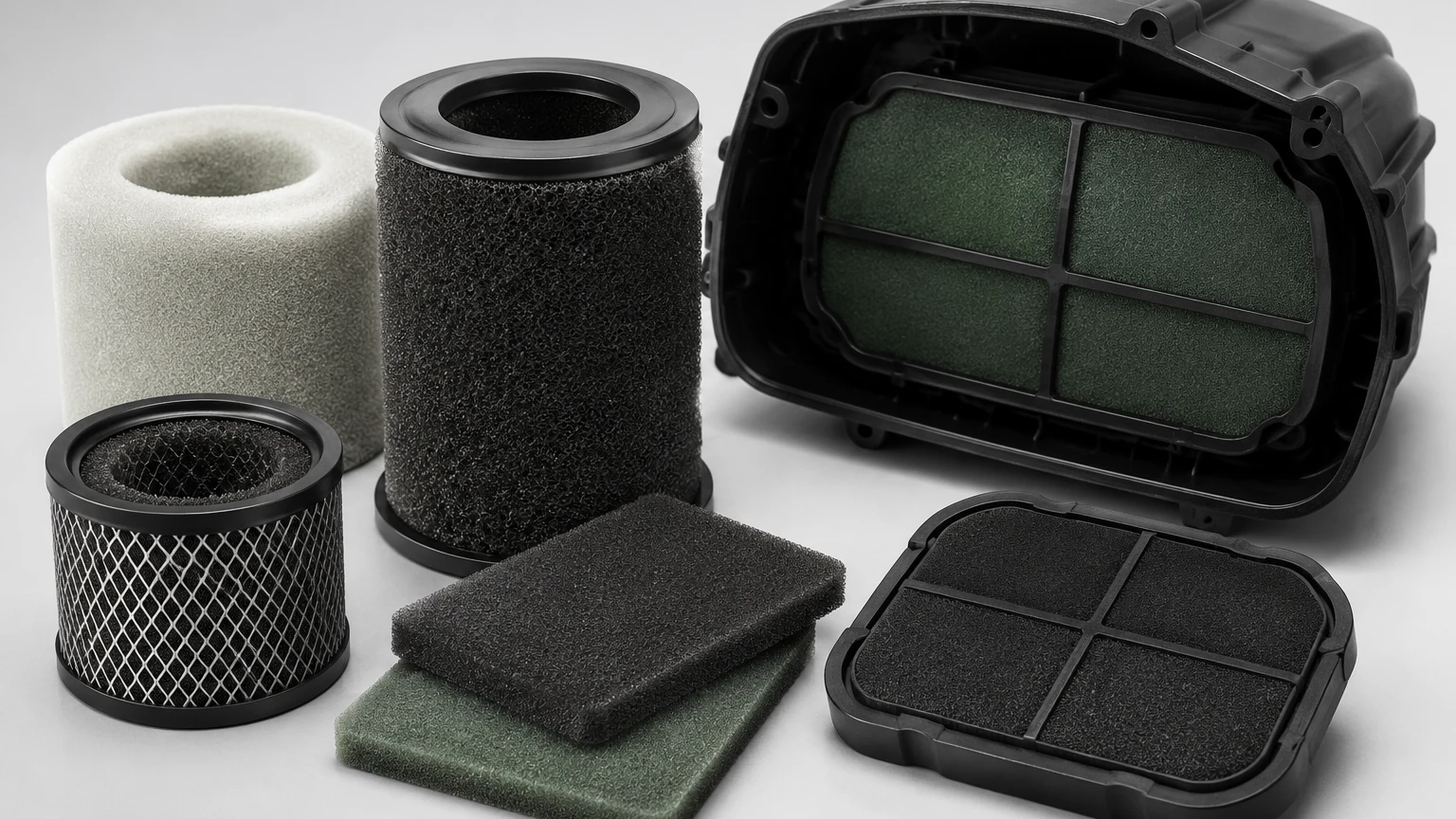
In the landscape of industrial filtration, the foam air filter remains a fundamental component for managing air quality and protecting sensitive machinery. Characterized by its porous, sponge-like structure, this type of filter is primarily utilized for pre-filtration and primary filtration in environments where high dust holding capacity and low initial pressure drop are critical. For engineers and procurement specialists, understanding the technical nuances of foam media—ranging from pore density to chemical compatibility—is essential for optimizing system performance and longevity.
While many industrial applications rely on the versatility of polyurethane or polyether foams, the evolution of filtration requirements often leads technical professionals to evaluate these materials against more robust alternatives, such as the stainless steel wire mesh solutions provided by manufacturers like Kaifil. This guide examines the engineering principles of foam air filters, their performance metrics, and the criteria for selecting the most appropriate filtration media for demanding industrial environments.
Engineering Fundamentals of Foam Air Filters
The efficacy of a foam air filter is rooted in its cellular structure. Most industrial foam filters are made from reticulated foam, a material where the "windows" or membranes of the individual cells have been removed, leaving only a skeletal structure of interconnected strands. This process, often achieved through a controlled thermal explosion or chemical etching, creates a highly porous 3D matrix.
Pores Per Inch (PPI) and Filtration Efficiency
The primary metric for classifying foam filtration media is Pores Per Inch (PPI). This measurement dictates both the filtration efficiency and the resistance to airflow.
* Low PPI (10–30): These filters feature large pores and are typically used as pre-filters to capture large debris and coarse dust. They offer minimal airflow resistance and are common in heavy industrial machinery and HVAC intakes.
* Medium PPI (45–60): This range strikes a balance between efficiency and pressure drop. It is often found in power equipment and general industrial air handling units.
* High PPI (80–100+): Fine-pore foams provide high-efficiency filtration for smaller particulates but require more frequent monitoring of pressure differentials as they clog more quickly.
From an engineering perspective, the depth filtration mechanism of foam allows it to trap particles throughout its entire volume, not just on the surface. This differs significantly from surface filtration media, providing a distinct advantage in environments with high concentrations of particulate matter.
Material Science and Chemical Compatibility
Selecting the right polymer for a foam air filter is as important as determining the PPI. The two most common materials are polyurethane (polyester-based) and polyether-based foams, each offering different resistances to environmental stressors.
Polyester Polyurethane Foam
Polyester-based foams are generally preferred for air filtration due to their superior physical properties, including higher tensile strength and better resistance to hydrocarbons and many solvents. However, they are susceptible to hydrolysis—the breakdown of the material when exposed to high humidity and heat over extended periods.
Polyether Polyurethane Foam
Polyether foams offer excellent resistance to moisture and microbial growth. While they may have slightly lower physical strength than polyester foams, they are the preferred choice for high-humidity environments or applications where the filter may come into contact with water or steam.
For systems operating in extreme conditions—such as those involving high temperatures, corrosive chemicals, or stringent hygiene requirements—engineers often transition from foam to stainless steel filtration components. You can explore these high-durability options on the Main Page of the Kaifil website, where custom metal filtration solutions are detailed for specialized industrial use.
Performance Metrics: Pressure Drop and Dust Holding Capacity
When integrating a foam air filter into an industrial system, engineers must account for the relationship between airflow velocity and pressure drop (ΔP). A foam filter’s open-cell structure is designed to maximize the "tortuous path" for particulates while minimizing the energy required to move air through the media.
Initial vs. Operating Pressure Drop
The initial pressure drop is the resistance measured when the filter is clean. As the filter captures dust, the effective pore size decreases, leading to an increase in ΔP. In precision systems, sensors are often used to monitor this change, signaling the need for maintenance when a pre-defined threshold is reached. Failure to replace or clean a saturated foam filter can lead to reduced system efficiency, overheating of motors, and potential bypass of unfiltered air.
Dust Holding Capacity (DHC)
One of the greatest technical advantages of reticulated foam is its high dust holding capacity. Because the material is highly compressible and has a large internal surface area, it can retain a significant mass of contaminants before reaching its terminal pressure drop. This characteristic extends the service interval compared to thin, pleated paper filters, making foam an economical choice for heavy-duty applications.
Maintenance Protocols and Lifecycle Management
Unlike many single-use filtration solutions, many foam air filters are designed to be washable and reusable, provided the material integrity remains intact. However, the cleaning process must be handled with technical precision to avoid damaging the delicate cell strands.
1. Inspection: Regularly check for signs of "friability"—where the foam becomes brittle and begins to crumble. This is a sign of UV degradation or chemical breakdown and necessitates immediate replacement.
2. Cleaning: Industrial foam filters should be cleaned using compatible aqueous detergents. High-pressure air or aggressive mechanical agitation can tear the reticulated strands, permanently reducing the filter's efficiency.
3. Drying: Filters must be completely dry before re-installation to prevent the growth of mold or the immediate caking of dust upon restart.
4. Oiling (Optional): In certain high-performance or small-engine applications, foam filters are treated with specialized tackifiers or oils. These oils increase the filter's ability to capture fine dust through impingement, though they also increase the initial pressure drop.
Foam vs. Stainless Steel Mesh: A Comparative Analysis
In many B2B contexts, the choice between a foam air filter and a stainless steel wire mesh filter depends on the operating environment and the total cost of ownership. While foam is cost-effective for standard air intake, stainless steel offers distinct advantages in specialized industrial processes.
| Feature | Reticulated Foam | Stainless Steel Wire Mesh |
| :— | :— | :— |
| Temperature Limit | Typically < 90°C | Up to 500°C+ (depending on alloy) |
| Chemical Resistance | Limited; prone to swelling/degradation | Excellent; resistant to most acids/alkalis |
| Durability | Moderate; ages over time | High; resistant to mechanical stress |
| Cleanability | Washable but finite lifespan | Ultrasonic cleaning; near-infinite reuse |
| Filtration Type | Depth filtration | Surface or multi-layer depth filtration |
Engineers working in chemical processing, food and beverage, or high-pressure hydraulic systems often find that the precision and durability of stainless steel components outweigh the initial cost savings of foam. Kaifil specializes in these high-performance metal filters, providing OEM solutions that meet exact micron ratings and structural requirements.
Engineering Selection: Matching Filter to Application
To select the correct foam air filter, technical teams should follow a structured evaluation process:
* Identify the Contaminant Profile: Determine the particle size distribution of the dust or debris. This dictates the required PPI.
* Calculate Airflow Requirements: Ensure the filter surface area is sufficient to maintain the required CFM (Cubic Feet per Minute) without exceeding the maximum allowable pressure drop.
* Assess Environmental Stressors: Will the filter be exposed to UV light, moisture, oil mist, or high temperatures? This determines the polymer base (Polyester vs. Polyether) or indicates a need for metal mesh.
* Evaluate Housing Constraints: Foam is highly conformable, making it ideal for irregularly shaped housings where a tight peripheral seal is required without complex gasket systems.
The Role of Customization in Industrial Filtration
Standard off-the-shelf foam filters often fall short in specialized industrial equipment. Customization allows for the layering of different PPI foams to create a gradient-density filter, which optimizes both efficiency and service life. Furthermore, foam can be bonded to other substrates, such as wire reinforcement or plastic frames, to provide structural rigidity in high-velocity air streams.
At Kaifil, the focus is on providing engineered filtration solutions that solve specific operational challenges. Whether a project requires the flexibility of custom-cut foam or the uncompromising strength of a stainless steel cartridge, the goal is to achieve reliable, repeatable filtration performance. For detailed specifications on precision metal components that can replace or augment foam systems, visiting the Main Page provides access to a wealth of technical resources and product data.
Conclusion: Making Informed Procurement Decisions
The foam air filter remains a versatile and essential tool in the industrial filtration toolkit. By understanding the relationship between PPI, material chemistry, and depth filtration mechanics, engineers can ensure their systems are protected from particulate contamination effectively. However, as industrial demands evolve toward higher temperatures and more aggressive chemical environments, the transition to precision metal filtration often becomes necessary.
When evaluating filtration options, consider the total lifecycle cost, including maintenance frequency, replacement parts, and the potential impact of filter failure on downstream equipment. By partnering with experienced manufacturers like Kaifil, purchasing teams and engineers can secure filtration components that are tailored to their specific technical requirements, ensuring long-term operational efficiency and equipment protection.
