


Woven Wire Mesh: Industrial Engineering vs. Retail Selection
In the procurement process for industrial filtration and separation components, engineers and purchasing managers often evaluate various sourcing channels. A common starting point for localized or small-scale projects is searching for woven wire mesh home depot or similar big-box retail solutions. While retail outlets provide immediate availability for general-purpose hardware, industrial applications in chemical processing, pharmaceuticals, and food production require a deeper technical understanding of material science and weave precision.
Selecting the right Woven Wire Mesh involves more than just identifying a grid pattern. It requires a rigorous analysis of mechanical properties, chemical compatibility, and filtration efficiency. This guide explores the technical boundaries between retail-grade materials and industrial-grade solutions, helping technical professionals make informed decisions for high-performance environments.
Understanding the Limitations of Retail Woven Wire Mesh
When searching for woven wire mesh home depot options, users typically find products categorized as "hardware cloth" or "utility mesh." These products are designed for residential and light commercial use, such as pest control, gutter guards, or basic fencing.
From an engineering perspective, retail mesh often lacks the necessary documentation and precision for industrial systems. The primary limitations include:
* Material Constraints: Retailers often stock galvanized steel or low-grade aluminum. In industrial filtration, these materials fail quickly due to oxidation or chemical corrosion. Industrial applications almost exclusively demand Stainless Steel 304, 316, or 316L.
* Tolerance and Precision: Retail mesh is manufactured with wider tolerances. For a filtration system requiring a specific micron rating, the variance in aperture size found in utility-grade mesh can lead to bypass or system failure.
* Limited Weave Varieties: Most retail options are restricted to simple plain weaves. Industrial processes often require specialized weaves like Twill or Dutch weave to handle high-pressure differentials or fine particle retention.
Technical Specifications: Beyond the Standard Grid
Industrial-grade Woven Wire Mesh is defined by its geometry and the physics of the weave. Unlike the generic rolls found at a woven wire mesh home depot search result, professional filtration components are specified by several critical factors:
1. Mesh Count vs. Micron Rating
Mesh count refers to the number of openings per linear inch. While this is a standard industry term, engineers must focus on the resulting aperture size (micron rating). A high mesh count does not always equate to finer filtration if the wire diameter is excessively thin, which compromises the structural integrity of the filter element.
2. Wire Diameter and Open Area
The ratio between the wire diameter and the aperture size determines the "percentage of open area." This is a vital calculation for flow rate and pressure drop. In industrial settings, maximizing the open area while maintaining the mechanical strength of the mesh is a primary design goal—a balance rarely addressed by retail-grade products.
3. Weave Types and Performance
* Plain Weave: The most common type where each warp wire crosses over and under each shute wire. It offers the highest open area but is limited in terms of fine filtration.
* Twill Weave: Each shute wire passes over and under two warp wires. This allows for a heavier wire diameter in a given mesh count, increasing the strength for high-pressure applications.
* Dutch Weave (Plain and Twill): These weaves use different wire diameters for warp and shute, creating a dense, tortuous path for fluids. This is the gold standard for precision filtration, providing high mechanical stability and fine micron ratings that are unavailable in the woven wire mesh home depot inventory.
Material Selection for Demanding Environments
One of the most significant risks in using retail-sourced mesh for industrial projects is the lack of material certification. Industrial manufacturers like Kaifil provide Mill Test Reports (MTRs) to verify the chemical composition of the alloy.
* Stainless Steel 304: Suitable for general industrial use, providing good corrosion resistance and durability. It is the standard for many water treatment and architectural applications.
* Stainless Steel 316/316L: Contains molybdenum, which significantly enhances resistance to chlorides and pitting. This is essential for marine environments, chemical processing, and pharmaceutical manufacturing where strict sanitation and corrosion resistance are required.
* Specialty Alloys: For extreme temperatures or highly acidic environments, alloys like Monel, Inconel, or Hastelloy may be required. These are specialized materials that must be sourced through dedicated industrial manufacturers.
Engineering Considerations: Flow Rate and Pressure Drop
In a B2B context, the performance of a filter is measured by its impact on the overall system. Using an improperly specified mesh can lead to increased energy consumption or pump failure.
When evaluating Woven Wire Mesh, engineers must calculate the pressure drop ($ΔP$) across the clean mesh. This is influenced by the fluid's viscosity, velocity, and the mesh's resistance coefficient. Retail products found through a woven wire mesh home depot search rarely provide the technical data sheets necessary to perform these calculations accurately. Industrial suppliers provide precise data on aperture uniformity, ensuring that flow models remain valid throughout the component's lifecycle.
Customization and Post-Processing
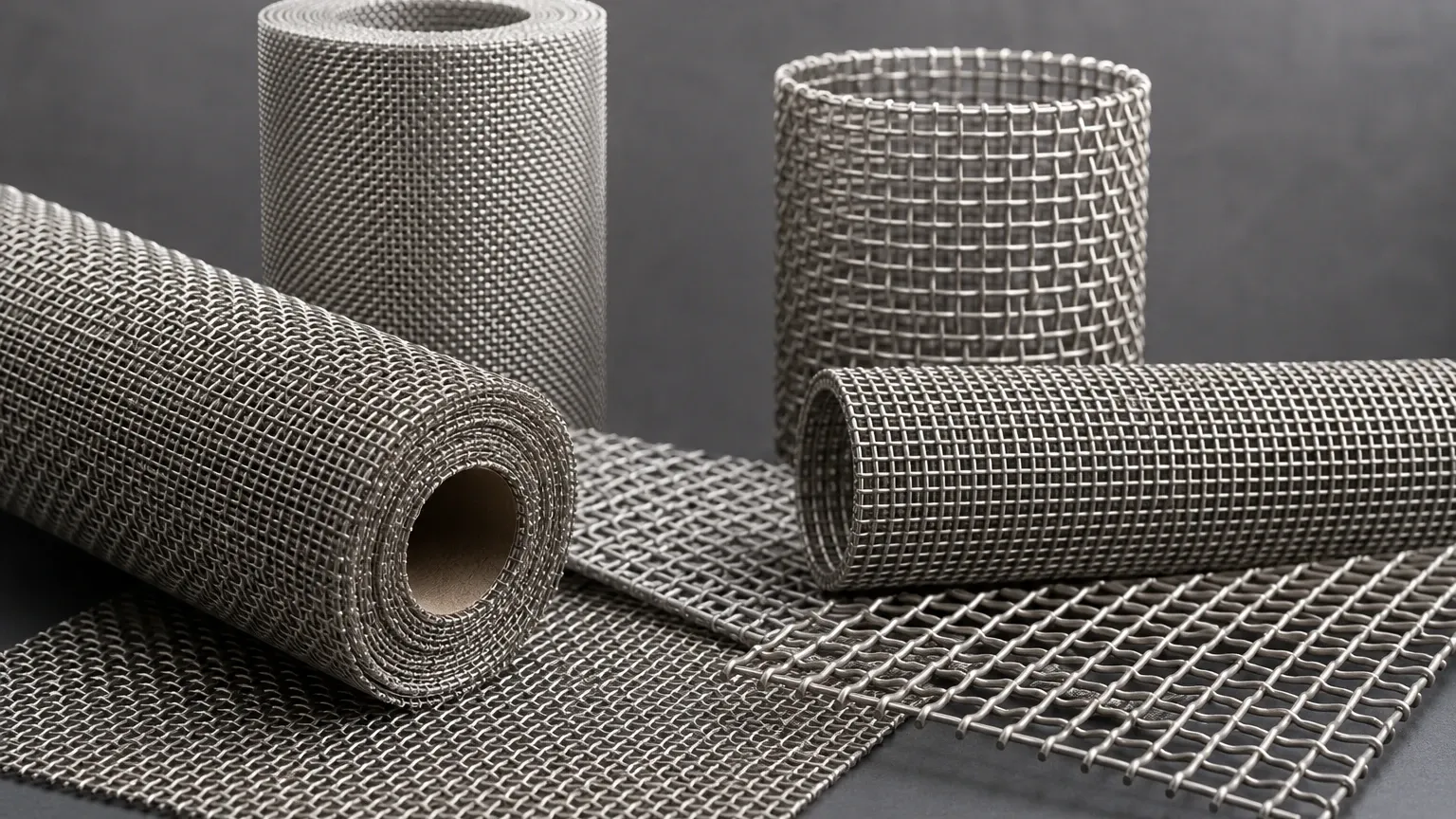
Industrial filtration often requires the mesh to be integrated into a larger assembly. Unlike the bulk rolls found at retail, industrial Woven Wire Mesh can be customized through several processes:
* Precision Cutting: Laser or plasma cutting to exact dimensions for circular filters, rectangular panels, or custom shapes.
* Framing and Edging: Adding U-binders or custom frames to ensure the mesh can be securely installed in housings without bypass.
* Multi-Layer Sintering: Bonding multiple layers of mesh together to create a composite material that combines fine filtration with extreme structural rigidity.
* Pleating: Increasing the surface area of the mesh within a fixed volume to extend the service life between cleaning cycles.
Total Cost of Ownership (TCO) in Industrial Procurement
While the initial price point of a woven wire mesh home depot product might appear attractive for a quick fix, the Total Cost of Ownership often tells a different story. In an industrial environment, the costs associated with downtime, frequent replacements, and potential product contamination far outweigh the savings of using non-spec materials.
1. Durability: Industrial-grade 316L stainless steel mesh can withstand rigorous backwashing and ultrasonic cleaning, extending its lifespan for years. Retail-grade galvanized mesh may fail within weeks due to corrosion or mechanical fatigue.
2. Compliance: Industries such as food and beverage or pharmaceuticals must adhere to FDA or ISO standards. Industrial manufacturers provide the traceability and quality assurance documentation required for regulatory audits.
3. Efficiency: Precisely engineered mesh ensures that the filtration system operates at peak efficiency, reducing the load on pumps and minimizing energy costs.
When to Choose an Industrial Manufacturer Over Retail
If your project involves any of the following, sourcing through a specialized manufacturer like Kaifil is necessary:
* High-Pressure Systems: Where the mesh must withstand significant differential pressure without deforming.
* Corrosive Chemicals: Where exposure to acids, bases, or salts would degrade standard steel.
* Precision Micron Requirements: Any application requiring particle retention smaller than 100 microns.
* Sanitary Standards: Applications requiring smooth, burr-free surfaces and high-grade stainless steel for easy sterilization.
For those evaluating material options, you can Plain, twill and dutch woven wire mesh in SS304/316L — rolls, cut mesh and framed panels. Send mesh count or micron target for a technical quote. to ensure your specifications meet the rigorous demands of your specific industrial application.
Conclusion
While a search for woven wire mesh home depot may provide a solution for a home garden or a simple DIY repair, it is rarely the appropriate path for industrial engineering. The complexities of fluid dynamics, material science, and mechanical stress require a level of precision that only specialized manufacturers can provide. By focusing on technical specifications such as weave type, alloy grade, and micron accuracy, engineers can ensure the long-term reliability and efficiency of their filtration systems. Choosing an industrial partner ensures that the components delivered are not just "wire screens," but precision-engineered tools designed to perform under pressure.
