Dust Collector Manufacturer
In industrial environments, the selection of a dust collector manufacturer is a critical decision that impacts operational efficiency, regulatory compliance, and workplace safety. Dust collection systems are engineered to remove airborne contaminants from the air, protecting workers from respiratory hazards and preventing the accumulation of combustible dust. However, the performance of these systems is fundamentally dependent on the quality of the filtration components housed within them. For engineers and procurement specialists, understanding the technical nuances of dust collection technology—from housing design to the precision of stainless steel filter elements—is essential for long-term reliability.
Understanding the Role of a Dust Collector Manufacturer in Industrial Operations
A professional dust collector manufacturer does more than assemble metal housings; they provide engineered solutions for air quality management. Industrial dust collection is required across a vast spectrum of sectors, including chemical processing, pharmaceuticals, food and beverage, and metalworking. Each of these industries presents unique challenges, such as corrosive vapors, fine particulate matter, or high-temperature exhaust.
The primary function of a dust collector is to capture particulate matter at the source, convey it through ductwork, and separate the dust from the air stream using filtration media. Manufacturers typically offer several types of systems, including baghouses, cartridge collectors, and cyclone separators. The choice between these systems depends on the particle size, dust load, and the specific physical properties of the dust being handled. A manufacturer’s ability to conduct a thorough application analysis is the first indicator of their technical competence.
Key Evaluation Criteria for Selecting a Dust Collector Manufacturer
When evaluating potential partners, technical teams should look beyond the initial purchase price and focus on engineering integrity and material quality. The following criteria are paramount:
1. Engineering and Design Capabilities
A reputable manufacturer should offer custom engineering services. Off-the-shelf solutions rarely meet the specific needs of a complex chemical plant or a high-volume food processing line. Engineers should verify if the manufacturer can provide detailed CAD drawings, airflow simulations, and structural calculations that adhere to local and international standards, such as NFPA (National Fire Protection Association) guidelines for combustible dust.
2. Material Selection and Construction Quality
The durability of a dust collector is largely determined by its materials of construction. While carbon steel is common for standard applications, many industrial processes require stainless steel (such as 304 or 316L) to resist corrosion and prevent contamination. This is particularly true in the pharmaceutical and food industries, where hygiene and chemical resistance are non-negotiable. The quality of welds, the thickness of the plate work, and the integrity of the seals all contribute to the system's lifespan.
3. Filtration Efficiency and Media Options
The efficiency of a dust collector is defined by its ability to capture particles of a specific micron size. Manufacturers must provide documented performance data, often expressed as a MERV (Minimum Efficiency Reporting Value) rating or a specific filtration percentage at a given micron level. The choice of filtration media—whether it be polyester, PTFE membranes, or specialized stainless steel wire mesh—must be matched to the application’s temperature and chemical profile.
The Critical Importance of Filtration Media and Components
While the external housing of a dust collector provides the structure, the internal filter elements are the "heart" of the system. This is where the actual separation of dust and air occurs. In many demanding industrial applications, standard fabric or paper filters are insufficient due to high temperatures, moisture, or chemical reactivity.
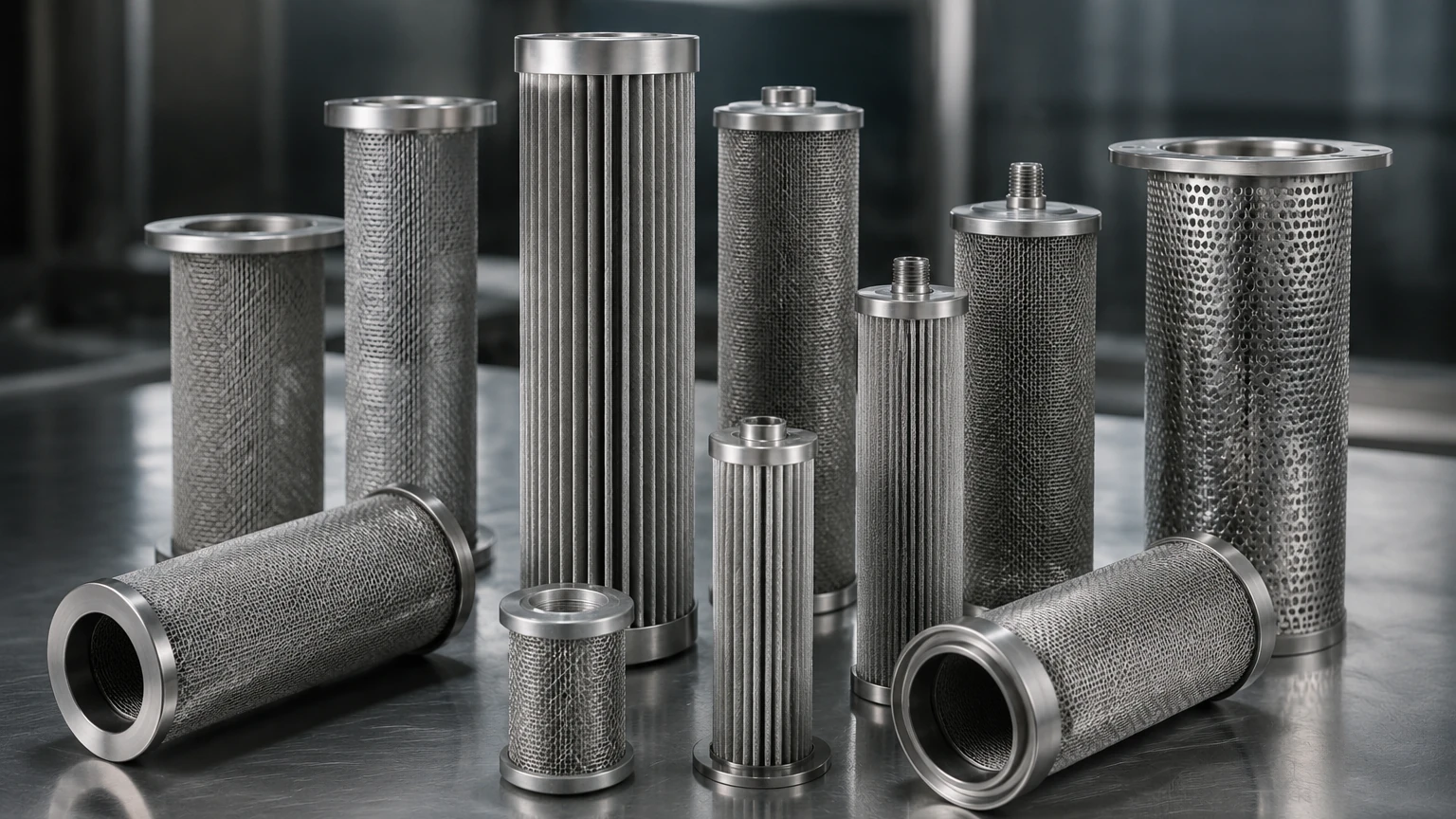
This is where specialized manufacturers like Kaifil provide essential support. By focusing on custom stainless steel filtration solutions, including wire mesh filters and precision metal filter cartridges, Kaifil enables dust collection systems to operate in environments that would destroy conventional media. For those looking to integrate high-durability components into their air quality systems, visiting the Main Page offers a technical look at how stainless steel filtration can enhance system performance.
Stainless steel filter cartridges offer several advantages over disposable options:
* High Temperature Resistance: Metal filters can withstand temperatures far exceeding the limits of synthetic fibers.
* Chemical Compatibility: Stainless steel is resistant to a wide range of solvents, acids, and bases.
* Cleanability: Unlike disposable filters, stainless steel mesh can often be cleaned and reused, reducing the total cost of ownership.
* Structural Integrity: Metal filters maintain their shape and filtration accuracy even under high differential pressure.
Engineering Considerations for High-Temperature and Corrosive Environments
In sectors like chemical processing and power generation, dust collectors are often exposed to extreme conditions. When selecting a dust collector manufacturer for these environments, engineers must prioritize thermal expansion management and corrosion allowances.
Corrosive gases can quickly degrade standard filter housings and internal components. Utilizing 316L stainless steel for both the housing and the filter elements ensures that the system does not fail prematurely. Furthermore, in high-temperature applications, the air-to-cloth ratio (the amount of air passing through a square foot of filter media) must be carefully calculated to prevent excessive pressure drop and premature blinding of the filters. Stainless steel wire mesh filters are particularly effective here, as they provide a stable pore structure that does not deform under thermal stress.
Common Risks and Pitfalls in Dust Collector Procurement
Procuring an industrial dust collection system involves navigating several risks that can lead to operational failure or safety hazards. One of the most common mistakes is under-sizing the system. A dust collector that is too small for the required CFM (Cubic Feet per Minute) will suffer from high internal velocities, leading to excessive wear on the ducting and the filter media.
Another significant risk is the failure to account for the physical properties of the dust. For example, hygroscopic dust (which absorbs moisture) can lead to "mudding" on the filter surface, making pulse-jet cleaning ineffective. In such cases, specialized coatings or stainless steel mesh with specific surface treatments may be required to facilitate dust release.
Finally, ignoring the requirements for explosion venting and fire suppression is a major liability. If the dust being collected is combustible, the manufacturer must integrate explosion panels, rotary valves, and chemical isolation systems to protect the facility and its personnel.
Total Cost of Ownership (TCO) and Performance Expectations
The initial capital expenditure (CAPEX) for a dust collector is only a fraction of its lifetime cost. When evaluating a dust collector manufacturer, it is vital to calculate the Total Cost of Ownership (TCO). This includes:
* Energy Consumption: The pressure drop across the filters directly affects the energy required by the fan. High-quality, low-resistance filters can save thousands of dollars in annual energy costs.
* Maintenance Labor: Systems that are difficult to access or require frequent filter changes increase labor costs and downtime.
* Filter Replacement Costs: While stainless steel cartridges or high-grade wire mesh filters have a higher upfront cost, their durability and cleanability often make them more cost-effective over the system's life compared to frequent replacements of inexpensive disposable filters.
* Compressed Air Usage: For pulse-jet systems, the efficiency of the cleaning cycle impacts the amount of compressed air consumed.
Technical Questions to Ask Before Finalizing a Purchase
Before selecting a manufacturer or a filtration component supplier, engineers should confirm the following technical details:
1. What is the recommended air-to-cloth ratio for this specific dust type? This ensures the system is not over-taxed.
2. What is the expected pressure drop (clean and dirty)? This helps in sizing the system fan correctly.
3. Are the filter elements customizable for specific micron ratings? Precision in filtration accuracy is vital for process consistency.
4. What material certifications are provided? For pharmaceutical and food applications, material traceability (e.g., 3.1 certificates) is often required.
5. How is the cleaning system controlled? Modern systems use differential pressure sensors to trigger cleaning cycles only when necessary, extending filter life.
Conclusion
Selecting a dust collector manufacturer is a complex process that requires a deep understanding of both mechanical engineering and material science. The effectiveness of the entire system hinges on the synergy between the air-handling equipment and the filtration media. By prioritizing high-quality materials like stainless steel and seeking out manufacturers with proven technical expertise, industrial facilities can ensure long-term compliance, safety, and operational efficiency. Whether you are designing a new system or upgrading an existing one, the focus must remain on the precision and durability of the filtration components to achieve the best results in demanding industrial environments.