


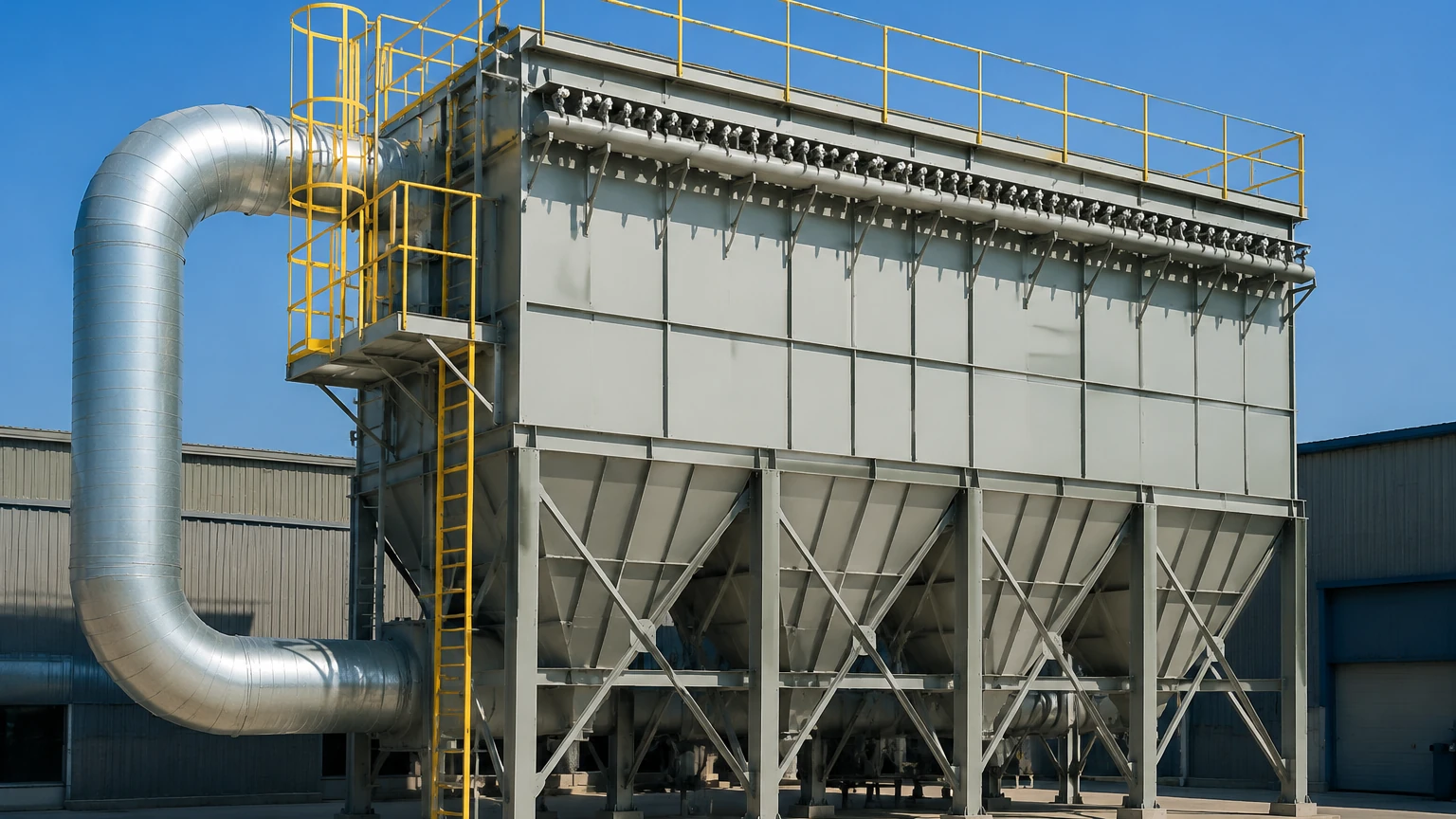
Industrial Baghouse Dust Collector
In the landscape of industrial air pollution control, the industrial baghouse dust collector remains a cornerstone technology for maintaining air quality, ensuring regulatory compliance, and facilitating material recovery. These systems are engineered to handle high volumes of dust-laden air, utilizing fabric filter bags to separate particulate matter from gas streams. For engineers and facility managers, selecting the right baghouse configuration is not merely a matter of capacity; it requires a deep understanding of filtration mechanics, material science, and the specific demands of the industrial environment.
As a manufacturer specializing in precision filtration solutions, Kaifil understands that the efficiency of any filtration system—whether it involves liquid processing or air purification—depends on the integrity of its components. While the primary filter media in a baghouse are often non-woven fabrics, the structural support and high-temperature stages frequently rely on specialized metal components. This guide explores the technical foundations of industrial baghouse dust collectors to assist technical professionals in making informed procurement and design decisions.
Understanding the Role of Industrial Baghouse Dust Collectors
An industrial baghouse dust collector is a large-scale filtration unit designed to remove dry particulates from industrial exhaust. Unlike centrifugal separators (cyclones) or electrostatic precipitators, baghouses utilize a physical barrier—the filter bag—to achieve high collection efficiencies, often exceeding 99% for sub-micron particles.
These systems are critical in industries such as chemical processing, cement manufacturing, food production, and metalworking. The primary functions of a baghouse include:
* Environmental Compliance: Meeting EPA or local air quality standards regarding particulate matter (PM) emissions.
* Product Recovery: Capturing valuable dust from the process stream to be reintroduced into production, thereby reducing waste.
* Health and Safety: Protecting workers from hazardous airborne particles and reducing the risk of combustible dust explosions.
* Equipment Protection: Preventing abrasive dust from damaging downstream equipment like fans, heat exchangers, or turbines.
Core Operating Principles and System Types
The operation of an industrial baghouse dust collector is defined by its cleaning mechanism. As dust accumulates on the surface of the filter bags, a "dust cake" forms. While this cake initially improves filtration efficiency, it eventually increases the pressure drop across the system, necessitating a cleaning cycle. There are three primary types of baghouses categorized by their cleaning methods:
1. Pulse-Jet Baghouses
This is the most common configuration in modern industrial settings. In a pulse-jet system, dust is collected on the outside of the bags, which are supported by internal metal cages. Short bursts of high-pressure compressed air are injected into the top of the bags, creating a shockwave that flexes the fabric and dislodges the dust cake. This method allows for continuous operation without shutting down the airflow, making it ideal for high-volume processes.
2. Shaker Baghouses
In shaker systems, the bags are suspended from a motorized rack at the top and secured at the bottom. Dust is collected on the inside of the bags. Periodically, the airflow is paused, and the rack shakes the bags to release the dust into a hopper. These systems are generally simpler but require the process to be compartmentalized or offline during cleaning.
3. Reverse-Air Baghouses
These systems collect dust on the inside of the bags. To clean them, a fan blows air in the opposite direction of the normal flow, causing the bags to partially collapse and the dust cake to fall. Like shaker systems, reverse-air baghouses typically require multiple compartments so that one section can be cleaned while others remain operational.
Key Engineering Parameters for Filter Selection
When evaluating an industrial baghouse dust collector, engineers must prioritize several technical parameters to ensure the system meets the specific needs of the application. On the Main Page of our technical resource, we emphasize the importance of matching filtration media to the chemical and thermal environment of the process.
Air-to-Cloth Ratio
The air-to-cloth (A/C) ratio, also known as the filtration velocity, is the ratio of the volume of air entering the collector (CFM) to the total square footage of the filter media. A lower A/C ratio generally leads to higher efficiency and longer bag life, as it reduces the velocity at which particles strike the media. High-density or abrasive dusts require significantly lower A/C ratios compared to light, non-abrasive dusts.
Micron Rating and Efficiency
The filtration efficiency is determined by the pore size of the media and the development of the dust cake. While fabric bags are rated for specific micron levels, the actual performance is often superior once a stable cake is formed. For precision applications requiring absolute filtration, engineers may consider secondary HEPA stages or specialized stainless steel mesh pre-filters to protect the primary bags from heavy loading.
Temperature and Chemical Resistance
The gas stream's temperature and chemical composition are the primary drivers for material selection. Standard polyester bags are suitable for temperatures up to 275°F (135°C), while materials like Aramid (Nomex), PTFE (Teflon), or fiberglass are required for higher temperatures or corrosive environments. In extreme cases where gases exceed 500°F, or where sparks are present, metal mesh components and spark arrestors become essential safety and performance features.
Material Compatibility and the Role of Stainless Steel Components
While the "bag" is the central element of the industrial baghouse dust collector, the longevity and reliability of the system depend on the metal components that house and support the media. This is where Kaifil’s expertise in stainless steel filtration solutions provides significant value to OEM manufacturers and plant engineers.
Support Cages
In pulse-jet systems, the filter bag is pulled tight against a metal cage. If these cages are poorly manufactured or prone to corrosion, they can develop burrs or rust that abrade the fabric, leading to premature bag failure. Utilizing high-quality stainless steel or galvanized wire cages ensures structural integrity and reduces mechanical wear on the bags.
Venturi Tubes
The Venturi is a critical component located at the top of the cage in pulse-jet systems. It directs the compressed air pulse efficiently into the center of the bag. Precision-engineered stainless steel Venturis minimize air turbulence and ensure that the cleaning pulse reaches the full length of the bag, maintaining a consistent pressure drop across the entire unit.
Pre-Filtration and Spark Arrestors
In many industrial processes, such as metal grinding or smelting, the gas stream may contain sparks or heavy, abrasive particles that would instantly destroy fabric bags. In these scenarios, stainless steel wire mesh filters are used as pre-filtration stages. These metal components are durable, heat-resistant, and capable of being cleaned and reused, providing a robust first line of defense for the more delicate baghouse media.
Operational Risks and Preventive Maintenance
Maintaining an industrial baghouse dust collector requires proactive monitoring to avoid common pitfalls that can lead to system downtime or environmental violations.
Differential Pressure (DP) Monitoring
The most effective way to monitor baghouse health is by tracking the differential pressure—the difference in air pressure between the dirty and clean sides of the filters. A sudden drop in DP may indicate a torn bag (leakage), while a steady, excessive rise in DP suggests "blinding," where dust has become deeply embedded in the fabric and cannot be removed by the cleaning cycle.
Moisture and Dew Point Issues
If the temperature of the gas stream drops below its dew point inside the baghouse, moisture will condense. When combined with dust, this creates a "mud" that clogs the filters and can lead to corrosion of the metal housing and support cages. Proper insulation and hopper heating are essential for processes involving combustion or high-humidity gases.
Abrasion and Mechanical Wear
High-velocity dust particles can act like sandpaper on the filter media. Engineers should ensure that the inlet design of the baghouse includes baffles to distribute the air evenly and reduce the velocity of particles before they strike the bags. Regularly inspecting the bags for wear patterns can help identify airflow imbalances within the housing.
Pre-Purchase Technical Checklist for Engineers
Before finalizing a specification for an industrial baghouse dust collector, purchasing teams and engineers should confirm the following data points to ensure the system's total cost of ownership is optimized:
1. Dust Characteristics: Is the dust abrasive, hygroscopic, explosive, or chemically reactive? This dictates both the bag material and the need for explosion venting (ATEX compliance).
2. Inlet Loading: What is the concentration of dust (grains per cubic foot)? High inlet loading may require a cyclone pre-separator.
3. Cleaning Air Quality: For pulse-jet systems, is the compressed air dry and oil-free? Moisture in the pulse air is a leading cause of bag blinding.
4. Access and Maintenance: Does the design allow for easy bag changes from the clean-air side (top-loading) or the dirty-air side? Top-loading designs are generally preferred for worker safety and speed of maintenance.
5. Component Durability: Are the internal cages and hardware made from materials compatible with the process gas? For pharmaceutical or food-grade applications, 304 or 316L stainless steel is often mandatory to prevent contamination.
Conclusion
An industrial baghouse dust collector is a complex engineering system that requires a balance of airflow dynamics, material science, and mechanical reliability. By focusing on high-quality components—from the fabric media to the stainless steel support structures—industrial facilities can achieve superior filtration performance and extended service life.
At Kaifil, we provide the precision metal filtration components and OEM expertise necessary to support demanding industrial environments. Whether you are designing a new system or optimizing an existing one, understanding the technical nuances of filtration is key to operational success. For more information on customized filtration solutions and technical support, visit our Main Page to explore how our manufacturing capabilities can meet your specific application requirements.
