


Rotary Drum
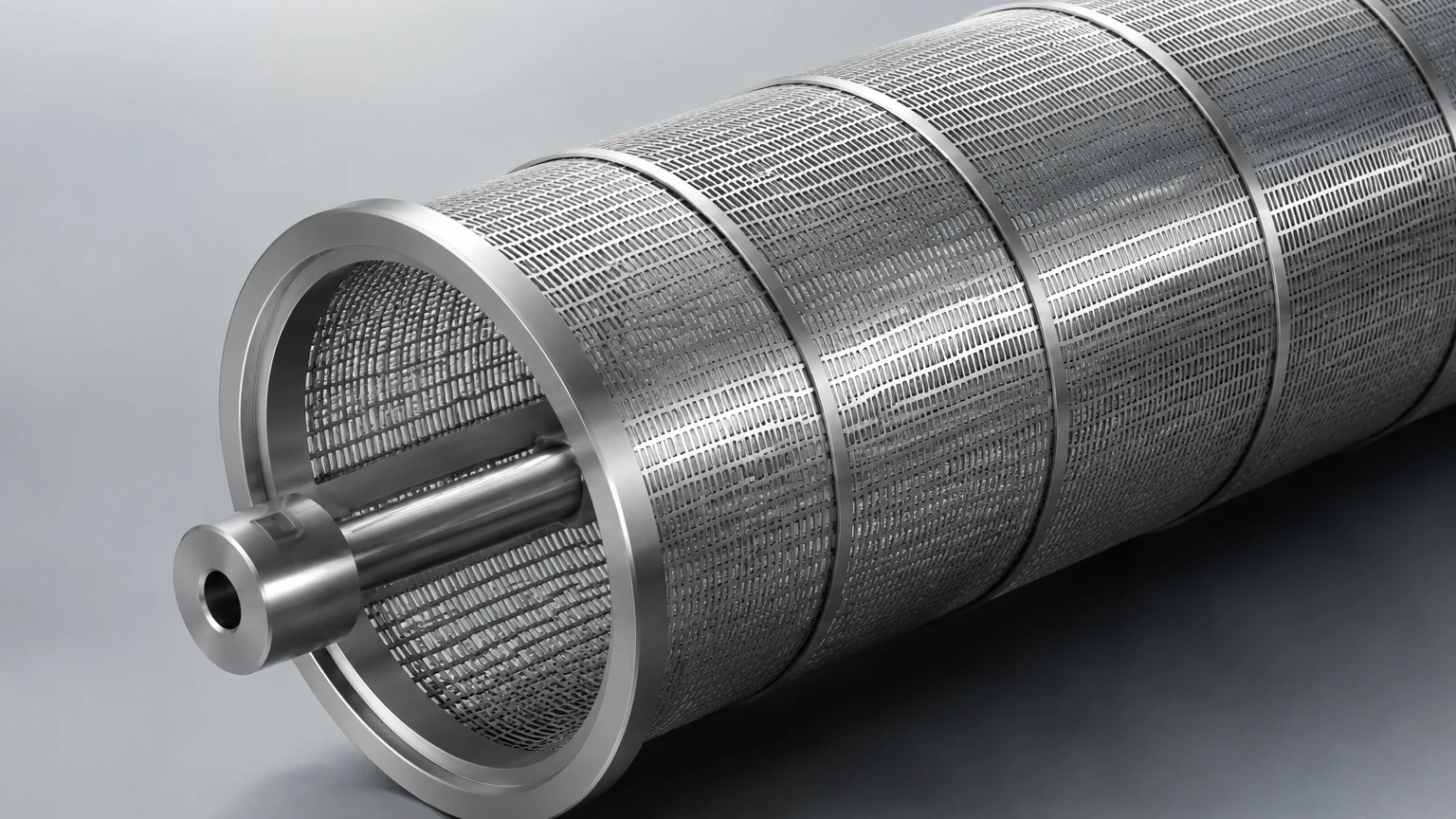
In the landscape of industrial solid-liquid separation, the rotary drum filter and screen represent a cornerstone of continuous processing. These systems are engineered to handle high volumes of slurry or wastewater, providing a mechanical means of removing suspended solids with minimal manual intervention. For engineers and procurement teams, understanding the technical nuances of the rotary drum is essential for optimizing plant efficiency and ensuring the longevity of filtration equipment.
As a specialized manufacturer of stainless steel filtration components, Kaifil provides the precision-engineered wire mesh and filter media that serve as the critical interface in these systems. For more information on our full range of industrial filtration components, visit our Main Page.
Fundamentals of Rotary Drum Filtration Systems
A rotary drum filtration system operates on the principle of mechanical separation through a rotating cylindrical screen. Depending on the specific application, these systems can be categorized into two primary types: gravity-fed rotary drum screens and rotary vacuum drum filters (RVDF).
Gravity-Fed Rotary Screens
In gravity-fed systems, the influent enters the interior or exterior of the rotating drum. The liquid passes through the filter media, while solids are retained on the surface. As the drum rotates, these solids are conveyed to a discharge point, often aided by internal flights or a scraper mechanism. These are common in municipal wastewater treatment and food processing pre-treatment.
Rotary Vacuum Drum Filters (RVDF)
The RVDF is a more complex system used for dewatering slurries with high solids concentrations. The drum is partially submerged in a vat of slurry. A vacuum is applied to the interior of the drum, drawing the liquid through the filter media and forming a "cake" of solids on the exterior surface. As the drum rotates out of the vat, the cake is dried and eventually removed by a discharge blade or air blow-back. This method is vital in chemical processing, mining, and pharmaceutical manufacturing where high-purity separation is required.
Critical Role of Stainless Steel Filter Media
The performance of any rotary drum system is fundamentally limited by the quality and specifications of its filter media. While some low-demand applications use synthetic fabrics, industrial-grade rotary drums typically require stainless steel wire mesh or wedge wire for several technical reasons.
Durability and Mechanical Strength
Industrial drums are subject to significant mechanical stress, including hydraulic pressure, vacuum forces, and the abrasive action of scraping blades. Stainless steel, particularly grades 304 and 316L, provides the structural integrity needed to resist deformation and tearing. In applications involving heavy solids loading, reinforced wire mesh laminates or sintered mesh are often employed to ensure the media does not sag or fail under load.
Chemical and Thermal Resistance
Many industrial processes involve corrosive chemicals or high-temperature fluids. Stainless steel filter components are selected for their ability to withstand pH extremes and thermal cycling without losing their filtration accuracy. This is a critical consideration for engineers in the chemical and petrochemical sectors, where synthetic alternatives would degrade rapidly.
Precision Filtration Accuracy
Kaifil specializes in producing wire mesh with precise micron ratings. In a rotary drum application, the opening size must be consistent across the entire surface area to prevent "breakthrough"—where oversized particles pass through the filter—and to ensure a uniform cake formation. Whether the requirement is for coarse 500-micron screening or fine 10-micron filtration, the uniformity of the weave is paramount.
Engineering Specifications and Selection Criteria
Selecting the correct rotary drum configuration requires an analysis of several variables. Engineers must balance flow rate requirements with the physical properties of the solids being removed.
1. Micron Rating and Open Area
The micron rating determines the smallest particle the drum will reliably capture. However, a finer mesh often results in a smaller percentage of open area, which can restrict flow and increase the pressure drop across the system. Engineering teams must calculate the "effective filtration area" to ensure the drum can handle the peak hydraulic load of the facility.
2. Solids Loading and Particle Characteristics
The concentration of solids in the influent (measured in mg/L or percentage by weight) dictates the required rotation speed of the drum. If the solids loading is high, the drum must rotate faster to present a clean filtration surface, or a larger drum surface area must be specified. Additionally, the morphology of the particles—whether they are fibrous, granular, or gelatinous—affects how easily they can be removed from the mesh during the discharge cycle.
3. Surface Finish and Coating
In food and beverage or pharmaceutical applications, the surface finish of the stainless steel is a regulatory requirement. Electropolished surfaces reduce the risk of bacterial growth and make the mesh easier to clean during Clean-in-Place (CIP) cycles. For highly abrasive slurries, specialized coatings or hardened alloys may be necessary to prevent premature wear of the drum surface.
Operational Challenges and Performance Optimization
Even a well-designed rotary drum can encounter operational hurdles that impact its total cost of ownership. Identifying these risks early allows for the implementation of preventative engineering solutions.
Blinding and Clogging
Blinding occurs when particles become lodged within the openings of the filter media, or when a thin film of fats, oils, or greases (FOG) coats the mesh. To combat this, many rotary drums are equipped with high-pressure spray bars that continuously wash the mesh from the outside in (backwashing). The design of these spray systems, including nozzle spacing and pressure, must be synchronized with the drum’s rotation speed.
Cake Discharge Efficiency
In vacuum systems, the efficiency of the discharge mechanism (scraper, roller, or string discharge) is critical. If the cake is not completely removed, it can be re-submerged in the vat, leading to "cake recycling" and a significant drop in throughput. Selecting a filter mesh with the appropriate surface tension and smoothness can significantly improve cake release characteristics.
Hydraulic Surges
Industrial processes rarely operate at a perfectly steady state. A rotary drum must be sized to handle hydraulic surges without overflowing. This often involves incorporating bypass channels or variable frequency drives (VFDs) on the drum motor to increase rotation speed during high-flow events.
Maintenance, Durability, and Replacement Strategies
From a procurement and maintenance perspective, the goal is to maximize the interval between filter media replacements. Stainless steel components are an investment in reduced downtime.
Inspection Protocols
Regular inspection of the drum surface is necessary to identify signs of mechanical fatigue, such as broken wires or localized thinning of the mesh. In many cases, small areas of damage can be repaired if caught early, preventing the need for a full media replacement.
Cleaning Cycles
Beyond continuous backwashing, periodic deep cleaning using chemical agents may be required to remove scale or biological fouling. The compatibility of the stainless steel grade with these cleaning chemicals (such as nitric acid or caustic soda) must be verified during the design phase. 316L stainless steel is generally preferred for its superior resistance to chloride-induced pitting during cleaning.
Replacement Cycles
The lifespan of a rotary drum filter screen varies widely by industry. In municipal applications, a high-quality stainless steel screen may last 5 to 10 years. In abrasive mining environments, the cycle may be significantly shorter. Keeping a standardized set of custom-dimensioned replacement mesh panels on-site is a recommended strategy to minimize emergency downtime.
Customization and OEM Integration for Industrial Systems
No two industrial applications are identical, which is why customization is a core component of Kaifil’s service model. We work closely with original equipment manufacturers (OEMs) and end-users to develop filtration components tailored to specific rotary drum designs.
Tailored Mesh Weaves
Depending on the application, we can provide different weave patterns, such as plain weave, twilled weave, or Dutch weave. Each offers a different balance of flow capacity, strength, and filtration depth. For example, a Dutch weave provides superior strength for vacuum applications where the pressure differential is high.
Structural Reinforcements
For large-diameter drums, the filter mesh often requires a support structure. We can manufacture multi-layer sintered mesh or mesh bonded to perforated metal sheets to provide the necessary rigidity without sacrificing filtration performance. This ensures the drum maintains its concentricity over years of operation.
Precision Dimensions and Fitting
Ease of installation is a major factor in maintenance costs. We manufacture filter components to exact tolerances, ensuring that replacement mesh fits perfectly onto existing drum frames. This reduces the risk of leaks at the edges of the filter panels, which is a common point of failure in poorly fitted systems.
Conclusion
The rotary drum is a vital asset in modern industrial processing, offering a reliable and automated solution for large-scale filtration. By focusing on high-quality stainless steel filter media, engineering teams can ensure their systems operate with maximum efficiency, minimal downtime, and the lowest possible total cost of ownership.
Whether you are designing a new system or seeking to optimize an existing one, selecting the right filtration partner is essential. Kaifil’s expertise in custom stainless steel filtration solutions provides the technical foundation required for demanding industrial environments. To explore our capabilities and discuss your specific application requirements, please visit our Main Page.
