


Waste Screen
In the landscape of industrial processing, the waste screen serves as a critical primary barrier, responsible for the separation of solids from liquid streams. Whether integrated into a municipal wastewater facility, a chemical processing plant, or a food production line, the efficiency of a waste screen directly impacts the longevity of downstream equipment, such as pumps, valves, and fine filtration membranes. Engineering a waste screen requires a deep understanding of fluid dynamics, material science, and the specific mechanical stresses of the application environment.
Industrial waste screens are not generic components; they are precision-engineered tools designed to handle varying particle sizes, flow rates, and chemical compositions. For technical professionals and purchasing teams, selecting the right screen involves balancing filtration accuracy with mechanical durability. This guide explores the technical considerations, material selections, and engineering principles necessary to optimize waste screening processes.
The Engineering Foundations of Waste Screen Design
The primary function of a waste screen is to provide a physical barrier that allows fluid to pass while retaining solid debris. However, the engineering complexity arises when considering the "open area" versus "structural integrity." A higher open area allows for greater flow rates and lower pressure drops, but it often comes at the cost of the screen's ability to withstand high-pressure differentials or abrasive materials.
Material Selection: Stainless Steel Dominance
In industrial environments, stainless steel is the standard for waste screen construction. The choice between different grades, such as Type 304 and Type 316L, is determined by the chemical nature of the waste stream.
* Type 304 Stainless Steel: This is the most common grade, offering excellent durability and resistance to oxidation. It is suitable for most water treatment and general industrial applications where the fluid is not highly acidic or saline.
* Type 316L Stainless Steel: For environments involving chlorides, high salinity, or aggressive chemicals (common in pharmaceutical and chemical processing), 316L is preferred. The addition of molybdenum enhances its corrosion resistance, particularly against pitting and crevice corrosion.
Beyond basic grades, specialized alloys may be required for extreme temperatures or highly caustic waste streams. The durability of the material ensures that the waste screen maintains its aperture geometry over time, preventing "bypass" where oversized particles leak through due to screen deformation.
Types of Waste Screen Structures
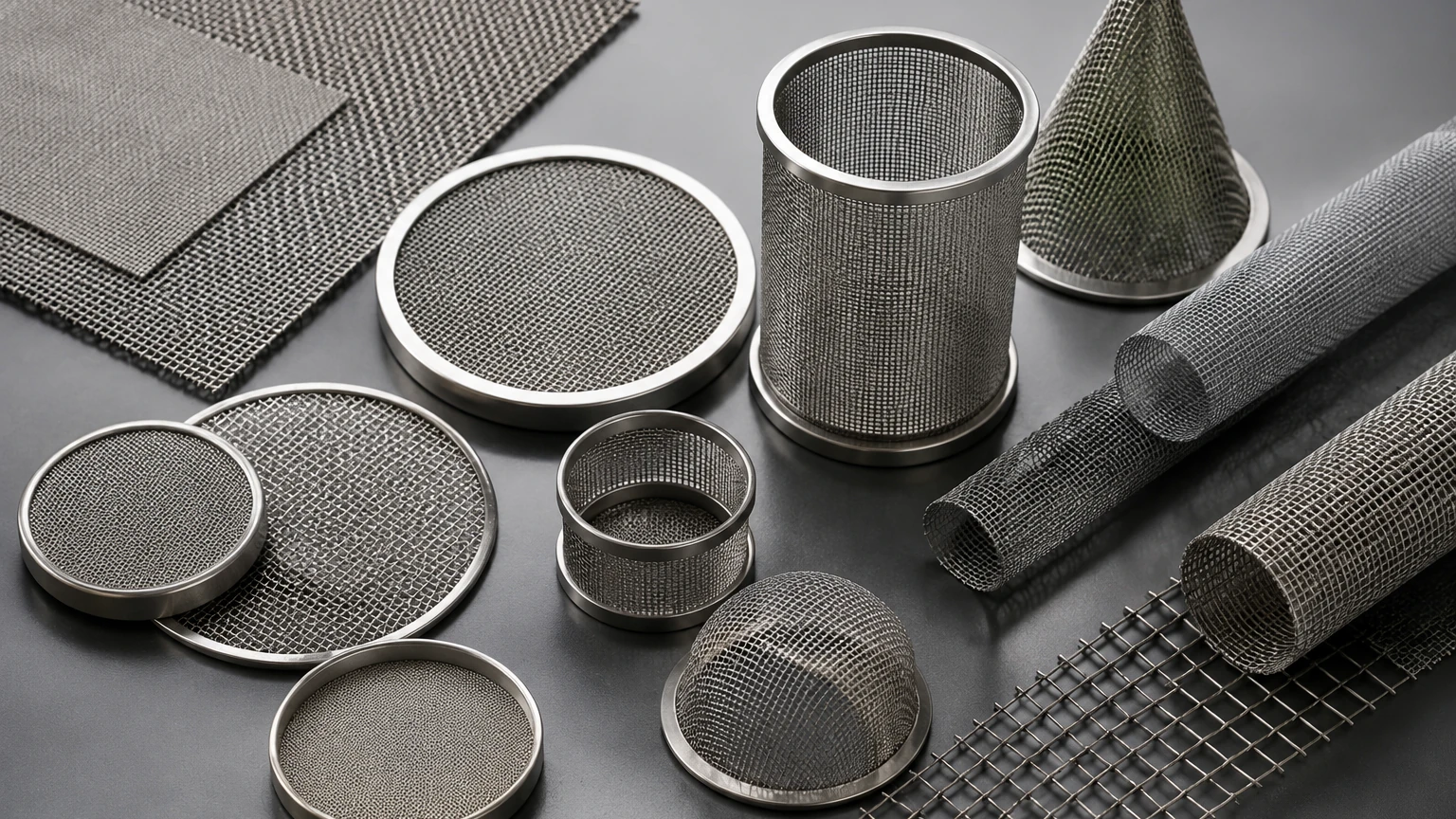
Not all waste screens are created equal. The physical structure of the screening media determines its suitability for specific types of waste. The three most common configurations are woven wire mesh, perforated metal, and wedge wire.
Woven Wire Mesh
Woven wire mesh screens are characterized by their precision and versatility. They can be manufactured to very fine micron ratings, making them ideal for secondary waste screening where smaller particulates must be captured. The weaving pattern—whether plain, twilled, or Dutch weave—affects the screen's strength and flow characteristics. In waste applications, wire mesh is often supported by a coarser perforated plate to prevent sagging under heavy loads.
Perforated Metal Screens
Perforated screens are produced by punching holes into a metal sheet. These are typically used for coarse screening where the primary goal is to remove large debris like plastic fragments, stones, or wood. They offer exceptional mechanical strength and are easier to clean than fine mesh, but they generally provide a lower open area percentage, which can lead to higher initial pressure drops.
Wedge Wire (V-Wire) Technology
Wedge wire is often considered the gold standard for high-demand industrial waste screens. It consists of V-shaped profile wires resistance-welded onto support rods. This design creates a slot that widens inwardly, which significantly reduces the risk of "blinding" or clogging. If a particle manages to pass the narrowest point of the slot, it will easily clear the rest of the screen. This self-cleaning property is essential for continuous operations where manual cleaning is impractical.
Technical Parameters for Selection
When specifying a waste screen, engineers must confirm several technical parameters to ensure the component meets the application's performance expectations. For those evaluating custom manufacturing options, visiting the Main Page can provide insights into how these parameters are integrated into bespoke filtration solutions.
Micron Rating and Aperture Size
The micron rating defines the smallest particle the screen is intended to capture. In waste screening, it is important to distinguish between "absolute" and "nominal" ratings. An absolute rating implies that 100% of particles above that size will be retained, whereas a nominal rating indicates a high percentage (usually 60-90%). For critical protection of downstream pumps, absolute ratings are often required.
Open Area and Flow Velocity
The open area is the percentage of the total screen surface that is not obstructed by metal. This directly influences the flow velocity. If the open area is too low, the velocity through the remaining openings increases, which can force soft particles through the screen or cause rapid erosion of the screen material itself. Engineers typically aim for a flow velocity that balances throughput with the physical limits of the screening media.
Pressure Drop (Delta P)
The pressure drop is the difference in pressure between the upstream and downstream sides of the screen. As a waste screen captures debris, the effective open area decreases, and the pressure drop increases. The screen and its housing must be designed to withstand the maximum expected pressure drop before cleaning or replacement is triggered.
Applications Across Key Industries
Waste screens are utilized in a variety of sectors, each with unique challenges that dictate the design of the filtration component.
Chemical and Petrochemical Processing
In these industries, waste screens must handle aggressive solvents and varying temperatures. The primary challenge is chemical compatibility. A screen that fails due to corrosion can lead to catastrophic downstream contamination. Precision-engineered stainless steel cartridges are often used here to ensure that catalyst fines or process byproducts are effectively removed from the waste stream.
Food and Beverage Production
Hygiene is the priority in food and beverage applications. Waste screens must be constructed from food-grade materials and designed for easy cleaning (CIP – Clean-In-Place). Common waste includes organic solids, fats, and oils. Screens in this sector often require smooth surface finishes to prevent bacterial growth and to facilitate the removal of sticky organic matter.
Municipal and Industrial Water Treatment
Large-scale water treatment involves the removal of diverse debris. From intake screens that protect the plant from aquatic life and large trash to internal screens that manage sludge, the durability of the waste screen is tested by constant exposure and high volumes. Wedge wire is frequently used in these applications due to its high strength-to-weight ratio and low maintenance requirements.
Maintenance, Cleaning, and Longevity
The total cost of ownership (TCO) of a waste screen is heavily influenced by its maintenance requirements. A screen that is difficult to clean will result in higher labor costs and more frequent downtime.
Cleaning Mechanisms
* Backwashing: This involves reversing the flow of the fluid to dislodge particles from the screen surface. This is most effective with wedge wire and certain types of wire mesh.
* Ultrasonic Cleaning: For fine mesh screens used in pharmaceutical or high-precision chemical applications, ultrasonic cleaning can remove sub-micron particles that are trapped within the weave.
* Mechanical Scrapers: In high-solids applications, a mechanical scraper may be used to physically remove the "filter cake" from the surface of a perforated or wedge wire screen.
Replacement Cycles
The replacement cycle of a waste screen depends on the abrasiveness of the waste and the frequency of cleaning. A well-engineered screen made from high-quality stainless steel can last for years if maintained correctly. However, engineers should monitor for signs of fatigue, such as wire breakage or slot widening, which can compromise the filtration integrity.
Customization and OEM Integration
Standard off-the-shelf waste screens rarely meet the exact needs of complex industrial systems. Customization allows for the optimization of the screen to the specific housing, flow rate, and particle characteristics of the process.
When working with a manufacturer like Kaifil, engineers can specify custom dimensions, reinforced structures for high-pressure environments, and specialized end-fittings (such as flanges, threads, or O-ring seals) to ensure a perfect fit within existing infrastructure. Customization also extends to the layering of different media; for example, a fine wire mesh can be sintered to a coarse perforated plate to combine high-precision filtration with extreme mechanical strength.
Conclusion: Making Informed Purchasing Decisions
Selecting a waste screen is a strategic decision that affects the entire process chain. By focusing on material quality, structural design, and technical parameters like micron rating and open area, engineers can ensure reliable performance and minimize operational risks.
For purchasing teams and technical professionals, the goal is to find a balance between initial investment and long-term durability. High-quality stainless steel filtration components may have a higher upfront cost, but their resistance to corrosion and mechanical failure provides a significantly lower total cost of ownership over the life of the equipment. To explore specific product options and receive application-specific support for your filtration challenges, reviewing the capabilities on the Main Page is a recommended next step in the procurement process.
Ultimately, a robust waste screen is the first line of defense in maintaining industrial efficiency, protecting sensitive equipment, and ensuring that waste streams meet regulatory or process requirements with consistency and precision.
