


Intake Screen
In industrial fluid handling and water treatment systems, the intake screen serves as the primary defense mechanism for downstream equipment. Whether drawing water from a natural source, a cooling tower basin, or a chemical processing tank, the integrity of the intake system determines the operational lifespan of pumps, valves, and heat exchangers. For engineers and procurement specialists, selecting an intake screen involves more than choosing a mesh size; it requires a deep understanding of fluid dynamics, material science, and the specific environmental challenges of the application.
As a specialized manufacturer of stainless steel filtration solutions, Kaifil provides precision-engineered components that address the complexities of industrial intake. This guide explores the technical considerations, material requirements, and engineering variables essential for optimizing intake screen performance.
Engineering Fundamentals of Intake Screen Design
The primary function of an intake screen is to remove debris and particulate matter while maintaining a consistent flow rate with minimal pressure drop. Achieving this balance requires careful calculation of several hydraulic variables.
Approach and Through-Screen Velocity
One of the most critical factors in intake design is velocity. The "approach velocity" refers to the speed of the fluid as it nears the screen, while the "through-screen velocity" is the speed at which the fluid passes through the openings. In many environmental applications, such as water intake from rivers or lakes, regulatory standards often mandate low approach velocities to prevent the impingement of aquatic life. From a mechanical perspective, maintaining a low through-screen velocity reduces the risk of debris becoming wedged in the mesh, which simplifies cleaning and reduces head loss.
Pressure Drop and Head Loss
Every filtration element introduces some level of resistance to the flow. In intake systems, excessive head loss can lead to pump cavitation, which causes catastrophic mechanical failure. Engineers must calculate the "clean pressure drop" based on the open area of the screen. Kaifil’s custom-manufactured screens are designed to maximize the effective open area while maintaining the structural rigidity required to withstand high differential pressures during debris loading events.
Material Selection for Industrial Environments
Industrial intake screens are frequently exposed to harsh conditions, including corrosive chemicals, abrasive particulates, and varying pH levels. The choice of material is the single most significant factor in determining the total cost of ownership (TCO) and the replacement cycle of the component.
Stainless Steel 304 vs. 316L
Stainless steel is the industry standard for intake screens due to its inherent strength and resistance to oxidation.
- Type 304 Stainless Steel: Suitable for general industrial applications, freshwater intake, and less aggressive chemical environments. It provides excellent structural integrity and cost-effectiveness.
- Type 316L Stainless Steel: Contains molybdenum, which provides superior resistance to chlorides and pitting. This is the preferred choice for marine environments, pharmaceutical processing, and chemical plants where the intake fluid may contain corrosive agents.
Advanced Alloys and Coatings
For extreme environments, such as high-temperature chemical processing or highly acidic fluid handling, specialized alloys or surface treatments may be required. Passivation and electropolishing are common post-manufacturing processes that Kaifil employs to enhance the corrosion resistance and surface smoothness of the filter media, further reducing the adhesion of biofouling organisms or mineral scaling.
Types of Intake Screen Configurations
Depending on the installation site and the nature of the fluid, different screen geometries are utilized to optimize performance. Kaifil specializes in customizing these structures to meet specific OEM requirements.
Wedge Wire Screens
Wedge wire (V-wire) is often the preferred choice for intake applications. The triangular profile of the wire creates a slot that widens inwardly. This design ensures that any particle small enough to pass through the initial opening will continue through without becoming trapped. This "non-clogging" characteristic is essential for continuous-duty systems where manual cleaning is difficult.
Perforated Metal and Wire Mesh
For applications requiring finer filtration, multi-layer sintered wire mesh or precision-perforated plates are used. These are common in hydraulic systems and food and beverage processing where the intake must capture smaller particulates to protect high-precision downstream components. By layering different mesh counts, engineers can create a depth-filtration effect that increases the dirt-holding capacity of the screen.
Passive vs. Active Intake Systems
Passive screens have no moving parts and rely on the natural flow or periodic manual cleaning. Active screens may incorporate internal brush systems or backwash mechanisms. When designing a custom solution, the choice between passive and active systems depends on the debris load of the source fluid and the availability of maintenance personnel.
Customization and OEM Integration
Standard off-the-shelf intake screens rarely meet the exact needs of complex industrial systems. Customization is often necessary to ensure seamless integration into existing piping and to meet specific filtration accuracy requirements.
Tailored Filtration Accuracy
Filtration accuracy, often measured in microns or millimeters, must be matched to the sensitivity of the downstream equipment. A screen that is too coarse will allow damaging particles through, while a screen that is too fine will clog prematurely. Kaifil works with engineering teams to determine the optimal slot size or mesh count based on particle size distribution (PSD) analysis of the fluid.
Structural Reinforcement
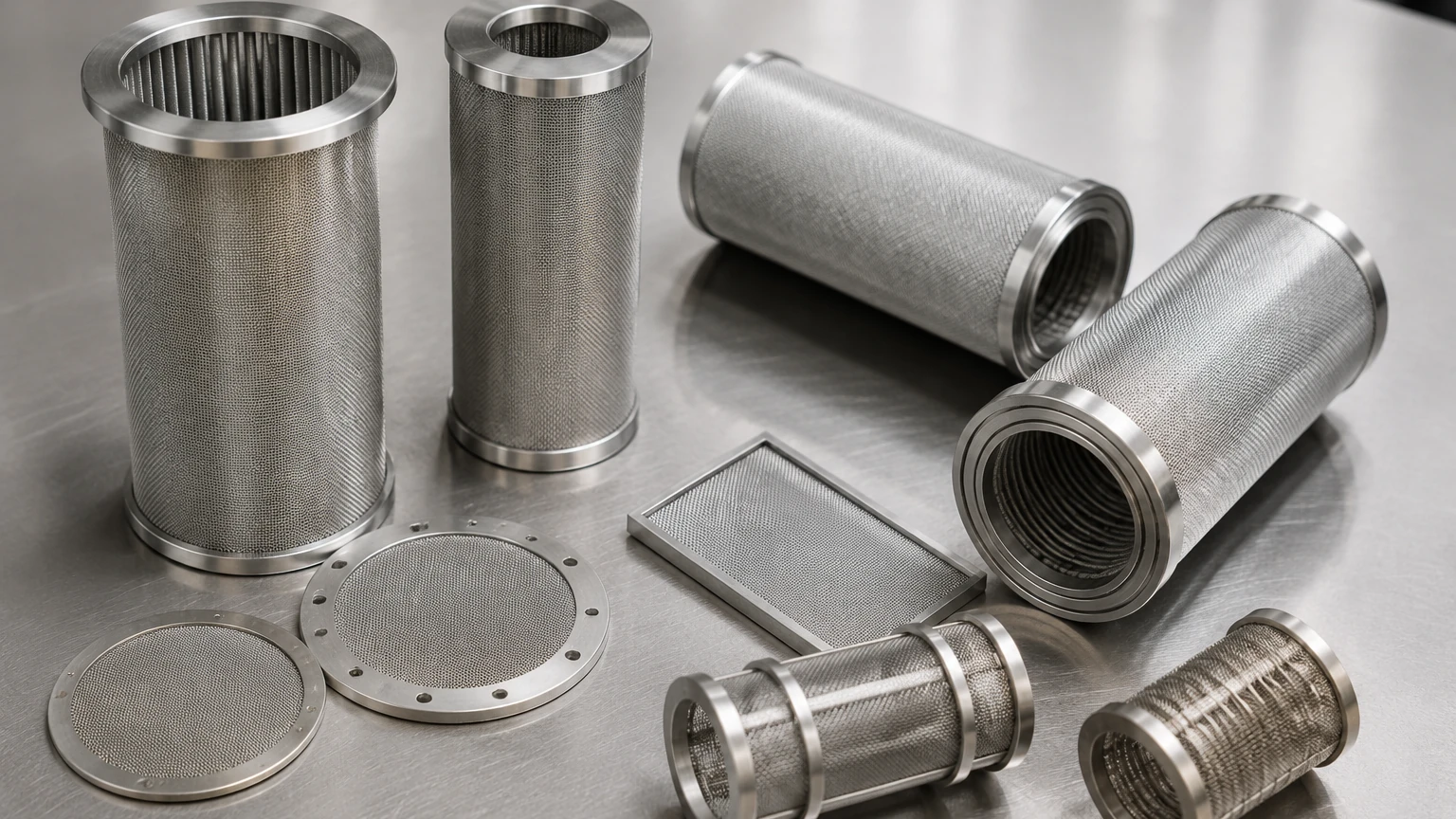
In high-flow or high-pressure applications, the intake screen must resist collapse or deformation. This is achieved through the use of internal support cores, reinforced end caps, and heavy-duty flange connections. On the Main Page of the Kaifil website, technical professionals can find more information on the various structural configurations available for custom filter cartridges and intake components.
Managing Biofouling and Scaling
In water-based intake systems, biofouling (the accumulation of microorganisms, algae, or mussels) and mineral scaling are constant challenges. These accumulations restrict flow and increase the weight of the screen, potentially leading to structural failure.
Mitigation Strategies
1. Surface Finish: A high-quality electropolished finish reduces the surface roughness, making it more difficult for biofilms to attach.
2. Air Burst Systems: Many intake screens are designed with internal piping for air bursting. Periodically releasing a high-pressure burst of air from inside the screen clears accumulated debris and biological growth from the external surface.
3. Material Additives: In some cases, copper-nickel alloys or specialized coatings are used for their natural biocidal properties, although stainless steel remains the primary choice for its mechanical durability.
Operational Maintenance and Replacement Cycles
An effective maintenance strategy is essential for the longevity of the intake system. Engineers should establish clear protocols for monitoring the performance of the intake screen.
Monitoring Differential Pressure
The most effective way to monitor screen health is by tracking the differential pressure (ΔP) across the screen. An increase in ΔP indicates that the screen is becoming loaded with debris. Automated systems can be set to trigger a cleaning cycle or an alarm when the pressure reaches a pre-defined threshold.
Inspection and Cleaning
Even with self-cleaning mechanisms, periodic physical inspections are recommended to check for signs of mechanical wear, corrosion, or bypass. In many industrial settings, intake screens are treated as semi-permanent components, but the filter media itself may eventually require replacement due to abrasion or chemical degradation. Using high-quality stainless steel components from a reliable manufacturer ensures that these replacement cycles are as long as possible, reducing downtime and labor costs.
Why Precision Manufacturing Matters
The performance of an intake screen is only as good as the precision of its manufacturing. Inconsistent slot widths in a wedge wire screen or poorly welded seams in a wire mesh cartridge can lead to "leakage," where large particles bypass the filter.
Kaifil utilizes advanced manufacturing techniques to ensure that every intake screen meets strict dimensional tolerances. This precision is vital for industries like pharmaceutical and food processing, where even minor filtration failures can result in contaminated batches and significant financial loss. By focusing on material purity and engineering integrity, Kaifil provides the reliability required for the most demanding industrial environments.
Conclusion: Selecting the Right Partner for Intake Solutions
Selecting an intake screen is a multi-faceted engineering decision that impacts the efficiency and safety of the entire fluid handling system. By considering flow velocities, material compatibility, and the specific nature of the contaminants, engineers can design a system that provides long-term protection for their equipment.
For those seeking specialized support in developing custom filtration components, Kaifil offers the technical expertise and manufacturing capability to deliver high-performance solutions. Whether you are designing a new system or upgrading an existing intake, focusing on quality and precision at the intake stage is the most effective way to ensure operational continuity. To explore specific product capabilities and technical specifications, visit the Main Page for a comprehensive overview of industrial filtration solutions.
