


Steel Housings
In the landscape of industrial filtration, the performance of a filter element is only as reliable as the vessel that contains it. Steel housings serve as the structural foundation for liquid and gas filtration systems, providing the necessary pressure containment, alignment, and environmental protection for sensitive filter media. For engineers and procurement specialists, selecting the appropriate housing is not merely a matter of sizing; it involves a complex evaluation of material science, fluid dynamics, and regulatory compliance.
As a specialized manufacturer, Kaifil provides precision-engineered stainless steel filtration solutions designed to meet the rigorous demands of modern industry. Understanding the technical nuances of steel housings is essential for optimizing system uptime, ensuring safety, and achieving the desired filtration efficiency. This guide examines the engineering considerations, material requirements, and selection criteria for industrial steel housings.
The Role of Steel Housings in Industrial Filtration Systems
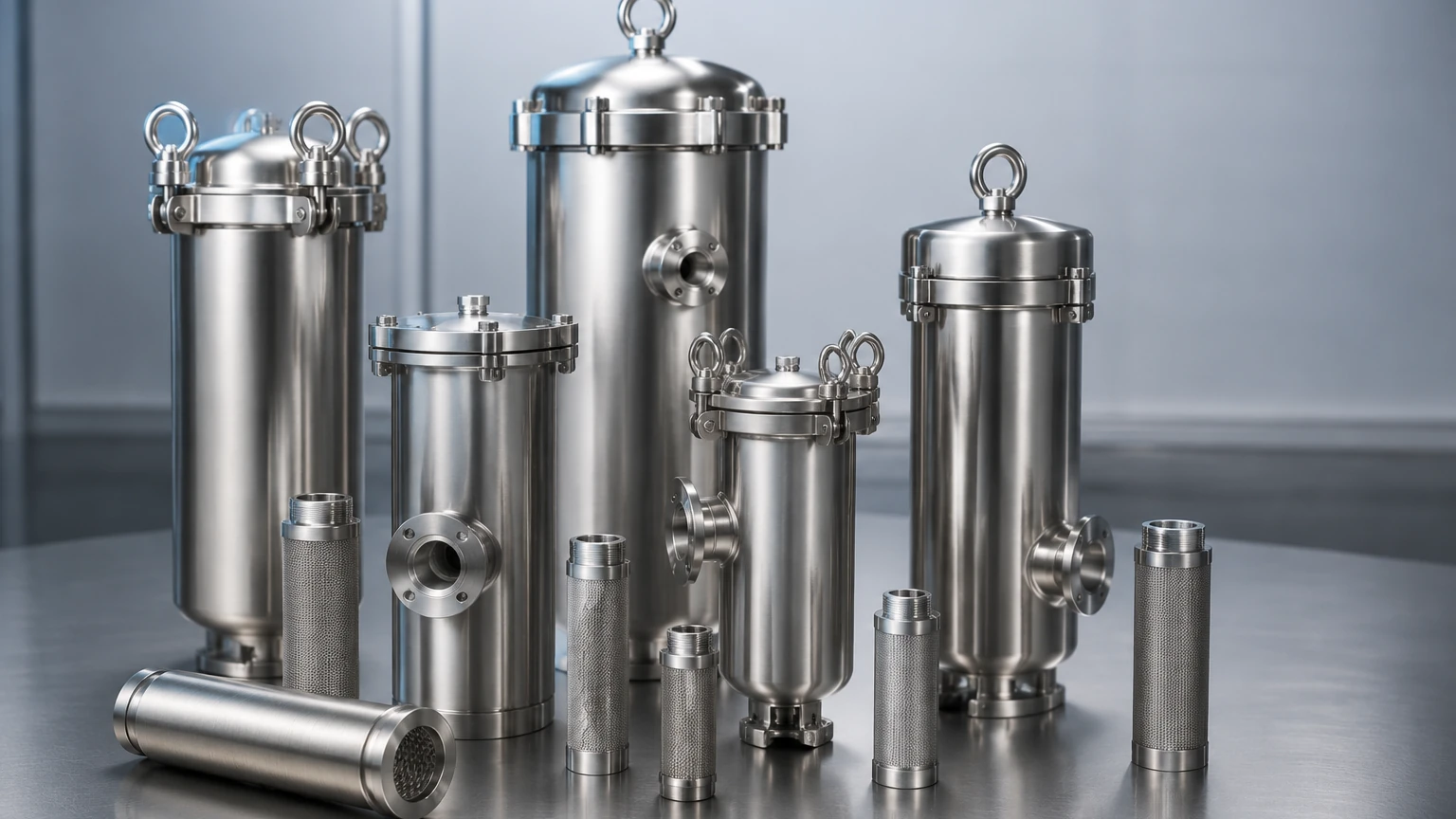
Steel housings are more than simple containers; they are precision-engineered pressure vessels designed to manage the flow of fluids while maintaining the integrity of the filtration process. Their primary function is to direct the influent through the filter media—whether it be a wire mesh screen, a pleated cartridge, or a sintered metal element—and collect the effluent for downstream use.
Beyond flow direction, steel housings must withstand significant internal pressures and external environmental stresses. In hydraulic systems, for instance, housings may be subjected to rapid pressure spikes. In chemical processing, they must resist both internal corrosion from the process fluid and external oxidation in harsh plant environments. The design of the housing also dictates the ease of maintenance. A well-designed housing allows for rapid element change-outs, minimizing downtime during scheduled service intervals. By visiting the Main Page, technical teams can explore the various configurations available for specific industrial applications.
Material Selection: Comparing Stainless Steel Grades and Finishes
The choice of material for steel housings is the most critical factor in determining the vessel's lifespan and compatibility with the process fluid. While carbon steel is used in some low-end applications, stainless steel is the industry standard for high-performance filtration due to its superior corrosion resistance and mechanical strength.
304 Stainless Steel
Grade 304 is the most common stainless steel used in industrial filtration. It offers excellent corrosion resistance to a wide range of atmospheric environments and many corrosive media. It is typically used in water treatment, food and beverage (non-acidic), and general industrial applications where cost-effectiveness and durability are balanced.
316 and 316L Stainless Steel
For more demanding environments, 316 stainless steel is preferred due to the addition of molybdenum, which enhances resistance to chlorides and pitting. 316L, the low-carbon version, is essential for housings that require extensive welding. The lower carbon content prevents carbide precipitation during the welding process, which otherwise could lead to intergranular corrosion in the heat-affected zones. These grades are standard in pharmaceutical, marine, and aggressive chemical processing environments.
Surface Finishes and Treatments
The internal and external surface finish of steel housings is critical, especially in sanitary applications.
- Bead Blasting: Provides a uniform, matte finish often used for industrial-grade housings.
- Mechanical Polishing: Reduces surface roughness (measured in Ra) to prevent particle entrapment and facilitate cleaning.
- Electropolishing: An electrochemical process that removes a microscopic layer of material, resulting in a mirror-like finish. This is the gold standard for pharmaceutical and semiconductor applications, as it minimizes the surface area for bacterial growth and enhances corrosion resistance.
Engineering Standards and Pressure Vessel Compliance
When specifying steel housings, engineers must ensure the design complies with relevant international standards. These standards govern the wall thickness, welding quality, and testing protocols required to ensure safety under pressure.
ASME and PED Certification
In North America, the ASME (American Society of Mechanical Engineers) Boiler and Pressure Vessel Code (Section VIII) is the primary standard for pressure vessels. In Europe, the Pressure Equipment Directive (PED) 2014/68/EU serves a similar purpose. Housings designed to these standards undergo rigorous calculations to determine the maximum allowable working pressure (MAWP) and are often subjected to hydrostatic testing at 1.3 to 1.5 times the design pressure.
Flow Dynamics and Pressure Drop
The internal geometry of the housing significantly impacts the total pressure drop ($ΔP$) of the system. Engineers must account for the "housing pressure drop," which is the resistance caused by the inlet and outlet ports and the internal flow path, independent of the filter element. Minimizing turbulence and avoiding sharp turns within the housing design helps maintain energy efficiency and prevents fluid shearing in sensitive applications.
Design Configurations: Single-Round vs. Multi-Round Housings
The volume of fluid to be processed and the required filtration area dictate the physical configuration of the steel housings.
Single-Round Housings
These are designed to hold a single filter cartridge or bag. They are ideal for low-to-medium flow rates or batch processing. Single-round housings are often used in point-of-use applications or as pre-filters for sensitive analytical equipment. Their compact footprint makes them easy to integrate into existing piping systems.
Multi-Round Housings
For high-flow industrial processes, multi-round housings contain multiple filter elements (ranging from 3 to over 100) within a single vessel. This design provides a massive surface area, allowing for high flow rates with minimal pressure drop and longer intervals between filter changes. Multi-round housings often feature specialized internal support plates and compression mechanisms to ensure each element is sealed correctly, preventing bypass.
Bag Filter Housings
Steel housings for bag filters are designed with an internal support basket. These are typically used for high-solids loading applications where the goal is to capture large volumes of contaminants. The "top-entry" or "side-entry" design of these housings influences how easily the spent bags can be removed without spilling unfiltered liquid into the clean side of the vessel.
Connection Types and Sealing Mechanisms
The method by which steel housings connect to the piping system and how they seal internally is vital for leak-free operation and process purity.
Inlet and Outlet Connections
- Threaded (NPT/BSP): Common for smaller, low-pressure industrial housings.
- Flanged (ANSI/DIN/JIS): The standard for large-diameter piping and high-pressure applications. Flanges provide a robust, bolt-on connection that is easy to disassemble for maintenance.
- Tri-Clamp (Sanitary): Used extensively in the food, beverage, and pharmaceutical industries. These allow for quick, tool-free disassembly and provide a crevice-free internal joint that prevents bacterial harborage.
Sealing Gaskets and O-Rings
The choice of sealing material must be compatible with the process temperature and chemical composition. Common materials include:
- Buna-N (Nitrile): Good for general water and oil applications.
- EPDM: Excellent for steam, water, and many ketones, but poor for oils.
- Viton (FKM): High-temperature resistance and broad chemical compatibility with oils and fuels.
- PTFE/TEV: Used for the most aggressive chemical environments where elastomeric seals might fail.
Maintenance, Inspection, and Operational Longevity
To ensure the long-term reliability of steel housings, a proactive maintenance and inspection schedule is required. Unlike the filter elements themselves, which are consumables, the housing is a capital asset intended to last for years or decades.
Regular Inspection Points
- Closure Integrity: Inspecting the swing bolts, V-band clamps, or threaded lids for wear or deformation.
- Seal Surfaces: Checking the O-ring grooves and flange faces for scratches or pitting that could lead to bypass or external leaks.
- Corrosion Monitoring: Especially in chemical applications, periodic ultrasonic thickness testing may be required to ensure the vessel wall has not thinned beyond safe limits due to corrosion.
Cleaning Procedures
In many industries, steel housings must be cleaned during filter change-outs to remove accumulated sediment from the "dirty" side of the vessel. In sanitary applications, the housings may undergo CIP (Clean-in-Place) or SIP (Steam-in-Place) cycles. The housing design must eliminate "dead legs" or stagnant zones where fluid could collect and degrade or promote microbial growth.
Selecting the Right Housing for Your Application
When purchasing steel housings, engineers should provide a comprehensive set of parameters to the manufacturer to ensure the vessel is fit for purpose. Key data points include:
1. Fluid Properties: Viscosity, density, and chemical composition.
2. Operating Conditions: Normal and maximum operating pressure, as well as temperature ranges.
3. Flow Rate: Both nominal and peak flow requirements.
4. Filtration Goal: The required micron rating and the type of filter element to be used (DOE, Code 7, etc.).
5. Environment: Indoor vs. outdoor installation, presence of salt spray, or wash-down requirements.
By carefully evaluating these factors, technical teams can select a housing that provides the lowest total cost of ownership through reduced maintenance, energy savings, and extended equipment life. Kaifil’s engineering team works closely with global clients to develop customized steel housings that meet these specific technical demands, ensuring that every filtration system operates at peak efficiency.
For more detailed technical specifications and to view our full range of stainless steel filtration components, please visit the Main Page.
