


Basket Strainer
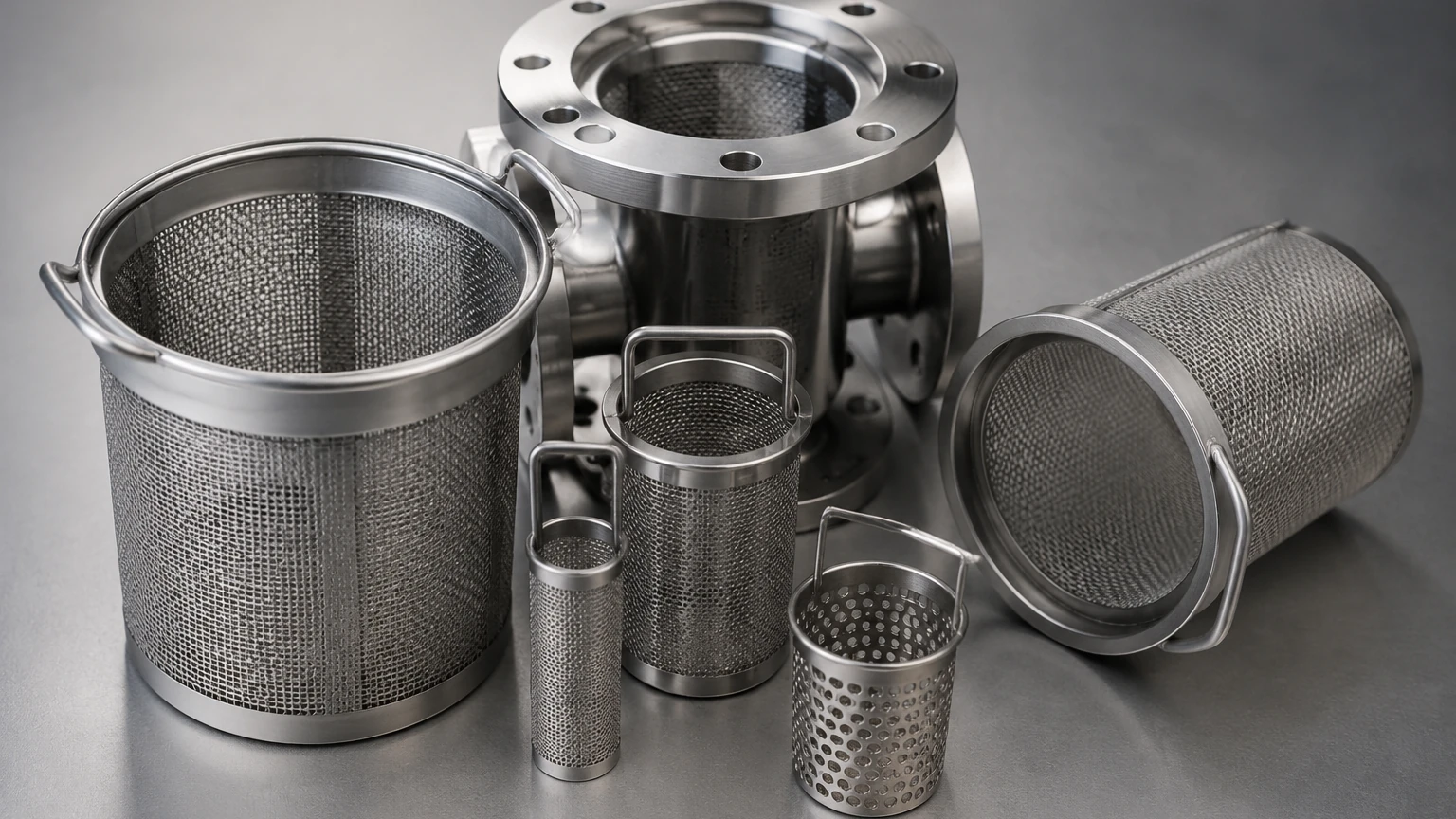
In industrial fluid handling systems, the integrity of downstream equipment—such as pumps, valves, flow meters, and spray nozzles—is paramount to operational efficiency and safety. A basket strainer serves as a critical mechanical component designed to remove unwanted solids from liquid, gas, or steam lines by means of a perforated or wire mesh straining element. Unlike simpler filtration components, the basket strainer is engineered for high-capacity debris collection and ease of maintenance, making it a staple in sectors ranging from chemical processing to food and beverage production.
As a specialized manufacturer of stainless steel filtration solutions, Kaifil emphasizes the importance of material selection and precision engineering in strainer design. Understanding the technical nuances of these components allows engineers to optimize flow rates, minimize pressure drops, and extend the service life of the entire piping system.
The Role of Basket Strainers in Industrial Process Protection
The primary function of a basket strainer is to intercept particulate matter that could cause mechanical wear, clogging, or process contamination. While Y-strainers are often used for applications with lower debris loading or where space is constrained, the basket configuration offers a significantly larger surface area. This increased "open area ratio" allows for longer run times between cleaning cycles and a lower initial pressure drop.
In heavy-duty industrial environments, these strainers are positioned on the suction side of pumps. By capturing scale, weld beads, or external contaminants before they reach the pump impeller, the strainer prevents cavitation and mechanical seal failure. In the pharmaceutical and food industries, the focus shifts toward maintaining product purity, where stainless steel basket strainers with high-polish finishes ensure that no bacterial growth occurs within the filtration housing.
Engineering Design: Simplex vs. Duplex Configurations
When selecting a basket strainer, engineers must first determine the tolerance for system downtime. This leads to the choice between simplex and duplex designs.
Simplex Basket Strainers
Simplex strainers consist of a single chamber and a single basket. They are ideal for batch processes or systems that can be temporarily shut down for maintenance. To clean a simplex strainer, the flow must be stopped, the vessel depressurized, and the cover removed. These are cost-effective solutions for applications where debris loading is predictable and infrequent.
Duplex Basket Strainers
For continuous-flow operations where shutdown is not an option—such as cooling water loops in power plants or fuel lines in marine engines—a duplex basket strainer is required. This configuration involves two separate straining chambers connected by a diverted valve (often a plug or ball valve). When one basket becomes loaded with debris, the operator can switch the flow to the clean chamber without interrupting the process. This allows for "on-the-fly" maintenance and ensures 100% uptime.
Material Science: Why Stainless Steel is the Standard for Industrial Filtration
The environment in which a basket strainer operates dictates its material composition. While cast iron or carbon steel may suffice for basic water applications, stainless steel remains the gold standard for demanding industrial processes. Kaifil specializes in utilizing high-grade alloys to meet these rigorous demands.
1. Corrosion Resistance: Stainless steel 304 and 316L provide exceptional resistance to oxidation and chemical attack. 316L, containing molybdenum, is particularly effective in chloride-rich environments or acidic chemical processing.
2. Thermal and Mechanical Stability: Industrial processes often involve high temperatures and fluctuating pressures. Stainless steel maintains its structural integrity and creep resistance far better than plastic or lower-grade metal alternatives.
3. Sanitary Compliance: In food, beverage, and pharmaceutical sectors, the non-porous surface of stainless steel allows for effective Clean-in-Place (CIP) procedures. Custom-manufactured baskets can be electropolished to achieve specific Ra (roughness average) values, preventing particle entrapment and biofilm formation.
Technical Specifications: Micron Ratings and Mesh Selection
The performance of a basket strainer is largely defined by its internal element. This element usually consists of a heavy-gauge perforated metal sheet that provides structural support, often lined with a finer stainless steel wire mesh to achieve the desired filtration accuracy.
Perforation vs. Mesh
Perforated metals are typically used for "coarse" straining, with hole sizes ranging from 1/32" to 1/2". When finer filtration is required, a wire mesh liner is added. This mesh can range from 20 mesh (approx. 840 microns) down to 400 mesh (approx. 37 microns) or finer. Engineers must balance the need for fine filtration with the risk of rapid clogging; a mesh that is too fine for the application will result in excessive pressure drop and frequent maintenance.
The Open Area Ratio (OAR)
A critical engineering metric is the ratio of the internal straining area to the cross-sectional area of the inlet pipe. A high-quality basket strainer typically offers an OAR of at least 6:1. This means the total area of the holes in the basket is six times larger than the area of the pipe. A higher OAR results in a lower velocity through the mesh, reducing the "delta P" (pressure drop) and protecting the mesh from premature fatigue or bursting.
Performance Evaluation: Flow Rates and Pressure Drop Management
Every component in a fluid system contributes to pressure loss. For a basket strainer, the total pressure drop is the sum of the loss through the housing and the loss through the clean straining element. As debris accumulates, the pressure drop increases exponentially.
Engineers should consult flow coefficient (Cv) charts during the design phase. The Cv value represents the flow of water in gallons per minute (GPM) that will pass through the strainer with a 1 psi pressure drop. To maintain system efficiency, it is generally recommended that the initial (clean) pressure drop does not exceed 2 psi.
Factors affecting pressure drop include:
* Viscosity: Higher viscosity fluids (like heavy oils or resins) require larger strainers or coarser mesh to maintain flow.
* Specific Gravity: Denser fluids increase the resistance through the strainer.
* Velocity: High-velocity flow can cause turbulence within the housing, leading to increased energy loss and potential erosion of the basket material.
Maintenance Protocols and Operational Longevity
A basket strainer is only as effective as its maintenance regimen. Neglecting a clogged strainer can lead to basket collapse, which allows debris to bypass the filter and potentially destroy downstream equipment.
Differential Pressure Monitoring
The most reliable way to track strainer performance is through differential pressure (DP) gauges. By measuring the pressure before and after the strainer, operators can identify exactly when the basket needs cleaning. Typically, a strainer should be cleaned when the DP reaches 5 to 10 psi above the clean reading.
Cleaning Procedures
For stainless steel wire mesh baskets, cleaning usually involves rinsing with a high-pressure hose or ultrasonic cleaning for fine particulates. It is essential to inspect the gaskets and seals (such as EPDM, Viton, or PTFE) during every cleaning cycle. A compromised seal can lead to external leaks or "fluid bypass," where unfiltered liquid escapes around the edges of the basket.
Selecting a Basket Strainer for Specific Industry Applications
Different industries impose unique constraints on strainer design. Customization is often necessary to ensure the component fits the specific mechanical and chemical requirements of the site.
* Chemical Processing: Requires compatibility with aggressive solvents. Features often include PTFE-coated gaskets and heavy-duty 316L stainless steel construction.
* Water Treatment: Focuses on high-volume flow and the removal of organic matter or sand. Large-capacity baskets are favored here to minimize manual intervention.
* Oil & Gas: High-pressure ratings (ANSI Class 150, 300, or 600) are standard. These strainers often feature bolted covers for maximum safety under high-stress conditions.
* Food & Beverage: Requires "quick-opening" covers (such as swing bolts or tri-clamp closures) to facilitate frequent cleaning and inspection, alongside sanitary-grade welding.
Conclusion: Optimizing Your Filtration Strategy
Selecting the right basket strainer is a balance of fluid dynamics, material science, and operational logistics. By focusing on high-quality stainless steel construction and precise mesh selection, facilities can significantly reduce maintenance costs and protect their capital equipment. Whether you require a standard simplex unit or a highly customized multi-basket duplex system, the engineering details—from the open area ratio to the micron rating—determine the success of your filtration strategy.
For technical professionals and purchasing teams looking to integrate high-performance filtration into their systems, reviewing the comprehensive capabilities of a dedicated manufacturer is the next logical step. Explore detailed technical specifications and customization options by visiting the Main Page to see how advanced stainless steel solutions can be tailored to your specific industrial requirements.
