


100 Mesh Stainless Steel Screen
In industrial filtration, selecting the correct mesh size is a critical engineering decision that balances particle retention with flow efficiency. The 100 mesh stainless steel screen is one of the most widely utilized specifications in the B2B sector, serving as a versatile medium for fine filtration across chemical, pharmaceutical, and food processing industries. Understanding the technical nuances of this specific mesh count—including wire diameter, aperture size, and material grade—is essential for engineers and purchasing teams tasked with optimizing filtration systems.
As a specialized manufacturer of custom stainless steel filtration solutions, Kaifil provides precision-engineered components that utilize 100 mesh screen technology. This guide explores the technical parameters, application scenarios, and selection criteria necessary for integrating 100 mesh stainless steel screens into demanding industrial environments.
Technical Specifications and Geometry of 100 Mesh
The term "100 mesh" refers to the number of openings per linear inch of the screen. In a square weave configuration, this means there are 10,000 openings per square inch. However, the mesh count alone does not fully define the filtration capability; the wire diameter and the resulting aperture size are the primary factors determining performance.
Aperture and Micron Rating
For a standard 100 mesh stainless steel screen, the wire diameter typically ranges from 0.10 mm to 0.11 mm (approximately 0.004 inches). With a 100-mesh count, the aperture—the clear distance between two adjacent parallel wires—is approximately 150 microns (0.150 mm). This makes it an ideal choice for removing fine sand, scale, and particulate matter that could damage downstream equipment or contaminate end products.
Open Area Percentage
The open area is the ratio of the area of the openings to the total area of the screen. For a standard 100 mesh screen with a 0.10 mm wire, the open area is roughly 36% to 40%. Engineers must consider this percentage when calculating flow rates and potential pressure drops across the filter element. A higher open area reduces resistance to flow but may compromise the structural integrity of the mesh under high-pressure conditions.
Material Selection: 304 vs. 316L Stainless Steel
Choosing the correct alloy is as important as selecting the mesh size. Stainless steel is preferred in industrial filtration for its mechanical strength and resistance to oxidation. At Kaifil, we focus on providing materials that match the chemical and thermal demands of the application.
* Grade 304 Stainless Steel: This is the standard industrial grade, offering excellent durability and cost-effectiveness. It is suitable for most water treatment, hydraulic oil, and general industrial applications where extreme corrosion is not a primary concern.
* Grade 316/316L Stainless Steel: For environments involving chlorides, acids, or high-salinity fluids, 316L is the preferred choice. The addition of molybdenum enhances pitting resistance, while the "L" (low carbon) designation prevents carbide precipitation during welding, ensuring the longevity of fabricated filter cartridges and screens in chemical processing or marine environments.
Key Applications in Industrial Filtration
The 100 mesh stainless steel screen is frequently integrated into complex filtration assemblies, such as pleated cartridges, basket strainers, and perforated metal support structures. Its specific aperture makes it suitable for several high-stakes roles:
Chemical and Petrochemical Processing
In chemical manufacturing, 100 mesh screens act as secondary filters to protect sensitive instrumentation and catalyst beds. They are effective at capturing fine solids that might have bypassed coarser primary strainers, ensuring the purity of the chemical stream.
Food and Beverage Industry
Compliance with hygiene standards requires materials that are easy to clean and resistant to corrosion from cleaning agents. 100 mesh screens are used in the filtration of juices, syrups, and oils to remove pulp or unwanted particulates while maintaining high throughput. The smooth surface of stainless steel wire mesh prevents bacterial growth and facilitates CIP (Clean-in-Place) processes.
Hydraulic and Lubrication Systems
Precision hydraulic systems require clean fluid to prevent wear on valves and pumps. A 100 mesh screen is often used as a suction strainer or a return line filter element to capture metal shavings and environmental contaminants, extending the service life of expensive hydraulic components.
Engineering Considerations: Pressure Drop and Flow Rate
When designing a system around a 100 mesh stainless steel screen, engineers must perform a thorough analysis of the "Delta P" or pressure drop. As particles accumulate on the surface of the mesh, the effective open area decreases, leading to an increase in pressure across the filter.
1. Viscosity Impact: The viscosity of the fluid significantly influences the flow rate through a 100 mesh screen. High-viscosity fluids like heavy oils require larger surface areas or lower flow velocities to prevent excessive pressure buildup.
2. Structural Support: Because 100 mesh is relatively fine, the wire is thin. In high-pressure applications, the mesh must be supported by a coarser backup mesh or a perforated metal core. This prevents the mesh from deforming or "bursting" under the force of the fluid flow.
3. Pleating for Surface Area: To extend the time between cleaning cycles, the 100 mesh screen can be pleated. Pleating increases the available filtration surface area within the same footprint, effectively lowering the face velocity and the rate of pressure increase.
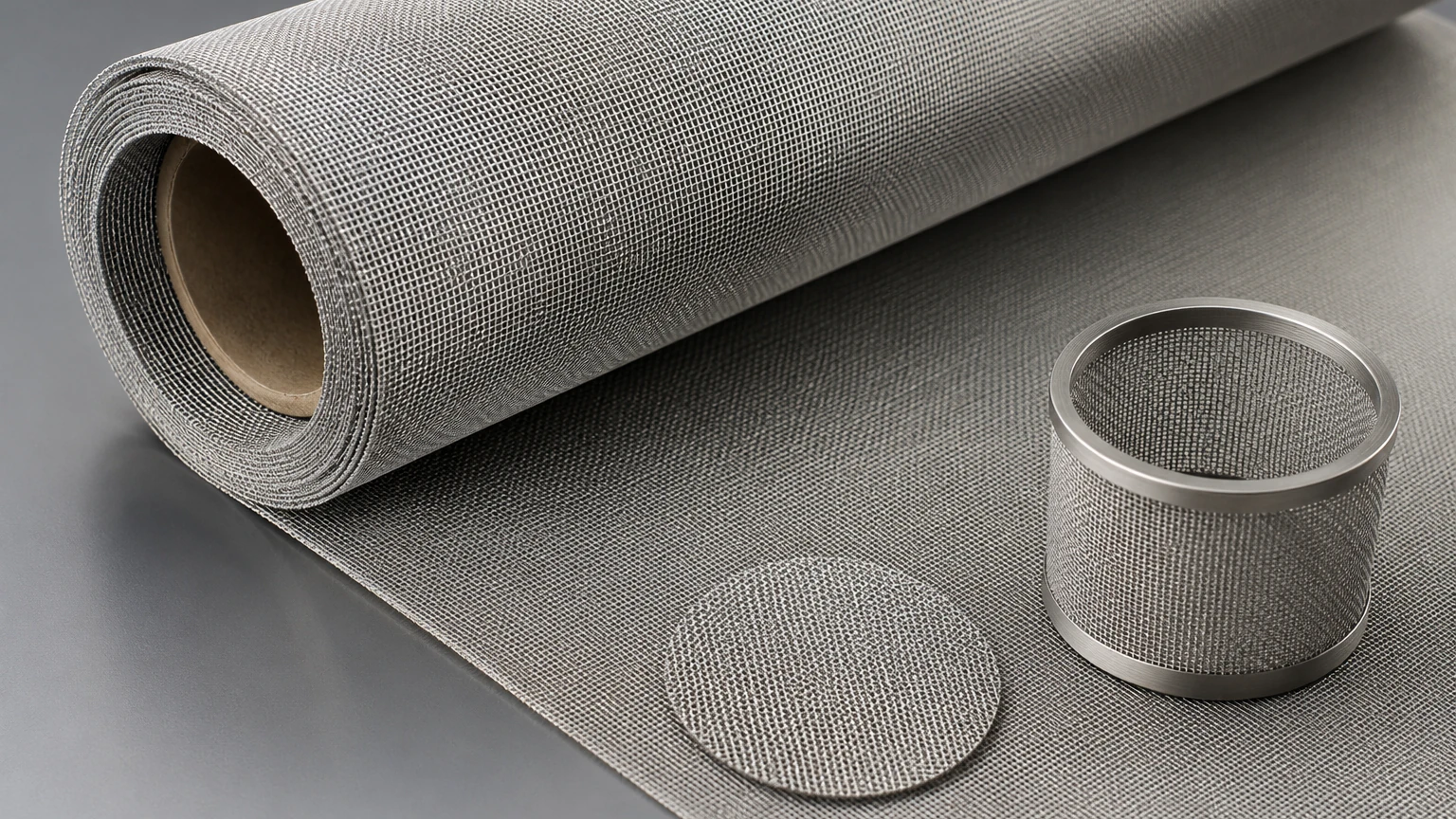
Customization and Fabrication for OEM Requirements
Standard rolls of 100 mesh screen are rarely used in isolation within industrial settings. Most B2B applications require customized components tailored to specific equipment. Kaifil specializes in transforming raw mesh into functional industrial tools through several fabrication techniques:
* Multi-Layer Sintering: For extreme durability, 100 mesh can be sintered with other layers of stainless steel mesh to create a monolithic, high-strength filter plate. This is common in pharmaceutical nutsche filters or high-pressure gas filtration.
* Precision Die-Cutting: We produce 100 mesh discs and gaskets with tight tolerances for use in extruder screens and laboratory equipment.
* Custom Filter Cartridges: By combining 100 mesh with custom end caps and support structures, we develop OEM filter elements that meet the exact specifications of proprietary machinery.
For more information on our full range of manufacturing capabilities and to explore our technical resources, visit our Main Page.
Maintenance, Cleaning, and Total Cost of Ownership
One of the primary advantages of using a 100 mesh stainless steel screen over disposable synthetic filters is cleanability. In a B2B context, the ability to reuse filter elements significantly reduces the total cost of ownership (TCO) and minimizes waste.
Cleaning Methods
* Backwashing: Reversing the flow of the fluid can dislodge particles trapped on the surface of the mesh. This is often automated in continuous filtration systems.
* Ultrasonic Cleaning: For stubborn or microscopic contaminants, ultrasonic baths use high-frequency sound waves to create cavitation bubbles that strip debris from the wire intersections without damaging the mesh.
* Chemical Cleaning: Depending on the material (304 or 316L), the screens can be soaked in specialized solvents or acids to dissolve organic or mineral buildup.
Replacement Cycles
While stainless steel is durable, it is not infinite. Fatigue from pressure pulsations or abrasion from hard particulates will eventually necessitate replacement. Purchasing teams should evaluate the "service life vs. cost" ratio. While a 100 mesh screen has a higher upfront cost than a polymer mesh, its longevity and reliability in harsh conditions often result in lower long-term expenditures.
Conclusion for Technical Buyers
The 100 mesh stainless steel screen is a cornerstone of industrial filtration, offering a precise 150-micron rating that serves a multitude of sectors. When sourcing these components, it is vital to confirm the material grade, wire diameter, and fabrication requirements to ensure compatibility with your specific industrial application. By focusing on engineering-grade specifications and selecting a manufacturer with robust OEM capabilities, companies can achieve optimized filtration performance and improved operational efficiency.
For technical support, custom design consultations, or to review our product options, please refer to the resources available on our Main Page.
