


Sintered Stainless Steel
In the landscape of industrial filtration, few materials offer the combination of mechanical strength, thermal stability, and chemical resistance provided by sintered stainless steel. As industries move toward more demanding processing environments—characterized by higher temperatures, corrosive fluids, and the need for high-precision particle retention—sintered metal media have become a standard specification for engineers and procurement teams.
Sintered stainless steel is not a single product but a category of porous materials manufactured through a process of diffusion bonding. By subjecting stainless steel components (whether wire mesh, metal fibers, or powders) to high temperatures and pressures below their melting point, a rigid, porous structure is formed. This article explores the technical nuances of sintered stainless steel filtration media, providing the engineering context necessary for informed selection and application.
Understanding the Sintering Process in Filtration
The manufacturing of sintered stainless steel begins with the selection of the base material, typically in the form of multi-layer wire mesh, non-woven metal fibers, or spherical metal powders. The sintering process involves placing these materials into a high-temperature vacuum or controlled-atmosphere furnace.
During sintering, atomic diffusion occurs at the contact points between the metal particles or wires. This creates molecular bonds that fuse the individual elements into a monolithic structure without the need for binders or welding fillers. The result is a porous material that retains the chemical properties of the base alloy while gaining significant mechanical integrity. For industrial filtration, this process is critical because it ensures that the pore geometry remains fixed even under high differential pressure. Unlike traditional wire mesh, which can experience "pore migration" or shifting of wires under stress, sintered stainless steel provides a stable filtration rating throughout its service life.
Material Properties and Engineering Advantages
When evaluating sintered stainless steel for industrial applications, engineers must consider the specific advantages this material provides over polymers, ceramics, or standard woven wire cloth.
Mechanical Strength and Durability
Because the layers or particles are fused at a molecular level, sintered stainless steel exhibits exceptional structural rigidity. It can withstand high internal and external pressures, making it ideal for hydraulic systems and high-pressure chemical reactors. This durability also allows for the design of self-supporting filter elements that do not require internal perforated cores in some applications, reducing overall weight and complexity.
Thermal Stability
Stainless steel alloys such as 304L and 316L maintain their mechanical properties at temperatures far exceeding the limits of synthetic filter media. Sintered stainless steel components can often operate in environments ranging from cryogenic levels up to 600°C (1112°F) in oxidizing atmospheres, and even higher in reducing environments. This makes them indispensable for steam filtration and hot gas polishing.
Corrosion Resistance
The use of high-grade alloys ensures compatibility with a wide range of aggressive fluids. 316L stainless steel is the industry standard due to its low carbon content and the addition of molybdenum, which enhances resistance to pitting and crevice corrosion in chloride-rich environments. For specialized applications, alloys like 904L or Hastelloy can be sintered to meet extreme chemical demands.
Precise Pore Distribution
The sintering process allows for tight control over pore size and distribution. Whether the media is designed for 0.5-micron gas filtration or 200-micron liquid processing, the manufacturing process ensures a high degree of uniformity. This predictability is essential for validated processes in the pharmaceutical and food and beverage sectors.
Comparing Sintered Mesh and Sintered Metal Powder
Sintered stainless steel media generally fall into two categories: sintered wire mesh and sintered metal powder. Choosing between them depends on the specific requirements of the filtration task.
Sintered Wire Mesh
Sintered wire mesh is typically constructed from multiple layers of woven wire cloth. A common configuration is the five-layer sintered mesh, which includes a fine filtration layer, a distribution layer, and several support layers.
* Advantages: High permeability, excellent backwash characteristics, and high mechanical strength. It is particularly effective for surface filtration where particles are trapped on the exterior of the media.
* Applications: Water treatment, polymer melt filtration, and pharmaceutical nutsche filters.
Sintered Metal Powder
This media is produced by sintering spherical or irregular stainless steel powders. The result is a deep, tortuous path for the fluid to travel through.
* Advantages: Excellent for "depth filtration," where the media can hold a higher volume of contaminants within its structure. It provides very fine filtration ratings, often down to sub-micron levels.
* Applications: Gas sparging, flame arrestors, and fine chemical catalyst recovery.
Critical Selection Criteria for Industrial Applications
Selecting the correct sintered stainless steel filter requires a balance of several technical factors. Engineers should confirm the following parameters before finalizing a specification:
1. Micron Rating (Absolute vs. Nominal): It is vital to distinguish between nominal ratings (an approximate average pore size) and absolute ratings (the size of the largest particle that can pass through the media). Sintered media often provide absolute ratings, which are necessary for critical safety and purity applications.
2. Operating Environment: Beyond temperature and pressure, consider the chemical composition of the process fluid. For instance, the presence of specific acids or salts may necessitate a shift from 304 to 316L or a more exotic alloy.
3. Differential Pressure (ΔP): This is the difference in pressure between the upstream and downstream sides of the filter. Sintered stainless steel is chosen for its ability to withstand high ΔP, but the initial clean pressure drop must be low enough to ensure energy-efficient operation.
4. Flow Rate Requirements: The porosity of the sintered material directly impacts the flow velocity. High-porosity sintered fiber felt might be preferred over sintered powder if high flow rates and low pressure drops are the primary concern.
Performance Evaluation: Flow Rate and Pressure Drop
In B2B industrial procurement, the Total Cost of Ownership (TCO) is often driven by the energy required to push fluid through the filtration system. Sintered stainless steel media are engineered to optimize the relationship between filtration efficiency and permeability.
Permeability is governed by the physical structure of the sintered media. Sintered metal fibers, for example, offer a much higher void volume (up to 80% or more) compared to sintered powder (typically 30-50%). This higher porosity results in a significantly lower initial pressure drop, which can translate to smaller pump sizes and lower energy consumption over the life of the system.
However, in applications where the goal is gas diffusion or flow restriction (such as in aeration or dampening), the lower permeability of sintered powder may be a functional requirement. Engineers must use Darcy’s Law and other fluid dynamics calculations to ensure the selected sintered grade aligns with the system's pump or compressor curves.
Maintenance, Cleaning, and Service Life
One of the primary economic justifications for investing in sintered stainless steel is that it is a cleanable, reusable medium. Unlike disposable polymer cartridges that contribute to waste and recurring procurement costs, sintered elements can be restored to near-original performance levels through various cleaning methods.
* Backpulsing/Backwashing: For liquid and gas systems, reversing the flow can dislodge filter cakes and surface contaminants. Sintered wire mesh is particularly well-suited for this due to its smooth surface and high structural strength.
* Ultrasonic Cleaning: Using high-frequency sound waves in a cleaning solvent can remove fine particles lodged deep within the porous structure of sintered powder or fiber felt.
* Chemical Cleaning: Sintered stainless steel can be treated with caustic or acidic cleaning agents to dissolve organic or inorganic scaling, provided the alloy is compatible with the cleaning chemicals.
* Thermal Burn-off: For polymer or organic contaminants, heating the filter element in a controlled furnace can carbonize and remove the blockage.
Proper maintenance protocols extend the service life of the filter to several years, significantly reducing the long-term cost per gallon or cubic foot of filtered product.
Custom Filtration Solutions and OEM Support
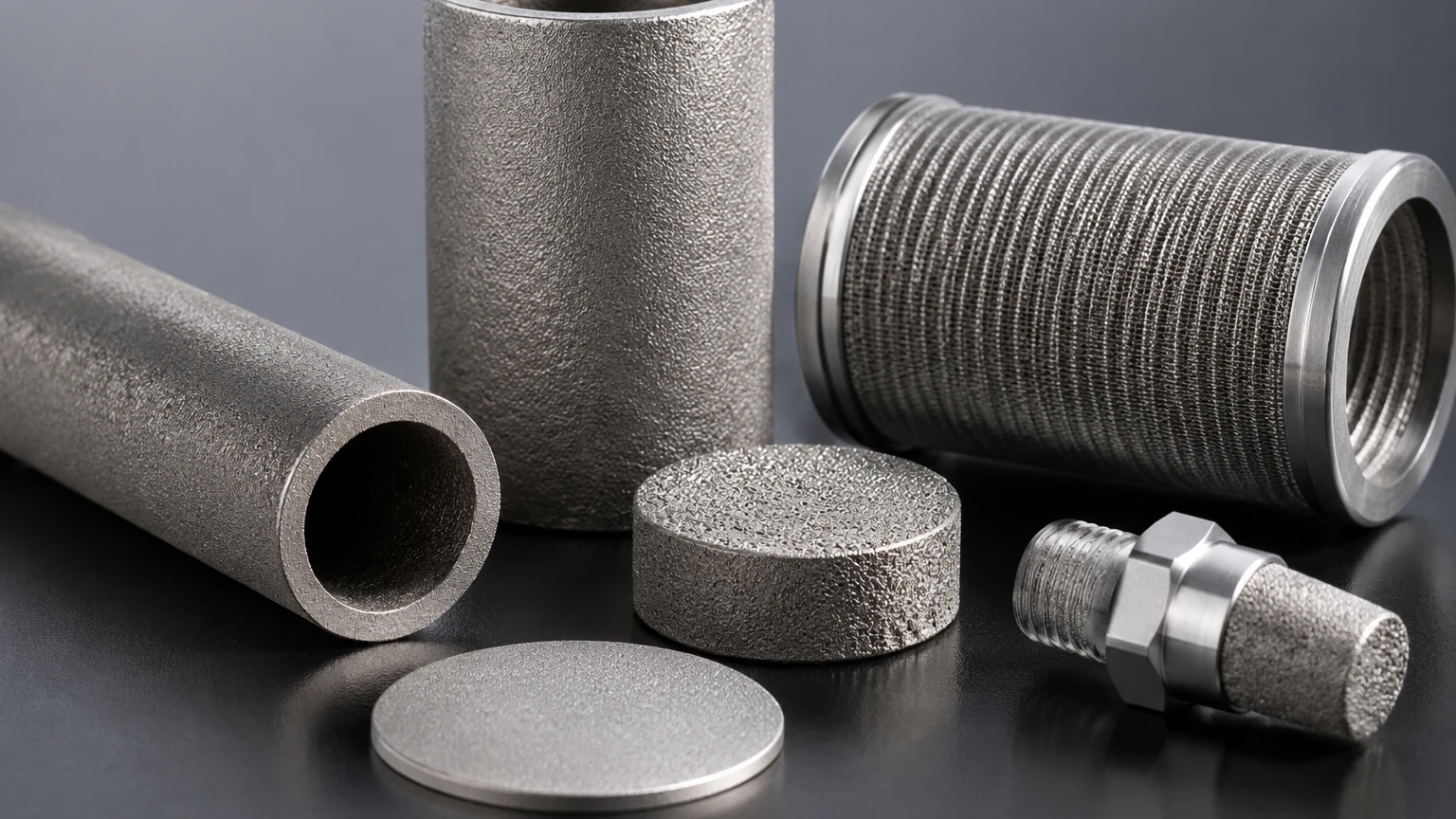
Industrial filtration is rarely a one-size-fits-all field. Most high-performance systems require custom-engineered components that fit specific housing geometries or meet unique flow characteristics. Sintered stainless steel is highly adaptable; it can be machined, welded, and formed into various shapes, including pleated cartridges, flat discs, conical strainers, and cylindrical tubes.
Working with a manufacturer that understands the nuances of material science and fluid dynamics is essential for developing effective OEM solutions. From selecting the appropriate sintering temperature to ensure the correct pore size distribution to performing bubble point tests for quality assurance, technical expertise is the foundation of a reliable filtration system.
For engineers looking to optimize their filtration processes or source high-quality metal filter components, reviewing comprehensive product specifications is the next logical step. You can explore detailed technical data and application support on our Main Page.
Conclusion
Sintered stainless steel represents a pinnacle of filtration technology for demanding industrial environments. Its ability to provide precise, absolute filtration while withstanding extreme physical and chemical stress makes it a preferred choice for chemical processing, pharmaceuticals, and heavy industry. By understanding the differences between sintered mesh and powder media, and by prioritizing factors like permeability and cleanability, technical professionals can ensure their systems operate with maximum efficiency and minimal downtime. As industrial requirements continue to evolve, the versatility and durability of sintered metal solutions remain a cornerstone of modern engineering.
