


Bag Filter Housing Manufacturer
In industrial liquid filtration, the bag filter housing serves as the critical pressure vessel that contains and supports the filter media. Selecting a qualified bag filter housing manufacturer is a decision that impacts not only the initial capital expenditure but also the long-term operational efficiency, safety, and maintenance costs of a processing facility. For engineers and procurement teams in the chemical, pharmaceutical, and food and beverage sectors, understanding the technical nuances of housing construction is essential for ensuring system integrity and filtration precision.
Industrial bag filtration is preferred for its high flow capacity, ease of use, and cost-effectiveness in handling large volumes of liquid with varying solids loading. However, the performance of the filter bag is entirely dependent on the design and manufacturing quality of the housing. A well-engineered housing prevents fluid bypass, withstands fluctuating pressures, and facilitates rapid bag change-outs to minimize downtime.
The Engineering Role of a Bag Filter Housing Manufacturer
A professional bag filter housing manufacturer does more than fabricate metal containers; they provide engineered solutions that adhere to strict mechanical standards. The housing must be designed to accommodate specific flow rates and pressure drops while maintaining a leak-proof seal. The manufacturer’s expertise in metallurgy, welding, and fluid dynamics determines whether the equipment will survive the corrosive environments of a chemical plant or meet the stringent sanitary requirements of a pharmaceutical laboratory.
When evaluating a manufacturer, technical teams must look for capabilities in precision machining and certified welding. The internal support basket, which prevents the filter bag from bursting under pressure, must be perfectly aligned with the housing’s sealing rim. Any deviation in manufacturing tolerances can lead to "bypass," where unfiltered liquid escapes around the edge of the bag, compromising the entire downstream process.
Material Selection and Chemical Compatibility
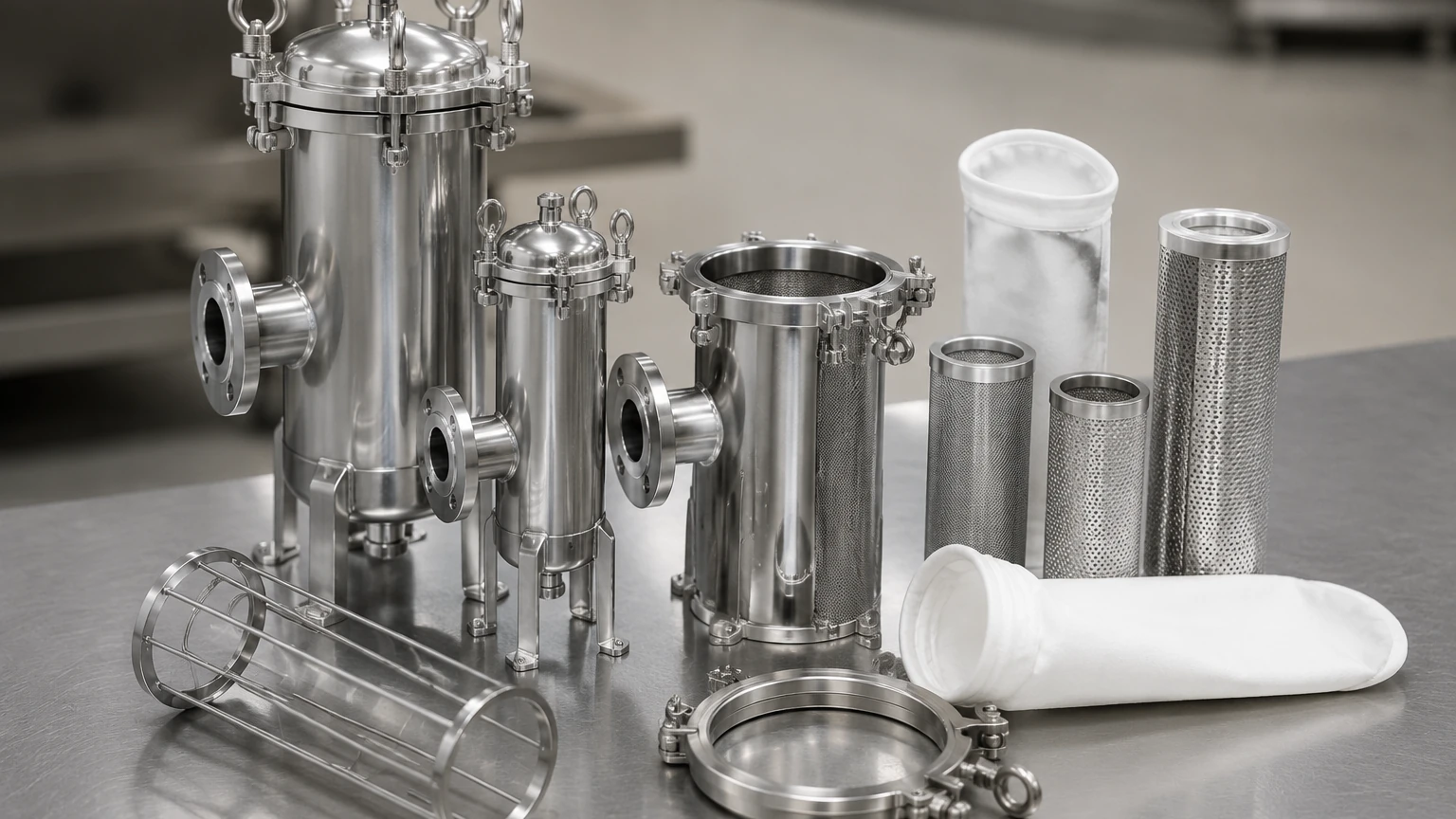
One of the primary responsibilities of a bag filter housing manufacturer is guiding the customer through material selection. Most industrial housings are constructed from stainless steel due to its durability and resistance to oxidation.
Stainless Steel 304 vs. 316L
For general water treatment and mildly corrosive applications, Grade 304 stainless steel is often sufficient. However, in environments involving chlorides, high temperatures, or aggressive chemicals, a manufacturer will typically recommend Grade 316L. The "L" denotes low carbon content, which is crucial for preventing carbide precipitation during welding, thereby maintaining the corrosion resistance of the heat-affected zones.
Gaskets and Seals
The choice of sealing material is equally vital. A manufacturer must offer a range of elastomers, including EPDM, Viton (FKM), Nitrile (Buna-N), and PTFE-encapsulated gaskets. Engineers must confirm that the selected seal is compatible with the process fluid’s chemical composition and operating temperature to prevent swelling, degradation, or leakage.
Design Configurations: Single vs. Multi-Bag Housings
Application requirements dictate the physical configuration of the housing. A bag filter housing manufacturer typically offers several standard designs, which can be further customized for specific footprints.
1. Single-Bag Housings: These are used for batch processing or lower flow rate applications. They are available in side-entry or top-entry designs. Top-entry housings are generally preferred for high-precision applications because the lid compresses the bag directly, ensuring a 360-degree seal that virtually eliminates bypass.
2. Multi-Bag Housings: For high-volume continuous flow, multi-bag housings contain anywhere from 2 to 24 or more bags within a single vessel. This design allows for massive flow rates without the need for multiple separate installations. A key engineering consideration here is the flow distribution within the vessel to ensure that all bags are utilized evenly and that no single bag is subjected to excessive velocity.
For more detailed technical specifications on these configurations, engineers can visit the Main Page of a dedicated manufacturer to review flow charts and pressure rating tables.
Customization and OEM Capabilities
In many industrial settings, standard off-the-shelf housings do not meet the spatial or functional requirements of the facility. This is where the capabilities of a custom bag filter housing manufacturer become indispensable. Customization often involves:
* Connection Types: While NPT or BSP threaded connections are common for smaller units, larger industrial housings usually require ANSI, DIN, or JIS flanges. Some applications may require sanitary tri-clamp fittings or specialized quick-connect couplings.
* Orientation and Footprint: In tight mechanical rooms, a manufacturer may need to adjust the inlet and outlet positions (e.g., tangential entries or low-profile outlets) to fit existing piping.
* Heating Jackets: For high-viscosity fluids like resins, oils, or food products that must be kept at a specific temperature to flow, manufacturers can integrate steam or electric heating jackets into the housing wall.
* Surface Finishes: For the food and pharmaceutical industries, internal surfaces must be polished to a specific Ra (Roughness Average) value to prevent bacterial growth and ensure easy cleaning. Electropolishing is often used to achieve a mirror-like finish.
Performance Evaluation and Quality Control
A reliable bag filter housing manufacturer must implement rigorous testing protocols to ensure the safety of the vessel. Since these housings operate under pressure, they are subject to various safety codes.
Hydrostatic Testing
Every housing should undergo hydrostatic testing, typically at 1.5 times the design pressure, to verify the integrity of the welds and the effectiveness of the seals. This test is a fundamental requirement for ensuring that the housing will not fail during a pressure spike.
Weld Quality and Certification
In critical industries, manufacturers should provide documentation for weld procedures and welder qualifications. Non-destructive testing (NDT), such as radiographic (X-ray) or dye penetrant testing, may be required for vessels operating at high pressures or in hazardous environments.
Filtration Accuracy and Bypass Prevention
The manufacturer must demonstrate how their design prevents fluid bypass. This often involves a precision-machined "seat" where the bag’s plastic flange or steel ring rests. Some manufacturers utilize a spring-loaded compression device or a heavy-duty hold-down plate to ensure the bag remains seated even during flow surges or back-pressure events.
Operational Efficiency and Total Cost of Ownership
When selecting a bag filter housing manufacturer, it is a mistake to focus solely on the initial purchase price. The total cost of ownership (TCO) is influenced by the ease of maintenance and the durability of the components.
* Closure Mechanisms: How quickly can an operator open the housing? Swing-bolt closures are robust and standard for high-pressure units, but they take longer to open than V-clamp closures or quick-opening davit covers. If a process requires bag changes every few hours, a quick-opening mechanism can save hundreds of labor hours per year.
* Basket Design: The stainless steel support basket should be easy to remove and clean. A manufacturer that uses high-quality perforated metal or heavy-duty wire mesh for the basket ensures that it will not deform over time, which would otherwise lead to bag failure.
* Waste Reduction: Well-designed housings minimize the amount of "dead volume" (residual liquid) left in the vessel during a change-out. This reduces product loss and simplifies the disposal of spent bags.
Information to Confirm Before Purchasing
Before finalizing an order with a bag filter housing manufacturer, engineers should confirm the following technical details to ensure the equipment is fit for purpose:
1. Maximum Operating Pressure and Temperature: Ensure these ratings exceed the maximum possible surge conditions of your system.
2. Corrosion Allowance: In chemical applications, confirm if the wall thickness includes a corrosion allowance for the intended service life.
3. Seal Compatibility: Verify that the O-ring material is compatible with all chemicals in the process stream, including cleaning agents.
4. Flow Rate vs. Pressure Drop: Request clean pressure drop curves for the housing to ensure it doesn't create a bottleneck in your system.
5. Compliance Standards: Specify if the vessel needs to meet ASME Section VIII, CE/PED, or other regional pressure vessel codes.
Conclusion
The choice of a bag filter housing manufacturer is a foundational step in building a reliable industrial filtration system. By focusing on material integrity, precision engineering, and the ability to customize designs for specific application needs, facilities can achieve higher throughput and lower operational costs. Whether the application is pre-filtration for a reverse osmosis system or final polishing of a chemical product, the housing remains the primary line of defense for process purity. For technical teams seeking to optimize their filtration processes, consulting with a manufacturer that understands the balance between heavy-duty construction and precision performance is essential for long-term success.
