


Pillow Plate Heat Exchanger Applications
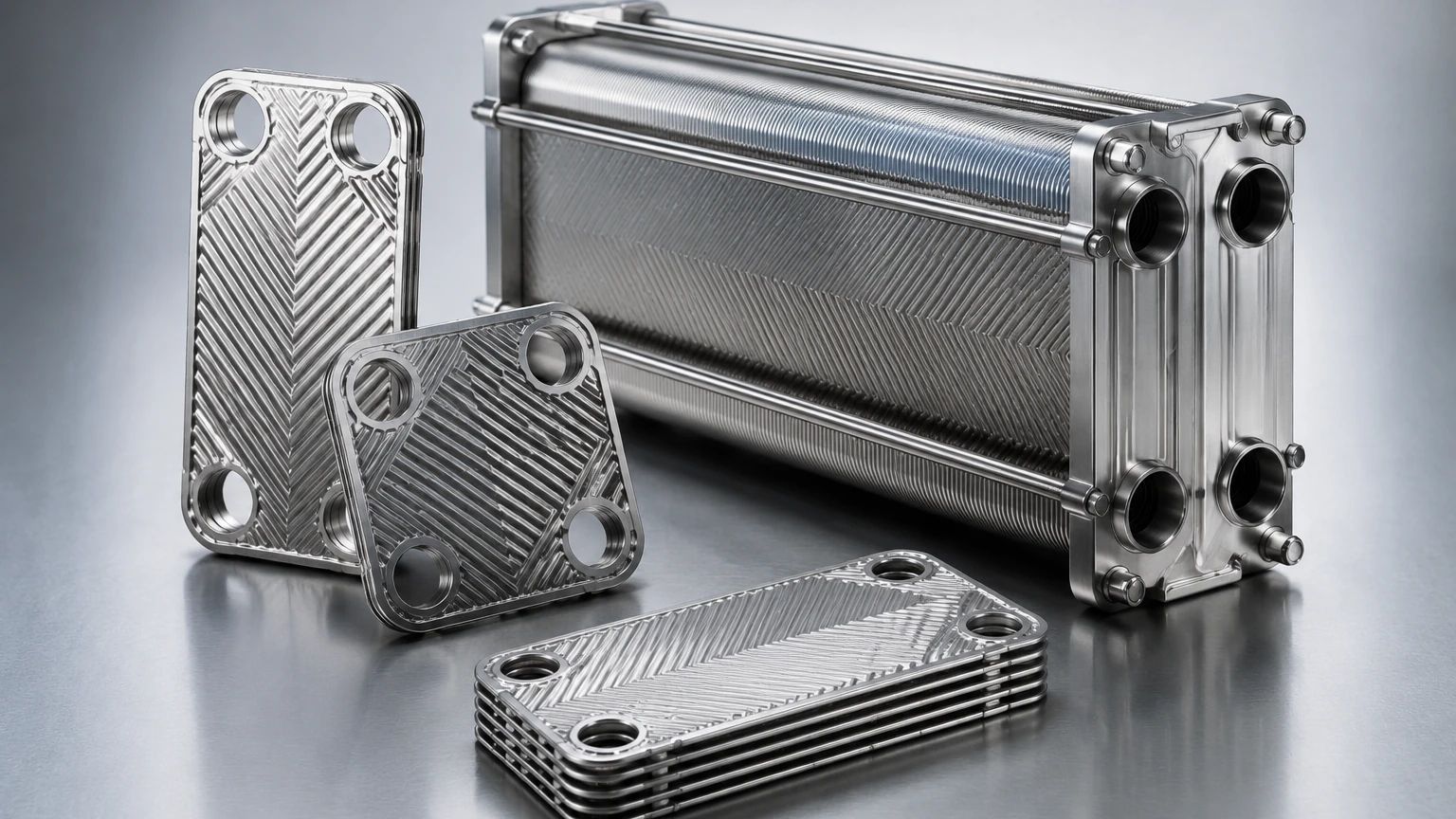
In the landscape of industrial thermal management, the transition from traditional shell-and-tube or gasketed plate heat exchangers to more specialized designs has been driven by the need for higher efficiency, reduced footprint, and improved hygiene. Pillow plate heat exchangers, often referred to as thermo-plates or laser-welded dimple jackets, have emerged as a versatile solution across multiple sectors. These components consist of two stainless steel sheets laser-welded together in a specific pattern, which are then hydraulically inflated to create a "pillow"-like void for fluid flow. This structure induces high turbulence at low flow velocities, significantly enhancing heat transfer coefficients while maintaining structural integrity.
Understanding the specific pillow plate heat exchanger applications is essential for engineers and procurement teams looking to optimize process efficiency, particularly when dealing with viscous fluids, high-purity requirements, or space-constrained installations. This guide examines the technical implementation of pillow plate technology across diverse industrial landscapes.
Engineering Fundamentals of Pillow Plate Technology
Before exploring specific applications, it is necessary to understand why the pillow plate geometry is preferred in demanding B2B environments. The laser-welding process allows for precise control over the welding points, which determines the pressure resistance and flow characteristics of the plate.
Unlike traditional dimple jackets that are plug-welded, laser-welded pillow plates offer a smoother surface finish and a more uniform stress distribution. This reduces the risk of fatigue failure under cyclic thermal loading. From a thermal perspective, the undulating surface of the inflated plate creates a complex flow path. This path promotes constant mixing of the heat transfer medium, which breaks down the boundary layer and results in heat transfer rates that can be up to three times higher than those of conventional jacketed designs.
Furthermore, the low internal volume of the pillow plate allows for rapid response times to temperature changes, a critical factor in batch processing and pharmaceutical applications. For organizations evaluating their thermal management infrastructure, reviewing the broader scope of precision metal components on our Main Page can provide insights into how these technologies integrate with wider filtration and processing systems.
Food and Beverage Industry Applications
The food and beverage sector represents one of the most significant adopters of pillow plate technology. The primary driver here is the combination of thermal efficiency and strict hygienic standards.
Dairy and Milk Processing
In dairy processing, maintaining precise temperature control is vital for both product safety and quality. Pillow plates are frequently integrated into the walls of large storage silos and cooling tanks. Because the plates are welded directly to the tank shell, they provide a "jacketed" effect that is easy to clean and free from the crevices where bacteria might proliferate. They are used for rapid cooling of raw milk and maintaining stable temperatures during pasteurization stages.
Brewing and Winemaking
Fermentation is an exothermic process that requires constant heat removal to prevent yeast stress and off-flavors. In the brewing industry, pillow plate jackets are wrapped around fermentation tanks (CCTs) and bright beer tanks. The ability to customize the weld pattern allows engineers to create multiple cooling zones on a single tank, permitting precise control over the fermentation profile. In winemaking, immersion-style pillow plates are often lowered directly into open-top fermenters to manage temperatures without the need for complex external pumping loops.
Chemical and Pharmaceutical Processing
In chemical and pharmaceutical environments, pillow plate heat exchanger applications often involve corrosive media, high-pressure requirements, and the need for total containment.
Jacketed Reactors
Chemical reactors often require aggressive heating or cooling to manage reaction kinetics. Pillow plates can be formed into cylindrical or conical shapes to fit the exterior of reactor vessels. Because they can be manufactured from high-grade stainless steel (such as 316L or Duplex alloys), they offer excellent resistance to chemical attack. The high turbulence within the plate prevents the scaling or fouling of the heat transfer fluid, ensuring consistent performance over long production cycles.
Sterile Environments and Condensers
In pharmaceutical manufacturing, the smooth surface of the pillow plate is a major advantage. These plates are used in solvent recovery systems and as condensers in vacuum drying processes. The lack of gaskets—common in traditional plate heat exchangers—eliminates a major source of potential contamination and leakage. This makes them ideal for clean-room installations where the integrity of the process fluid must be guaranteed.
Falling Film Chillers and Immersion Cooling
Pillow plates are not limited to being tank jackets; they are also used as standalone heat exchange elements in falling film chillers and immersion systems.
Falling Film Chillers
In a falling film chiller, water or a process fluid is distributed over the outside of vertically hung pillow plates, forming a thin film that flows downward. Inside the plates, a refrigerant or chilled glycol circulates. This setup allows for the production of chilled water at temperatures very close to the freezing point (0.5°C) without the risk of the heat exchanger bursting if ice forms. This is a critical application in the poultry processing and vegetable cooling industries.
Immersion Cooling
For applications involving large volumes of contaminated or viscous liquids, immersion cooling is often the most practical choice. Banks of pillow plates are submerged directly into the fluid. This is common in the textile industry for cooling dye baths and in the metal finishing industry for temperature control of plating tanks. The wide gaps between the plates prevent clogging, and the assemblies are easily accessible for mechanical cleaning.
Heat Recovery and Industrial Sustainability
As industrial facilities face increasing pressure to reduce carbon footprints and energy costs, pillow plate heat exchanger applications in heat recovery have expanded.
Flue Gas Heat Recovery
Industrial boilers and furnaces release significant thermal energy through exhaust gases. Pillow plate heat exchangers can be designed as gas-to-liquid exchangers to capture this waste heat. The robust nature of the laser-welded plates allows them to withstand the vibrations and thermal shocks associated with flue gas streams. The recovered heat can then be used to preheat boiler feedwater or for space heating within the facility.
Wastewater Heat Exchange
In industries like commercial laundering or textile manufacturing, large volumes of hot wastewater are often discharged. Submerged pillow plate banks can extract heat from this wastewater to preheat incoming fresh water. This closed-loop approach significantly reduces the energy required for water heating and improves the overall thermal efficiency of the plant.
Selection Criteria and Technical Considerations
When specifying pillow plates for industrial applications, engineers must confirm several technical parameters to ensure long-term reliability.
1. Material Grade: While 304 stainless steel is standard for many food-grade applications, 316L is required for chloride-rich environments or pharmaceutical use. For highly corrosive chemical processes, specialized alloys like Hastelloy may be necessary.
2. Operating Pressure: The inflation pressure and weld pattern dictate the maximum allowable working pressure (MAWP). It is essential to match the plate design to the pressure of the heat transfer medium (e.g., steam vs. glycol).
3. Surface Finish: For internal tank applications, the surface finish (Ra value) must meet specific hygienic standards to ensure effective Cleaning-in-Place (CIP) cycles.
4. Weld Pattern: The choice between a regular grid pattern and a staggered pattern affects both the pressure drop and the heat transfer coefficient. Staggered patterns generally offer higher turbulence but may result in a higher pressure drop.
Integration with Industrial Filtration Systems
In many industrial processes, heat exchange and filtration are interdependent. For example, in the chemical industry, the viscosity of a fluid must often be reduced through heating before it can effectively pass through a stainless steel wire mesh filter or a pleated filter cartridge. Conversely, in food processing, a fluid may need to be cooled immediately after a high-temperature filtration step to prevent degradation.
Customized metal filtration components, such as those discussed on our Main Page, are often designed to operate within the same temperature and pressure envelopes as pillow plate systems. When designing a process line, engineers should consider how the thermal profile managed by the heat exchanger will impact the performance and lifespan of the downstream filtration media. Proper temperature management prevents premature clogging of filters caused by crystallization or increased fluid thickness.
Conclusion
Pillow plate heat exchanger applications offer a robust, efficient, and hygienic solution for modern industrial thermal management. From the precise temperature control required in pharmaceutical reactors to the energy-saving potential of wastewater heat recovery, the versatility of laser-welded plates is unmatched by traditional designs. By understanding the engineering benefits and the specific requirements of their industry, technical professionals can implement these systems to achieve superior process stability and energy efficiency. For those seeking precision-engineered stainless steel components to complement their industrial systems, exploring the technical resources and product options available on our Main Page is a recommended next step in the procurement process.
