


Trickling Bed Reactor
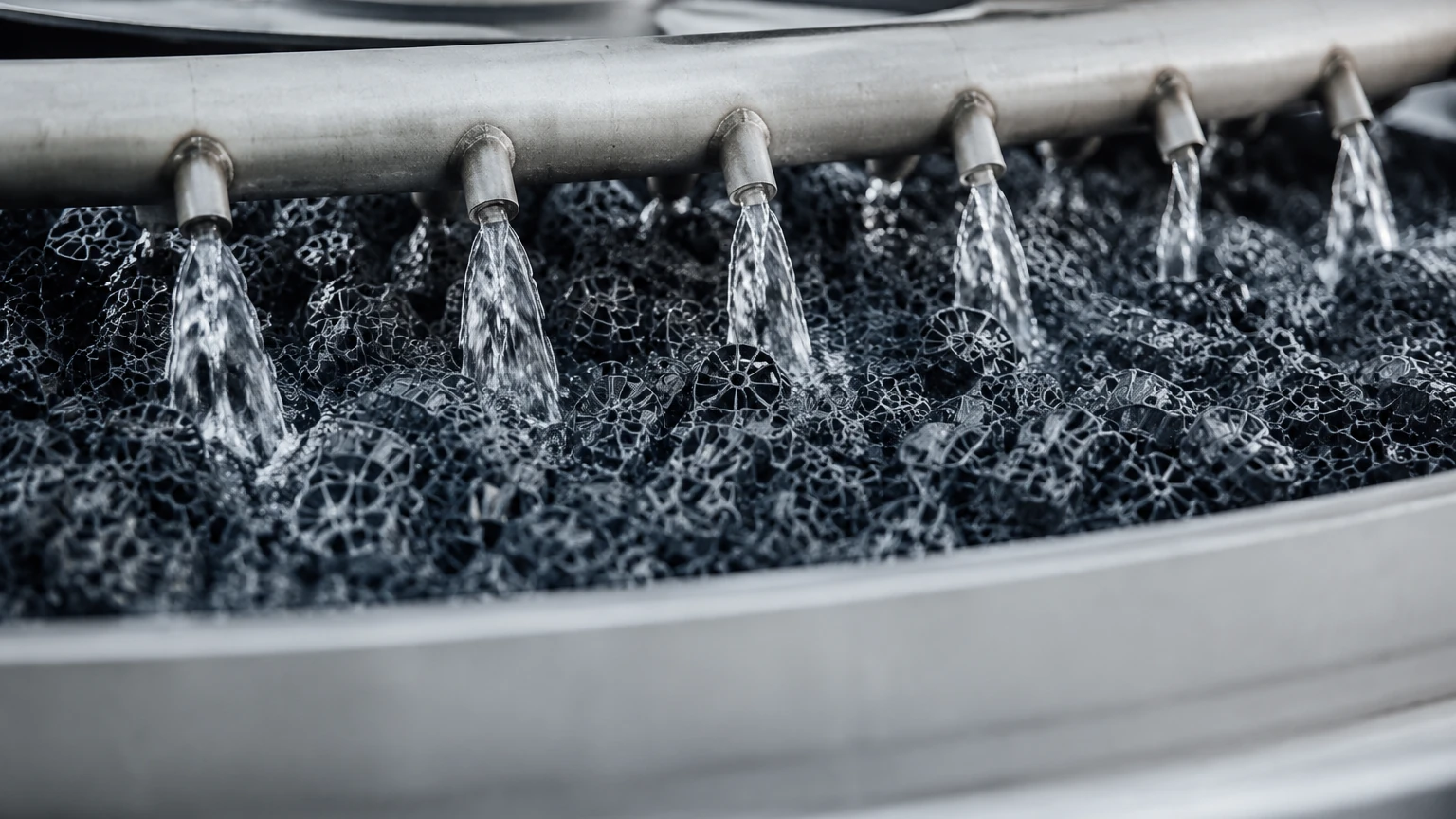
A trickling bed reactor (TBR) is a cornerstone of modern chemical processing, petrochemical refining, and wastewater treatment. As a multiphase reactor, it facilitates reactions between gas and liquid phases over a solid catalyst bed. In these systems, the liquid typically flows downward—"trickling" over the catalyst surface—while the gas phase occupies the remaining void space, moving either concurrently or counter-currently to the liquid.
For engineers and plant operators, the efficiency of a trickling bed reactor is not merely a function of chemical kinetics; it is heavily dependent on the mechanical integrity of the reactor internals and the precision of the filtration systems used to manage catalyst beds and feed purity. Ensuring optimal performance requires a deep understanding of hydrodynamics, pressure drop management, and the selection of durable filtration components capable of withstanding high-temperature and corrosive environments.
Fundamentals of Trickling Bed Reactor Operation
The fundamental goal of a trickling bed reactor is to maximize the contact area between the gas, liquid, and solid catalyst. This is achieved by maintaining a specific flow regime, often referred to as the trickle flow regime, where the liquid forms a thin film over the catalyst pellets.
Several factors influence the effectiveness of this interaction:
* Liquid Distribution: Uniform distribution at the top of the bed is critical. Poor distribution leads to "channeling," where the liquid bypasses large sections of the catalyst, significantly reducing conversion rates and potentially causing localized hot spots.
* Wetting Efficiency: This refers to the fraction of the catalyst surface area actually covered by the liquid film. Incomplete wetting can lead to gas-phase reactions occurring on dry catalyst surfaces, which may produce undesirable by-products.
* Pressure Drop: As fluids move through the packed bed, resistance creates a pressure gradient. Excessive pressure drop can limit throughput, increase energy costs for pumps and compressors, and in extreme cases, cause mechanical deformation of the reactor internals.
The Critical Role of Filtration and Reactor Internals
In any trickling bed reactor, the physical components that hold the catalyst in place and manage fluid flow are as vital as the catalyst itself. These components, often manufactured from high-grade stainless steel or specialty alloys, serve several functions:
Catalyst Support Grids
At the base of the reactor, a support grid must hold the weight of the entire catalyst bed, which can be several tons, while allowing the processed gas and liquid to pass through with minimal resistance. These grids often utilize precision-engineered wire mesh or wedge wire screens. The opening size must be smaller than the smallest catalyst particle to prevent migration, yet large enough to avoid clogging from process debris or catalyst fines.
Inlet and Outlet Distributors
To prevent the aforementioned channeling, inlet distributors use a combination of spray nozzles and perforated trays. At the outlet, collectors ensure that the liquid and gas are efficiently removed from the vessel. High-performance filtration components at these stages prevent catalyst fines from entering downstream equipment, such as heat exchangers and pumps, where they could cause erosion or blockages.
Bed Limiters and Hold-down Screens
In high-velocity gas flows, there is a risk of catalyst fluidization or movement at the top of the bed. Hold-down screens are installed to keep the catalyst stationary, maintaining the structured packing and preventing mechanical attrition of the catalyst pellets.
Engineering Challenges in TBR Filtration
Designing filtration solutions for a trickling bed reactor involves balancing several competing technical requirements. Engineers must evaluate the following criteria during the specification phase:
1. Catalyst Migration and Fines Management
Over time, mechanical stress and thermal cycling can cause catalyst pellets to break down into smaller "fines." If these fines are not captured by internal filtration components, they can accumulate in the bottom of the reactor or travel downstream. Selecting the correct micron rating for support screens is a balancing act; a mesh that is too tight will foul quickly, while one that is too loose will fail to protect downstream assets.
2. Corrosion and Material Compatibility
Many reactions within a trickling bed reactor involve hydrogen (hydrotreating), acidic components, or high-moisture environments. Standard carbon steel is rarely sufficient. Stainless steel grades like 304L and 316L are common, but for more aggressive environments involving chlorides or high-temperature sulfidation, specialty materials like Duplex stainless steel or nickel-based alloys may be required to ensure a long service life.
3. Thermal Expansion
Reactors often operate at temperatures exceeding 300°C. The filtration components and support structures must be designed to accommodate thermal expansion. If the design is too rigid, the resulting mechanical stress can lead to the warping of screens or the failure of weld points, compromising the integrity of the catalyst bed.
Customization and Design Specifications
Because no two chemical processes are identical, the filtration components for a trickling bed reactor are rarely off-the-shelf items. Customization is essential to match the specific geometry of the reactor vessel and the characteristics of the catalyst being used.
When consulting with a manufacturer like Kaifil, engineers should be prepared to discuss specific design parameters:
* Micron Rating: The precise pore size required to retain the catalyst while allowing fluid flow.
* Flow Rates: Both the minimum and maximum expected gas and liquid velocities.
* Mechanical Load: The total weight of the catalyst bed, including the weight of the liquid holdup during operation.
* Cleaning Requirements: Whether the filter elements need to be cleaned in-situ (backwashing) or removed for ultrasonic cleaning during scheduled turnarounds.
For many industrial applications, stainless steel filter cartridges and wire mesh filters offer the best combination of durability and precision. Wire mesh, in particular, can be layered and sintered to create a robust filtration medium that handles high pressure-differentials without deforming.
Maintenance, Fouling, and Replacement Cycles
The lifespan of reactor internals and filtration components depends heavily on the purity of the feedstocks and the stability of the catalyst. Fouling is the most common reason for performance degradation. This can occur through:
* Coking: In petrochemical applications, carbon deposits can build up on the surfaces of the filter mesh, gradually increasing the pressure drop.
* Particulate Accumulation: Inorganic scales or corrosion products from upstream piping can become trapped in the catalyst bed or on the support screens.
* Catalyst Attrition: The accumulation of catalyst fines within the mesh structure itself.
Monitoring Performance
Operators should monitor the differential pressure (DP) across the reactor bed. A steady increase in DP usually indicates gradual fouling, whereas a sudden drop might indicate a breach in the support grid or a "blow-through" event where catalyst has escaped.
Replacement Strategy
While high-quality stainless steel internals are designed for multi-year service, they should be inspected during every major turnaround. Components showing signs of erosion, pitting corrosion, or mechanical fatigue should be replaced to prevent catastrophic failure during the next production cycle. Custom-manufactured components allow for exact replacements that fit existing vessel configurations without the need for on-site modifications.
Selecting a Filtration Partner
Choosing the right components for a trickling bed reactor requires a partner who understands the technical nuances of industrial filtration. It is not just about providing a piece of mesh; it is about engineering a solution that accounts for the specific hydrodynamic and chemical stresses of the reactor environment.
From material selection (ensuring the alloy can withstand the process chemistry) to the mechanical design of support structures, every detail impacts the total cost of ownership. High-quality filtration reduces downtime, extends catalyst life, and protects expensive downstream equipment.
For those seeking technical guidance on custom filtration components, including wire mesh filters and stainless steel cartridges tailored for reactor environments, reviewing product options and application support on the Main Page can provide the necessary data to inform purchasing decisions.
Conclusion
The trickling bed reactor remains a vital technology for high-efficiency multiphase reactions. However, its success is tethered to the performance of its internal components. By focusing on precision-engineered catalyst supports, effective distribution systems, and robust filtration media, engineers can minimize pressure drops, prevent catalyst loss, and ensure the long-term reliability of the chemical process. Understanding the relationship between fluid dynamics and mechanical filtration is the key to optimizing any TBR installation.
