


Woven Wire Fence Inside or Outside Posts: Engineering Considerations for Industrial Containment
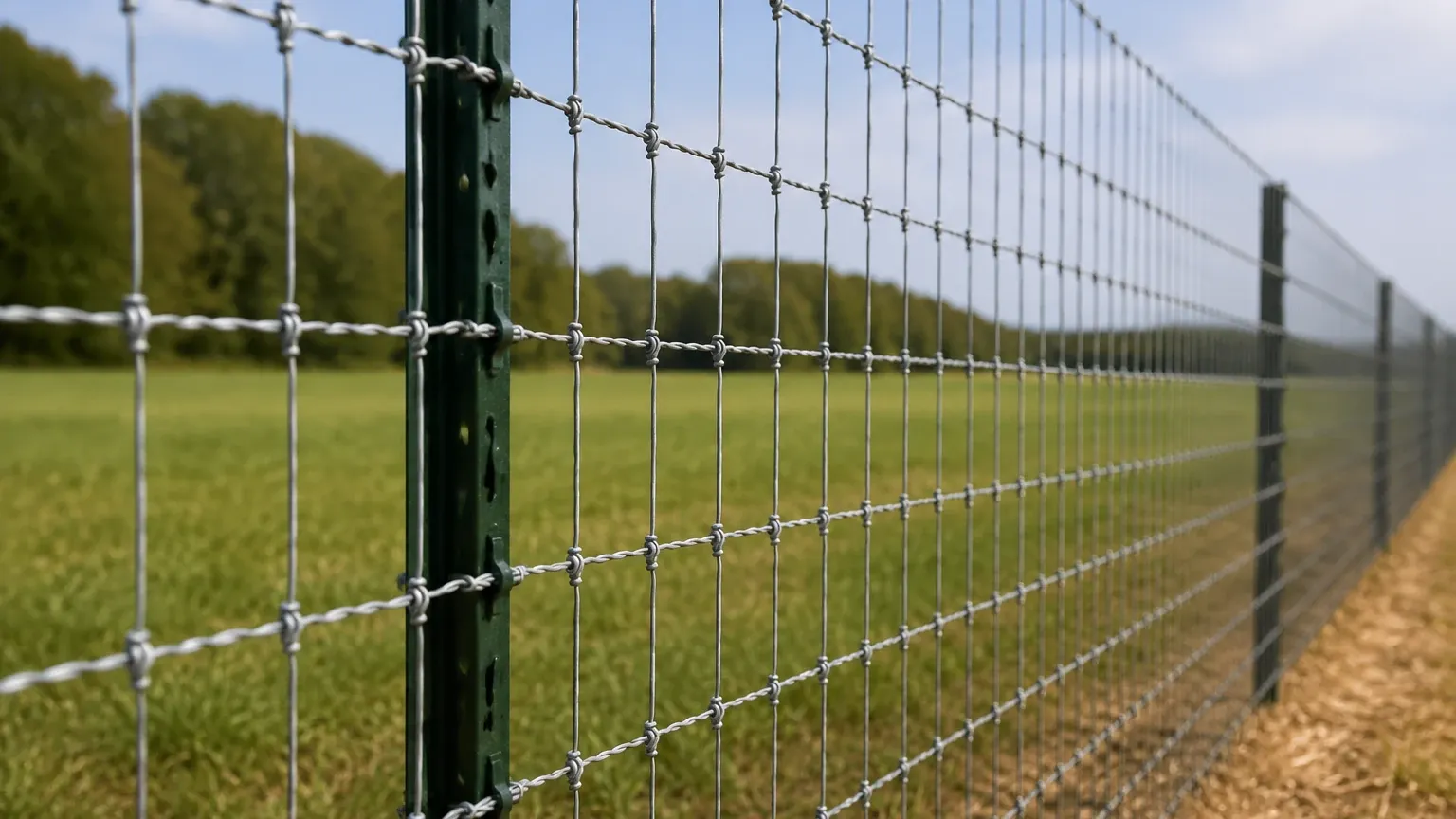
In industrial environments, the installation of protective barriers, machine guards, and perimeter partitions requires more than just a standard fencing approach. When utilizing high-quality Woven Wire Mesh, engineers and facility managers must determine the optimal orientation of the mesh relative to the support posts. The decision of whether to mount woven wire fence inside or outside posts is not merely aesthetic; it is a critical engineering choice that affects structural integrity, safety, and the longevity of the installation.
While Kaifil specializes in precision filtration solutions, the same principles of material science and mechanical stress that govern stainless steel filter cartridges apply to industrial wire mesh partitions. This guide examines the technical factors involved in selecting the correct mounting orientation for woven wire mesh in industrial applications.
Understanding the Structural Dynamics of Woven Wire Mesh
Woven wire mesh is engineered by interlacing longitudinal (warp) and transverse (shute) wires. In an industrial partition or "fence" context, the mesh acts as a tensioned membrane. Unlike rigid perforated metal, woven mesh possesses a degree of flexibility that allows it to absorb and distribute impact energy. However, this energy distribution is heavily dependent on how the mesh is anchored to its vertical supports.
When we discuss "inside" versus "outside" mounting, we are defining the position of the mesh relative to the area being enclosed or protected. In a B2B context, this often refers to machine guarding, warehouse partitioning, or chemical storage containment. The primary goal is to ensure that under stress—whether from a falling pallet, a pressurized leak, or a security breach—the mesh remains securely attached to the posts.
Evaluating Force Direction: The Core Decision Factor
The most important rule in industrial mesh installation is that the mesh should be placed on the side of the post where the expected force will originate. This allows the post itself to act as a physical backup to the fasteners.
Mounting on the Inside (The Pressure Side)
If the purpose of the woven wire mesh is containment—such as preventing materials from spilling out of a storage area or containing debris from a high-pressure industrial process—the mesh should be installed on the inside of the posts.
In this configuration, any outward force pushes the mesh directly against the post. The fasteners (clips, staples, or weld points) are not the primary line of defense against the force; instead, they simply hold the mesh in place while the structural post absorbs the mechanical load. This significantly reduces the risk of fastener failure and prevents the mesh from being "popped off" the support structure.
Mounting on the Outside (The Impact Side)
Conversely, if the mesh is intended as a perimeter guard to prevent external objects or personnel from entering a restricted zone, it should be mounted on the outside of the posts. In this scenario, an external impact pushes the mesh against the post. This is common in robot cells and automated assembly lines where the primary threat is external interference or accidental impact from forklifts operating in the vicinity.
Fastening Systems and Load Distribution
The method used to secure Plain, twill and dutch woven wire mesh in SS304/316L — rolls, cut mesh and framed panels to the posts will vary based on the industrial environment. Selecting the right fastening system is as crucial as the inside/outside orientation.
1. Tension Bands and Bolts: For heavy-duty industrial partitions, stainless steel tension bands are often used to wrap around the post and bolt through the mesh. This creates a high-friction grip that is less likely to slip under vibration.
2. U-Clips and Brackets: These are ideal for modular systems where the mesh may need to be removed for maintenance. When using clips, mounting the mesh so that the force pushes it into the post (rather than away from it) is essential to prevent the clips from shearing.
3. Welded Attachments: In permanent installations, the wire mesh may be tack-welded directly to stainless steel posts. While this provides the highest level of security, it requires careful material matching (e.g., using 304 mesh with 304 posts) to prevent galvanic corrosion and ensure weld integrity.
Material Selection for Industrial Environments: 304 vs. 316L
When specifying woven wire mesh for industrial barriers, material selection is a primary concern for long-term performance. The environment in which the fence or guard is installed will dictate the grade of stainless steel required.
* Grade 304 Stainless Steel: This is the standard industrial grade, offering excellent durability and resistance to oxidation. It is suitable for most indoor warehouse applications, machine guarding, and general-purpose partitions where exposure to highly corrosive chemicals is limited.
* Grade 316L Stainless Steel: For applications in chemical processing, pharmaceutical cleanrooms, or marine environments, 316L is the preferred choice. The addition of molybdenum provides superior resistance to pitting and crevice corrosion, particularly in environments with high chloride or acidic concentrations.
Engineers must also consider the wire diameter and mesh count. A thicker wire diameter increases the physical strength of the barrier, while the mesh count determines the level of visibility and airflow. In filtration-adjacent applications, such as intake screens or vent guards, the micron rating of the mesh may also be a factor to prevent the passage of specific particulates while maintaining structural guarding.
Customization Options for High-Performance Barriers
Standard fencing solutions often fall short of industrial requirements. Customization is frequently necessary to meet specific safety standards or spatial constraints. When ordering woven wire mesh for industrial use, several parameters can be tailored:
* Edge Treatments: To prevent fraying and improve safety, mesh panels can be supplied with hemmed edges, U-edging, or pre-installed in angle iron frames. Framed panels are particularly advantageous when mounting to posts, as they provide a rigid surface for bolting and ensure the mesh remains taut.
* Weave Types: While plain weave is the most common for industrial guarding, twill weaves can be used for heavier wire diameters that are difficult to weave in a standard pattern. Dutch weaves, though typically used for fine filtration, can be utilized in specialized containment scenarios where extremely high strength and restricted flow are required.
* Dimensional Accuracy: Precision-cut mesh ensures that the panels fit perfectly between or across posts, reducing the need for on-site modifications that can compromise the protective coating or structural integrity of the material.
Maintenance and Total Cost of Ownership
Choosing the correct mounting orientation (inside vs. outside) significantly impacts the total cost of ownership (TCO) of an industrial mesh system. A properly installed mesh that utilizes the structural strength of the posts will require fewer repairs and have a longer service life.
Key maintenance considerations include:
* Tension Inspection: Over time, mechanical vibrations can cause fasteners to loosen. Regular inspections should ensure that the mesh remains taut and securely seated against the posts.
* Cleaning Protocols: In food and pharmaceutical applications, the mesh must be cleaned regularly to prevent bacterial growth. Stainless steel’s smooth surface facilitates this, but the mounting method should avoid creating "dead zones" where debris can accumulate between the mesh and the post.
* Replacement Cycles: If a section of mesh is damaged by a high-force impact, modular mounting (using clips or frames) allows for the replacement of individual panels rather than the entire run, significantly reducing maintenance costs.
Conclusion: Making the Informed Choice
Deciding whether to install woven wire fence inside or outside posts is a decision that should be driven by the direction of the anticipated load. For containment, the inside is superior; for protection from external impact, the outside is preferred. By combining this logic with high-quality materials like SS304 or SS316L and precision manufacturing, industrial facilities can ensure their partitions are both safe and durable.
For engineers seeking specific technical data or customized mesh configurations, reviewing the available options is the next logical step. Whether you require standard rolls or framed panels for complex industrial guarding, selecting the right specifications is essential for optimal performance.
Review product options and application support to find the ideal woven wire mesh solution for your project's specific mechanical and environmental demands.
