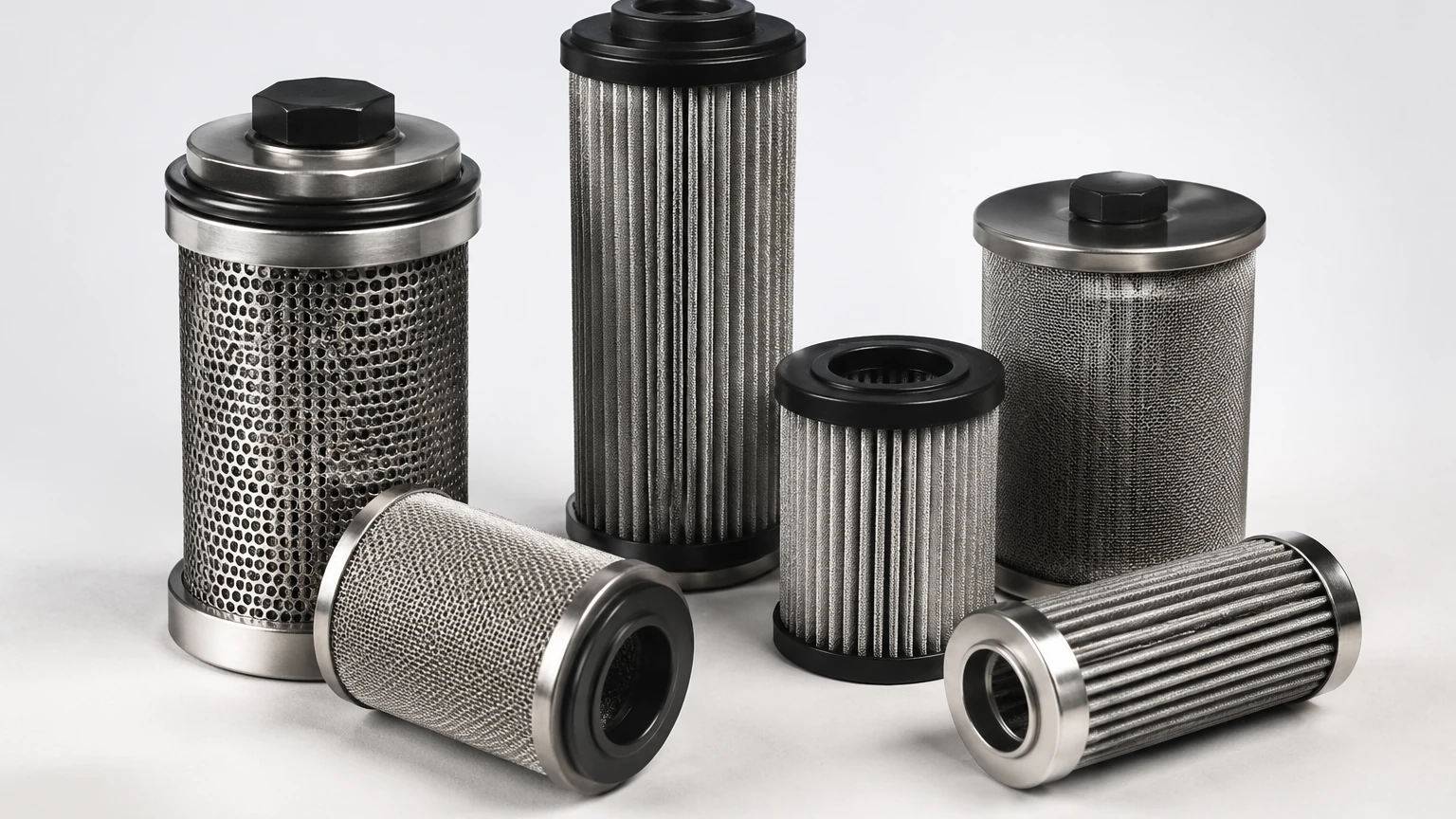
Oil Filter Water Separator
In industrial fluid management, the presence of water in oil—whether in hydraulic systems, lubrication circuits, or fuel lines—represents a critical failure point. Water contamination reduces the load-carrying capacity of the lubricant, promotes the oxidation of the oil, and leads to the corrosion of internal components. An oil filter water separator is a specialized filtration component designed to remove both solid particulates and moisture from oil streams. For engineers and maintenance professionals, selecting the correct separation technology is essential for maintaining system reliability and extending the service life of high-value machinery.
The Mechanics of Water Contamination in Oil
Before selecting an oil filter water separator, it is necessary to understand the three states in which water exists within oil: dissolved, emulsified, and free water.
1. Dissolved Water: At low concentrations, water molecules are dispersed individually throughout the oil, similar to humidity in the air. The amount of dissolved water an oil can hold depends on its base stock, additive package, and temperature.
2. Emulsified Water: Once the oil reaches its saturation point, additional water becomes suspended in the oil as microscopic droplets. This emulsion often gives the oil a cloudy or milky appearance and is the most damaging state for high-precision components.
3. Free Water: This is water that has completely separated from the oil phase and settles at the bottom of a reservoir or tank due to the difference in specific gravity.
An effective oil filter water separator is engineered to address both free and emulsified water, ensuring that the oil remains below its saturation point to prevent the onset of mechanical wear and chemical degradation.
Core Technologies in Oil-Water Separation
Industrial filtration systems employ several distinct methods to achieve separation. The choice of technology depends on the viscosity of the oil, the volume of water present, and the required cleanliness level.
Coalescence Separation
Coalescence is the most common method used in high-flow industrial applications. A coalescence filter element consists of multiple layers of media, often including a primary stage of pleated fiberglass or specialized synthetic fibers. As the contaminated oil passes through the media, small water droplets are forced to collide and merge into larger droplets. Once these droplets reach a sufficient size and mass, they migrate to the outer surface of the element and fall by gravity into a collection sump.
Centrifugal Separation
Centrifugal separators use high-speed rotation to create G-forces that separate fluids of different densities. Because water is denser than oil, it is forced to the outer periphery of the centrifuge bowl, while the lighter oil remains in the center. This method is highly effective for removing large volumes of free water and heavy particulate matter, though it is generally more complex and energy-intensive than stationary filtration.
Vacuum Dehydration
For applications where dissolved water must be removed, vacuum dehydration is employed. By reducing the ambient pressure within a chamber, the boiling point of water is lowered, allowing it to evaporate at temperatures that do not damage the oil's chemical structure. While highly effective, this is often a secondary process used in conjunction with a standard oil filter water separator.
Engineering Considerations for Stainless Steel Separators
In demanding environments such as chemical processing, pharmaceutical manufacturing, and marine applications, the material construction of the separator is as important as the filtration media itself. Kaifil specializes in the production of stainless steel filtration components that offer superior durability compared to standard carbon steel or plastic housings.
Material Selection: 304 vs. 316L Stainless Steel
For most industrial applications, Grade 304 stainless steel provides adequate corrosion resistance. However, in environments where the oil may contain acidic bypass products or where the separator is exposed to saltwater, Grade 316L is preferred. The addition of molybdenum in 316L enhances resistance to pitting and crevice corrosion, ensuring the structural integrity of the filter housing and internal support structures over long-term operation.
Micron Ratings and Filtration Efficiency
The efficiency of an oil filter water separator is defined by its ability to capture particles of a specific size. In hydraulic systems, where clearances between moving parts may be as small as 5 microns, a high-efficiency beta-rated filter is required. When designing a custom filtration solution, engineers must balance the need for high filtration accuracy with the resulting pressure drop across the media.
The Role of Custom Wire Mesh in Separation
Precision wire mesh plays a vital role in the final stages of separation. After the coalescence stage has formed large water droplets, a secondary separator screen is often used to prevent those droplets from re-entering the clean oil stream. This screen is frequently treated with a hydrophobic coating or manufactured from specific stainless steel weaves that allow oil to pass through while repelling water droplets.
Customized wire mesh configurations allow for:
* Optimized Flow Distribution: Ensuring the oil moves evenly across the entire surface area of the filter media.
* Structural Support: Providing the necessary rigidity to withstand high differential pressures without collapsing.
* Cleanability: Unlike disposable cellulose media, stainless steel wire mesh elements can often be cleaned and reused, reducing the total cost of ownership.
Selection Criteria for Industrial Applications
When specifying an oil filter water separator for a new or existing system, technical teams should evaluate the following parameters:
1. Viscosity of the Fluid: High-viscosity oils require larger surface areas and specialized media to maintain flow rates without excessive pressure buildup.
2. Operating Temperature: Temperature affects both the oil's viscosity and the saturation point of water. The filter materials and seals must be rated for the maximum expected operating temperature.
3. Flow Rate (GPM/LPM): The separator must be sized to handle the peak flow of the system. Undersized separators lead to high differential pressure, which may trigger bypass valves and allow unfiltered oil to circulate.
4. Environmental Conditions: For outdoor or offshore installations, the housing must be resistant to external corrosion and UV degradation.
For organizations looking to optimize their filtration processes, it is advisable to Review product options and application support to ensure the selected components align with specific technical requirements.
Common Risks of Improper Separation
Failure to maintain an effective oil filter water separator leads to several well-documented industrial risks:
* Hydrogen Embrittlement: Water can provide a source of hydrogen that penetrates the surface of high-strength steel components, leading to sudden, brittle fractures.
* Additive Depletion: Many oil additives, such as detergents and anti-wear agents, are water-soluble. Excessive moisture can strip these additives from the oil, leaving the machinery unprotected.
* Microbial Growth: In fuel systems and some lubricating oils, water provides the environment necessary for the growth of bacteria and fungi, which can rapidly clog filters and cause localized corrosion.
Maintenance and Performance Monitoring
To ensure the continued effectiveness of an oil filter water separator, a proactive maintenance schedule is required. The primary indicator of filter health is the differential pressure (ΔP). As the filter captures particulates, the resistance to flow increases. Most industrial separators are equipped with visual or electronic indicators that signal when the element has reached its dirt-holding capacity.
In addition to monitoring pressure, regular oil analysis should be conducted to track the moisture content (typically measured in parts per million, or PPM). If moisture levels remain high despite a new filter element, it may indicate that the water ingression rate exceeds the separator's capacity or that the coalescence media has been "blinded" by surfactants in the oil.
Custom OEM Solutions for Filtration
Many industrial systems require non-standard filtration components due to space constraints, extreme pressures, or unique fluid chemistries. Working with a manufacturer like Kaifil allows for the development of bespoke oil filter water separator elements that fit existing housings while providing upgraded performance. Customization options include varied pleat densities, reinforced core tubes, and specialized end-cap configurations (such as NPT, flanged, or O-ring seals).
By focusing on precision engineering and high-grade materials, custom stainless steel filters provide a reliable solution for critical applications where off-the-shelf components may fail. Whether the application involves high-pressure hydraulic circuits or sensitive chemical processing lines, the integration of a high-performance separator is a fundamental requirement for operational excellence.
Conclusion
The oil filter water separator is a vital component in the protection of industrial infrastructure. By understanding the physics of water contamination and the technical specifications of separation media, engineers can implement solutions that significantly reduce downtime and maintenance costs. When selecting these components, prioritizing material quality, filtration accuracy, and the ability to customize for specific operational demands ensures long-term system stability. For more detailed technical specifications and to explore custom filtration designs, visit the Kaifil Main Page for comprehensive product information and engineering assistance.