


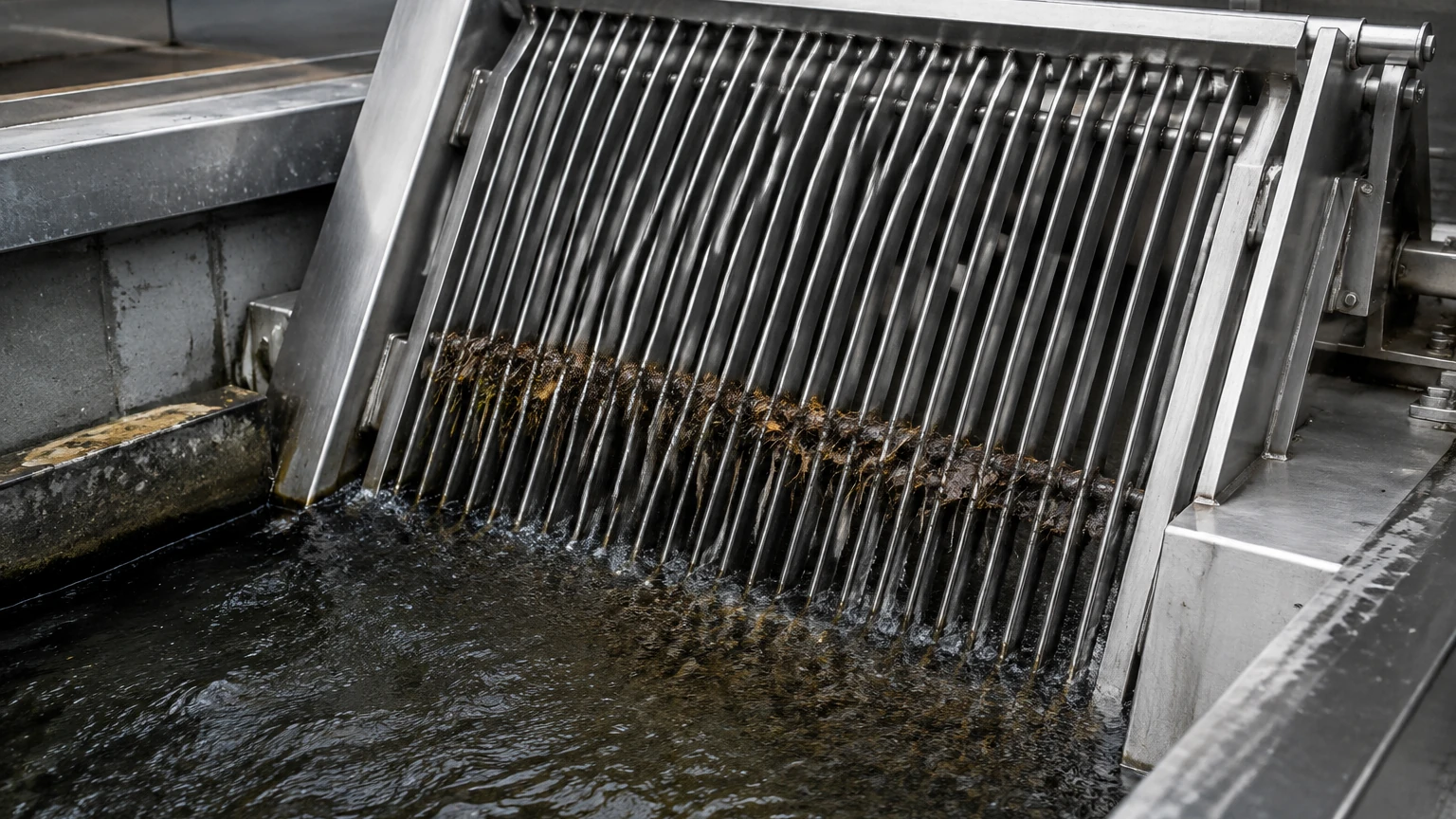
Wastewater Treatment Bar Screen
In the hierarchy of industrial and municipal water processing, the wastewater treatment bar screen serves as the critical first line of defense. Its primary function is the removal of large solids—ranging from plastic debris and rags to organic matter—that could otherwise damage downstream equipment such as pumps, valves, and membrane bioreactors. For engineers and facility managers, selecting the appropriate screening technology is not merely a matter of sizing; it involves a complex evaluation of hydraulic capacity, material durability, and the specific characteristics of the influent.
As a specialized manufacturer of stainless steel filtration solutions, Kaifil emphasizes the importance of precision engineering in these components. Whether integrated into a large-scale municipal facility or a specialized industrial processing plant, the performance of a bar screen directly impacts the total cost of ownership and the operational uptime of the entire treatment train.
Understanding the Function of a Wastewater Treatment Bar Screen
The fundamental objective of a wastewater treatment bar screen is to protect the integrity of the treatment process. By intercepting large objects, the screen prevents mechanical blockages and reduces the abrasive load on subsequent filtration stages. In industrial settings, such as chemical processing or food and beverage production, the nature of the solids can vary significantly, requiring a tailored approach to screen design.
Primary vs. Secondary Screening
Screening is typically divided into stages. Primary or "coarse" screening usually involves bar spacings of 6mm to 150mm. These are designed to catch the largest debris. Secondary or "fine" screening utilizes much tighter tolerances, often ranging from 0.5mm to 6mm. Fine screens are essential for protecting sensitive downstream processes like fine-bubble aeration or membrane filtration. The choice between these depends on the sensitivity of the equipment located further down the line.
Engineering Considerations for Hydraulic Efficiency
When designing or specifying a wastewater treatment bar screen, hydraulic performance is the most critical technical factor. An improperly sized screen can lead to excessive head loss, which in turn causes upstream surcharging and potential overflows.
Head Loss and Flow Velocity
Head loss refers to the drop in water level across the screen. It is influenced by the bar shape, the angle of inclination, and the percentage of open area. Engineers typically use the Bernoulli equation or specific empirical formulas (such as the Kirschmer equation) to calculate the expected head loss.
Velocity is another vital metric. The approach velocity (the speed of the water before it hits the screen) should ideally be maintained between 0.3 to 0.6 meters per second (m/s). If the velocity is too low, solids will settle in the channel before reaching the screen. If it is too high, flexible solids may be forced through the bars, or the screen itself may undergo structural stress.
Open Area Calculations
The "clear opening" or open area ratio determines the throughput capacity. A higher open area reduces velocity through the bars and minimizes head loss. However, increasing the open area often requires thinner bars, which may compromise the structural integrity of the screen under heavy loading conditions. Finding the balance between hydraulic throughput and mechanical strength is a core challenge in filtration engineering.
Material Selection: The Case for Stainless Steel
The environment within a wastewater treatment plant is inherently aggressive. Screens are constantly exposed to moisture, varying pH levels, and potentially corrosive chemicals. Consequently, material selection is the primary determinant of the screen's lifespan.
Grade 304 vs. Grade 316 Stainless Steel
Stainless steel is the industry standard for high-performance bar screens due to its exceptional corrosion resistance and structural rigidity.
- Grade 304: This is suitable for standard municipal wastewater applications where the risk of chemical corrosion is moderate.
- Grade 316/316L: For industrial applications involving high chloride concentrations or acidic effluents (common in chemical and pharmaceutical sectors), Grade 316 is preferred. The addition of molybdenum provides enhanced resistance to pitting and crevice corrosion.
At Kaifil, we focus on high-quality stainless steel fabrication to ensure that every filtration component can withstand these demanding environments without premature failure. The use of precision-welded stainless steel not only extends the life of the bar screen but also reduces the frequency of maintenance-related shutdowns.
Classifying Bar Screen Mechanisms
Beyond the material and spacing, the mechanical method of cleaning the screen defines its operational category.
Manual Bar Screens
Manual screens are static racks that require personnel to rake away accumulated debris. While cost-effective in terms of initial capital expenditure, they are labor-intensive and only suitable for low-flow applications or as emergency bypasses. They are typically installed at a 30 to 45-degree angle to facilitate easier manual raking.
Mechanical Bar Screens
In modern industrial facilities, mechanical bar screens are standard. These systems use automated rakes, chains, or reciprocating mechanisms to clear the bars.
- Climber Screens: Use a rack-and-pinion drive to move a rake up and down the screen.
- Chain-Driven Screens: Utilize continuous chains to move multiple rakes, allowing for high-capacity debris removal.
- Catenary Screens: Feature a front-cleaned, front-return mechanism that is robust and capable of handling very heavy solids.
Customization and OEM Manufacturing Requirements
No two wastewater streams are identical. Therefore, off-the-shelf solutions often fall short of meeting specific engineering requirements. Customization is essential for optimizing the filtration process. When working with a manufacturer, engineers should look for capabilities in material selection, precise slot sizing, and structural reinforcement.
Customized stainless steel filter components allow for the integration of specific bar profiles, such as wedge wire or teardrop shapes, which can significantly improve hydraulic efficiency and reduce the risk of "blinding" (clogging). For those looking to optimize their current systems or develop new filtration infrastructure, it is beneficial to Review product options and application support to ensure the selected components align with the project's technical demands.
Addressing Common Risks: Blinding and Corrosion
The two most common failure modes for a wastewater treatment bar screen are blinding and corrosion.
Preventing Blinding
Blinding occurs when debris becomes lodged between the bars or when a layer of grease and fine particles coats the screen surface. This increases head loss and can lead to a total blockage. To mitigate this, engineers should consider:
1. Bar Profile: Tapered bars or wedge wire profiles provide a wider opening on the downstream side, allowing particles that pass the initial gap to clear the screen easily.
2. Cleaning Frequency: Automated systems should be triggered by differential pressure sensors rather than simple timers to respond to sudden surges in solids loading.
Managing Corrosion
Even with stainless steel, localized corrosion can occur if the material is not properly treated or if the environment exceeds the material's limits. Passivation and proper welding techniques are essential during the manufacturing process to maintain the protective oxide layer of the steel. In highly aggressive environments, specifying low-carbon versions (like 316L) helps prevent intergranular corrosion near weld points.
Technical Checklist for Procurement
Before finalizing a specification for a wastewater treatment bar screen, the following data points must be confirmed to ensure the equipment is fit for purpose:
* Influent Characteristics: What is the nature of the solids? Are there fats, oils, or greases (FOG) that might require specialized cleaning?
* Peak Flow Rate: The screen must be sized for the maximum anticipated flow, not just the average flow.
* Channel Dimensions: Exact width and depth of the concrete channel are required for a precise fit.
* Discharge Height: Where will the screenings be deposited? This dictates the length and angle of the mechanical rake.
* Material Grade: Based on the chemical composition of the wastewater, is 304, 316, or a more specialized alloy required?
* Integration Requirements: Does the screen need to interface with existing SCADA systems for automated monitoring?
Conclusion
The wastewater treatment bar screen is a vital component that determines the efficiency and longevity of an entire water treatment system. By focusing on high-quality materials like stainless steel and adhering to rigorous hydraulic engineering principles, facilities can ensure reliable performance and minimal maintenance.
For engineers tasked with designing these systems, the priority should always be on precision and durability. Partnering with a manufacturer that understands the nuances of custom stainless steel filtration ensures that the bar screen is not just a piece of hardware, but a engineered solution tailored to the specific challenges of the application. For more information on specialized filtration components and custom manufacturing, visit the Main Page to explore technical specifications and engineering support.
