


Sterile Air Filter
In industrial processing, the requirement for sterile air is a critical factor in maintaining product integrity and preventing microbial contamination. A sterile air filter is designed to remove microorganisms, including bacteria, viruses, and bacteriophages, from compressed air or gas streams. Unlike standard particulate filters, these components must meet stringent validation standards to ensure that the air exiting the filter is biologically inert. For engineers and procurement professionals in the pharmaceutical, food and beverage, and biotechnology sectors, understanding the technical nuances of these filters is essential for optimizing process safety and operational efficiency.
Industrial filtration systems often rely on a combination of materials and mechanical designs to achieve sterility. While the primary sterile membrane is often composed of hydrophobic polymers like PTFE, the surrounding infrastructure—including the housings and pre-filtration stages—frequently utilizes high-grade stainless steel components. As a specialist in custom filtration, Kaifil provides the engineering expertise necessary to integrate these components into complex industrial environments. For more detailed technical specifications on filtration components, professionals can visit the Main Page to explore customized solutions.
Mechanisms of Sterile Air Filtration
The performance of a sterile air filter is not merely dependent on a "sieving" effect. Because microorganisms are often smaller than the nominal pore size of many industrial filters, the filtration process relies on three primary physical mechanisms: physical interception, inertial impaction, and Brownian diffusion.
Physical Interception
Interception occurs when a particle or microorganism follows a gas streamline but comes within one particle radius of a filter fiber. The particle then makes contact and is captured. This is the primary mechanism for particles that are roughly the same size as the gaps in the filter media.
Inertial Impaction
Inertial impaction is effective for larger, heavier particles. As the air stream maneuvers around the filter fibers, the inertia of the particle causes it to continue in a straight path rather than following the streamline. This results in the particle striking the fiber and becoming trapped. This mechanism is particularly relevant in high-velocity air streams.
Brownian Diffusion
For extremely small particles, such as viruses or sub-micron bacteria, Brownian diffusion is the dominant capture mechanism. These particles do not follow streamlines but move erratically due to collisions with gas molecules. This random motion increases the probability that the particle will contact a filter fiber. Because of this, sterile air filters are often more efficient at capturing very small particles than they are at capturing mid-sized particles, leading to the concept of the Most Penetrating Particle Size (MPPS).
Material Engineering and Construction
The construction of a sterile air filter must withstand rigorous operating conditions, including high temperatures and repeated sterilization cycles. The choice of materials for both the filter media and the housing is a primary engineering consideration.
Filter Media Selection
Most modern sterile air filters utilize pleated hydrophobic membranes. Hydrophobicity is crucial because moisture in the air stream can lead to "blinding" or pressure drops, and it provides a breeding ground for bacteria if the filter is not properly maintained. Polytetrafluoroethylene (PTFE) is the industry standard for sterile gas filtration due to its chemical inertness and inherent water-repellent properties.
Stainless Steel Housings and Components
In B2B industrial applications, the sterile filter element is housed within a stainless steel vessel. Typically, AISI 316L stainless steel is used for its superior corrosion resistance and ability to withstand Steam-in-Place (SIP) procedures. The internal surfaces of these housings are often polished to a high degree (Ra < 0.8 µm) to prevent microbial attachment and facilitate thorough cleaning. Kaifil specializes in manufacturing the precision metal components and wire mesh structures that support these high-stakes filtration environments, ensuring structural integrity under pressure.
Key Performance Indicators for Engineers
When evaluating a sterile air filter for a specific application, engineers must look beyond simple flow rates. Several technical metrics determine the suitability of a filter for sterile processes.
Log Reduction Value (LRV)
The effectiveness of a sterile filter is measured by its Log Reduction Value. An LRV of 7, for example, means that for every 10^7 (10,000,000) microorganisms reaching the filter, only one will pass through. To be classified as a true sterile grade filter, the media must typically demonstrate an LRV of 7 or higher for a specific challenge organism, such as *Brevundimonas diminuta*.
Pressure Drop (Delta P)
Every filter introduces resistance to the air stream. A high initial pressure drop increases energy costs for the compressor system. Engineers must balance the required filtration efficiency with the allowable pressure drop. Over time, as the filter captures particulates, the pressure drop will increase, signaling the need for replacement or cleaning of pre-filters.
Temperature and Pressure Limits
Sterile air filters used in fermentation or pharmaceutical packaging must often operate at elevated temperatures. It is vital to confirm that the filter media, o-rings, and support structures can maintain their integrity at the maximum operating temperature of the system, especially during SIP cycles where temperatures can reach 142°C.
The Role of Pre-filtration in Sterile Systems
A common mistake in industrial system design is the lack of adequate pre-filtration. A sterile air filter is a high-precision, high-cost component designed to remove biological contaminants, not bulk scale, rust, or oil aerosols from the compressor.
Using stainless steel wire mesh filters or sintered metal elements as pre-filters can significantly extend the service life of a sterile air filter. These pre-filters remove the majority of the particulate load, allowing the sterile membrane to focus on microbial retention. This multi-stage approach reduces the total cost of ownership by protecting the more expensive sterile elements from premature clogging. Kaifil’s expertise in custom wire mesh filtration provides a robust first line of defense in these systems, tailored to the specific flow and particulate requirements of the facility.
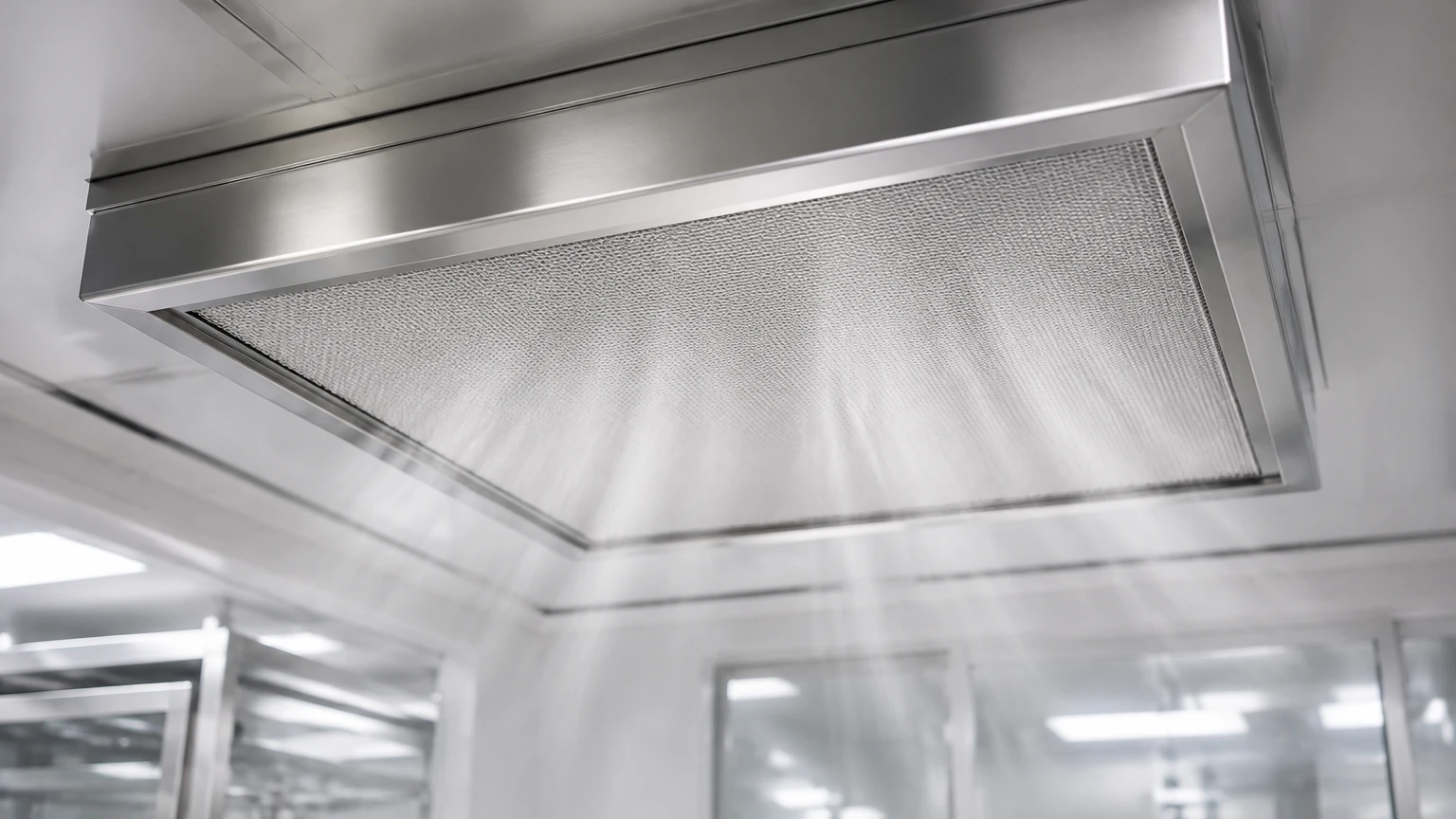
Validation and Integrity Testing
In regulated industries, a sterile air filter must be validated to prove it is performing as intended. This is not a one-time event but a recurring requirement. There are two primary methods for testing the integrity of a sterile air filter without compromising its sterility.
1. Aerosol Challenge (DOP/PAO Test): This involves introducing a known concentration of oil aerosols (like Dispersed Oil Particulate) upstream and measuring the downstream concentration. This is often used for HEPA filters but can be applied to certain gas-stage sterile filters.
2. Water Intrusion Test (WIT): This is the preferred method for hydrophobic sterile air filters. It measures the pressure required to force water into the pores of the hydrophobic membrane. Because the membrane is hydrophobic, it resists water; a drop in pressure indicates a breach in the membrane’s integrity.
3. Bubble Point Test: This test measures the pressure required to force air through a liquid-saturated filter. While more common for liquid filters, it can be used for sterile air filters if the media is properly wetted with a low-surface-tension fluid.
Sourcing and Customization Considerations
For OEM manufacturers and plant engineers, off-the-shelf solutions may not always meet the spatial or performance requirements of a specialized machine. Customization in sterile air filtration often involves specific housing dimensions, unique connection types (such as Tri-Clamp, flange, or threaded), and specialized support cores for the filter media.
When sourcing a sterile air filter system, it is important to confirm the following with the manufacturer:
* Chemical Compatibility: Ensure the housing and seals are compatible with any cleaning agents or trace gases in the air stream.
* Flow Capacity: Calculate the maximum CFM (Cubic Feet per Minute) required at the lowest operating pressure to ensure the filter is not undersized.
* Replacement Cycles: Determine the expected lifespan based on the air quality and the frequency of sterilization cycles.
* Certification: Request validation guides that prove the filter’s performance against microbial challenges.
By focusing on these technical parameters, procurement teams can ensure they are investing in a sterile air filter solution that provides long-term reliability. Whether providing the primary filtration element or the critical stainless steel components that ensure the system's structural integrity, manufacturers like Kaifil play a vital role in the industrial filtration supply chain. For further information on custom metal filtration components and industrial solutions, engineers are encouraged to review the resources available on the Main Page.
Conclusion
The implementation of a sterile air filter is a necessity for any industrial process where microbial contamination poses a risk to safety or product quality. By understanding the mechanical principles of capture, the importance of material selection, and the necessity of robust pre-filtration, engineers can design systems that are both effective and cost-efficient. Regular integrity testing and the use of high-quality stainless steel components ensure that these systems remain a reliable barrier against biological hazards in the most demanding industrial environments.
