


Plate Condensers
In modern industrial thermal management, plate condensers represent a significant evolution from traditional shell-and-tube designs. These compact, high-efficiency heat exchangers are engineered to condense vapors into liquids by transferring heat across a series of thin, corrugated metal plates. For engineers and procurement teams in the chemical processing, pharmaceutical, and food and beverage sectors, understanding the technical nuances of plate condensers—and the filtration systems required to protect them—is essential for maintaining system integrity and operational uptime.
Plate condensers operate on the principle of high turbulence and large surface area within a minimal footprint. However, the very design that makes them efficient—narrow flow channels—also makes them sensitive to particulate contamination. Ensuring the longevity of these systems requires a dual focus on thermal engineering and robust filtration solutions. For comprehensive technical support and to explore high-performance filtration components, professionals often consult the Main Page of specialized manufacturers to align filter specifications with condenser requirements.
Technical Principles and Design Architecture
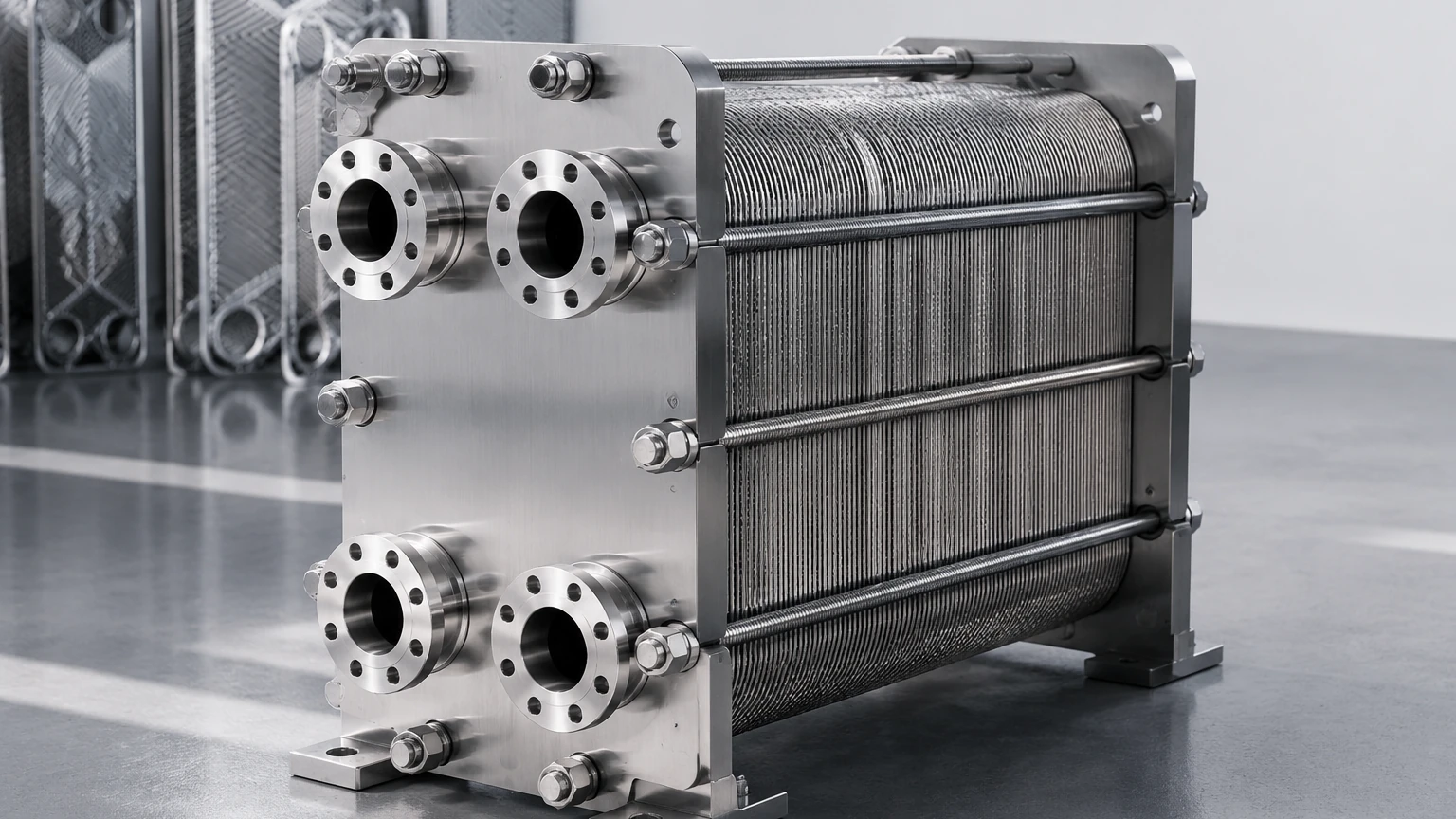
The core architecture of plate condensers consists of a pack of corrugated metal plates held together by a frame or joined through brazing or welding. These plates are arranged to create alternating channels through which the vapor and the cooling medium flow in counter-current or co-current directions.
Heat Transfer Efficiency
The corrugations on the plates, often referred to as a "chevron" or "herringbone" pattern, serve two primary purposes. First, they increase the effective surface area available for heat transfer. Second, they induce high levels of turbulence even at low flow velocities. This turbulence disrupts the boundary layer of the fluid, significantly increasing the heat transfer coefficient compared to smooth-tube heat exchangers. In condensation applications, this design facilitates rapid phase change by quickly removing latent heat from the vapor.
Compact Footprint
One of the primary drivers for selecting plate condensers over shell-and-tube alternatives is spatial efficiency. Because of the high heat transfer rates, a plate condenser can achieve the same thermal duty as a shell-and-tube unit while being significantly smaller and lighter. This is particularly advantageous in offshore platforms, modular chemical skids, and urban industrial facilities where floor space and structural weight limits are critical constraints.
Material Selection and Corrosion Resistance
The choice of material for the plates is a critical engineering decision that depends on the chemical composition of the vapor, the cooling medium, and the operating temperature. Since plate condensers often handle aggressive media, selecting the correct alloy is paramount to preventing premature failure due to pitting, crevice corrosion, or stress corrosion cracking.
1. Stainless Steel (304 and 316L): These are the most common materials for general industrial applications. 316L, with its molybdenum content, offers superior resistance to chlorides and is the standard for food, beverage, and pharmaceutical processes.
2. Titanium: In applications involving seawater cooling or highly corrosive chemicals like concentrated nitric acid, titanium plates are utilized due to their exceptional oxide layer protection.
3. Nickel Alloys: For high-temperature or extreme chemical environments, alloys such as Hastelloy are employed to maintain structural integrity and corrosion resistance.
Beyond the plates themselves, the sealing mechanism—whether gaskets, brazing material (copper or nickel), or laser welds—must be compatible with the processed fluids. In high-purity industries, the demand for stainless steel components extends beyond the condenser to the surrounding filtration and piping infrastructure to ensure a contaminant-free environment.
The Critical Role of Filtration in Condenser Protection
While plate condensers are highly efficient, their narrow internal channels (typically ranging from 1.5mm to 5mm) make them susceptible to fouling and clogging. Particulate matter, scale, or biological growth in the cooling water or process vapor can quickly obstruct flow, leading to increased pressure drops and a sharp decline in thermal efficiency.
Preventing Fouling with Wire Mesh Filters
To mitigate these risks, industrial systems must integrate precision filtration components. Stainless steel wire mesh filters are frequently installed upstream of plate condensers to capture suspended solids. Unlike disposable filters, high-quality wire mesh filters provide a durable, cleanable solution that can withstand the high pressures and temperatures typical of industrial condensing cycles.
Engineers must specify the filtration rating (micron size) based on the narrowest gap within the plate condenser. A general rule of engineering is to filter out particles that are 1/3 to 1/5 the size of the plate gap to prevent bridging and subsequent blockage. For those seeking customized filtration inserts or specialized cartridges, reviewing options on the Main Page can provide insights into material compatibility and flow rate optimization.
Custom Filter Cartridges for OEM Integration
In many OEM applications, standard off-the-shelf filters may not meet the specific spatial or flow requirements of a proprietary condenser skid. Custom-engineered stainless steel filter cartridges allow for seamless integration into the system piping. These components are designed to handle high differential pressures, ensuring that even if the filter becomes loaded with debris, it will not collapse and bypass contaminants into the sensitive plate channels.
Selection Criteria for Industrial Applications
When specifying plate condensers for a new project or a system retrofit, technical teams must evaluate several variables to ensure the equipment meets the application's thermal and mechanical demands.
Vapor Load and Condensation Rate
The primary calculation involves determining the total heat load (Q) required to condense the vapor. This includes the latent heat of vaporization and any sensible heat removed if sub-cooling is required. The mass flow rate of the vapor and its physical properties (density, thermal conductivity, and viscosity) at the operating pressure are essential data points for sizing the plate pack.
Pressure Drop Constraints
In vacuum condensation or low-pressure steam applications, the allowable pressure drop across the condenser is extremely limited. Excessive pressure drop can raise the boiling point of the vapor, reducing the temperature difference between the vapor and the coolant and potentially stalling the process. Engineers must balance the desire for high turbulence (which increases heat transfer) with the need to keep pressure drop within acceptable limits.
Approach Temperature
The "approach temperature"—the difference between the temperature of the condensed liquid and the inlet temperature of the cooling medium—dictates the required surface area. A closer approach temperature requires more plates, increasing the initial capital expenditure but potentially reducing long-term utility costs by allowing the use of warmer cooling water.
Maintenance and Operational Longevity
The total cost of ownership for plate condensers is heavily influenced by maintenance requirements. Unlike shell-and-tube heat exchangers, which can be difficult to clean mechanically, gasketed plate condensers can be disassembled for manual cleaning and inspection. However, brazed and welded units require different strategies.
Cleaning-in-Place (CIP)
For brazed plate condensers, CIP is the standard maintenance procedure. This involves circulating a cleaning solution (often a mild acid or specialized detergent) through the unit to dissolve scale and remove organic fouling. The effectiveness of CIP is highly dependent on the initial filtration; if large solids have entered the unit and become wedged in the plate corrugations, CIP may not be sufficient to restore full flow.
Monitoring Performance
Continuous monitoring of the pressure differential ($ΔP$) and the temperature effectiveness is the most reliable way to track the health of a plate condenser. A gradual increase in $ΔP$ on the cooling side usually indicates fouling, while a decrease in the condensation rate suggests a buildup of non-condensable gases or fouling on the vapor side. Implementing a regular maintenance schedule for both the condenser and its protective wire mesh filters is the most effective way to prevent unplanned downtime.
Customization and OEM Solutions
Industrial filtration and heat transfer are rarely "one size fits all." Manufacturers like Kaifil specialize in providing the customized stainless steel components that support these complex systems. Whether it is a specific grade of stainless steel for a pharmaceutical-grade condenser or a custom-designed wire mesh strainer for a high-flow chemical line, customization ensures that the filtration system complements the condenser's performance rather than hindering it.
Technical professionals should confirm the following when working with an OEM partner for filtration components:
* Material Certification: Ensure all stainless steel components meet ASTM or equivalent standards for the intended environment.
* Filtration Accuracy: Verify that the micron rating is precisely calibrated to the plate condenser's channel width.
* Structural Integrity: Confirm the maximum operating pressure and temperature ratings of the filter housings and elements.
By focusing on these technical details, purchasing teams can secure components that offer the durability required for demanding industrial environments. For further technical specifications on customized metal filtration components, visiting the Main Page provides a direct path to engineering resources and product catalogs.
Conclusion
Plate condensers are a cornerstone of efficient industrial thermal management, offering superior heat transfer performance in a compact design. However, their sensitivity to fouling necessitates a rigorous approach to system design, material selection, and, most importantly, upstream filtration. By integrating high-quality stainless steel wire mesh filters and custom cartridges, engineers can protect the intricate plate surfaces from particulate damage, ensuring consistent condensation rates and extended service life. As industries continue to push for higher efficiency and smaller equipment footprints, the synergy between advanced plate condensers and precision filtration will remain a critical factor in operational success.
