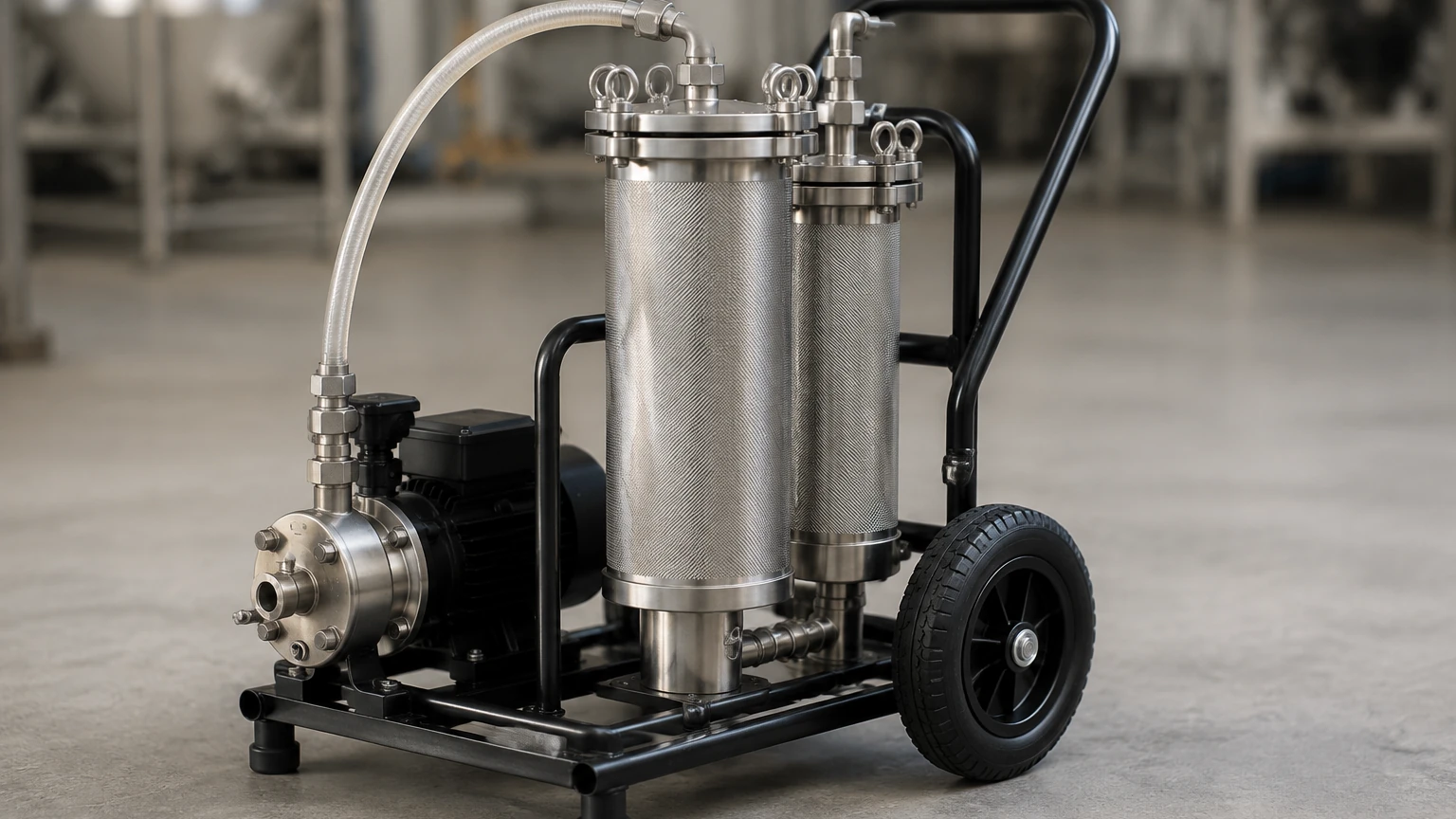
Portable Oil Filtering System
In industrial environments, the longevity and reliability of hydraulic systems, gearboxes, and lubrication circuits are directly proportional to the cleanliness of the circulating fluid. Contamination—whether in the form of solid particulates, moisture, or oxidation byproducts like varnish—is responsible for a significant percentage of mechanical failures. A portable oil filtering system serves as a critical maintenance tool, offering a versatile and efficient method for off-line filtration, oil transfer, and system flushing. By removing contaminants that standard on-board filters might miss, these mobile units help maintain oil within specified ISO cleanliness codes, thereby reducing wear on precision components and extending the service life of expensive industrial fluids.
The Strategic Importance of Portable Oil Filtration
Most industrial machinery is equipped with full-flow filters designed to protect components during operation. However, these filters often have limitations regarding micron ratings and dirt-holding capacity to prevent excessive pressure drops that could trigger bypass valves. A portable oil filtering system, often referred to as a filter cart or kidney-loop system, operates independently of the main system's pump and pressure. This independence allows for "polishing" the oil—circulating it through high-efficiency media for multiple passes until the desired cleanliness level is achieved.
Engineers utilize these systems for several key functions:
1. New Oil Pre-filtration: Contrary to common belief, new oil delivered in drums is often not clean enough for high-pressure hydraulic systems. Portable units ensure oil is filtered before it ever enters the reservoir.
2. Off-line Contamination Control: While the machine is running or during downtime, the system can continuously remove wear debris and ingested contaminants.
3. Fluid Transfer: Moving oil from storage containers to machine reservoirs without introducing environmental pollutants.
4. System Flushing: After a component failure or a major overhaul, portable systems flush the lines to remove residual metallic particles and assembly debris.
Engineering Components of a Portable Oil Filtering System
A robust portable oil filtering system is more than just a pump and a filter. It is an engineered assembly designed to handle varying fluid viscosities and environmental conditions. The primary components include:
The Pump and Motor Assembly
The heart of the system is typically a positive displacement pump, such as a gear or vane pump. These are preferred because they provide a consistent flow rate regardless of the pressure changes that occur as the filter element loads with contaminants. The motor must be sized to handle the torque required to move high-viscosity oils, especially in cold-start conditions.
Filter Housings and Heads
Industrial-grade systems utilize heavy-duty filter housings capable of withstanding the rigors of a factory floor. For applications involving corrosive fluids or high temperatures, stainless steel housings are the standard. The filter head often includes a bypass valve to protect the system from over-pressurization and a differential pressure indicator (mechanical or electronic) to signal when the element is saturated.
Suction and Discharge Hoses
High-quality, chemical-resistant hoses are essential. Suction hoses are often wire-reinforced to prevent collapse under vacuum, while discharge hoses must be rated for the maximum output pressure of the pump. Quick-disconnect couplings are frequently used to ensure spill-free operation and ease of use across multiple machines.
Filtration Media Selection: Stainless Steel vs. Disposable
The choice of filtration media is perhaps the most critical decision in configuring a portable oil filtering system. While disposable cellulose or synthetic fiber elements are common, stainless steel wire mesh and sintered metal components offer distinct advantages in demanding B2B industrial applications.
Stainless Steel Wire Mesh:
These elements provide precise surface filtration. They are characterized by their high structural integrity and resistance to "media migration," where bits of the filter material itself break off and enter the fluid stream. Stainless steel mesh is particularly effective for removing large volumes of metallic wear debris and can be cleaned and reused, providing a lower long-term cost of ownership in high-contamination environments.
Sintered Metal Media:
For applications requiring finer filtration (down to sub-micron levels) combined with high pressure-differential tolerance, sintered stainless steel provides a porous structure that captures particles throughout its depth. This is ideal for high-temperature oils or fluids that are chemically incompatible with standard adhesives and seals found in disposable cartridges.
For more detailed technical specifications on filter media compatibility, engineers can consult the Main Page of specialized manufacturers like Kaifil to evaluate material grades and weave patterns.
Technical Parameters: Flow Rate, Viscosity, and Pressure
When selecting or designing a portable oil filtering system, three technical parameters must be balanced: flow rate, fluid viscosity, and pressure drop (ΔP).
* Viscosity Considerations: Oil viscosity changes dramatically with temperature. A system designed for ISO 32 hydraulic oil at 40°C will behave very differently when tasked with filtering ISO 460 gear oil at 15°C. If the oil is too viscous, the pressure drop across the filter element will exceed the bypass setting, and the oil will circulate without being filtered. High-viscosity applications require slower pump speeds and larger filter surface areas.
* Flow Rate and Residence Time: While higher flow rates allow for faster oil transfer, they can reduce the efficiency of certain types of media, particularly water-removal elements. The "residence time"—the duration the oil spends inside the filter housing—must be sufficient for the media to capture contaminants effectively.
* Beta Ratio and Efficiency: The performance of the filter element is measured by its Beta Ratio (β). A Beta ratio of 1000 at 5 microns (β5=1000) means that for every 1000 particles of 5-micron size entering the filter, only one passes through. For critical hydraulic systems, high Beta ratios are essential to maintain the integrity of servo valves and high-pressure pumps.
Application-Specific Configurations
Portable oil filtering systems are not one-size-fits-all. Different industries require specific configurations to address their unique contamination challenges.
Hydraulic and Lube Oil Systems
In these applications, the focus is on removing fine particulates (3-10 microns) that cause abrasive wear. The systems often utilize two-stage filtration: a coarse pre-filter to catch large debris and a high-efficiency secondary filter to achieve the target ISO cleanliness code.
Chemical and Process Industries
When filtering oils used in chemical processing, material compatibility is paramount. Standard carbon steel or plastic components may corrode or degrade. Here, a portable oil filtering system constructed with 304 or 316L stainless steel components—from the pump internals to the filter mesh—is required to ensure fluid purity and equipment longevity.
Water Removal Applications
If oil is contaminated with water (common in paper mills or marine environments), the portable system may be equipped with coalescing elements or water-absorbing polymers. Coalescers work by gathering small water droplets into larger ones that settle at the bottom of the housing for drainage.
Maintenance, Cleaning, and Lifecycle Management
To ensure the portable oil filtering system remains an asset rather than a source of contamination, a strict maintenance protocol is necessary.
1. Element Monitoring: The differential pressure gauge is the primary indicator of filter health. Operating a system with a clogged filter in bypass mode is counterproductive.
2. Cleaning Reusable Elements: One of the primary benefits of using stainless steel filter components is their cleanability. Depending on the contaminant, these can be cleaned using ultrasonic baths, back-flushing with solvent, or chemical cleaning. This process must be performed carefully to avoid damaging the precision wire mesh.
3. Seal Integrity: Regular inspection of O-rings and gaskets is vital, especially when the system is moved frequently or used with different types of fluids. Viton or EPDM seals are often specified based on the chemical profile of the oils being processed.
4. Hose Management: Hoses should be capped when not in use to prevent the ingress of environmental dust. They should also be inspected for cracks or abrasions that could lead to leaks during operation.
Engineering Custom Solutions with Kaifil
For many industrial facilities, standard off-the-shelf filter carts do not meet specific operational requirements. This is where custom engineering becomes essential. Factors such as restricted floor space, the need for explosion-proof motors in hazardous zones, or the requirement for extremely high dirt-holding capacities necessitate a tailored approach.
Manufacturers like Kaifil specialize in the production of custom stainless steel filtration components that serve as the core of these high-performance systems. By providing precision-engineered wire mesh filters and stainless steel cartridges, they enable the construction of portable oil filtering systems that can withstand extreme pressures and aggressive chemical environments.
When designing a custom system, engineers should confirm:
* The specific ISO cleanliness target for the application.
* The range of operating temperatures and corresponding fluid viscosities.
* The chemical compatibility of all wetted parts.
* The required mobility features (e.g., pneumatic tires for uneven floors vs. compact frames for tight spaces).
By focusing on high-quality metal filtration components, maintenance teams can ensure that their portable oil filtering system provides reliable service for years, significantly reducing the total cost of ownership and protecting the primary production assets of the facility. For those seeking to integrate advanced filtration technology into their maintenance workflows, reviewing the available options on the Main Page of an experienced manufacturer is a recommended starting point for technical evaluation.