


Metal Filter Media
In the landscape of industrial processing, the selection of filtration media is a critical engineering decision that directly impacts product purity, equipment longevity, and operational efficiency. While polymer-based filters are common in light-duty applications, demanding environments characterized by high temperatures, corrosive chemicals, and high mechanical stress necessitate the use of metal filter media. These materials provide a level of structural integrity and precision that synthetic alternatives cannot match.
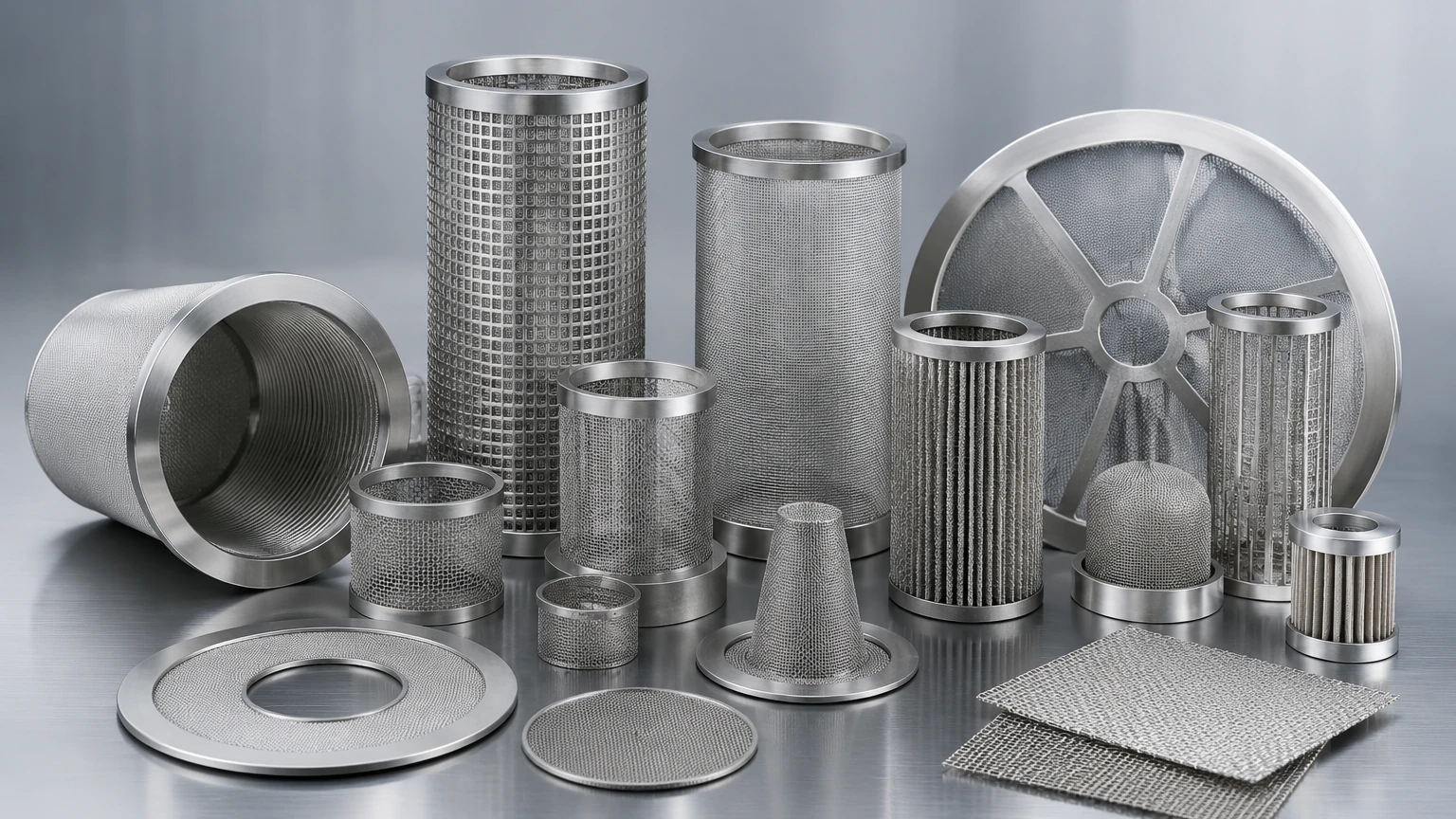
Metal filter media encompass a wide range of structures, from simple woven wire mesh to complex sintered fiber felts and wedge wire configurations. Understanding the technical nuances of these materials allows engineers to optimize filtration systems for specific micron ratings, flow rates, and cleaning cycles. As a specialized manufacturer, Kaifil provides a comprehensive range of these solutions, which can be explored further on our Main Page.
Types of Metal Filter Media and Their Structures
The performance of a filter is largely dictated by its geometric structure. Metal media are generally categorized by their manufacturing process, each offering distinct advantages for different industrial scenarios.
Woven Wire Mesh
Woven wire mesh is the most versatile and widely used form of metal filter media. It is produced by weaving individual metal wires in various patterns, such as plain weave, twill weave, or Dutch weave.
* Plain Weave: Offers a simple, straight-through flow path with square openings. It is ideal for high-flow, low-pressure applications where coarse filtration is sufficient.
* Dutch Weave: Utilizes different wire diameters for the warp and shute wires, resulting in a denser, more robust mesh. This structure allows for finer filtration (down to 5-10 microns) while maintaining high mechanical strength.
Sintered Metal Mesh
Sintering is a process where multiple layers of wire mesh are bonded together using heat and pressure in a vacuum furnace. This creates a monolithic structure that does not rely on the mechanical interlocking of wires. Sintered mesh is exceptionally stable, ensuring that the pore size remains constant even under high-pressure fluctuations. It is the preferred choice for applications requiring high-precision filtration and frequent backwashing.
Sintered Metal Fiber Felt
Unlike woven mesh, sintered fiber felt is composed of non-woven stainless steel fibers that are randomly laid and then sintered. This results in a highly porous structure (up to 80% porosity) with a high dirt-holding capacity. It is particularly effective for filtering viscous fluids or gases where a low pressure drop is required over an extended service life.
Wedge Wire
Wedge wire, or V-wire, consists of surface profiles welded onto support rods. The V-shaped profile creates a slot that widens inwardly, which minimizes clogging and facilitates easy surface cleaning. This media is commonly used in water treatment, pulp and paper, and food processing applications where large volumes of solids must be separated from liquids.
Material Selection for Industrial Filtration
The chemical and thermal compatibility of the metal filter media is as important as its physical structure. Stainless steel is the primary material used, but the specific grade must be matched to the operating environment.
* Stainless Steel 304: The standard grade for general industrial use. It offers good corrosion resistance and is cost-effective for applications involving water, air, and mild chemicals.
* Stainless Steel 316L: Contains molybdenum, which significantly enhances resistance to pitting and crevice corrosion in chloride-rich environments. It is the industry standard for pharmaceutical, food and beverage, and marine applications.
* Specialty Alloys: For extreme conditions, materials like Hastelloy, Inconel, and Monel are utilized. These alloys are designed to withstand highly acidic or alkaline environments and temperatures exceeding 800°C, where standard stainless steels would suffer from oxidation or stress corrosion cracking.
Key Performance Metrics: Accuracy and Permeability
When evaluating metal filter media, engineers must look beyond the nominal micron rating. Two critical concepts define the efficiency of the media: absolute filtration and permeability.
Absolute vs. Nominal Ratings
A nominal rating refers to the ability of the filter to retain a certain percentage (usually 60% to 90%) of particles of a specific size. In contrast, an absolute rating indicates the diameter of the largest hard spherical particle that will pass through the filter under specified test conditions. For critical processes, such as catalyst recovery or sterile filtration, absolute-rated metal media are required to ensure no bypass occurs.
Pressure Drop and Permeability
Permeability is a measure of how easily a fluid can pass through the filter media. Higher porosity typically leads to a lower initial pressure drop ($ΔP$). In a well-designed system, the goal is to maximize the surface area to ensure that the $ΔP$ remains within operational limits for as long as possible. Sintered fiber felts often outperform woven mesh in this regard due to their high void volume.
Engineering Considerations for Custom Filtration Solutions
Off-the-shelf filtration components rarely meet the specific needs of complex industrial systems. Customization is often necessary to balance filtration efficiency with mechanical constraints. When designing a custom filter, several engineering factors must be addressed:
1. Mechanical Strength: The media must withstand the maximum differential pressure of the system without collapsing or deforming. This often requires the addition of support layers or perforated metal cores.
2. Flow Dynamics: The internal geometry of the filter housing and the orientation of the media should minimize turbulence and dead zones, which can lead to uneven cake buildup or bacterial growth in sanitary applications.
3. Seal Integrity: The method of joining the filter media to the end caps (e.g., plasma welding, TIG welding) is vital. Mechanical seals or adhesives are often avoided in high-temperature or high-purity applications to prevent outgassing or bypass.
At Kaifil, we specialize in translating these technical requirements into reliable hardware. Our engineering team works closely with clients to develop OEM solutions that integrate seamlessly into existing infrastructure. Detailed specifications and service capabilities are available on our Main Page.
Maintenance, Cleaning, and Total Cost of Ownership
One of the primary advantages of metal filter media over disposable alternatives is its cleanability. While the initial capital expenditure (CAPEX) for stainless steel filters is higher, the total cost of ownership (TCO) is often lower due to the elimination of frequent replacement costs and disposal fees.
Cleaning Methods
* Backpulsing/Backwashing: Using a reverse flow of fluid or gas to dislodge particles from the surface of the media. This is highly effective for wedge wire and sintered mesh.
* Ultrasonic Cleaning: Utilizing high-frequency sound waves in a cleaning solvent to remove fine particulates trapped deep within the pores of sintered fiber felts.
* Chemical Cleaning: Using acids, alkalis, or surfactants to dissolve organic or inorganic fouling. This requires careful consideration of the media's chemical compatibility.
Replacement Cycles
Despite their durability, metal filters are not infinite. Factors such as fatigue from pressure cycling, erosion from abrasive particles, or irreversible fouling will eventually necessitate replacement. Regular inspection and monitoring of the pressure drop are essential for predictive maintenance.
Application-Specific Solutions
Metal filter media serve a diverse array of industries, each with unique challenges:
* Chemical Processing: Used for filtering aggressive solvents, catalysts, and polymers. The media must resist corrosion and maintain integrity under high temperatures.
* Food and Beverage: Requires sanitary designs that are easy to clean and compliant with FDA or EU regulations. Stainless steel 316L is the preferred material to prevent contamination.
* Pharmaceuticals: Demand high-precision absolute filtration for sterile air and liquid processing. Sintered structures are often used to ensure no fiber migration into the product stream.
* Hydraulic Systems: Metal mesh filters protect sensitive valves and pumps from particulate wear, often operating under extreme pressures.
Conclusion
Selecting the right metal filter media is a balance of material science, fluid dynamics, and mechanical engineering. By understanding the differences between woven, sintered, and wedge wire structures, and by selecting the appropriate alloy and micron rating, industrial operators can achieve superior filtration performance.
As a dedicated manufacturer of stainless steel filtration solutions, Kaifil provides the technical expertise and manufacturing precision required to meet these demanding standards. Whether you require a standard replacement or a fully customized OEM component, our team is equipped to support your project. For more information on our product range and technical specifications, please visit our Main Page.
