


Industrial Woven Wire Mesh Maintenance and Repair Strategies
In heavy industrial environments, the integrity of stainless steel mesh systems is paramount for operational safety, filtration efficiency, and equipment protection. While the term "woven wire fence repair kit" often evokes images of agricultural or residential boundary maintenance, in a B2B and engineering context, it refers to the specialized tools and materials required to maintain high-performance industrial mesh installations. These installations range from high-durability machine guarding and perimeter security in chemical plants to the structural support layers of complex filtration systems.
Maintaining Woven Wire Mesh requires a deep understanding of metallurgy, weave patterns, and mechanical tension. When an industrial mesh panel is compromised—whether through mechanical impact, localized corrosion, or fatigue—engineers must decide between a localized repair using a specialized kit or a full component replacement. This guide examines the technical considerations for maintaining industrial woven wire systems and the engineering criteria for selecting repair materials.
Understanding the Composition of Industrial Woven Wire
Before selecting a woven wire fence repair kit for industrial applications, it is essential to identify the specific characteristics of the existing mesh. Industrial mesh is not a monolithic product; it is engineered with specific wire diameters, mesh counts, and alloy compositions to meet the demands of the environment.
Material Selection: SS304 vs. SS316L
Most industrial mesh systems utilize stainless steel due to its balance of strength and corrosion resistance.
* Grade 304: The standard industrial grade, providing excellent durability for general-purpose machine guards and structural partitions. It is suitable for environments where moisture is present but chemical exposure is limited.
* Grade 316L: For pharmaceutical, food processing, or marine environments, 316L is the preferred choice. The addition of molybdenum provides superior resistance to chlorides and pitting. Any repair kit used in these sectors must match the base alloy exactly to prevent galvanic corrosion or premature failure at the repair site.
Weave Patterns and Structural Integrity
The weave type determines how the mesh reacts to stress. Plain weave is the most common for industrial "fencing" or partitions, offering a stable, bidirectional strength. However, in high-pressure filtration or heavy-duty screening, Twill or Dutch weaves might be employed. A Dutch weave, for instance, utilizes a larger diameter warp wire and a smaller diameter weft wire, creating a dense, high-strength structure. Repairing these specialized weaves requires precise material matching to ensure the repaired section does not become a point of mechanical weakness or a bottleneck for fluid flow.
Assessing Damage in Industrial Mesh Systems
An effective maintenance protocol begins with a rigorous inspection. Engineers should look for three primary types of degradation that necessitate the use of a woven wire fence repair kit or professional intervention:
1. Mechanical Deformation: This occurs when the mesh is subjected to impacts or pressures exceeding its yield strength. In industrial partitions, this can lead to "bagging" or sagging, which compromises the safety distance required for machine guarding.
2. Abrasive Wear: In applications involving the movement of particulates (such as in mining or chemical processing), the wire diameter can thin over time. If the wire diameter is reduced by more than 10-15%, the structural integrity of the mesh is significantly compromised.
3. Stress Corrosion Cracking (SCC): Often invisible to the naked eye until failure occurs, SCC happens in environments where high tensile stress and corrosive agents (like chlorides) coexist. If SCC is detected, a simple repair kit is usually insufficient; the entire panel must typically be replaced with a more resistant alloy.
Components of a Professional Woven Wire Fence Repair Kit
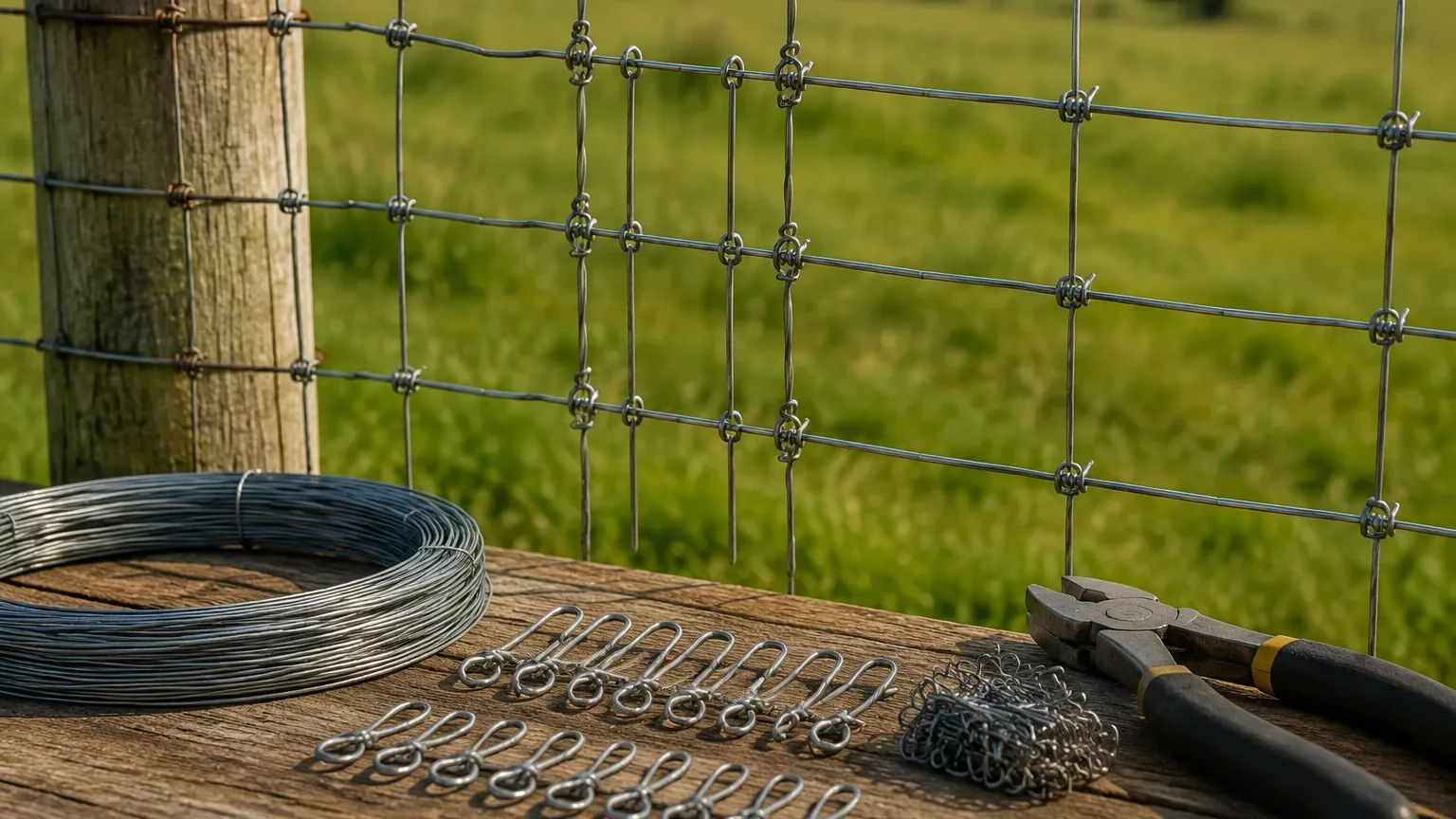
For industrial facilities, a standardized repair kit should contain more than just wire and pliers. A technically complete kit for maintaining stainless steel mesh installations includes:
* Matching Mesh Patches: Pre-cut sections of Woven Wire Mesh that match the original's mesh count and wire diameter. Using a different mesh count can create uneven stress distribution.
* Stainless Steel Lacing Wire: High-tensile wire used for "sewing" patches into place. This wire should be of the same alloy as the mesh to ensure chemical compatibility.
* Tensioning Tools: Mechanical or hydraulic tensioners are required to ensure that the repaired section maintains the same tautness as the surrounding panel. Loose mesh is prone to vibration-induced fatigue.
* Specialized Fasteners: In many industrial settings, welding is not permissible due to explosive atmospheres or the risk of altering the heat-affected zone (HAZ) of the stainless steel. In these cases, mechanical fasteners or high-strength clips are essential.
Engineering Considerations for Repair vs. Replacement
When evaluating a damaged section of mesh, engineers must perform a cost-benefit analysis that considers the total cost of ownership (TCO) and the impact on process efficiency.
Impact on Filtration and Flow
If the woven wire mesh serves a dual purpose—such as a safety guard that also acts as a coarse filter—any repair will alter the "open area" percentage. A patch overlapping the original mesh significantly reduces the flow rate and increases the pressure drop ($ΔP$) across the screen. In precision filtration environments, even a small repair can cause turbulence or localized clogging, making full replacement the only viable engineering choice.
Structural Load Distribution
Woven wire is designed to distribute loads across the entire surface area. A localized repair introduces new joinery points. If the repair is performed using lacing wire or mechanical fasteners, these points become stress concentrators. For high-vibration environments, such as vibrating screens or heavy machinery enclosures, these stress concentrators can lead to rapid failure of the surrounding "healthy" mesh.
The Role of OEM Customization
For critical infrastructure, relying on a generic woven wire fence repair kit is often a temporary measure. Professional manufacturers like Kaifil provide OEM-specific components designed for easy integration. Custom-framed mesh panels or modular filtration cartridges allow for rapid replacement of damaged sections without the need for field-weaving or makeshift patching, ensuring that the original engineering specifications (micron rating, tensile strength, and corrosion resistance) are maintained.
Installation and Maintenance Best Practices
To maximize the lifespan of industrial woven wire mesh and minimize the need for frequent repairs, facilities should implement the following engineering practices:
1. Proper Tensioning: Ensure that mesh panels are installed with the correct tension. Under-tensioned mesh vibrates, leading to work-hardening and eventual wire breakage. Over-tensioned mesh is susceptible to premature failure under thermal expansion.
2. Avoid Dissimilar Metal Contact: When installing or repairing mesh, ensure that all fasteners and support frames are compatible. Contact between stainless steel mesh and carbon steel frames will lead to rapid galvanic corrosion of the mesh.
3. Regular Cleaning Protocols: In chemical and food processing, the buildup of material (blinding) can increase the weight and pressure on the mesh. Regular ultrasonic cleaning or backwashing helps maintain the structural integrity of the wires.
4. Documenting Mesh Specifications: Maintain a technical log of the mesh count, wire diameter, and alloy for every installation. This ensures that when a repair is needed, the components in the woven wire fence repair kit are an exact match.
Conclusion
In the B2B industrial sector, maintaining woven wire mesh is a matter of precision engineering rather than simple hardware repair. Whether the mesh is used for high-security perimeters, machine safety, or complex industrial filtration, the materials and methods used for maintenance must align with the original design parameters. By understanding the nuances of material selection, weave patterns, and structural load distribution, engineers can ensure the longevity and safety of their filtration and enclosure systems.
For organizations requiring high-precision components or custom-engineered solutions, selecting the right partner is critical. Plain, twill and dutch woven wire mesh in SS304/316L — rolls, cut mesh and framed panels. Send mesh count or micron target for a technical quote. to ensure your facility is equipped with the highest quality filtration and separation materials available.
