


Parr Reactor Hastelloy C-22
In the demanding landscape of chemical research and industrial processing, the Parr reactor stands as a cornerstone for high-pressure and high-temperature reactions. When these processes involve highly corrosive media, the material of construction becomes the most critical factor in ensuring equipment longevity, safety, and batch purity. Among the various high-performance alloys available, the Parr reactor Hastelloy C-22 configuration is often specified for its exceptional resistance to a broad spectrum of aggressive chemicals. For engineers and technical professionals, understanding the integration of specialized filtration components within these reactors is essential for optimizing performance.
As a manufacturer specializing in custom metal filtration solutions, Kaifil recognizes that the efficiency of a reactor system is frequently limited by its internal components. Whether it is a catalyst recovery filter, a gas sparger, or a dip tube strainer, the material properties must match the reactor vessel to prevent galvanic corrosion and mechanical failure. This guide explores the technical considerations, material benefits, and engineering requirements for filtration systems designed for use in Parr reactors utilizing Hastelloy C-22.
Technical Properties of Hastelloy C-22 in Reactor Applications
Hastelloy C-22 (UNS N06022) is a versatile nickel-chromium-molybdenum-tungsten alloy designed to provide better overall corrosion resistance than other Ni-Cr-Mo alloys, such as Hastelloy C-276, C-4, and alloy 625. In the context of a Parr reactor, which may operate at pressures up to 5,000 psi (345 bar) and temperatures exceeding 350°C, the chemical stability of C-22 is paramount.
The alloy's high chromium content provides excellent resistance to oxidizing media, while the molybdenum and tungsten components offer resistance to reducing environments. This dual-capability makes it an ideal choice for multi-purpose reactors where the chemical environment may shift between acidic and alkaline or oxidizing and reducing states. Specifically, Hastelloy C-22 excels in resisting pitting, crevice corrosion, and stress corrosion cracking (SCC)—phenomena that often plague standard 316L stainless steel in the presence of chlorides or high-temperature mineral acids.
For filtration components, such as sintered metal mesh or perforated support tubes, using C-22 ensures that the filter medium does not become a point of failure. In many industrial processes, the filter is the most vulnerable part of the system due to its high surface area and the mechanical stresses of fluid flow. Utilizing the same high-grade alloy as the reactor body maintains the integrity of the entire fluid path.
Filtration Challenges in High-Pressure Reactor Environments
Operating a Parr reactor Hastelloy C-22 system involves navigating complex fluid dynamics and harsh chemical interactions. Filtration in these environments is not merely about particle removal; it is about maintaining process continuity under extreme conditions. Several challenges must be addressed during the design phase:
1. Differential Pressure Management
In high-pressure reactors, the differential pressure across a filter element can increase rapidly as solids accumulate. If the filter is not engineered with sufficient structural integrity, the pleats may collapse or the mesh may deform. Custom-engineered stainless steel or Hastelloy cartridges must be designed to withstand these specific Delta-P ( ΔP) requirements without bypassing contaminants.
2. Thermal Expansion and Sealing
At elevated temperatures, different materials expand at different rates. If a C-22 reactor uses a filter made of a different alloy, the seal integrity at the housing interface may be compromised. It is critical to ensure that gaskets, O-rings, and the filter hardware itself are thermally compatible with the reactor's operating range. Metal-to-metal seals or specialized PTFE-encapsulated seals are often required for these applications.
3. Catalyst Recovery and Retention
Many reactions performed in Parr reactors utilize expensive precious metal catalysts. Efficient filtration is required to recover these catalysts for reuse and to prevent them from contaminating downstream processes. The filtration media must have a precise micron rating and a high capture efficiency, often requiring sintered metal powder or multi-layer sintered wire mesh to achieve the necessary retention without excessive flow restriction.
Custom Filtration Solutions for Hastelloy C-22 Reactors
Standard off-the-shelf filters rarely meet the precise needs of a specialized Parr reactor setup. Customization is often necessary to accommodate specific vessel geometries and process requirements. Kaifil provides a range of filtration components that can be tailored for these high-performance environments.
Sintered Wire Mesh Filters
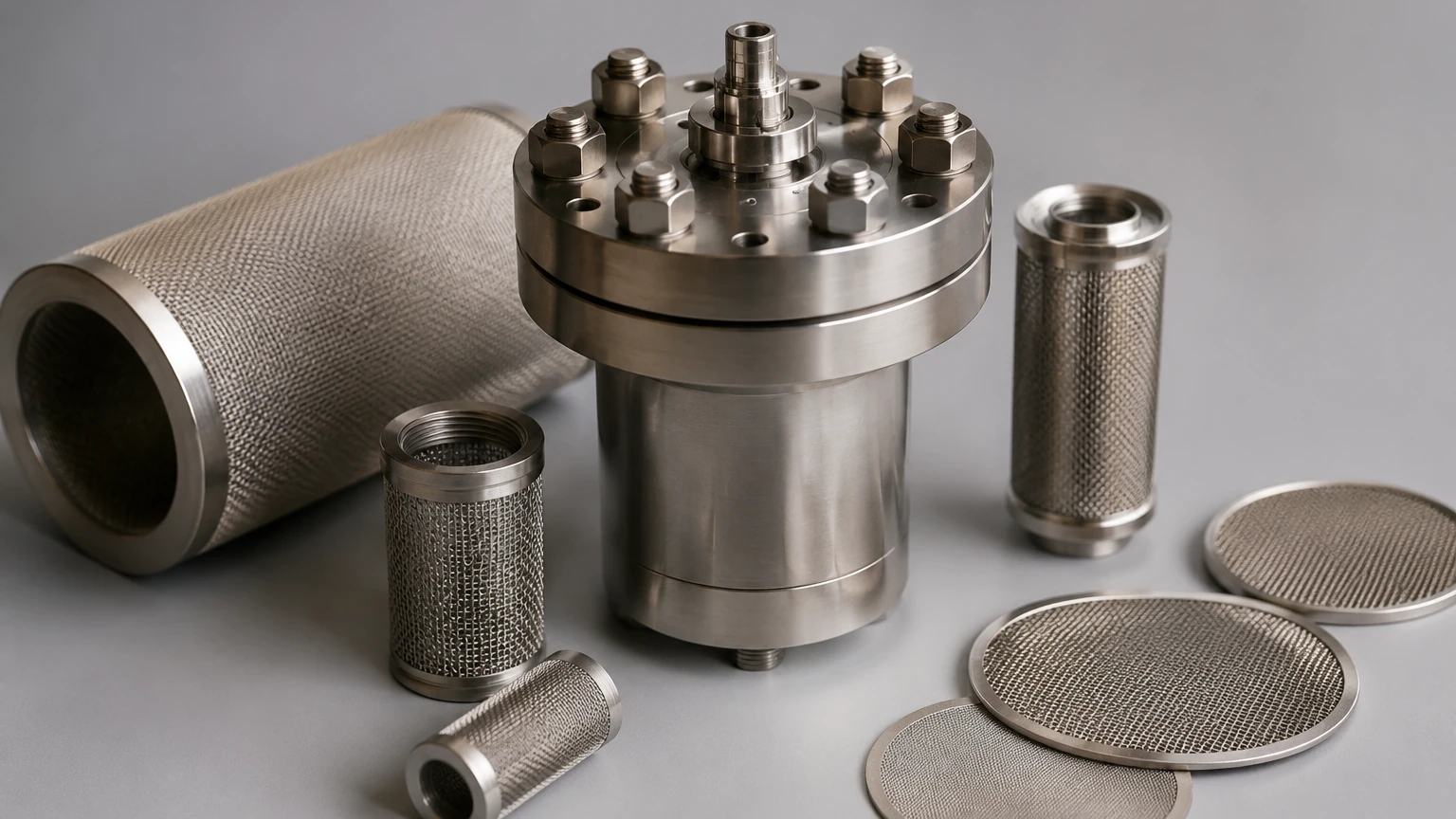
Sintered wire mesh is a preferred medium for reactor filtration because it combines the precision of woven wire cloth with the structural strength of multi-layer diffusion bonding. For a C-22 system, the mesh layers are vacuum-sintered to create a robust, porous plate or cylinder. This structure provides excellent permeability and can be backwashed or ultrasonically cleaned, extending the service life of the component significantly compared to disposable filters.
Porous Metal Spargers
In gas-liquid reactions, gas must be introduced into the liquid phase in the form of fine bubbles to maximize the surface area for mass transfer. Hastelloy C-22 porous spargers are used in Parr reactors to ensure uniform gas distribution while resisting the corrosive effects of the reactants. The pore size of the sparger directly influences the bubble size, which in turn affects the reaction rate and yield.
Catalyst Baskets and Internals
For fixed-bed or slurry-phase reactions, custom-designed baskets made from Hastelloy C-22 wire mesh allow for the containment of catalyst particles while permitting the free flow of reactants. These internals must be precision-manufactured to fit the reactor's internal dimensions, ensuring no "dead zones" where reactants could stagnate.
Engineering Considerations for Filter Selection
When selecting or designing a filter for a Parr reactor Hastelloy C-22 application, engineers must evaluate several technical parameters to ensure the solution is fit for purpose. These considerations go beyond simple micron ratings:
* Media Velocity: High fluid velocities can lead to erosion of the filter media, especially in abrasive slurry applications. Selecting a filter with a larger surface area (such as a pleated design) can reduce the face velocity and prolong the life of the alloy.
* Micron Rating (Absolute vs. Nominal): In critical pharmaceutical or fine chemical applications, an absolute micron rating is required to guarantee that no particles above a certain size pass through the filter. For less critical pre-filtration, a nominal rating may suffice and provide lower initial pressure drops.
* Cleaning Compatibility: Because Hastelloy C-22 is often chosen for processes involving difficult-to-clean residues, the filter must be capable of withstanding aggressive cleaning cycles. This includes high-temperature pyrolysis, chemical baths (such as nitric acid or caustic soda), or high-pressure steaming.
* Total Cost of Ownership (TCO): While Hastelloy C-22 components have a higher initial capital cost than stainless steel, their longevity in corrosive environments significantly reduces the TCO. Fewer replacements mean less downtime, lower labor costs, and reduced risk of batch loss due to filter failure.
Operational Longevity and Maintenance
To maximize the lifespan of filtration components within a Parr reactor, a proactive maintenance strategy is essential. Even the most corrosion-resistant alloys can suffer from fouling or mechanical wear over time. Regular inspection of the filter surface for signs of pitting or mechanical deformation is recommended.
Cleaning protocols should be established based on the specific contaminants present in the reactor. For example, if the reactor is used for polymer synthesis, the filter may require solvent cleaning or thermal stripping. If used for inorganic synthesis, acid pickling may be necessary to remove mineral scales. Because C-22 is highly resistant to a wide range of chemicals, it allows for more aggressive cleaning methods than standard materials, which helps in restoring the original flow characteristics of the filter.
Furthermore, the replacement cycle should be determined by monitoring the pressure drop across the filter. A consistent increase in the baseline pressure after cleaning cycles indicates that the media is reaching its "end-of-life" due to depth-loading or irreversible fouling. Replacing the element before it reaches a critical pressure prevents the risk of structural failure and ensures process safety.
The Role of Custom Manufacturing in Specialized Filtration
Achieving optimal filtration performance in a Parr reactor requires a partner who understands both the metallurgy and the mechanical requirements of industrial filtration. Kaifil works closely with engineering teams to develop bespoke filtration components that integrate seamlessly with existing reactor systems. From initial material selection to the final precision machining of fittings and housings, every step is focused on delivering a product that meets the rigorous demands of the chemical processing industry.
By leveraging advanced manufacturing techniques, such as precision welding and controlled sintering, it is possible to produce Hastelloy C-22 filters that offer predictable performance and long-term reliability. Whether the application involves pilot-scale research or full-scale industrial production, the right filtration solution is a critical component of the reactor's success.
For technical professionals seeking to optimize their reactor setups or those in the process of specifying new equipment, reviewing the available material options and engineering supports is a vital step. To explore more about custom metal filtration solutions and how they can be applied to your specific reactor requirements, please visit our Main Page for detailed product specifications and application support.
Conclusion
The use of Hastelloy C-22 in Parr reactors represents a significant investment in process reliability and chemical resistance. By ensuring that internal filtration components match the high standards of the reactor vessel, engineers can prevent premature equipment failure and maintain the highest levels of product purity. Through careful consideration of material properties, structural design, and maintenance requirements, the challenges of high-pressure, corrosive filtration can be effectively managed. As the industry continues to push the boundaries of chemical synthesis, the synergy between high-performance alloys and precision-engineered filtration will remain a fundamental requirement for success.
