


Rotary Vacuum Filters
Rotary vacuum filters (RVFs) are a cornerstone of continuous solid-liquid separation in industrial processing. Unlike batch filtration systems that require periodic downtime for cake discharge and cleaning, rotary vacuum filters operate on a continuous cycle, making them indispensable for high-volume applications in chemical processing, mining, water treatment, and food production. For engineers and procurement teams, understanding the mechanical nuances and material requirements of these systems is essential for optimizing throughput and reducing the total cost of ownership.
At the heart of every rotary vacuum filter is the filter media, which must withstand constant pressure differentials, chemical exposure, and mechanical abrasion. As a specialist in custom stainless steel filtration solutions, Kaifil provides the precision-engineered components necessary to maintain the integrity of these complex systems. To explore the full range of available filtration materials and custom OEM capabilities, technical professionals can refer to the Main Page for detailed product specifications.
Understanding the Fundamentals of Rotary Vacuum Filtration
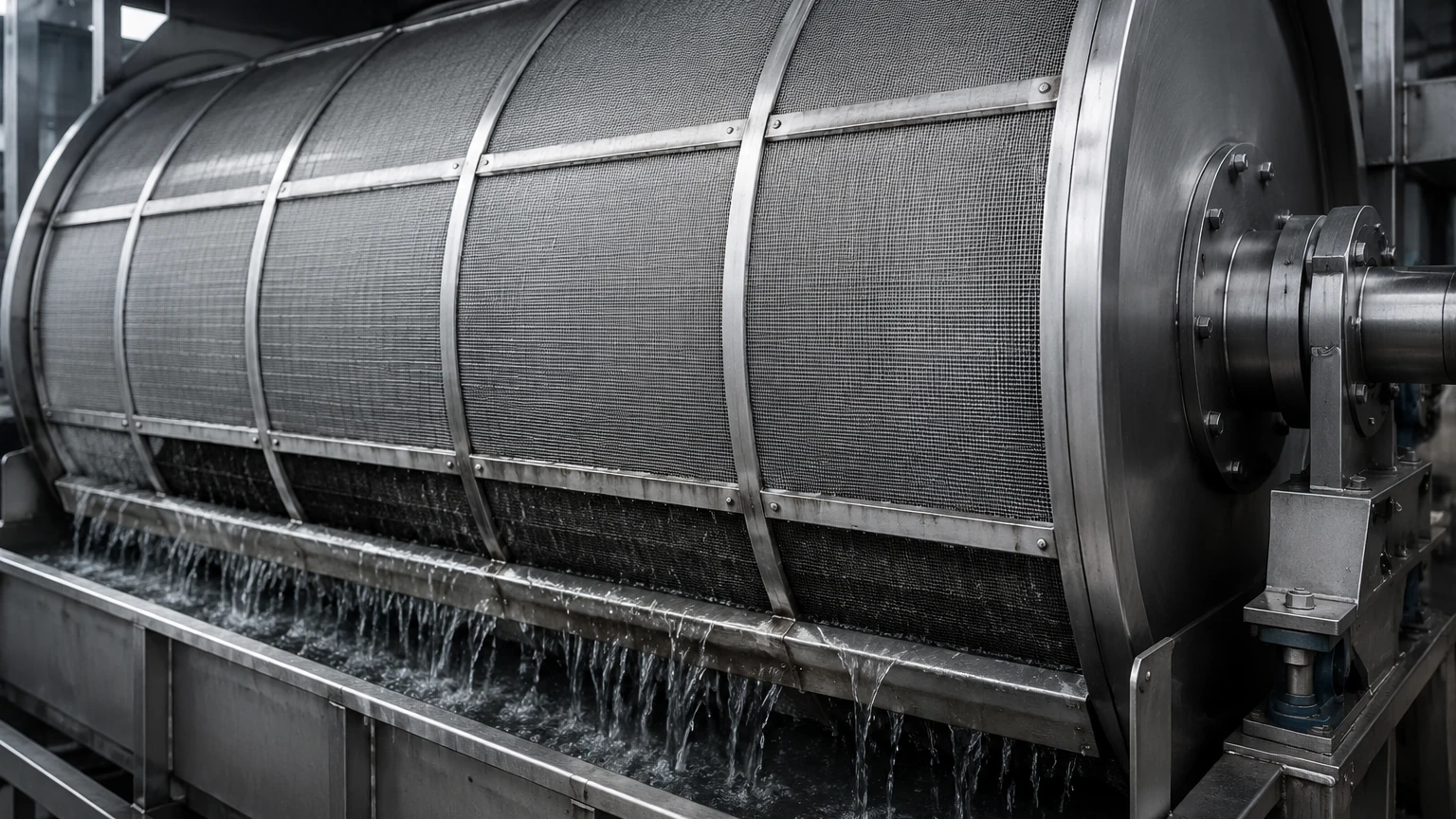
The primary objective of a rotary vacuum filter is to separate solids from a liquid slurry by using a vacuum to draw the liquid through a filter medium while retaining the solids on the surface. The system typically consists of a large horizontal drum covered with a filter medium, such as stainless steel wire mesh or specialized fabric. The drum rotates partially submerged in a vat containing the slurry.
The continuous nature of the rotary vacuum filter is achieved by dividing the drum into several independent sections or "cells." Each cell is connected to a central vacuum valve via internal piping. As the drum rotates, each section passes through different functional zones: cake formation, dewatering (drying), washing (if required), and cake discharge. This compartmentalization allows the filter to perform multiple stages of the separation process simultaneously, ensuring a steady flow of both filtrate and solids.
The Engineering Cycle: How Rotary Vacuum Filters Operate
To specify the right components for a rotary vacuum filter, engineers must analyze the four distinct stages of the filtration cycle. Each stage places different demands on the filter media and the vacuum system.
1. Cake Formation Zone
As a drum section rotates into the slurry vat, the internal vacuum valve opens for that specific cell. The vacuum creates a pressure differential that forces the liquid through the filter medium, leaving a layer of solids—the filter cake—on the exterior of the drum. The thickness of the cake is determined by the drum's rotational speed, the vacuum level, and the concentration of the slurry.
2. Dewatering and Drying Zone
Once the section emerges from the vat, the vacuum continues to pull air through the cake. This process displaces residual moisture, significantly reducing the liquid content of the solids. In many industrial applications, achieving a specific moisture percentage is critical for downstream processing or disposal costs.
3. Cake Washing Zone
If the objective is to recover the liquid or remove impurities from the solids, a washing stage is integrated. Spray nozzles apply a wash liquid to the surface of the cake. The vacuum pulls this liquid through the cake, displacing the original mother liquor. Precision in the filter media's pore size is vital here to ensure the wash liquid distributes evenly without eroding the cake structure.
4. Discharge Zone
In the final stage, the vacuum is released, and in some designs, a brief blast of compressed air (blowback) is applied to loosen the cake. A discharge mechanism—such as a scraper blade, roller, or string—removes the solids from the drum surface, preparing the section to re-enter the slurry vat.
Selecting the Optimal Filter Media for Vacuum Systems
The performance of rotary vacuum filters is heavily dependent on the choice of filter media. While synthetic cloths are common, many demanding industrial environments require the durability and precision of stainless steel wire mesh or sintered metal components.
Stainless Steel Wire Mesh
For applications involving high temperatures, high pressures, or aggressive chemical solvents, stainless steel wire mesh is the preferred choice. It offers superior mechanical strength and dimensional stability compared to fabric media. Engineers often select 304 or 316L stainless steel for its corrosion resistance. The mesh must be woven with high precision to ensure a uniform pore size, which prevents "blinding" (clogging) and ensures consistent filtrate clarity.
Sintered Metal Media
In scenarios where extreme durability is required, multi-layer sintered mesh provides a robust solution. By diffusion-bonding multiple layers of wire mesh together, manufacturers create a filter medium that combines fine filtration accuracy with high structural integrity. This is particularly useful in rotary vacuum filters where the discharge mechanism (like a scraper) might cause mechanical wear on softer materials.
Engineering Considerations for Media Selection
When evaluating media for rotary vacuum filters, consider the following:
* Micron Rating: The pore size must be small enough to retain the target solids but large enough to permit the required flow rate.
* Permeability: High permeability reduces the energy consumption of the vacuum pumps.
* Cake Release Characteristics: The surface texture of the media influences how easily the cake detaches during the discharge phase.
Key Design Considerations for Industrial Slurries
Not all slurries behave the same way under vacuum. Engineers must tailor the rotary vacuum filter configuration to the specific physical properties of the material being processed.
* Particle Size Distribution: Slurries with a wide range of particle sizes often form a more compressible cake, which can impede flow. In such cases, a slower drum speed or a specific mesh weave may be necessary to maintain throughput.
* Slurry Concentration: High-solids slurries form cakes quickly, requiring faster drum rotation to prevent the cake from becoming too thick and resistant to dewatering.
* Viscosity: Highly viscous liquids require higher vacuum levels and may benefit from heated vats or specialized filter media coatings to facilitate flow.
* Chemical Compatibility: The entire filter assembly, including the drum, internal piping, and filter media, must be compatible with the pH and chemical composition of the slurry. Stainless steel components are often the standard for pharmaceutical and chemical applications due to their inert nature.
Discharge Methods and Their Impact on Media Longevity
The method used to remove the cake from the rotary vacuum filter significantly affects the wear and tear on the filter medium. Choosing the right discharge mechanism is a balance between cake characteristics and media protection.
1. Scraper Discharge: A blade is positioned close to the drum surface. While effective for thick, friable cakes, it poses a risk of mechanical abrasion. Using a reinforced stainless steel mesh can mitigate this risk.
2. Roller Discharge: Ideal for sticky or "tacky" cakes. The cake adheres to a discharge roller and is then scraped off the roller rather than the drum. This is gentler on the primary filter media.
3. String Discharge: A series of closely spaced strings wrap around the drum and lift the cake off as they move toward a discharge roll. This is effective for thin, fragile cakes.
4. Belt Discharge: The filter media itself is a continuous belt that leaves the drum to pass over a small-diameter discharge roller. This allows for thorough washing of both sides of the media before it returns to the drum, preventing long-term blinding.
Performance Optimization and Maintenance Strategies
To ensure the longevity of rotary vacuum filters, a proactive maintenance schedule is required. The most common failure point is the degradation of the filter media or the loss of vacuum integrity.
* Monitoring Vacuum Levels: A drop in vacuum often indicates a leak in the internal piping or the central valve. Conversely, an unexpected rise in vacuum may indicate that the filter media is becoming blinded.
* Regular Cleaning Cycles: Even with continuous operation, periodic "Clean-in-Place" (CIP) cycles are necessary to remove fine particles trapped within the mesh pores. Stainless steel mesh is particularly advantageous here, as it can withstand high-pressure washing and aggressive cleaning agents that would damage synthetic fabrics.
* Inspection of Seal Components: The wear plates in the central vacuum valve are critical for maintaining the separation between the different zones of the drum. These should be inspected and resurfaced regularly to prevent cross-contamination between the cake formation and drying stages.
The Role of Precision Metal Components in OEM Filtration
For manufacturers of industrial equipment, sourcing high-quality OEM components is vital for the reliability of the final product. Rotary vacuum filters require precision-manufactured drum segments, support grids, and filtration mesh that meet exact tolerances.
Kaifil specializes in the production of these critical metal components. By utilizing advanced manufacturing techniques, we ensure that every wire mesh filter and custom cartridge meets the rigorous demands of industrial filtration. Whether you are designing a new system or retrofitting an existing rotary vacuum filter, selecting the right material grade and weave pattern is the first step toward operational efficiency.
For more information on custom filtration solutions, including material selection guides and engineering support, please visit our Main Page.
Conclusion
Rotary vacuum filters remain a preferred solution for continuous liquid-solid separation due to their versatility and reliability. However, the efficiency of these systems is only as good as the components used in their construction. By focusing on high-quality stainless steel media and understanding the mechanical requirements of the filtration cycle, engineers can optimize performance, reduce maintenance downtime, and achieve superior product purity. When technical precision and durability are paramount, choosing the right manufacturing partner for your filtration components is the most critical decision in the procurement process.
