Semi Batch Reactor
In the landscape of industrial chemical processing, the semi batch reactor (also known as a fed-batch reactor) occupies a critical middle ground between the simplicity of batch reactors and the efficiency of continuous stirred-tank reactors (CSTR). For engineers and procurement specialists in the chemical, pharmaceutical, and food processing industries, understanding the nuances of semi-batch operations is essential for optimizing reaction kinetics, ensuring safety, and managing product purity.
A semi batch reactor is defined by its operational flexibility: one reactant is initially charged into the vessel, while one or more additional reactants are added continuously or intermittently over time. Alternatively, a product or byproduct may be continuously removed (such as in reactive distillation). This configuration allows for precise control over reaction rates and thermal loads, making it the preferred choice for highly exothermic reactions or processes where selectivity is sensitive to reactant concentration.
Operational Dynamics of Semi-Batch Systems
The fundamental characteristic of a semi batch reactor is its unsteady-state nature. Unlike continuous systems where mass balance remains constant over time, the volume, concentration, and often the temperature within a semi-batch vessel change throughout the cycle.
From an engineering perspective, the mass balance for a species *i* in a semi-batch system is expressed as the rate of accumulation being equal to the rate of inflow minus the rate of outflow, plus the rate of generation by reaction. Because the volume is increasing as reactants are added, the concentration of species is diluted not only by the reaction but also by the increasing total volume of the mixture. This dilution effect is a powerful tool for suppressing unwanted side reactions that occur at higher concentrations.
Engineering Advantages and Thermal Management
One of the primary reasons engineers specify a semi batch reactor is for superior thermal management. In a standard batch reactor, adding all reactants at once can lead to a rapid, uncontrollable release of energy in exothermic reactions. In a semi-batch setup, the rate of heat generation is limited by the rate of addition of the limiting reactant. By adjusting the feed rate, operators can match the heat generation rate to the cooling capacity of the reactor's jacket or internal coils, maintaining a stable temperature profile.
Furthermore, semi-batch operations are vital for reactions where selectivity is a concern. For example, in a series reaction where A + B → R and R + B → S (where R is the desired product), maintaining a low concentration of B by feeding it slowly into a vessel full of A minimizes the formation of the unwanted byproduct S. This level of control is difficult to achieve in a single-stage batch process.
The Critical Role of Industrial Filtration in Semi-Batch Processes
While the reaction phase is the heart of the process, the efficiency of a semi-batch system is often determined by the performance of the integrated filtration components. In many industrial applications, catalysts are employed to drive the reaction. These catalysts, often in the form of fine powders or slurries, must be retained within the reactor or recovered with high precision during the discharge phase.
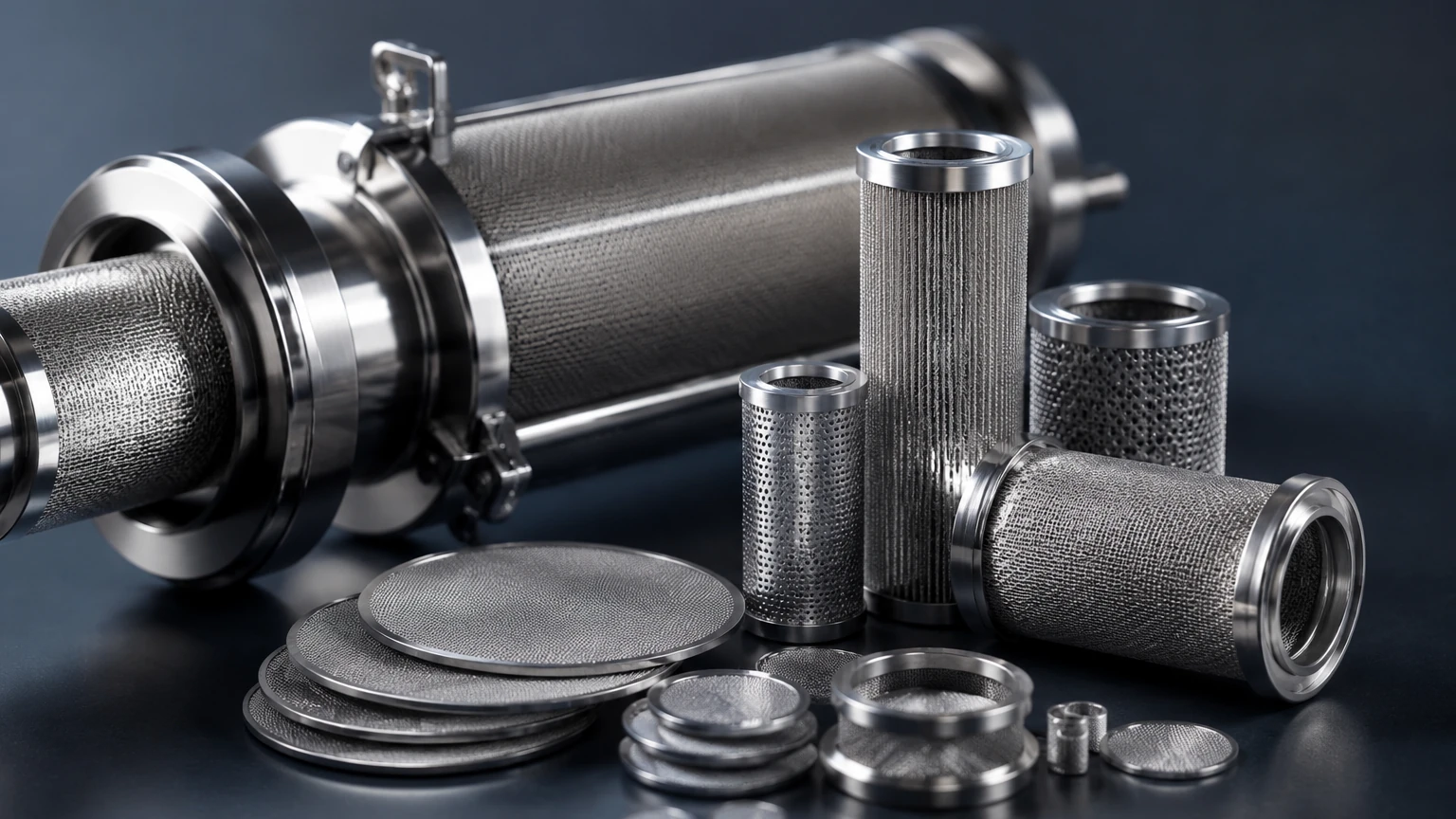
Stainless steel filtration solutions are the industry standard for these demanding environments. Because semi-batch reactions often involve aggressive chemicals, high temperatures, and varying pressures, the filtration media must offer exceptional mechanical strength and chemical resistance. Components such as wire mesh filters and sintered metal cartridges are frequently used to:
1. Recover Precious Catalysts: In pharmaceutical and fine chemical synthesis, catalysts can be extremely expensive. High-precision stainless steel filters ensure that these materials are captured and can be reused in subsequent batches.
2. Protect Downstream Equipment: Fines or unreacted solids that escape the reactor can damage pumps, valves, and heat exchangers. Installing a robust stainless steel filter cartridge acts as a safeguard for the entire production line.
3. Ensure Product Purity: In food and beverage or pharmaceutical applications, removing precipitates or impurities is a non-negotiable step. The choice of filtration accuracy (micron rating) directly impacts the final quality of the product.
For technical professionals evaluating these components, the Main Page of a specialized manufacturer provides essential data on material grades and filtration efficiencies required for these complex systems.
Selection Criteria for Filtration Media in Semi-Batch Reactors
When designing or upgrading a semi batch reactor system, selecting the correct filtration media involves several technical considerations. Engineers must look beyond simple micron ratings and evaluate the total performance of the filter under operational stress.
Material Compatibility
Stainless steel is the material of choice due to its durability. However, the specific grade matters. While Grade 304 is suitable for many general applications, Grade 316L is typically required for semi-batch processes involving chlorides or acidic environments to prevent pitting and stress corrosion cracking. In extreme cases, high-performance alloys like Hastelloy may be integrated into the filter design.
Structural Integrity and Pressure Drop
In a semi-batch process, the filter may be subject to varying flow rates and pressures as the vessel volume increases. A filter with high porosity and a low initial pressure drop (ΔP) is essential to maintain efficient flow without taxing the feed pumps. Sintered wire mesh is particularly effective here, as it combines the precision of fine mesh with the structural support of coarser layers, preventing the media from deforming under high differential pressure.
Cleaning and Regeneration
Unlike disposable filters, stainless steel filter cartridges in industrial reactors are designed for longevity. In semi-batch operations, filters often require backwashing or ultrasonic cleaning between cycles. The ability of the filter to withstand repeated cleaning cycles without losing its pore structure or filtration accuracy is a key factor in the total cost of ownership (TCO).
Common Risks and Mitigation Strategies
Operating a semi-batch system is not without risks. The most significant concern is the "accumulation risk." If the reaction rate is slower than the feed rate, unreacted materials can build up in the vessel. If the temperature then rises or a catalyst becomes active, the accumulated mass can react all at once, leading to a thermal runaway.
To mitigate this, engineers must confirm:
* Kinetics and Induction Periods: Understanding the time delay before a reaction starts.
* Feed Interlocks: Automated systems that stop the feed if the temperature exceeds a certain threshold or if the cooling system fails.
* Filtration Monitoring: Differential pressure sensors across the filter can indicate if a catalyst is blinding the mesh, which could indirectly affect the reaction rate by reducing the available surface area for heterogeneous catalysis.
Confirming Specifications for Procurement
Before moving to the procurement phase for semi-batch reactor components, purchasing teams and engineers should collaborate to confirm a specific set of data. This ensures that the filtration and reactor components are fit for purpose.
* Micron Rating Requirements: Determine the particle size distribution of the solids to be retained. For catalyst recovery, this often requires precision down to 1-5 microns.
* Operating Temperature and Pressure: Confirm the maximum peaks, not just the averages, as stainless steel filters must be engineered to handle the highest stress points of the cycle.
* Flow Rate Dynamics: Since the volume in a semi-batch reactor is dynamic, the filter must handle the maximum discharge flow rate expected at the end of the batch.
* Chemical Environment: Provide a full list of solvents, reactants, and potential byproducts to the filter manufacturer to ensure material compatibility.
Conclusion
The semi batch reactor remains a cornerstone of flexible, safe, and high-quality chemical production. By allowing for the controlled addition of reactants, it solves many of the thermal and selectivity challenges inherent in traditional batch processing. However, the success of these systems relies heavily on the quality of the internal components, particularly the filtration media used for product purification and catalyst retention.
Choosing a manufacturer that understands the rigors of industrial filtration is paramount. High-quality stainless steel wire mesh and filter cartridges provide the durability and precision necessary to maintain consistent performance across thousands of cycles. For those seeking to optimize their filtration setup or explore customized metal filter components, visiting the Main Page offers a gateway to technical expertise and reliable manufacturing solutions designed for the most demanding industrial environments.