


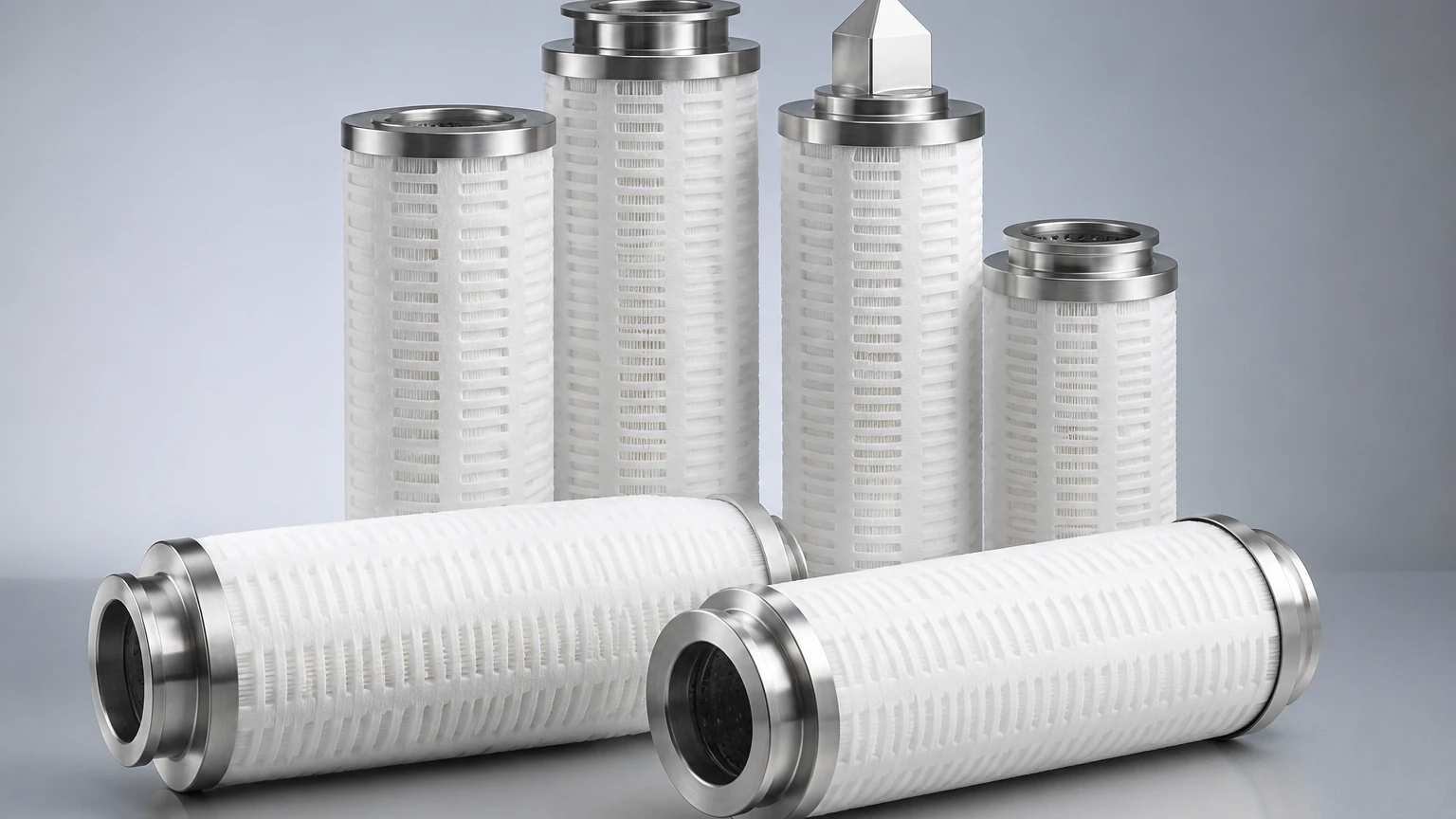
High Flow Filter Cartridge
In industrial liquid processing, the efficiency of a filtration system is often measured by its ability to handle large volumes of fluid without frequent downtime or excessive pressure drops. The high flow filter cartridge has emerged as a critical component for engineers and facility managers who need to balance high throughput with precise particle retention. Unlike standard diameter cartridges, these high-capacity elements are designed to optimize the surface area and flow dynamics within a compact footprint, making them indispensable in sectors ranging from chemical processing to large-scale water treatment.
For technical professionals, selecting the right high flow filter cartridge involves more than just matching a micron rating. It requires an understanding of fluid dynamics, material compatibility, and the total cost of ownership. This guide examines the engineering principles, material considerations, and performance metrics that define high-performance filtration solutions.
Engineering Principles of High Flow Filtration
The primary distinction of a high flow filter cartridge lies in its geometry and flow configuration. While standard industrial cartridges typically feature a 2.5-inch or 4.5-inch diameter, high flow variants usually measure 6 inches or larger. This increased diameter allows for a significantly higher pleat density, which translates to a much larger effective filtration area (EFA) within a single element.
The Inside-to-Outside Flow Pattern
One of the most significant engineering features of many high flow designs is the inside-to-outside flow path. In this configuration, the process fluid enters the center of the cartridge and flows outward through the filter media. This design offers several technical advantages:
1. Contaminant Containment: Because particles are trapped on the interior surface of the cartridge, they are contained within the element during change-outs. This prevents debris from falling back into the clean side of the filter housing, ensuring system integrity.
2. Uniform Flow Distribution: The large internal core allows for lower fluid velocity as it enters the filter, reducing the risk of media blinding and ensuring that the entire surface area of the pleats is utilized effectively.
3. Structural Integrity: The outward pressure helps keep the pleats open and stable, even under high differential pressure conditions, preventing pleat bunching which can lead to premature failure.
Surface Area vs. Depth Filtration
High flow cartridges often utilize pleated media to maximize surface area. By folding the media, manufacturers can fit several square meters of filtration surface into a single 40-inch or 60-inch cartridge. This high surface area is the primary driver behind the high flow rates—often exceeding 500 gallons per minute (GPM) per element—while maintaining a low initial differential pressure (ΔP).
Material Selection: The Role of Stainless Steel in High Flow Systems
While polymer-based high flow cartridges (such as polypropylene or PES) are common in general water applications, demanding industrial environments often require the durability of metal. As a manufacturer specializing in custom stainless steel filtration solutions, Kaifil provides high flow filter cartridge options engineered for extreme conditions.
Advantages of Stainless Steel Media
In B2B applications involving aggressive chemicals, high temperatures, or high-viscosity fluids, stainless steel (typically 304 or 316L) is the material of choice for several reasons:
* Thermal Stability: Stainless steel cartridges can operate at temperatures far exceeding the melting points of polymers, making them suitable for steam filtration and hot chemical processing.
* Chemical Compatibility: 316L stainless steel offers superior resistance to corrosion and chemical attack, ensuring that the filter media does not leach contaminants or degrade when exposed to solvents or acids.
* Mechanical Strength: High flow systems often experience pressure surges. Metal mesh and sintered metal structures provide the rigidity necessary to withstand high differential pressures without bypassing or collapsing.
* Reusability and Cleanability: Unlike disposable plastic cartridges, stainless steel high flow elements can often be cleaned via backwashing, ultrasonic cleaning, or chemical soaking, significantly reducing the long-term waste and replacement costs.
Weave Types and Sintering
The performance of a metal high flow filter cartridge is heavily influenced by the weave of the wire mesh. Plain square weaves offer high open areas for maximum flow, while Dutch weaves provide finer filtration and higher mechanical strength. Sintering—a process of bonding multiple layers of mesh together using heat and pressure—creates a monolithic structure that is both highly porous and extremely robust, ideal for high-pressure industrial applications.
Performance Metrics: Evaluating Efficiency and Dirt-Holding Capacity
When evaluating a high flow filter cartridge, engineers must look beyond the nominal micron rating. True performance is defined by the relationship between efficiency, capacity, and pressure drop.
Absolute vs. Nominal Ratings
A nominal rating is an empirical value indicating that the filter will retain a majority of particles at that size. However, for critical applications, an absolute rating is required. This is often expressed as a Beta Ratio (β). For example, a filter with a β=5000 at 10 microns means it is 99.98% efficient at removing 10-micron particles. High flow cartridges used in pharmaceutical or fine chemical sectors must provide consistent absolute ratings to ensure product purity.
Dirt-Holding Capacity (DHC)
DHC refers to the total mass of contaminants a filter can retain before reaching its terminal differential pressure. High flow cartridges excel here because their massive surface area allows for a higher volume of solids to be trapped before the flow is restricted. A higher DHC means longer intervals between change-outs, which is a primary factor in reducing operational labor costs.
Differential Pressure (ΔP)
The initial ΔP is the pressure drop across a clean filter. A well-designed high flow cartridge should have a very low initial ΔP to provide maximum "headroom" for contaminant loading. As the filter traps particles, the ΔP increases. Engineers typically set a terminal ΔP (often around 15–35 PSI depending on the housing and pump capacity) at which point the cartridge must be replaced or cleaned.
Operational Advantages: Throughput and System Footprint
The transition from standard cartridges to a high flow filter cartridge system often results in significant logistical and economic benefits.
Reduced Housing Size
Because a single high flow cartridge can replace 10 to 20 standard 2.5-inch cartridges, the filter housing can be significantly smaller. This is particularly valuable in offshore platforms, skid-mounted systems, or facilities where floor space is at a premium. A smaller housing also means a lower initial capital expenditure (CAPEX) for the vessel itself.
Lower Labor and Disposal Costs
Changing out 40 standard cartridges in a large housing is a labor-intensive process that results in significant downtime. In contrast, a high flow housing might only contain 3 to 5 elements. This reduces the time required for maintenance from hours to minutes. Furthermore, fewer spent cartridges mean lower disposal costs and a smaller environmental footprint, especially when using cleanable stainless steel media.
Maintenance, Cleaning, and Replacement Cycles
To optimize the lifespan of a high flow filter cartridge, a structured maintenance program is essential. For stainless steel elements, the cleaning process is a critical part of the lifecycle.
1. Monitoring: Continuous monitoring of differential pressure is the most reliable way to determine the state of the filter. Automated systems can trigger alarms or bypasses when terminal ΔP is reached.
2. Cleaning Protocols: For reusable metal cartridges, the cleaning method must be compatible with the contaminant. For example, organic buildup may require solvent cleaning, while mineral scale might require an acid wash. Proper cleaning restores the initial ΔP and extends the total service life of the component.
3. Inspection: During change-outs, seals and O-rings should be inspected. High flow cartridges rely on high-integrity seals (such as EPDM, Viton, or PTFE) to prevent bypass. Even a minor seal failure can compromise the entire filtration stage.
Customization and OEM Integration for Specialized Applications
Every industrial process has unique requirements. Standard off-the-shelf high flow cartridges may not always meet the specific needs of a highly specialized chemical reactor or a high-pressure hydraulic circuit. This is where custom manufacturing becomes vital.
Kaifil works closely with engineering teams to develop bespoke filtration solutions. This includes customizing the length, diameter, and end-cap configurations to fit existing housings, as well as selecting specific wire mesh grades to handle unique fluid viscosities or corrosive profiles. By leveraging advanced manufacturing capabilities, it is possible to produce high flow elements that provide precise filtration performance in environments where standard products fail.
For engineers seeking specific technical data or customized configurations, visiting the Main Page provides a starting point for exploring industrial-grade filtration components. Reviewing the technical specifications on the Main Page allows purchasing teams to align their requirements with manufacturing capabilities, ensuring that the selected high flow filter cartridge meets the rigorous demands of their specific application.
Conclusion
The high flow filter cartridge represents a sophisticated intersection of material science and mechanical engineering. By providing high throughput, exceptional dirt-holding capacity, and a reduced physical footprint, these components are essential for modern industrial efficiency. Whether the application calls for the disposable convenience of polymers or the rugged, reusable performance of stainless steel, understanding the technical nuances of these filters is the key to optimizing process uptime and product quality. When selecting a filtration partner, focusing on technical expertise, material quality, and the ability to provide customized solutions will ensure long-term operational success.
