


Capsule Filter Ptfe
In the landscape of industrial fluid and gas processing, the capsule filter PTFE (Polytetrafluoroethylene) represents a critical component for achieving high-purity results in demanding environments. These self-contained, disposable filtration units are engineered to handle aggressive chemicals, sterile venting, and high-purity compressed gases. For engineers and procurement specialists, understanding the technical nuances of PTFE membranes and the structural integrity of the capsule housing is essential for optimizing process efficiency and ensuring product safety.
As a manufacturer specializing in custom stainless steel filtration solutions, Kaifil recognizes that industrial filtration often requires a multi-stage approach. While stainless steel filters provide the robust durability needed for coarse and high-temperature applications, PTFE capsule filters offer the fine-tuned chemical resistance and gas-handling capabilities necessary for the final stages of purification. You can explore more about integrated filtration strategies on our Main Page.
Understanding the Role of Capsule Filter PTFE in Industrial Systems
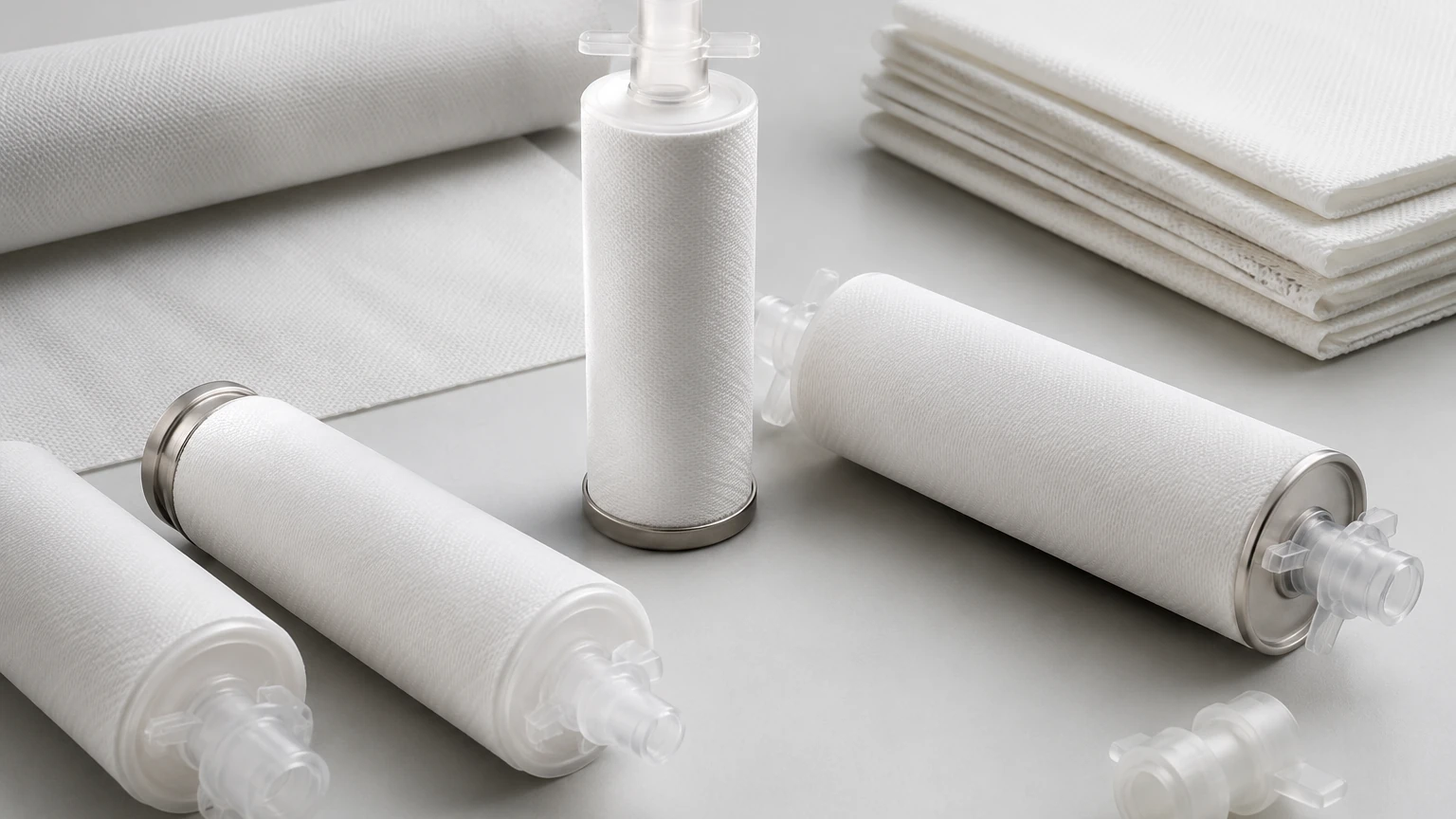
A capsule filter PTFE is a compact, ready-to-use filtration assembly that integrates a pleated PTFE membrane into a high-strength polymer housing, typically polypropylene. Unlike traditional filter cartridges that require a separate stainless steel or plastic housing, the capsule design is self-contained. This "all-in-one" configuration eliminates the need for housing cleaning and validation between batches, making it a preferred choice for pharmaceutical, electronic, and specialty chemical industries where cross-contamination must be strictly avoided.
The core of these filters is the expanded PTFE (ePTFE) membrane. PTFE is a fluoropolymer known for its exceptional thermal stability and near-universal chemical inertness. In a capsule format, these membranes are pleated to maximize surface area, which directly translates to higher flow rates and increased dirt-holding capacity. Because the membrane is naturally hydrophobic, the capsule filter PTFE is exceptionally effective at removing moisture and particulates from air and gas streams.
Technical Properties of PTFE Membranes
When evaluating a capsule filter PTFE, engineers must distinguish between the two primary types of PTFE membranes: hydrophobic and hydrophilic.
Hydrophobic PTFE Membranes
In their natural state, PTFE membranes repel water. This hydrophobicity makes them the industry standard for gas filtration and tank venting. They allow gases to pass through freely while blocking aqueous liquids and aerosols. This property is vital for protecting storage tanks from vacuum collapse during liquid withdrawal and for ensuring that compressed air used in sensitive manufacturing processes is free of oil and water droplets.
Hydrophilic PTFE Membranes
For applications involving aqueous solutions or high-surface-tension liquids, the PTFE membrane can be chemically modified to become hydrophilic. These modified membranes do not require pre-wetting with alcohols, which simplifies the workflow in pharmaceutical and semiconductor manufacturing. Hydrophilic PTFE capsules are often used for filtering aggressive solvents, photoresists, and high-purity chemicals where other polymers like nylon or PES (Polyethersulfone) would degrade.
Pore Size and Filtration Efficiency
Capsule filters are available in a range of pore sizes, typically from 0.05 μm to 1.0 μm. The selection depends on the target contaminant. In sterile applications, a 0.2 μm rated capsule filter PTFE is standard for achieving bacterial retention, often validated using *Brevundimonas diminuta* challenge tests.
Engineering Considerations for Filter Selection
Selecting the right capsule filter PTFE involves more than just choosing a pore size. Engineers must account for the fluid dynamics and chemical interactions within the specific system.
Chemical Compatibility
The primary advantage of PTFE is its resistance to nearly all acids, bases, and organic solvents. However, the housing material—usually polypropylene—must also be compatible with the process fluid. While PTFE can withstand temperatures up to 260°C, the polypropylene housing typically limits the operating temperature of the capsule to approximately 60°C to 80°C. For applications exceeding these limits, a transition to stainless steel housings and cartridges, such as those found on the Kaifil Main Page, is necessary.
Flow Rate and Differential Pressure
The flow rate through a capsule filter PTFE is determined by the membrane’s surface area, the fluid's viscosity, and the applied pressure. The differential pressure ($ΔP$)—the difference between the inlet and outlet pressure—increases as the filter captures contaminants. Engineers should design systems to operate at a low initial $ΔP$ to extend the service life of the capsule. If the initial pressure drop is too high, it may indicate that the filter surface area is insufficient for the required flow rate, necessitating a larger capsule or a multi-capsule manifold.
Connection Types
To ensure a leak-proof integration into existing piping, capsule filters come with various inlet and outlet connections, including:
* NPT Threaded: Common in industrial and chemical processing.
* Hose Barb: Ideal for flexible tubing in laboratory or pilot-plant settings.
* Sanitary Flange (Tri-Clamp): The standard for pharmaceutical and food/beverage applications to ensure easy cleaning and sterilization.
* Compression Fittings (Swagelok): Used in high-purity gas delivery systems.
Primary Applications Across Industrial Sectors
The versatility of the capsule filter PTFE allows it to serve critical roles in several high-stakes industries.
Pharmaceutical and Biotechnology
In the pharmaceutical sector, PTFE capsules are primarily used for sterile venting of fermentation tanks and carboys. They prevent airborne microorganisms from entering the vessel while allowing the displacement of air during filling or emptying. They are also used for the sterile filtration of organic solvents used in Active Pharmaceutical Ingredient (API) synthesis.
Semiconductor and Electronics
The manufacturing of microchips requires ultra-pure chemicals and gases. PTFE capsule filters are used to remove sub-micron particles from photoresists, etchants, and deionized water. The high cleanliness levels of PTFE ensure that no extractables or leachables contaminate the sensitive electronic components.
Food and Beverage
While often associated with heavy industry, PTFE filters are used in the food industry for filtering CO2 used in carbonation and for sterile air used in aseptic packaging. Their ability to withstand repeated steam sterilization cycles (SIP) or autoclaving makes them a durable choice for these hygiene-critical processes.
Chemical Processing
For the filtration of aggressive reagents, such as concentrated sulfuric acid or sodium hydroxide, the capsule filter PTFE provides a reliable barrier that does not leach impurities into the chemical stream. This is essential for maintaining the reagent grade required for laboratory analysis or specialized manufacturing.
Performance Evaluation and Integrity Testing
In critical applications, the performance of a capsule filter PTFE must be verifiable. Integrity testing ensures that the membrane is intact and that the filter will perform to its rated efficiency.
1. Bubble Point Test: This is the most common non-destructive integrity test. It measures the minimum pressure required to force air through a liquid-saturated membrane. A bubble point below the manufacturer’s specification indicates a damaged membrane or a failed seal.
2. Diffusion Flow Test: Used for larger filters or systems where the bubble point is difficult to observe, this test measures the rate of gas diffusion through the liquid-filled pores of the membrane.
3. Water Intrusion Test (WIT): Specifically for hydrophobic PTFE filters, this test measures the pressure required to force water into the hydrophobic pores. It is a highly sensitive method for testing large-scale vent filters without needing to wet them with alcohol.
Integrating PTFE Capsules with Stainless Steel Pre-filtration Systems
One common challenge in using a capsule filter PTFE is premature clogging. Because PTFE membranes are designed for fine filtration, they can quickly become blinded by large particulates or high solids loading. To optimize the total cost of ownership, engineers often implement a pre-filtration stage.
This is where Kaifil’s expertise in stainless steel filtration becomes a strategic advantage. By installing a cleanable, durable stainless steel wire mesh filter or a pleated metal cartridge upstream, the bulk of the particulate matter is removed before the fluid reaches the PTFE capsule. This "sacrificial" pre-filtration layer significantly extends the life of the more expensive PTFE unit, reduces downtime for filter changes, and ensures a more consistent flow rate. For high-temperature or high-pressure pre-filtration components, technical teams can consult the product specifications on our Main Page.
Maintenance, Replacement, and Disposal
Unlike stainless steel filters, which can be ultrasonically cleaned and reused, capsule filters are typically designed for single-use or short-term campaigns.
* Replacement Cycles: The replacement of a capsule filter PTFE is usually triggered by reaching a terminal differential pressure (e.g., 2.0 to 2.5 bar) or by a failed integrity test. In pharmaceutical applications, they may also be replaced based on a validated time limit to prevent biofilm buildup.
* Sterilization: Most PTFE capsules are compatible with autoclaving or in-line steam sterilization. However, the number of cycles is limited, as the polymer housing will eventually become brittle. It is crucial to follow the manufacturer’s guidelines regarding temperature and duration.
* Disposal: After use, the capsule must be disposed of according to the nature of the fluid it filtered. If used with hazardous chemicals or biohazardous materials, the entire unit must be treated as contaminated waste.
Conclusion
The capsule filter PTFE is an indispensable tool for modern industrial filtration, offering a unique combination of chemical inertness, hydrophobicity, and ease of use. Whether it is ensuring the sterility of a life-saving drug or maintaining the purity of a semiconductor grade solvent, these filters provide the precision required for high-performance outcomes. By understanding the engineering principles behind membrane selection and the benefits of integrating pre-filtration from the Main Page, technical professionals can build more resilient and cost-effective filtration systems.
