


Filtering Micron Mesh
In industrial filtration, the precision of a separation process often depends on the selection of the correct filtering micron mesh. For engineers and procurement specialists, understanding the technical nuances between mesh counts, micron ratings, and material properties is essential for optimizing system performance and ensuring the longevity of filtration components. As a specialized manufacturer of custom stainless steel filtration solutions, Kaifil provides high-performance components designed to meet the rigorous demands of chemical processing, pharmaceuticals, and hydraulic systems.
This guide explores the engineering considerations behind filtering micron mesh, providing the technical foundation necessary to select, specify, and maintain these critical industrial components.
Understanding the Relationship Between Mesh Count and Micron Rating
The terms "mesh" and "micron" are often used interchangeably in casual conversation, but they represent two different methods of measuring filtration capability. In professional engineering contexts, distinguishing between them is vital for accuracy.
Mesh Count Defined
Mesh count refers to the number of openings per linear inch of the wire cloth. For example, a 100-mesh screen has 100 openings per inch in both directions. As the mesh count increases, the size of the openings decreases, and the wire diameter typically becomes finer. However, mesh count alone does not provide a precise measurement of the particle size that can pass through the screen, as different wire diameters can be used for the same mesh count, resulting in different opening sizes.
Micron Rating Defined
A micron (micrometer) is a unit of length equal to one-millionth of a meter. In filtration, the micron rating specifies the size of the particles that the mesh is designed to retain. Filtering micron mesh is graded based on its ability to block particles of a specific size.
To achieve precise filtration, engineers must convert mesh counts to microns while accounting for the wire diameter. For instance, a standard 325-mesh stainless steel screen typically provides a nominal filtration of approximately 44 microns. When high-precision separation is required, specifying the micron rating is generally preferred over mesh count to ensure consistent performance across different batches and manufacturers.
Material Engineering for Industrial Filtering Micron Mesh
The environment in which the filter operates dictates the material selection. While various polymers and metals can be used for mesh, stainless steel remains the industry standard for demanding B2B applications due to its mechanical strength and chemical resistance.
Stainless Steel 304 and 316L
* Type 304: This is the most common grade for general industrial use. It offers excellent strength and basic corrosion resistance, making it suitable for food processing and standard water treatment.
* Type 316L: For applications involving corrosive chemicals, salts, or high-moisture environments, 316L is the preferred choice. The addition of molybdenum enhances its resistance to pitting and crevice corrosion. The "L" denotes low carbon content, which improves weldability—a critical factor when fabricating custom filter cartridges or pleated elements.
Specialty Alloys
In extreme environments, such as high-temperature chemical reactors or highly acidic processing lines, specialty alloys like Monel, Inconel, or Hastelloy may be required. These materials maintain their structural integrity and filtration accuracy under conditions that would cause standard stainless steel to degrade.
Weave Patterns and Their Impact on Filtration Accuracy
The way the wires are woven significantly influences the performance characteristics of the filtering micron mesh. Each weave type offers a different balance of flow rate, strength, and filtration precision.
Plain Weave
The most straightforward pattern, where each warp wire crosses alternately over and under each shute wire. It provides high flow rates and is easy to clean, making it ideal for general-purpose liquid filtration where the required micron rating is relatively large.
Twill Weave
In a twill weave, each shute wire passes over and under two warp wires. This allows for the use of heavier wires in a given mesh count, increasing the strength and durability of the mesh. It is commonly used for finer filtration requirements where a plain weave would be too fragile.
Dutch Weave (Plain and Twill)
Dutch weaves use different diameters for the warp and shute wires. The result is a dense, firm mesh with small, triangular openings.
* Plain Dutch Weave: Offers high mechanical strength and is capable of filtering very fine particles while maintaining a reasonable flow rate.
* Twill Dutch Weave: This is the most precise filtering micron mesh available. It can achieve micron ratings as low as 1 to 5 microns. Because the openings are smaller and the mesh is thicker, it is exceptionally strong and resistant to high pressure, though it typically requires more frequent cleaning or higher pressure to maintain flow.
Key Evaluation Criteria for Industrial Selection
When selecting a filtering micron mesh for a specific application, engineers must look beyond the micron rating and consider the total system dynamics. At Main Page, we emphasize a holistic approach to filter selection that accounts for the following variables:
1. Nominal vs. Absolute Micron Rating
* Nominal Rating: This indicates the ability of the filter to retain a majority of particles (usually 60% to 90%) of a specific size. It is often used for non-critical applications.
* Absolute Rating: This represents the diameter of the largest hard spherical particle that will pass through the filter under specified test conditions. Absolute ratings are essential in pharmaceutical and high-precision hydraulic applications where even a few oversized particles can cause system failure.
2. Effective Filtration Area (EFA)
The EFA determines the flow capacity and the dirt-holding capacity of the filter. To increase the EFA without increasing the overall footprint of the filter housing, filtering micron mesh is often pleated. Pleated stainless steel cartridges offer significantly more surface area than cylindrical filters, leading to lower pressure drops and longer intervals between cleaning cycles.
3. Pressure Drop (Delta P)
As fluid passes through the mesh, a loss of pressure occurs. This is influenced by the fluid's viscosity, the flow velocity, and the mesh's open area. Engineers must ensure that the initial pressure drop is low enough to allow for a functional operational window as the filter begins to load with contaminants.
Customization and OEM Capabilities
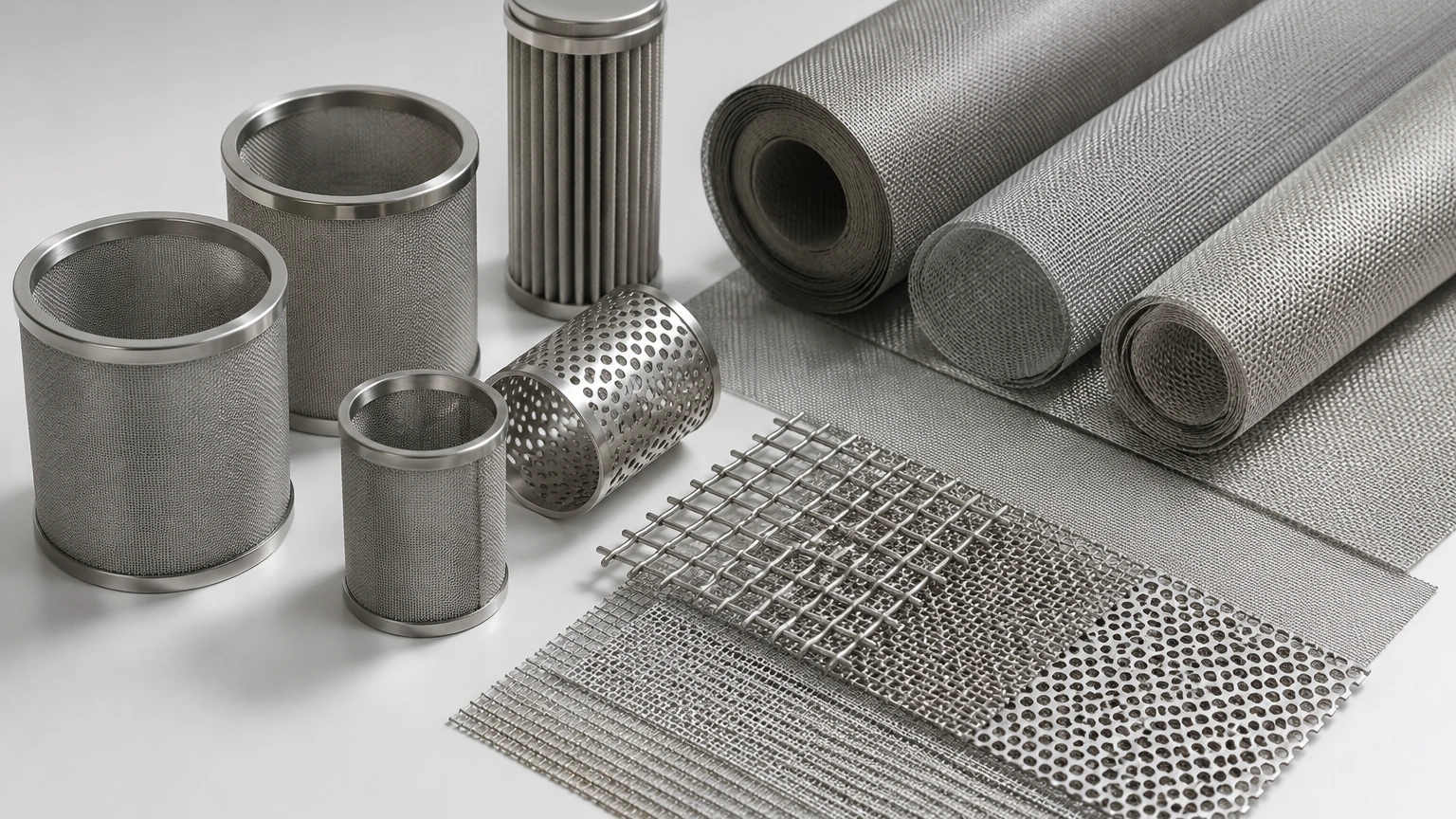
Standard off-the-shelf filters rarely meet the precise needs of specialized industrial equipment. Customization is often necessary to integrate the filtering micron mesh into existing systems or to handle unique fluid characteristics. Kaifil specializes in providing tailored solutions, including:
* Custom Geometric Shapes: Discs, cones, cylinders, and multi-layered sintered mesh components.
* Sintered Mesh: For applications requiring extreme durability, multiple layers of mesh can be sintered (diffusion bonded) together. This creates a rigid, stable filtration medium that will not migrate or deform under high-pressure pulses.
* Reinforced Structures: Adding perforated metal cores or outer shrouds to the mesh elements to provide structural support in high-viscosity or high-pressure applications.
By working closely with a manufacturer during the design phase, purchasing teams can ensure that the filtration components are optimized for the specific chemical compatibility and mechanical stresses of their application.
Maintenance, Cleaning, and Total Cost of Ownership
One of the primary advantages of using stainless steel filtering micron mesh over disposable synthetic filters is cleanability. However, the cleaning process must be handled correctly to avoid damaging the precision weave.
Cleaning Methods
* Backwashing: Reversing the flow of the fluid to dislodge particles from the surface of the mesh. This is effective for surface-loading filters like plain weave mesh.
* Ultrasonic Cleaning: Using high-frequency sound waves in a cleaning solution to remove fine particles trapped deep within the pores of Dutch weave or sintered mesh.
* Chemical Cleaning: Using compatible solvents or acids to dissolve organic or mineral buildup. This requires careful material selection (e.g., 316L) to ensure the mesh is not compromised by the cleaning agent.
Assessing Replacement Cycles
While stainless steel filters are durable, they are not infinite. Factors such as fatigue from pressure cycling, abrasion from hard particles, and eventual blinding (permanent clogging) will necessitate replacement. Monitoring the pressure differential across the filter is the most reliable way to determine when a filter needs cleaning or replacement. A well-engineered filtering micron mesh system should offer a predictable lifecycle, allowing for scheduled maintenance that prevents unplanned downtime.
Conclusion
Selecting the right filtering micron mesh is a technical process that requires a balance of material science, fluid dynamics, and mechanical engineering. By understanding the differences between weave types, micron ratings, and material grades, industrial professionals can specify filtration solutions that provide superior protection for their equipment and end products.
Whether you are designing a new chemical processing line or optimizing a hydraulic system, choosing high-quality stainless steel components ensures reliability in the most demanding environments. For technical support or to explore custom manufacturing options, engineers are encouraged to review product options and application support from industry experts who understand the complexities of precision metal filtration.
