


Gas Purifier System
In industrial environments where gas purity is a critical factor for process integrity, a gas purifier system serves as a vital safeguard. These systems are engineered to remove contaminants such as moisture, oxygen, carbon dioxide, and particulate matter from process gases like nitrogen, argon, hydrogen, and various specialty gases. While the chemical adsorption and catalytic stages of these systems handle molecular impurities, the mechanical filtration stage is equally essential for protecting downstream equipment and ensuring the final output meets stringent purity standards.
For engineers and procurement professionals, understanding the technical nuances of filtration components within a gas purifier system is necessary to maintain system efficiency and prevent costly downtime. High-performance stainless steel filters and wire mesh components provide the structural and thermal stability required for these demanding applications. For more information on specialized filtration components, you can visit the Main Page of Kaifil’s technical resource center.
Understanding the Role of Filtration in a Gas Purifier System
A gas purifier system typically operates through a multi-stage process involving adsorption, chemisorption, or catalytic reaction. However, the physical integrity of the gas stream is maintained by precision filtration. The primary role of mechanical filters in these systems is twofold: protecting the purifier media from incoming particulate contamination and preventing "media migration"—the release of fine particles from the adsorbent beds into the clean gas stream.
In high-purity applications, such as semiconductor manufacturing or analytical laboratory gas supply, even sub-micron particles can cause significant process failures. Industrial gas purifiers often utilize stainless steel filter cartridges or sintered metal fiber media because these materials offer high filtration efficiency without the risk of outgassing or chemical degradation associated with polymer-based filters.
When selecting filtration components for a gas purifier system, engineers must consider the specific phase of the gas and the potential for pressure surges. Metal filters are preferred in these scenarios due to their high mechanical strength and ability to withstand differential pressures that would compromise other materials.
Technical Specifications for Gas Filtration Components
The performance of a gas purifier system is heavily dependent on the specifications of its internal filtration elements. Several key parameters define the suitability of a filter for industrial gas purification:
Micron Rating and Efficiency
Filtration accuracy is typically defined by the micron rating. In gas purification, absolute ratings are generally preferred over nominal ratings. An absolute rating ensures that a specific percentage of particles (often 99.9% or higher) above a certain size are captured. For ultra-high purity (UHP) systems, filters may need to achieve efficiency levels at the 0.003-micron level, though standard industrial applications often operate in the 0.5 to 10-micron range.
Effective Filtration Area
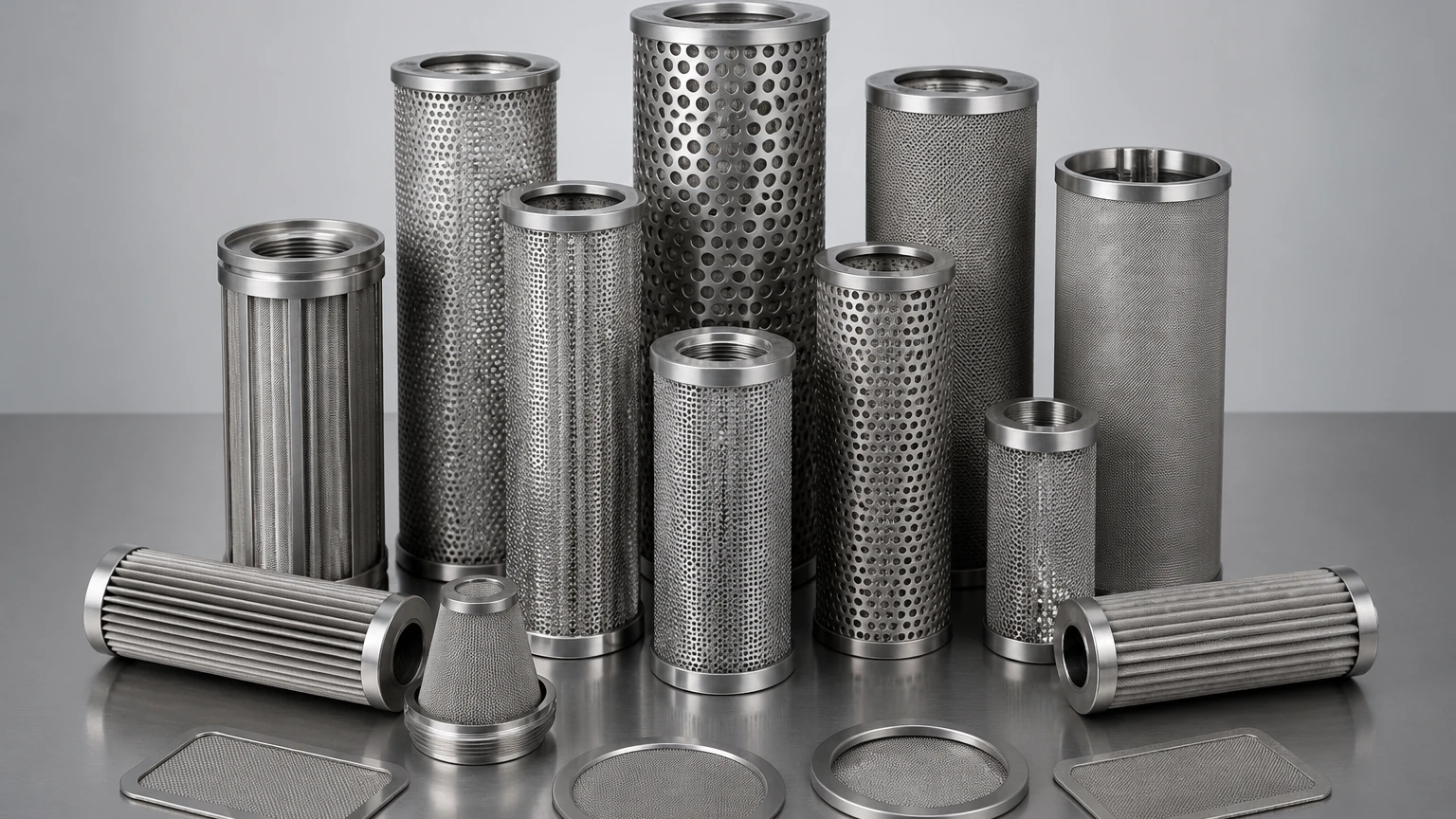
The surface area of the filter media directly impacts the flow capacity and the service life of the component. Pleated stainless steel filter cartridges are frequently used in gas purifier systems because the pleating process significantly increases the surface area within a compact footprint. This design allows for higher flow rates with a lower initial pressure drop.
Connection Types and Sealing
Gas purifier systems must be leak-tight to prevent atmospheric contamination. Filtration components must feature reliable connection interfaces, such as VCR fittings, NPT threads, or flange connections. Furthermore, the choice of sealing material (e.g., PTFE, Viton, or metal-to-metal seals) must be compatible with the specific gas being processed to avoid chemical attack or embrittlement.
Material Selection: Stainless Steel and Specialty Alloys
Material compatibility is a non-negotiable factor in the design of a gas purifier system. The filtration media and housing must be resistant to the chemical properties of the gas and the operating environment.
316L Stainless Steel
316L is the industry standard for most gas purification applications. The "L" denotes low carbon content, which improves weldability and reduces the risk of sensitization—a form of corrosion that can occur at grain boundaries during welding. 316L offers excellent resistance to a wide range of industrial gases and maintains its structural integrity at both cryogenic and elevated temperatures.
Sintered Wire Mesh
For applications requiring extreme durability and precise pore size distribution, sintered wire mesh is an optimal choice. This material consists of multiple layers of stainless steel wire cloth that are bonded together through a high-temperature sintering process. The result is a porous metal plate or tube that is exceptionally strong, easy to clean, and capable of maintaining its shape under high-pressure gas flows.
High-Nickel Alloys
In environments involving highly corrosive gases, such as chlorine or hydrogen chloride, standard stainless steel may be insufficient. In these cases, filters made from Hastelloy® or Monel® are utilized. These alloys provide superior resistance to pitting and stress corrosion cracking in aggressive chemical environments.
Performance Evaluation: Filtration Accuracy and Pressure Drop
One of the most critical engineering trade-offs in a gas purifier system is the relationship between filtration accuracy and pressure drop. As the pore size of the filter media decreases to capture smaller particles, the resistance to gas flow increases.
Calculating Pressure Drop
Engineers must calculate the total pressure drop (ΔP) across the filtration stage to ensure the system can maintain the required delivery pressure. A high pressure drop not only reduces the efficiency of the gas delivery but can also lead to premature system shut-downs. The pressure drop is influenced by:
* Gas Velocity: Higher flow rates lead to higher turbulence and resistance.
* Gas Density and Viscosity: Heavier or more viscous gases require more energy to pass through the filter pores.
* Contaminant Loading: As the filter captures particles, the available flow paths decrease, causing ΔP to rise over time.
Balancing Efficiency and Throughput
To optimize a gas purifier system, it is often beneficial to use a multi-stage filtration approach. A coarse pre-filter can remove the bulk of the particulate matter, allowing the high-precision final filter to operate longer before reaching its terminal pressure drop. This strategy extends the maintenance intervals and reduces the total cost of ownership.
Maintenance and Operational Longevity of Metal Filters
Unlike disposable polymer filters, stainless steel filtration components in a gas purifier system offer the advantage of being cleanable and reusable in many industrial contexts. However, the decision to clean versus replace depends on the nature of the contaminants and the criticality of the application.
Cleaning Methods
For non-hazardous contaminants, stainless steel filters can be cleaned using ultrasonic baths, chemical cleaning agents, or high-pressure back-flushing. Ultrasonic cleaning is particularly effective for removing fine particles lodged deep within the layers of a sintered wire mesh filter. It is essential to verify that the cleaning process does not introduce new contaminants or damage the pore structure of the media.
Replacement Indicators
In high-purity gas systems, filters are often replaced rather than cleaned to eliminate the risk of cross-contamination. The primary indicator for replacement is the differential pressure. Once the ΔP reaches a pre-defined limit (the terminal pressure drop), the filter element must be serviced. Regular monitoring of the pressure drop is a standard practice in predictive maintenance for gas purifier systems.
Customizing Filtration for Specific Industrial Gas Applications
Standard off-the-shelf filters may not always meet the unique requirements of specialized gas purifier systems. Customization is often necessary to address specific spatial constraints, flow requirements, or extreme operating conditions.
Custom Geometry and Integration
Manufacturers like Kaifil specialize in developing custom-shaped filter elements, such as conical filters, disc filters, or bespoke cartridges that fit into proprietary purifier housings. Custom engineering ensures that the filtration component integrates seamlessly with the rest of the system, minimizing dead space where contaminants could accumulate.
OEM Solutions for System Builders
For companies that manufacture gas purifier systems, partnering with a filtration specialist allows for the development of OEM components tailored to specific performance benchmarks. This includes custom micron ratings, specialized alloy selections, and proprietary end-cap designs. Such collaboration ensures that the filtration stage is perfectly matched to the adsorbent media and the intended gas application.
Engineering Support and Selection
When designing or upgrading a gas purifier system, engineers should consult with filtration experts to confirm material compatibility and performance expectations. Factors such as the maximum operating temperature, the presence of corrosive trace elements, and the required cleanliness class (such as ISO Class 5 or higher) will dictate the final filter design.
By focusing on high-quality stainless steel and precision metal components, operators can ensure that their gas purifier system provides consistent, reliable performance over a long service life. For more detailed technical specifications and support for customized filtration solutions, visiting the Main Page provides access to professional guidance and product data sheets.
