


Understanding the Woven Wire Mesh Machine: Engineering Precision in Industrial Filtration
In the realm of industrial filtration, the performance of a filter component is fundamentally tied to the precision of its base material. For stainless steel filtration solutions, this material is typically Woven Wire Mesh. While the end-user interacts with the finished cartridge or screen, the engineering integrity of that product is established much earlier in the manufacturing process, specifically during the weaving stage. The woven wire mesh machine, or industrial loom, is the critical piece of equipment that determines the structural uniformity, pore size accuracy, and mechanical strength of the resulting mesh.
For engineers and procurement professionals, understanding the capabilities and limitations of the woven wire mesh machine is essential for specifying the right filtration media. This article explores the technical mechanics of industrial weaving, the engineering considerations involved in machine operation, and how these factors influence the final performance of filtration components in demanding environments like chemical processing and pharmaceutical manufacturing.
The Role of the Woven Wire Mesh Machine in Industrial Filtration
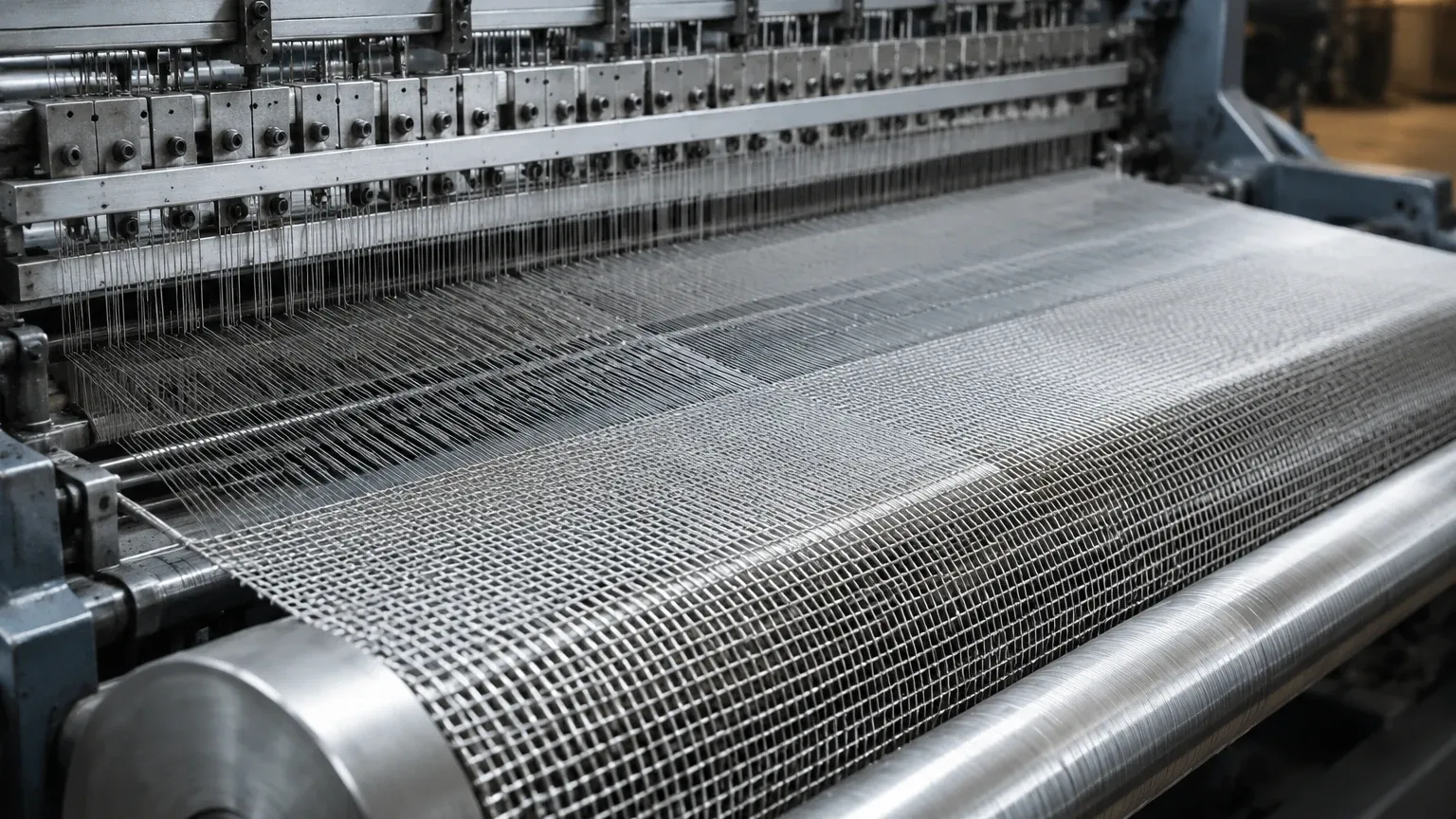
The production of high-precision metal cloth is significantly different from textile weaving. A woven wire mesh machine must handle high-tensile stainless steel wires, often with diameters measured in microns, while maintaining extreme positional accuracy. The primary function of the machine is to interlace warp wires (running lengthwise) and weft wires (running crosswise) into a stable, repeatable geometric pattern.
In industrial applications, the consistency of the "aperture" or opening is the most critical metric. If a woven wire mesh machine lacks the necessary rigidity or tension control, the resulting mesh will have inconsistent openings, leading to bypass or premature clogging in filtration systems. Modern machines used by specialized manufacturers like Kaifil are designed to minimize these variances, ensuring that a 20-micron rated mesh actually performs at that specification across its entire surface area.
Mechanical Principles of Industrial Weaving Looms
Industrial weaving for metal mesh generally utilizes two types of loom technologies: shuttle looms and shuttleless (rapier or projectile) looms.
Shuttle Looms
Traditional shuttle looms use a wooden or plastic shuttle to carry the weft wire across the warp. While still used for certain heavy-duty or wide-mesh applications, they are increasingly being replaced in high-precision filtration manufacturing. The mechanical limitations of the shuttle’s speed and weight make it difficult to maintain the ultra-fine tolerances required for high-mesh counts.
Rapier Woven Wire Mesh Machines
The rapier woven wire mesh machine is the current standard for precision stainless steel weaving. It uses a flexible or rigid "rapier" (a metal rod or tape) to pull the weft wire across the loom. This method allows for much higher speeds and, more importantly, superior control over wire tension. Because the rapier does not physically contact the warp wires in the same way a shuttle does, there is a significantly lower risk of wire abrasion or deformation during the weaving process.
Engineering Precision: Tension Management and Wire Integrity
The most significant challenge in operating a woven wire mesh machine is managing the tension of the stainless steel wire. Unlike synthetic fibers, stainless steel has high elasticity and a specific yield point. If the machine applies too much tension, the wire may stretch, reducing its diameter and altering the mesh’s filtration rating. If tension is too low, the mesh will be "loose," allowing the wires to shift during use, which compromises the integrity of the filter.
Warp Tensioning
The warp wires are fed from a beam at the back of the machine. A sophisticated braking and let-off system ensures that as the diameter of the warp beam decreases, the tension remains constant. Advanced machines utilize electronic sensors to monitor this tension in real-time, making micro-adjustments to the feed rate.
Weft Insertion and Beat-Up
Once the weft wire is inserted, the "reed" of the woven wire mesh machine performs the "beat-up" motion. This pushes the weft wire firmly against the previously woven section. The force of this beat-up must be perfectly calibrated. In Dutch weave patterns, where weft wires are driven close together to create a tortuous path for filtration, the beat-up force is much higher than in a standard plain weave.
Machine Capabilities and Weave Pattern Variations
A versatile woven wire mesh machine can be configured to produce various weave patterns, each suited to specific industrial requirements. The choice of weave impacts flow rate, pressure drop, and particle retention.
1. Plain Weave: The simplest pattern where each weft wire passes over and under one warp wire. This requires a machine with a standard two-shaft shedding motion. It provides the highest flow rates but is limited in how fine the apertures can be.
2. Twill Weave: The machine is programmed so that each weft wire passes over and under two warp wires. This allows for the use of heavier wires for a given mesh count, increasing the mechanical strength of the Woven Wire Mesh.
3. Dutch Weave (Plain and Twill): These are the "workhorses" of the filtration industry. The woven wire mesh machine is set up with a higher count of weft wires than warp wires. This creates a dense, multi-layered structure that provides excellent surface filtration and easy cake discharge.
Quality Control Systems in Modern Weaving
To meet the rigorous standards of the pharmaceutical and food and beverage industries, the weaving process must be monitored for defects. A high-end woven wire mesh machine is equipped with several automated quality control features:
* Broken Wire Sensors: If a single warp or weft wire snaps, the machine stops instantly. This prevents the production of "blind spots" or holes in the mesh that would lead to filtration failure.
* Electronic Mesh Counters: These systems use optical sensors to count the number of wires per inch as the mesh is being woven, ensuring the product stays within the specified mesh count tolerance.
* Surface Inspection Cameras: High-speed cameras can detect surface irregularities, such as oil spots or wire kinks, which might indicate a mechanical issue with the loom or a material defect in the wire itself.
Technical Considerations for Specifying Woven Wire Mesh
When engineers work with manufacturers like Kaifil to develop custom filtration solutions, the capabilities of the production machinery should be a part of the technical discussion. Here are the key factors to confirm before finalizing a specification:
Material Compatibility
Ensure the woven wire mesh machine is capable of handling the specific alloy required. While SS304 and SS316L are standard, more exotic alloys like Hastelloy or Inconel require different machine settings due to their different work-hardening properties and tensile strengths.
Dimensional Stability
In high-pressure hydraulic applications, the mesh must resist deformation. Ask about the machine's ability to produce "off-the-loom" mesh that is sufficiently tight, or whether post-weaving processes like calendering (running the mesh through high-pressure rollers) are necessary to lock the wires in place.
Micron Rating vs. Air Permeability
There is often a trade-off between how fine a machine can weave and the resulting pressure drop across the filter. A machine capable of high-precision Dutch weaves can produce very low micron ratings (down to 1-5 microns) while maintaining a structure that allows for acceptable flow rates.
The Impact of Machine Maintenance on Product Consistency
The precision of a woven wire mesh machine is only as good as its maintenance schedule. The reed, which guides the warp wires and performs the beat-up, is a wear item. Over time, the friction of stainless steel wire can create grooves in the reed, leading to uneven wire spacing. Similarly, the heald frames (which lift the warp wires) must be perfectly synchronized.
When sourcing filtration components, it is beneficial to partner with a manufacturer that maintains a modern fleet of weaving equipment and follows strict ISO-certified maintenance protocols. This ensures that the first roll of mesh produced is identical to the thousandth roll, a necessity for OEM applications where filter performance must be predictable across thousands of units.
Conclusion
The woven wire mesh machine is the foundation of high-performance industrial filtration. From the initial tensioning of the warp wires to the final beat-up of the weft, every mechanical action of the loom contributes to the efficiency and reliability of the final filter. By understanding these technical nuances, engineers can better communicate their requirements and ensure they receive Woven Wire Mesh that meets the exacting demands of their specific application.
Whether you are designing a new hydraulic system, a chemical reactor, or a food processing line, the quality of the mesh starts with the machine. Selecting a partner like Kaifil, who combines advanced manufacturing technology with deep engineering expertise, ensures that your filtration components will provide the durability and precision your process requires.
