


Simplex Strainers
In industrial fluid handling systems, the protection of downstream equipment is a critical engineering priority. Simplex strainers serve as a primary line of defense, designed to remove unwanted solids from liquid or gas streams to prevent damage to pumps, valves, meters, and heat exchangers. Unlike duplex systems that allow for continuous operation during maintenance, a simplex strainer is a single-chamber component used in batch processes or systems where the flow can be temporarily interrupted for cleaning or basket replacement.
For engineers and procurement teams, selecting the right simplex strainer involves more than matching pipe sizes. It requires a deep understanding of fluid dynamics, material compatibility, and the specific filtration requirements of the application. As a manufacturer specializing in custom stainless steel filtration solutions, Kaifil emphasizes the importance of precision engineering in these components to ensure long-term reliability and system efficiency.
Engineering Principles and Design Characteristics
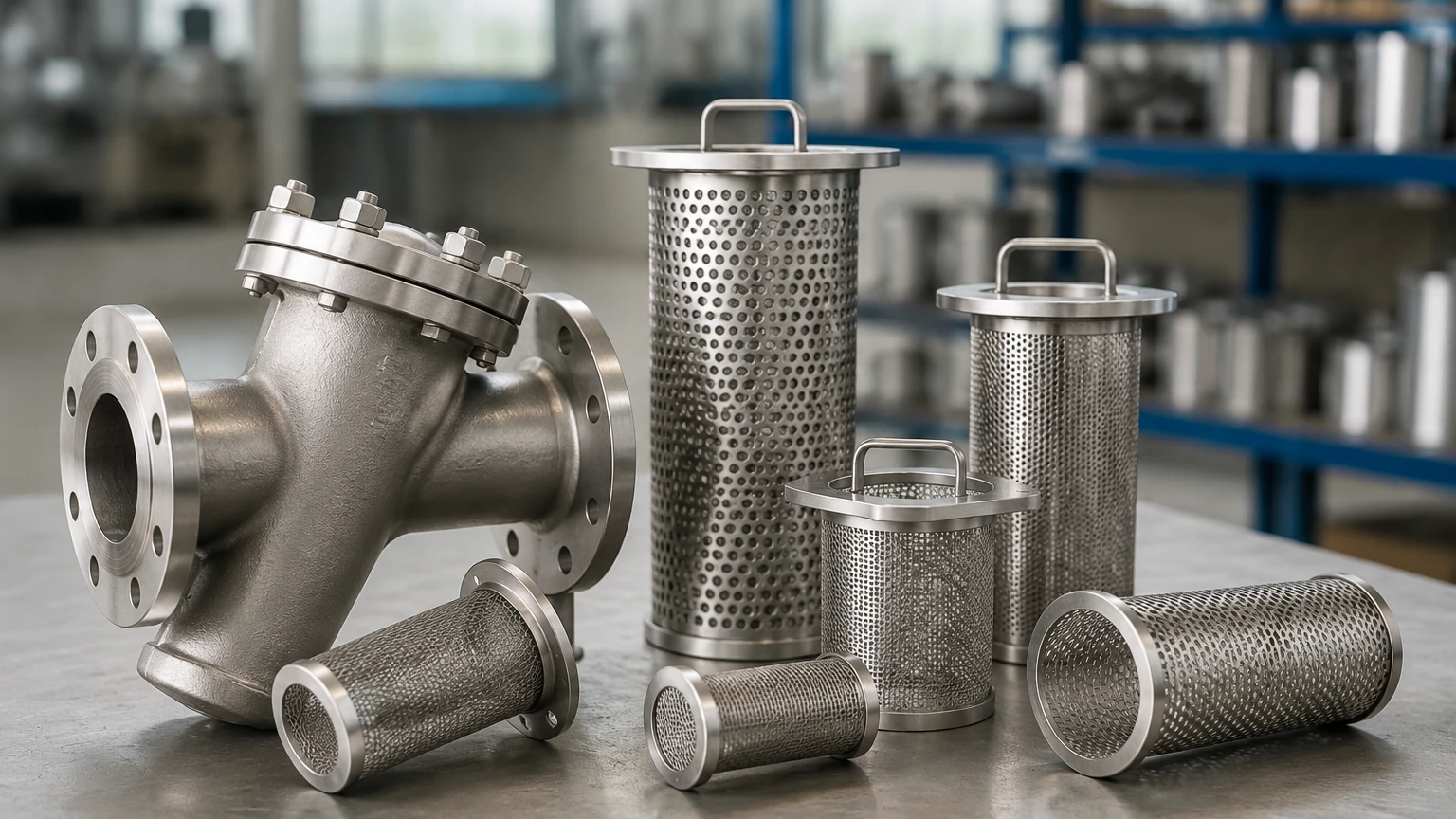
The fundamental design of a simplex strainer consists of a cast or fabricated housing containing a removable basket-shaped screen. The fluid enters the inlet, passes through the screen, and exits through the outlet. Debris is trapped inside the basket, which can then be removed and cleaned.
One of the most critical engineering metrics for simplex strainers is the Open Area Ratio (OAR). This is the ratio of the total open area of the strainer basket to the internal cross-sectional area of the inlet pipe. A higher OAR—typically 6:1 or 8:1 in high-performance industrial applications—ensures that the strainer can accumulate a significant amount of debris before the pressure drop becomes excessive. This reduces the frequency of maintenance and protects the system from sudden flow restrictions.
Flow direction is another design consideration. Most industrial simplex strainers utilize an "inside-out" flow pattern. This design ensures that the captured contaminants remain inside the basket during removal, preventing them from falling back into the downstream piping. For high-pressure applications, the housing must be engineered to withstand specific ASME ratings, with cover designs ranging from simple threaded caps to bolted flanges or quick-opening "swing-bolt" mechanisms for faster servicing.
Material Selection for Durability and Compatibility
The choice of material for both the housing and the internal filtration element is dictated by the chemical properties of the fluid, the operating temperature, and the pressure requirements. Stainless steel is the industry standard for demanding environments due to its superior corrosion resistance and mechanical strength.
1. Stainless Steel 304: Suitable for general-purpose applications, including water treatment and less corrosive chemical processes. It provides excellent durability and is cost-effective for standard industrial use.
2. Stainless Steel 316L: Preferred for pharmaceutical, food and beverage, and highly corrosive chemical applications. The addition of molybdenum and a lower carbon content enhances resistance to pitting and crevice corrosion, particularly in chloride-rich environments.
3. Specialty Alloys: In extreme cases involving highly acidic or alkaline fluids, materials like Monel or Hastelloy may be required, though stainless steel remains the most versatile choice for the majority of OEM filtration components.
The internal basket often utilizes a combination of perforated metal for structural support and a fine wire mesh liner for precise filtration. Kaifil’s expertise in custom wire mesh filters allows for the creation of baskets that balance structural integrity with high flow rates, ensuring that the mesh does not collapse under high differential pressure.
Technical Selection Criteria: Mesh vs. Micron
When specifying simplex strainers, engineers must distinguish between mesh count and micron rating. Mesh count refers to the number of openings per linear inch. For example, a 100-mesh screen has 100 openings per inch. However, because the wire diameter affects the size of these openings, the micron rating provides a more precise measurement of the largest particle that can pass through the screen.
* Coarse Filtration: Perforated baskets with hole sizes ranging from 1/32" to 1/4" are used for removing large debris like scale, welding slag, or stones.
* Fine Filtration: Wire mesh liners can achieve filtration levels down to 5 microns or less. However, as the filtration becomes finer, the pressure drop increases, and the basket will clog more quickly.
To optimize performance, engineers should consult the Main Page to review product options and application support, ensuring the selected micron rating aligns with the sensitivity of the downstream equipment without causing unnecessary flow resistance.
Pressure Drop and Flow Dynamics
The "Clean Pressure Drop" ($ΔP$) is the initial loss of pressure across a new or clean strainer. This value is influenced by fluid viscosity, velocity, and the density of the fluid. As debris accumulates, the "Dirty Pressure Drop" increases.
In a well-engineered system, a differential pressure gauge is installed across the inlet and outlet of the simplex strainer. This allows operators to monitor the status of the basket in real-time. A common industry standard is to schedule a cleaning cycle when the pressure drop reaches 5 to 10 psi above the clean state. Allowing the pressure drop to exceed the manufacturer’s recommended limit can lead to basket deformation or "bursting," where the pressure forces the screen to fail, bypass contaminants, and potentially damage the entire system.
Viscosity plays a significant role here. For high-viscosity fluids like heavy oils or syrups, the flow velocity must be reduced, and the strainer size may need to be increased (oversized) to maintain an acceptable pressure drop. Failure to account for viscosity is a frequent cause of premature system failure in industrial filtration setups.
Operational Maintenance and Safety Protocols
Since simplex strainers require the flow to be stopped for cleaning, maintenance procedures must be clearly defined to ensure safety and minimize downtime.
1. Isolation: The upstream and downstream valves must be fully closed to isolate the strainer from the pressurized system.
2. Venting and Draining: Before opening the cover, the internal pressure must be relieved through a vent valve, and the fluid should be drained via a bottom plug to prevent spills and exposure to hazardous materials.
3. Basket Inspection: Once removed, the basket should be inspected for signs of mechanical fatigue or corrosion. Cleaning should be performed using compatible solvents or ultrasonic baths, depending on the nature of the contaminants.
4. Seal Replacement: The O-ring or gasket under the cover is a common point of failure. It should be inspected during every cleaning cycle and replaced if it shows signs of compression set or chemical degradation.
For many industrial facilities, keeping spare baskets on hand is a standard practice. This allows for an immediate swap, reducing the time the process remains offline while the dirty basket is cleaned offline.
Customization and OEM Integration
Standard off-the-shelf simplex strainers may not meet the requirements of specialized industrial processes. Customization is often necessary to address unique spatial constraints, specific flange standards (ANSI, DIN, JIS), or extreme operating conditions.
Customized features often include:
* Magnetic Inserts: For applications involving hydraulic oils or machining coolants, magnetic rods can be added to the basket to capture fine ferrous particles that might otherwise pass through a standard mesh.
* Steam Jackets: In industries like food processing or bitumen handling, steam jackets are used to keep the fluid at a constant temperature, preventing it from solidifying inside the strainer.
* Specialized Coatings: For added chemical resistance or to meet FDA requirements for food contact, internal surfaces can be electropolished or coated with PTFE.
Kaifil works closely with global customers to develop these high-performance components, ensuring that the filtration accuracy and material selection are perfectly matched to the application’s demands. By focusing on precision manufacturing, we help engineers achieve a balance between durability and cost-effective performance.
Total Cost of Ownership and Selection Support
When evaluating simplex strainers, the initial purchase price is only one part of the total cost of ownership. Engineers must also consider the cost of replacement baskets, the labor required for frequent cleaning, and the potential costs of system downtime. A higher-quality stainless steel strainer with a larger open area may have a higher upfront cost but can significantly reduce operational expenses over the life of the system.
Before finalizing a purchase, technical professionals should confirm:
* The maximum allowable pressure drop for the specific pump or process.
* The exact chemical composition of the fluid to ensure seal and metal compatibility.
* The expected solids loading to determine the appropriate basket size and OAR.
For detailed technical specifications and to explore how custom filtration components can be integrated into your industrial infrastructure, visit the Main Page for comprehensive product information and engineering guidance. Selecting a partner with deep manufacturing expertise ensures that your filtration solution is not just a component, but a reliable asset in your fluid handling system.
