


Dust Control Booths
In industrial environments where grinding, sanding, powder mixing, or chemical processing occurs, managing airborne particulates is a fundamental requirement for both worker safety and product integrity. Dust control booths serve as self-contained environments designed to capture and sequester these particles before they can migrate into the broader facility or be inhaled by operators. For engineers and facility managers, selecting the right booth and, more importantly, the correct filtration media within that booth, is a critical technical decision that impacts operational uptime and regulatory compliance.
Effective dust containment relies on a combination of structural design and high-performance filtration components. While the booth provides the physical enclosure and airflow direction, the internal filtration system—often utilizing stainless steel cartridges or precision wire mesh—determines the efficiency of the capture and the longevity of the equipment. Understanding the engineering principles behind these systems is essential for optimizing performance in demanding industrial sectors like pharmaceuticals, food processing, and chemical manufacturing.
The Engineering Principles of Dust Control Booths
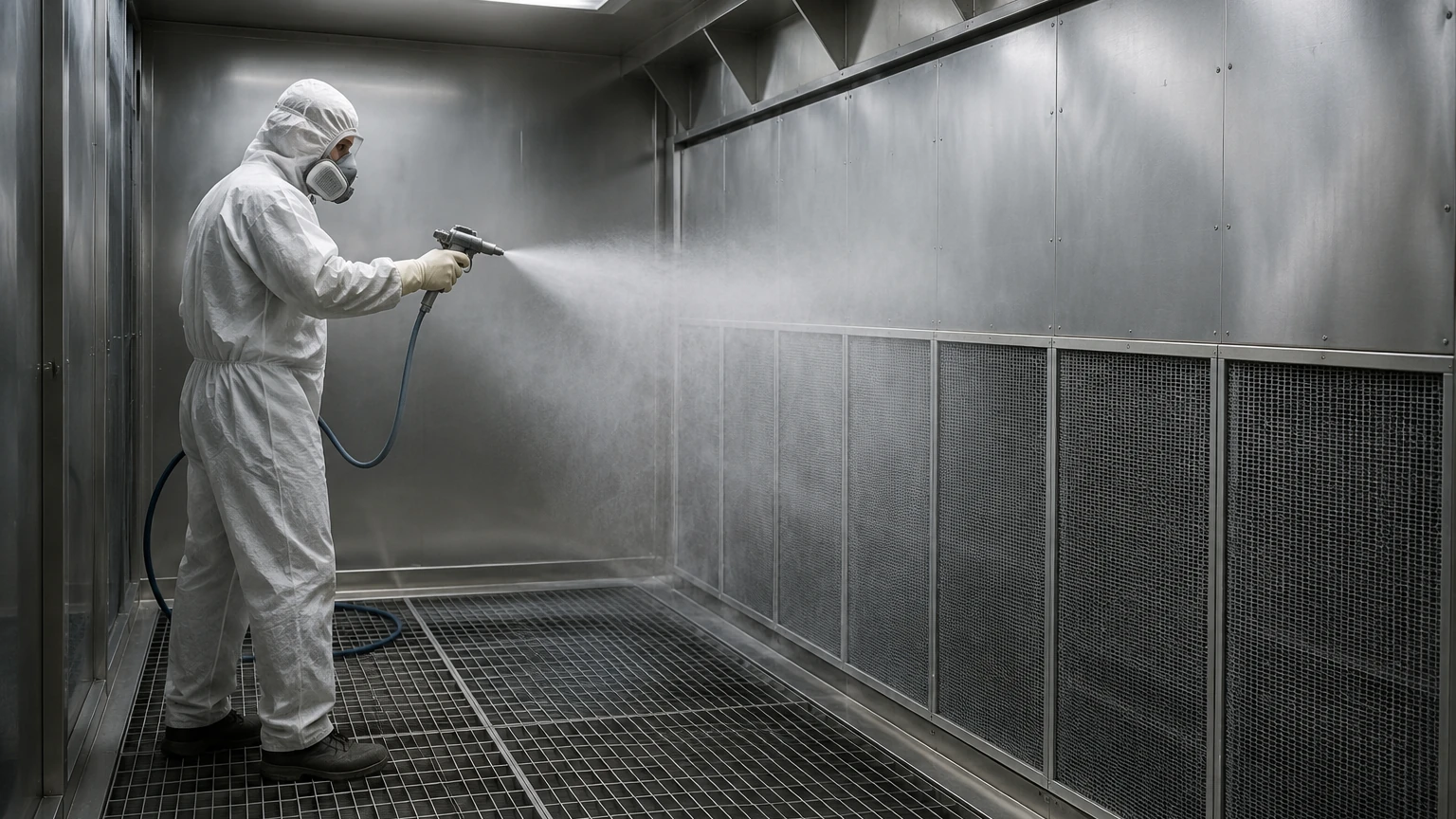
Dust control booths operate on the principle of controlled airflow. By creating a localized area of low pressure, the system draws contaminated air away from the operator's breathing zone and toward a filtration bank. There are several primary airflow configurations used in modern industrial booths:
1. Cross-Draft Booths: Air is drawn from the front of the booth and pulled horizontally across the work area into a filter wall at the rear. These are common for large parts or processes where the operator stands in front of the workpiece.
2. Down-Draft Booths: Air is pulled downward through a perforated floor or work surface. This is particularly effective for heavy dust particles or processes where the operator needs to work directly over the material.
3. Side-Draft/Back-Draft Booths: These utilize suction slots on the sides or back to capture finer particles that remain suspended in the air.
Regardless of the configuration, the "face velocity"—the speed of the air as it enters the booth—must be carefully calculated. If the velocity is too low, dust escapes the enclosure; if it is too high, it can interfere with delicate processes or cause premature filter loading. For most industrial applications, a face velocity between 100 and 150 feet per minute (fpm) is standard, though specific chemical or pharmaceutical standards may require higher rates.
The Role of Stainless Steel Filtration in Dust Containment
At the heart of every dust control booth is the filtration media. While many standard booths use disposable synthetic filters, high-performance industrial applications often require more robust solutions. Stainless steel filter cartridges and wire mesh components are frequently integrated into these systems, especially when dealing with high temperatures, corrosive materials, or the need for frequent cleaning.
Stainless steel filters offer several advantages over traditional media in a dust control context:
* Durability and Reusability: Unlike paper or synthetic filters that must be discarded after a single loading cycle, stainless steel mesh can be cleaned via ultrasonic baths, back-flushing, or chemical cleaning, significantly reducing long-term waste.
* Chemical Compatibility: In chemical processing or pharmaceutical environments, the dust may be acidic, alkaline, or solvent-based. Stainless steel (particularly 316L grade) provides the necessary resistance to prevent filter degradation.
* High Temperature Resistance: For processes involving hot dust or thermal spraying, synthetic filters may melt or ignite. Metal filtration components maintain structural integrity at much higher temperatures.
When evaluating filtration for dust control booths, engineers must consider the micron rating required for the specific particle size distribution of their process. Fine metal dust or pharmaceutical powders may require sub-micron filtration, necessitating multi-stage systems where a stainless steel pre-filter protects a high-efficiency secondary stage.
Key Evaluation Criteria for Industrial Filter Selection
Selecting the filtration component for a dust control system is not a one-size-fits-all process. Procurement teams and engineers should evaluate the following technical criteria to ensure the system meets the application's demands:
Filtration Accuracy and Micron Rating
Determining the particle size distribution (PSD) of the dust is the first step. If the filter mesh is too coarse, fine particles will pass through the system and return to the facility air. If it is too fine, the filter will clog rapidly, leading to excessive pressure drop and reduced airflow. Precision-engineered wire mesh allows for exact pore size control, ensuring that the filter captures the target particulate without unnecessary resistance.
Pressure Drop and Energy Consumption
Pressure drop (the difference in air pressure before and after the filter) is a direct indicator of energy efficiency. A high initial pressure drop means the booth's blower must work harder to maintain the required face velocity. Stainless steel cartridges with pleated designs increase the available surface area, which lowers the initial pressure drop and extends the time between cleaning cycles.
Material Selection and Alloy Grades
The environment dictates the material. While 304 stainless steel is suitable for general industrial dust, 316L is preferred for marine environments or food and beverage applications due to its superior corrosion resistance. For highly specialized chemical booths, exotic alloys may be required to prevent pitting or stress corrosion cracking.
Managing Operational Risks and Maintenance
Failure to properly maintain the filtration system in a dust control booth leads to two primary risks: reduced containment efficiency and increased fire or explosion hazards. In industries handling combustible dusts (such as aluminum, wood, or certain organic powders), the filtration system must be integrated with explosion venting and grounding to prevent static buildup.
Pulse-Jet Cleaning Systems
Many modern dust control booths utilize an automated pulse-jet cleaning system. This mechanism delivers a high-pressure burst of compressed air down the center of the filter cartridge, dislodging the dust cake from the outer surface. For this system to work effectively, the filter media must be rigid enough to withstand the mechanical stress of the pulse without deforming. Stainless steel reinforced cartridges are ideal for these high-stress environments.
Replacement Cycles and Monitoring
Differential pressure gauges are the standard tool for monitoring filter health. A steady increase in pressure indicates that the filter is loading. If the pressure does not drop after a cleaning cycle, the filter has reached the end of its service life or is "blinded." By using high-quality metal filters, the interval between full replacements is extended, lowering the total cost of ownership compared to frequent purchases of disposable media.
Customization and OEM Integration
Standard off-the-shelf dust control booths often require modification to fit specific facility layouts or unique process requirements. This is where custom filtration engineering becomes vital. OEM manufacturers of dust booths often partner with filtration specialists to design bespoke filter elements that fit unique housing geometries or meet specific flow rate requirements.
Customization options include:
* Variable Mesh Weaves: Selecting specific weave patterns (such as plain, twill, or dutch weave) to balance flow rate and particle retention.
* Reinforced Structures: Adding internal cores or external cages to filters to handle high-pressure differentials.
* Custom End Caps: Engineering specific mounting interfaces to ensure a leak-proof seal within the booth housing.
For organizations looking to optimize their filtration performance or develop a new containment solution, it is advisable to Review product options and application support to ensure the selected components align with the technical demands of the environment.
Conclusion: Selecting the Right Path Forward
Investing in dust control booths is a significant commitment to operational safety and environmental responsibility. However, the booth is only as effective as the filters it contains. By prioritizing technical factors such as micron accuracy, material compatibility, and structural durability, engineers can ensure that their dust containment systems provide reliable service with minimal downtime.
Before finalizing a purchase or design, technical teams should confirm the following:
1. Particle Characteristics: Is the dust abrasive, sticky, or combustible?
2. Airflow Requirements: Does the booth maintain the required face velocity under maximum filter load?
3. Cleaning Protocols: Is the filter media compatible with the intended cleaning method (e.g., pulse-jet or ultrasonic)?
4. Regulatory Compliance: Does the system meet OSHA, NFPA, or industry-specific standards for air quality?
By focusing on high-quality, precision-engineered filtration components, manufacturers can achieve a balance between effective dust capture and cost-efficient operation, ensuring a cleaner and safer industrial workspace.
