


Filtros Porosos
In the landscape of industrial filtration, the term filtros porosos refers to a specialized category of filtration media engineered to provide precise particle retention while maintaining structural integrity under extreme conditions. Unlike traditional cloth or paper filters, porous metal filters—specifically those manufactured from stainless steel—offer a unique combination of thermal stability, chemical resistance, and mechanical strength. For engineers and procurement specialists, understanding the nuances of these components is essential for optimizing process efficiency and ensuring the longevity of industrial equipment.
Industrial applications often demand filtration solutions that can withstand high pressure, corrosive chemicals, and fluctuating temperatures. This is where the technical advantages of stainless steel porous media become evident. By utilizing advanced manufacturing techniques such as sintering, manufacturers like Kaifil produce filtration components that serve as critical safeguards in chemical processing, pharmaceutical manufacturing, and high-pressure hydraulic systems. To explore the full range of custom solutions, professionals often refer to the Main Page of technical providers at https://www.kaifil.com/ to align product specifications with specific operational requirements.
Technical Fundamentals of Porous Metal Media
The performance of filtros porosos is primarily dictated by the material properties and the manufacturing process used to create the porous structure. Most industrial-grade porous filters are constructed from stainless steel alloys, such as AISI 316L, which is preferred for its superior corrosion resistance and low carbon content. This material is particularly effective in preventing intergranular corrosion after welding or high-temperature exposure.
There are two primary methods for producing these porous structures: sintering metal powders and layering stainless steel wire mesh. In the sintering process, fine metal powders are placed into a mold and heated to a temperature just below their melting point. This causes the particles to bond through a process called diffusion bonding, creating a rigid, porous structure with a highly controlled pore size distribution. The resulting media is characterized by its high porosity, which allows for significant flow rates with minimal pressure drop.
Alternatively, multi-layer wire mesh filters involve laminating several layers of woven wire cloth together. These layers are then sintered to create a single, integrated filtration element. This method provides excellent mechanical strength and is often used in applications where the filter must be frequently cleaned or backwashed. The choice between powder-sintered and mesh-sintered media depends on the specific micron rating required and the nature of the contaminants being removed.
Engineering Considerations: Micron Ratings and Permeability
When selecting filtros porosos, engineers must distinguish between nominal and absolute micron ratings. A nominal rating refers to the ability of the filter to retain a certain percentage of particles of a specific size, whereas an absolute rating indicates the size of the largest spherical particle that can pass through the media under laboratory conditions. For critical applications in the pharmaceutical or semiconductor industries, absolute filtration is often necessary to ensure process purity.
Permeability is another critical factor. It defines the ease with which a fluid (liquid or gas) can pass through the porous medium. High permeability is desirable because it reduces the initial pressure drop across the filter, thereby lowering the energy requirements for pumps and compressors. However, there is an inherent trade-off between filtration efficiency and permeability; finer pores provide better particle retention but increase resistance to flow.
Engineers must also calculate the "dirt-holding capacity," which refers to the amount of contaminant the filter can collect before the pressure drop reaches a critical limit (the terminal pressure drop). Porous metal filters typically offer a high dirt-holding capacity due to their depth-filtration characteristics, where particles are trapped not just on the surface but within the complex network of internal pores.
Industrial Applications and Chemical Compatibility
The versatility of filtros porosos allows them to be deployed across a wide spectrum of demanding industries. In chemical processing, these filters are used to recover catalysts from process streams, where they must resist degradation from aggressive solvents and high-temperature reactions. The use of 316L stainless steel ensures that the filter does not introduce metallic impurities into the chemical product.
In the food and beverage industry, porous metal filters are utilized for steam filtration and the carbonation of liquids. Because stainless steel is non-toxic and can be easily sterilized using Clean-in-Place (CIP) or Steam-in-Place (SIP) methods, it meets the stringent hygiene standards required by regulatory bodies. The mechanical robustness of these filters prevents media migration—a common failure in polymer-based filters where fibers may break off and contaminate the product stream.
For hydraulic and pneumatic systems, porous metal components serve as silencers, breathers, and flame arrestors. Their ability to handle high-velocity gas flows while providing consistent filtration makes them ideal for protecting sensitive valves and actuators from particulate damage. For those seeking detailed application guides and product catalogs, the Main Page at https://www.kaifil.com/ serves as a comprehensive resource for technical data sheets and engineering support.
Customization and OEM Capabilities
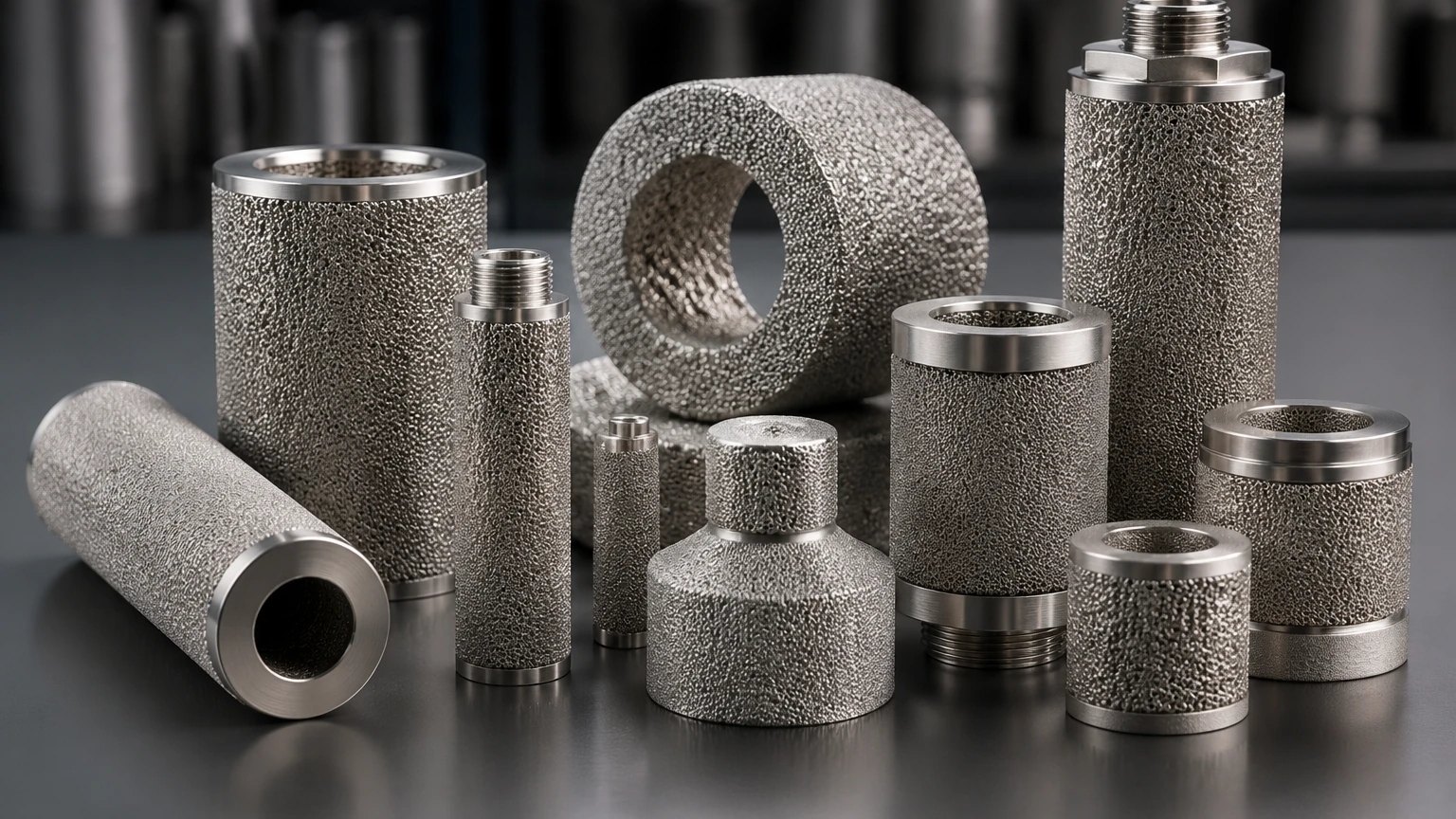
One of the primary advantages of working with a specialized manufacturer like Kaifil is the ability to customize filtros porosos to meet exact geometric and performance specifications. Standard off-the-shelf filters often fall short in specialized industrial machinery where space is limited or where unique end-fittings are required for installation.
Customization options include:
- Geometry: Filters can be manufactured as cylindrical cartridges, flat discs, conical shapes, or complex pleated structures to increase surface area.
- Micron Ratings: Precision engineering allows for the production of media ranging from 0.1 microns to over 200 microns.
- End Fittings: Custom threads, flanges, or O-ring grooves can be integrated directly into the filter structure to ensure a leak-proof fit within existing housing units.
- Reinforcement: For high-pressure applications, filters can be reinforced with internal cores or external cages to prevent collapse or bursting.
By collaborating with an OEM partner, engineering teams can optimize the total cost of ownership. While the initial investment in a stainless steel porous filter may be higher than that of a disposable plastic alternative, the ability to clean and reuse the metal filter significantly reduces long-term operational costs and waste.
Maintenance, Cleaning, and Lifecycle Management
The durability of filtros porosos is one of their most significant selling points. Unlike disposable filters that must be discarded once they become clogged, porous metal filters can often be restored to near-original performance through various cleaning techniques. This makes them an environmentally friendly and cost-effective choice for large-scale industrial operations.
Common cleaning methods include:
1. Backwashing: Reversing the flow of the fluid to dislodge particles trapped on the surface or within the pores. This is often automated in continuous process systems.
2. Ultrasonic Cleaning: Using high-frequency sound waves in a cleaning solvent to create cavitation bubbles that scrub the internal pore surfaces.
3. Chemical Cleaning: Utilizing specific acids or alkalis to dissolve organic or inorganic deposits without damaging the stainless steel structure.
4. Thermal Treatment: In some cases, filters can be heated in a controlled atmosphere to burn off organic contaminants (pyrolysis).
Determining the replacement cycle for these filters depends on the severity of the application and the effectiveness of the cleaning process. Over time, permanent fouling may occur, leading to a gradual increase in the "clean" pressure drop. Monitoring this baseline pressure drop is essential for predictive maintenance, allowing operators to replace the filter elements before a failure occurs.
Selecting the Right Partner for Filtration Solutions
Choosing a supplier for filtros porosos involves more than just comparing prices. It requires evaluating the manufacturer's technical expertise, quality control systems, and ability to provide engineering support. A reliable partner should be able to assist in the material selection process, ensuring that the chosen alloy is compatible with the process fluid and the operating temperature.
Quality assurance is paramount. Industrial filters should undergo rigorous testing, including bubble point tests to verify pore size, pressure decay tests to ensure structural integrity, and flow-permeability testing. Documentation and traceability of materials are also critical, especially in the pharmaceutical and aerospace sectors.
Kaifil specializes in providing these high-performance, customized filtration components. By focusing on the specific needs of the chemical, hydraulic, and food processing industries, the company ensures that every filter produced meets the highest standards of durability and precision. For more information on how custom stainless steel filtration can improve your process, visiting the Main Page at https://www.kaifil.com/ provides a direct path to expert consultation and a wide array of filtration products.
Conclusion
In summary, filtros porosos represent a critical technology for modern industrial processes. Their ability to deliver precise filtration under high-stress conditions makes them indispensable in sectors where reliability and purity are non-negotiable. By understanding the science behind sintered metal and wire mesh structures, engineers can make informed decisions that enhance system performance and reduce operational downtime. Whether the requirement is for a standard cartridge or a highly specialized OEM component, the focus should always remain on material quality, filtration accuracy, and the long-term sustainability of the filtration solution.
