


Waste Water Filter System
In industrial operations, the implementation of a robust waste water filter system is not merely a regulatory requirement but a critical component of operational efficiency and equipment protection. Industrial wastewater often contains a complex mixture of suspended solids, organic matter, and corrosive chemicals that can degrade downstream equipment or lead to significant environmental non-compliance. For engineers and facility managers, selecting the correct filtration components requires a deep understanding of material science, fluid dynamics, and the specific mechanical demands of the application environment.
Effective wastewater management relies on the ability to separate contaminants from the liquid stream with precision and reliability. Whether the goal is water reclamation for reuse in cooling towers or ensuring that effluent meets municipal discharge standards, the choice of filter media and housing design determines the long-term viability of the system. Stainless steel filtration solutions have emerged as the industry standard for these demanding environments due to their superior mechanical strength and chemical resistance.
Engineering Considerations for Industrial Waste Water Filtration
When designing or upgrading a waste water filter system, engineers must evaluate several technical parameters to ensure the system can handle the specific characteristics of the influent. Unlike clean water systems, wastewater streams are often unpredictable, with fluctuating solids loading and varying chemical compositions.
One of the primary considerations is the flow rate versus the effective filtration area. A common mistake in system design is under-sizing the filter, which leads to high face velocities. High velocity can force deformable contaminants through the filter mesh or cause rapid cake buildup, leading to frequent backwashing cycles and increased downtime. By utilizing high-surface-area components, such as pleated stainless steel cartridges, engineers can maintain lower flux rates while achieving the necessary throughput.
Another critical factor is the pressure drop ($ΔP$) across the filter media. As solids accumulate on the surface of a wire mesh filter, the resistance to flow increases. A well-engineered system must account for the clean pressure drop and the maximum allowable terminal pressure drop before cleaning or replacement is required. Utilizing precision-engineered stainless steel components ensures that the filter can withstand these pressure differentials without mechanical deformation.
Material Selection: The Role of Stainless Steel in Durability
In the context of an industrial waste water filter system, material compatibility is paramount. Wastewater in chemical processing or pharmaceutical manufacturing often contains acidic or alkaline components that would rapidly degrade polymer-based filters. Stainless steel, particularly grades 304 and 316L, provides the necessary corrosion resistance to handle these harsh environments.
Grade 316L stainless steel is frequently specified for wastewater applications involving chlorides or high-salinity environments, as the addition of molybdenum enhances its resistance to pitting and crevice corrosion. For even more extreme conditions, specialized alloys may be employed. Beyond chemical resistance, stainless steel offers thermal stability that synthetic materials cannot match, allowing for the filtration of high-temperature process water without the risk of media softening or structural failure.
Furthermore, the structural integrity of metal mesh allows for high-pressure backpulsing or ultrasonic cleaning. This regenerability is a significant advantage in industrial settings, as it reduces the total cost of ownership by extending the service life of the filter components compared to disposable depth filters.
Types of Metal Filter Components for Wastewater Applications
Different stages of wastewater treatment require different filtration technologies. A comprehensive waste water filter system typically employs a combination of coarse and fine filtration stages to optimize performance.
Stainless Steel Wire Mesh Filters
Wire mesh filters are often used in the primary stages of wastewater treatment to remove large debris and suspended solids. These filters are characterized by their precise pore sizes and high open-area ratios. The weave pattern—whether plain, twilled, or Dutch weave—determines the mechanical strength and the filtration characteristics of the mesh. For wastewater applications, robust weaves are preferred to handle the mechanical stress of high-flow environments.
Sintered Metal Filter Elements
For finer filtration requirements, sintered metal components provide exceptional performance. Sintering involves bonding multiple layers of wire mesh or metallic powder through a high-temperature thermal process. This creates a porous structure that is incredibly strong and resistant to migration. Sintered filters are ideal for removing fine particulates in secondary or tertiary treatment stages, where high filtration accuracy is required to protect sensitive downstream membranes or high-pressure pumps.
Wedge Wire Screens
Wedge wire is another critical component in many waste water filter system designs. Its non-clogging surface and high structural strength make it perfect for intake screens or primary solids separation. The V-shaped profile of the wire ensures that particles only make contact at two points, significantly reducing the likelihood of blinding and making the screen easier to clean via backwashing.
Balancing Filtration Accuracy and Maintenance Cycles
Selecting the correct micron rating is a balancing act between achieving the desired water quality and managing maintenance intervals. In a waste water filter system, specifying a filter that is too fine for the application will lead to premature clogging, while a filter that is too coarse will fail to protect downstream processes.
Engineers must distinguish between nominal and absolute filtration ratings. A nominal rating indicates the ability of the filter to retain a majority of particles of a certain size, whereas an absolute rating (often defined by a Beta ratio) indicates the size at which 99.9% of particles are retained. For critical industrial wastewater applications, absolute-rated stainless steel cartridges are often preferred to ensure consistent effluent quality.
To optimize maintenance, many modern systems incorporate automated differential pressure monitoring. When the $ΔP$ reaches a predetermined setpoint, the system can trigger an automatic backwash cycle or alert operators that a manual cleaning is necessary. Because stainless steel components are durable, they can withstand thousands of these cleaning cycles, providing a much lower long-term cost than systems relying on frequent cartridge replacements.
Customization and OEM Integration in Filtration Systems
Every industrial site has unique constraints, from the physical footprint available for the filtration skid to the specific chemical makeup of the waste stream. This is where customized filtration solutions become essential. A standard off-the-shelf filter may not provide the necessary connection types, housing dimensions, or material specifications required for a seamless integration into an existing process.
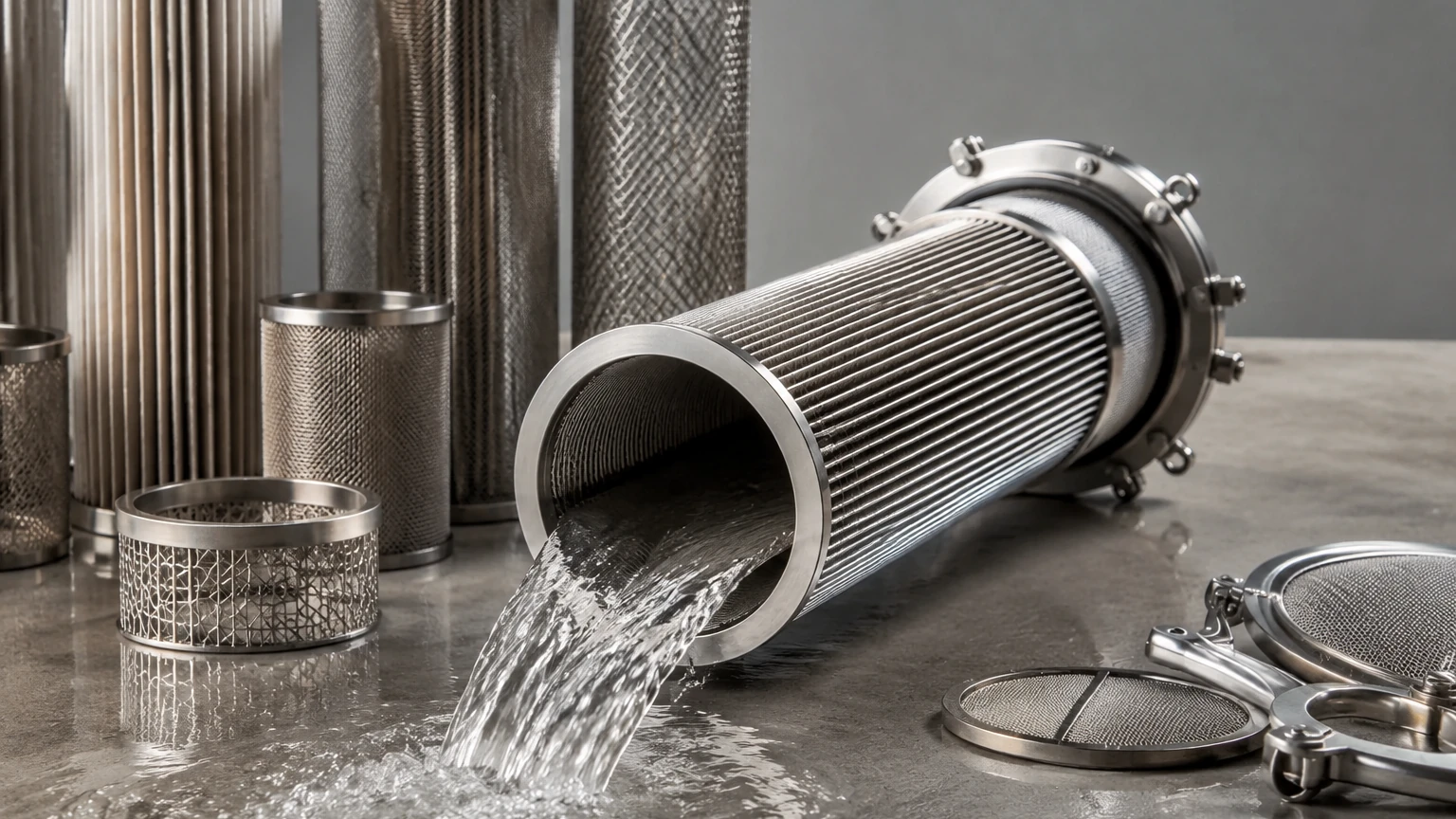
Customized stainless steel filter cartridges and precision metal components allow for the optimization of the filtration process. This might include custom flange connections, specialized internal support cores for high-pressure applications, or unique pleated geometries to maximize surface area within a restricted housing volume. For manufacturers and system integrators, partnering with a specialist who understands these engineering nuances is vital for delivering a reliable product to the end-user.
For those seeking to explore a wide range of technical specifications and customized options for industrial filtration, visiting the Main Page of a specialized manufacturer provides access to detailed product data and engineering support. This high level of technical oversight ensures that the chosen components are fit for the specific rigors of the intended application.
Addressing Common Risks in Wastewater Filtration
Operating a waste water filter system involves managing several operational risks. One of the most common issues is biofouling, where microorganisms grow on the filter media, creating a biofilm that restricts flow. While stainless steel is not inherently antimicrobial, its smooth surface and ability to withstand aggressive chemical cleaning (such as CIP or Steam-in-Place) make it much easier to sanitize than porous plastic media.
Another risk is mechanical bypass, where contaminants leak around the filter element due to poor sealing. High-quality industrial filters utilize precision-machined end caps and high-performance gaskets (such as Viton or PTFE) to ensure a positive seal. In high-vibration environments, the mechanical robustness of a stainless steel filter assembly prevents the bypass issues that can plague lighter-weight plastic housings.
Finally, the risk of media migration—where pieces of the filter itself break off and enter the downstream flow—is virtually eliminated with the use of high-quality stainless steel wire mesh and sintered components. This is particularly important in industries like food and beverage or pharmaceuticals, where product purity is non-negotiable.
Conclusion: Achieving Long-Term Efficiency
The selection of components for a waste water filter system is a decision that impacts the entire facility's operational cost and environmental footprint. By prioritizing high-quality materials like stainless steel and focusing on precise engineering specifications, industrial operators can ensure their filtration systems provide consistent performance over many years of service.
From the initial material selection to the final customization of filter elements, every detail contributes to the system's ability to handle the challenges of industrial wastewater. As industries move toward more sustainable water management practices, the role of durable, cleanable, and high-precision metal filtration will only continue to grow. For technical teams and purchasing professionals, the goal remains clear: implement a solution that balances initial capital expenditure with long-term reliability and ease of maintenance. For more information on product options and application support, please visit the Main Page to consult with filtration experts who can guide the selection process based on specific industrial requirements.
