


Air Pressure Muffler
In industrial pneumatic systems, the rapid exhaustion of compressed air into the atmosphere creates significant noise pollution and potential safety hazards. An air pressure muffler, often referred to as a pneumatic silencer, is a critical component designed to reduce the sound levels produced by exhausting air while simultaneously protecting the internal components of valves and cylinders from environmental contaminants. For engineers and procurement professionals, selecting the correct muffler involves a technical balance between acoustic attenuation and the management of back pressure to ensure system efficiency.
As a specialized manufacturer of stainless steel filtration and porous metal components, Kaifil provides high-performance solutions tailored for demanding industrial environments. Understanding the engineering principles behind these components is essential for optimizing pneumatic performance and ensuring compliance with workplace safety regulations.
The Engineering Fundamentals of Air Pressure Mufflers
At its core, an air pressure muffler functions by diffusing the high-velocity exhaust air through a porous medium. When compressed air is released from a pneumatic valve, it moves at high speeds, creating turbulence as it hits the static ambient air. This turbulence is the primary source of the "hissing" or "popping" noise associated with pneumatic machinery.
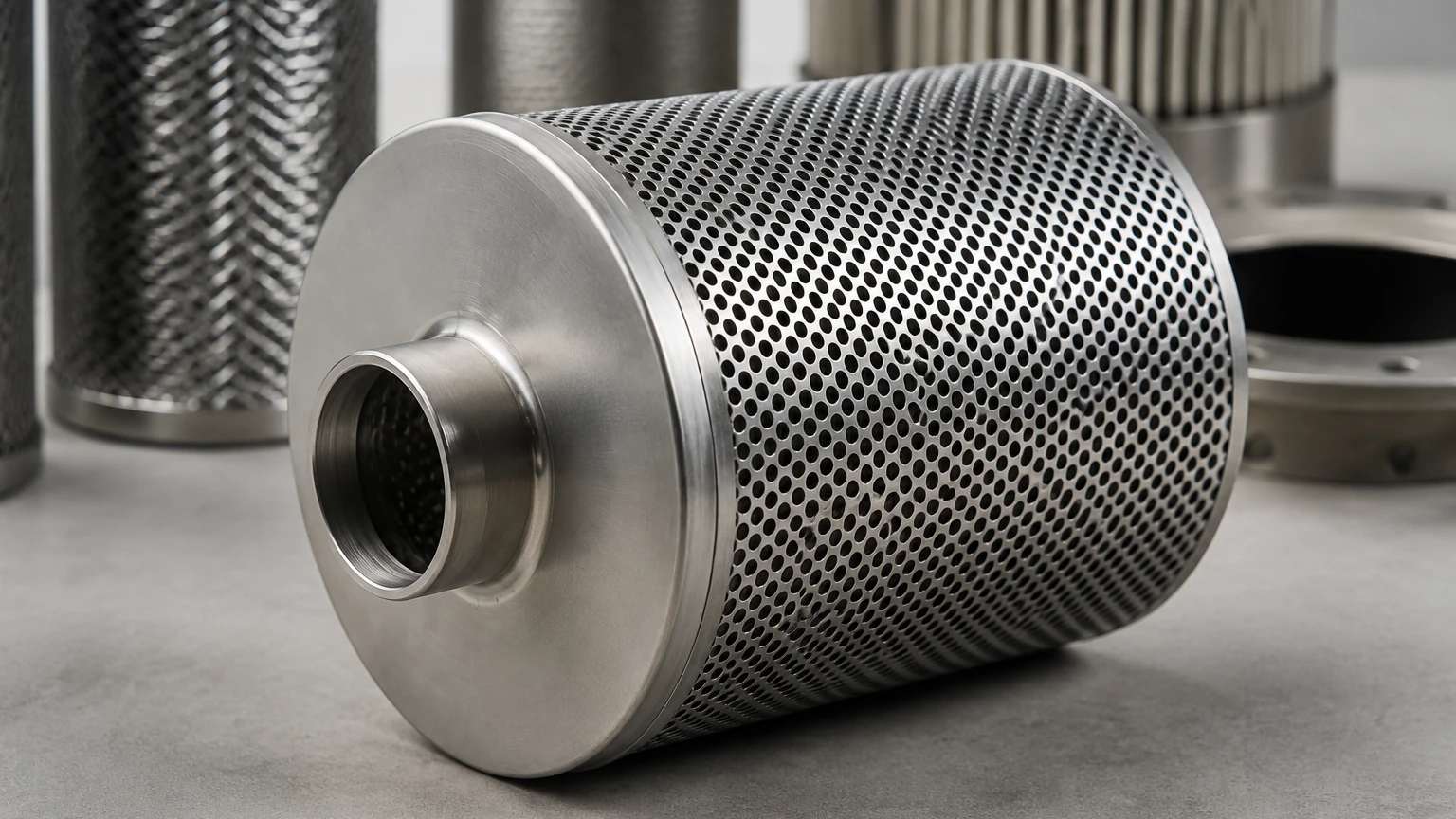
By forcing the air through a series of tortuous paths within a porous material—such as sintered stainless steel or wire mesh—the muffler breaks down the large, high-energy air stream into many smaller, lower-velocity streams. This process increases the surface area of the exhaust and allows the kinetic energy of the air to dissipate more gradually.
Beyond noise reduction, these components serve as a secondary defense for the pneumatic system. When a valve is in its exhaust cycle, the exhaust port is momentarily open to the environment. Without a muffler, dust, moisture, and particulate matter can enter the valve, leading to premature wear of seals and potential mechanical failure. The porous structure of the muffler acts as a filter, preventing ingress while allowing egress.
Material Selection: Why Stainless Steel Prevails
Industrial environments vary significantly, and the material of an air pressure muffler must be compatible with both the internal compressed air quality and the external atmosphere. While plastic and sintered bronze are common in light-duty applications, stainless steel is the preferred choice for heavy-industrial and specialized sectors.
Sintered Stainless Steel
Kaifil specializes in sintered stainless steel components, which offer superior mechanical strength and corrosion resistance. In industries such as chemical processing, pharmaceutical manufacturing, and food and beverage production, equipment is often exposed to caustic cleaning agents or corrosive process gases. Stainless steel (typically 304 or 316L) does not degrade under these conditions, ensuring a long service life and preventing metallic contamination of the work environment.
Wire Mesh Construction
For applications requiring high flow rates with minimal back pressure, multi-layered stainless steel wire mesh mufflers are often utilized. These designs provide a high degree of structural integrity and can be cleaned and reused, which is a significant advantage over disposable plastic alternatives. The precision of the mesh weave allows for predictable filtration and noise reduction performance.
Temperature and Pressure Resilience
Unlike plastic mufflers, which may soften or fail at high temperatures, metal mufflers maintain their shape and performance across a wide thermal range. This is particularly important in heavy-duty hydraulic and pneumatic systems where the air temperature can rise significantly during high-cycle operations.
Performance Metrics: Noise Reduction vs. Back Pressure
When evaluating an air pressure muffler, engineers must prioritize two conflicting performance metrics: decibel (dB) reduction and back pressure (pressure drop).
Acoustic Attenuation
The primary goal of a muffler is to bring noise levels within OSHA or local regulatory limits. A high-quality stainless steel muffler can typically reduce exhaust noise by 20 to 35 dB(A). However, the denser the porous material is to achieve better noise reduction, the more resistance it offers to the airflow.
Back Pressure Management
Back pressure is the resistance to flow created by the muffler. If the back pressure is too high, it will slow down the exhaust cycle of the pneumatic cylinder, leading to sluggish machine performance, increased cycle times, and reduced overall efficiency. In extreme cases, excessive back pressure can prevent a valve from shifting fully or cause a cylinder to stall.
To optimize this, engineers should look for the flow coefficient (Cv) or the effective orifice area of the muffler. A common rule of thumb is to select a muffler with a flow capacity that exceeds the flow capacity of the valve it is attached to. This ensures that the muffler does not become the bottleneck in the system.
Integration and Compatibility in Industrial Systems
Proper integration of an air pressure muffler requires attention to thread standards and physical dimensions. Most industrial pneumatic systems utilize standard threading, including NPT (National Pipe Thread) for North American applications and BSPP or BSPT (British Standard Pipe) for international markets.
Sizing Considerations
Mufflers are typically sized based on the port size of the valve, ranging from M5 miniature fittings to large 2-inch industrial ports. However, physical space is often a constraint in compact manifold designs. Engineers must ensure that the diameter and length of the muffler do not interfere with adjacent components or the movement of the machinery.
Customization for OEM Applications
Standard off-the-shelf mufflers may not meet the specific requirements of specialized equipment. Kaifil works closely with global customers to develop customized designs, adjusting the porosity, shape, and mounting options to fit unique engineering envelopes. For more information on tailored filtration and silencing components, professionals can visit the Main Page to review product options and application support.
Maintenance, Clogging, and Replacement Cycles
One of the most overlooked aspects of pneumatic system health is the maintenance of air pressure mufflers. Because they act as filters, they will eventually clog. The source of clogging is usually twofold:
1. Internal Contamination: Oil aerosols from lubricated air lines, moisture from poor desiccant performance, and pipe scale from the distribution system.
2. External Contamination: Dust, grease, or process-specific particulates in the ambient air of the factory.
A clogged muffler increases back pressure over time. Signs of a failing muffler include a noticeable change in the "pitch" of the exhaust sound, a gradual slowing of cylinder stroke speeds, or visible oil saturation on the muffler surface.
In cleanroom or food-grade environments, stainless steel mufflers are advantageous because they can often be cleaned using ultrasonic baths or solvent washes, extending their lifespan compared to porous plastic types which must be discarded. Establishing a preventive maintenance schedule—typically every 6 to 12 months depending on air quality—is essential to prevent unexpected downtime.
Common Risks and Selection Pitfalls
Choosing the wrong air pressure muffler can lead to several operational risks:
* The "Projectile" Risk: If a muffler is made of low-quality materials or has poorly machined threads, the constant pressure cycles can cause the muffler to fatigue and eventually blow off the valve at high velocity. Stainless steel construction provides the tensile strength necessary to resist these fatigue cycles.
* Chemical Incompatibility: Using a bronze muffler in an environment with high ammonia or sulfur content will lead to rapid corrosion and clogging. Engineers must confirm the chemical profile of the environment before selection.
* Undersizing: Selecting a muffler based solely on price or small physical size often leads to restricted flow, which can cause overheating in pneumatic motors or inconsistent timing in high-speed packaging lines.
* Icing: In systems with high moisture content and high flow rates, the rapid expansion of air through the muffler can cause a temperature drop (the Joule-Thomson effect), leading to ice formation within the porous media. This completely blocks the exhaust and can stop the machine. In such cases, choosing a muffler with a larger surface area or a coarser mesh can mitigate the risk.
Conclusion: Optimizing Pneumatic Performance
An air pressure muffler is more than a simple accessory; it is a functional component that impacts the safety, noise level, and efficiency of industrial machinery. By focusing on high-quality materials like stainless steel and carefully calculating the balance between noise reduction and back pressure, engineers can ensure their systems operate reliably over millions of cycles.
Kaifil remains committed to providing the technical expertise and manufacturing precision required for these critical components. Whether for standard industrial use or highly specialized OEM applications, selecting a partner with deep experience in porous metal technology is the first step toward optimized filtration and silencing. For technical specifications and to explore the full range of custom stainless steel filtration solutions, please visit the Kaifil Main Page.
