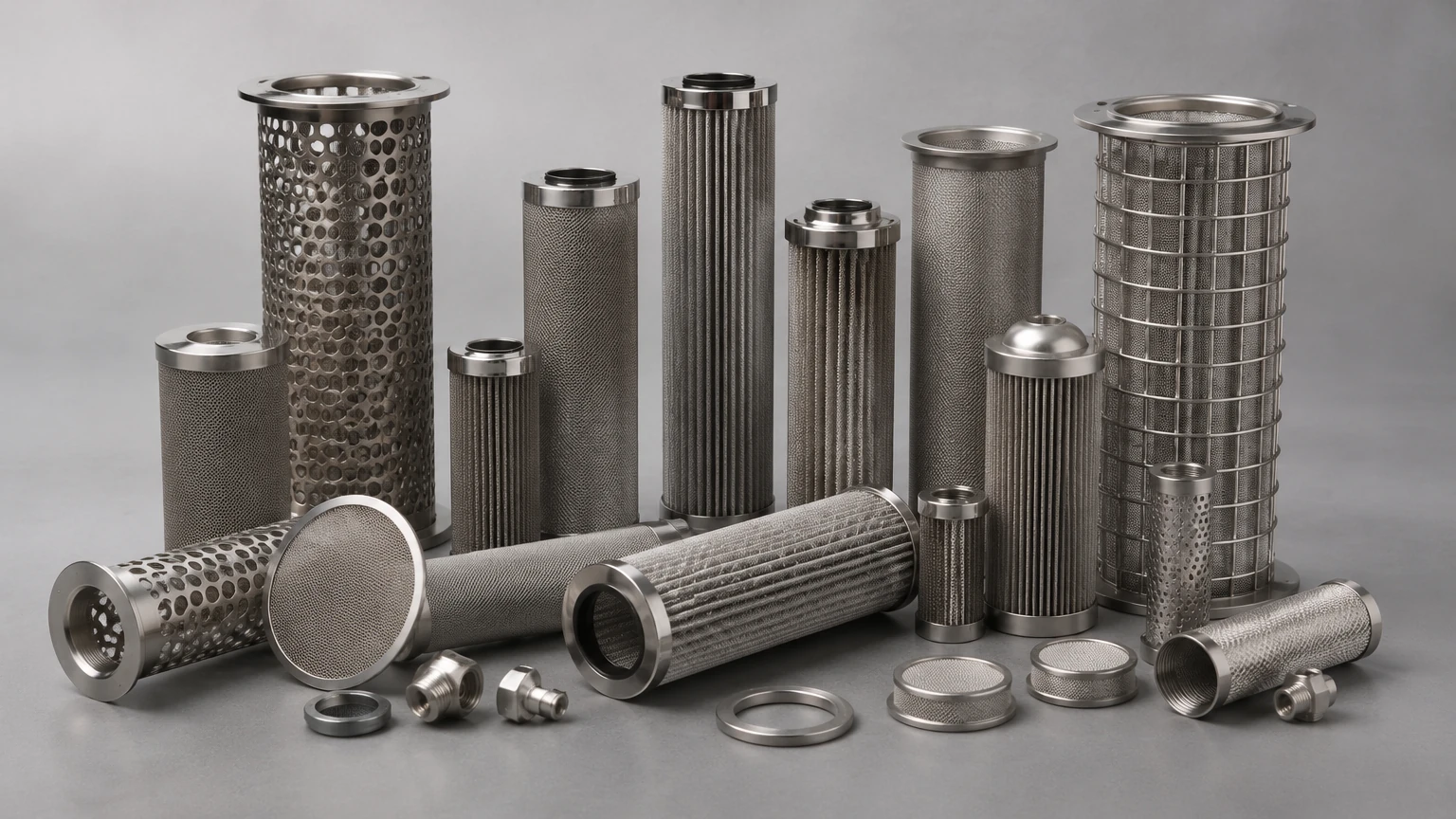
Bag Housing
In industrial liquid filtration, the bag housing serves as the critical pressure vessel that contains and supports filter bags during the separation process. For engineers and procurement teams, selecting the right bag housing is not merely a matter of sizing; it involves a complex evaluation of material compatibility, pressure ratings, flow dynamics, and long-term maintenance requirements. As a specialized manufacturer of stainless steel filtration solutions, Kaifil understands that the integrity of the housing directly impacts the efficiency of the entire production line, whether in chemical processing, food and beverage production, or pharmaceutical manufacturing.
Engineering Fundamentals and Material Selection
The primary function of a bag housing is to provide a secure environment for liquid filtration under pressure. Because these vessels are often subjected to high temperatures and corrosive fluids, the choice of construction material is paramount. Most industrial-grade housings are fabricated from stainless steel, specifically Grade 304 or Grade 316L.
* Grade 304 Stainless Steel: This is the standard choice for general industrial applications, including water treatment and mild chemical processing. It offers excellent durability and cost-effectiveness for environments where high-level corrosion resistance is not the primary concern.
* Grade 316L Stainless Steel: For more demanding environments, such as pharmaceutical manufacturing or the processing of aggressive chemicals, 316L is the preferred material. The addition of molybdenum enhances its resistance to pitting and crevice corrosion, particularly in chloride-rich environments. The "L" denotes low carbon content, which improves weldability and reduces the risk of intergranular corrosion.
Beyond the alloy, the surface finish of the bag housing is a critical engineering consideration. In the food and beverage or pharmaceutical sectors, internal surfaces often require electropolishing to achieve a specific Ra (Roughness Average) value. This minimizes bacterial growth and ensures the housing can be effectively cleaned through CIP (Clean-In-Place) protocols. For more information on high-precision components, you can visit our Main Page.
Structural Components and Sealing Mechanisms
A robust bag housing consists of several integrated components that must work in unison to prevent fluid bypass—the primary failure mode in filtration systems.
1. The Pressure Vessel: This is the outer shell designed to withstand the operating pressure of the system. It must be manufactured according to industry standards, such as ASME Section VIII, to ensure safety.
2. The Internal Support Basket: Because filter bags are made of flexible media (such as felt or mesh), they cannot withstand high differential pressures on their own. A stainless steel perforated or wire mesh support basket is placed inside the housing to provide the necessary structural rigidity. The precision of this basket is vital; any gaps between the basket and the housing wall can lead to bag rupture or bypass.
3. The Sealing Rim: The interface where the filter bag meets the housing is the most common point of leakage. High-quality housings utilize a machined sealing rim or a specialized V-ring design that compresses the bag’s collar (whether it is a plastic flange or a steel snap-ring) to create a leak-proof seal.
4. The Cover and Closure: Depending on the frequency of bag changes, the closure mechanism can vary from simple swing bolts to quick-opening Davit arms. Swing bolts provide a secure, high-pressure seal, while quick-closure designs are engineered to reduce downtime during maintenance cycles.
Comparing Single-Bag and Multi-Bag Housing Configurations
The scale of the operation typically dictates whether a single-bag or multi-bag housing is required. Understanding the trade-offs between these configurations is essential for optimizing the total cost of ownership.
Single-Bag Housings
Single-bag units are the workhorses of small-to-medium batch processing. They are compact, easier to install, and ideal for applications with flow rates ranging from 5 to 40 cubic meters per hour, depending on the fluid viscosity and the micron rating of the bag. These are often used as polished filters or for final-stage filtration where the contaminant load is relatively low.
Multi-Bag Housings
For high-volume industrial processes—such as large-scale water treatment or bulk chemical production—multi-bag housings are necessary. These vessels can hold anywhere from 2 to 24 bags (or more) in a single chamber.
* High Flow Capacity: Multi-bag units can handle flow rates exceeding several hundred cubic meters per hour.
* Reduced Footprint: Instead of installing multiple single-bag units in parallel, a single multi-bag vessel saves significant floor space and simplifies the piping architecture.
* Maintenance Efficiency: While the initial capital expenditure is higher, a multi-bag housing allows for longer run times between change-outs, as the total surface area of the filtration media is significantly increased.
Technical Selection Criteria for Industrial Applications
When specifying a bag housing, engineers must look beyond the physical dimensions and consider the operational variables that will affect performance over the vessel's lifespan.
Design Pressure and Temperature
Every bag housing must be rated for a maximum allowable working pressure (MAWP). Standard industrial housings are typically rated for 10 bar (150 psi) or 16 bar (232 psi). However, if the process involves high-temperature fluids, the pressure rating must be de-rated according to the material's thermal properties. It is crucial to confirm that the housing, the seals (O-rings), and the filter bags themselves are all compatible with the maximum operating temperature.
Fluid Viscosity and Flow Rate
The relationship between flow rate and pressure drop ($ΔP$) is non-linear and is heavily influenced by the viscosity of the liquid. For high-viscosity fluids like resins, oils, or syrups, the housing must be oversized to maintain a low clean pressure drop. If the initial pressure drop is too high, the effective life of the filter bag will be significantly shortened, leading to frequent and costly downtime.
Chemical Compatibility
While stainless steel is highly resistant, certain chemicals can degrade the gaskets and O-rings. Common seal materials include Buna-N, EPDM, Viton, and PTFE-encapsulated silicone. Engineers should provide a full chemical profile of the process fluid to ensure that the housing’s sealing components will not swell or degrade, which would compromise the system's integrity.
Operational Maintenance and Performance Optimization
The longevity of a bag housing and the quality of the filtrate depend on disciplined maintenance and the use of proper monitoring tools.
Monitoring Differential Pressure
The most important metric in bag filtration is the differential pressure—the difference in pressure between the inlet and the outlet of the housing. As the filter bag collects contaminants, the $ΔP$ increases. Every system should be equipped with pressure gauges on both the inlet and outlet ports. A general rule of thumb is to replace the filter bag when the differential pressure reaches 1.0 to 1.5 bar (15-22 psi). Operating beyond this point risks forcing contaminants through the media or causing the bag to burst against the support basket.
Preventing Bypass and Cleaning
During every bag change, the internal sealing surfaces of the housing should be inspected for debris or pitting. Even a small amount of particulate on the sealing rim can prevent the bag from seating properly, allowing unfiltered liquid to bypass the media. Furthermore, the support basket should be cleaned regularly to ensure that the perforations or mesh are not blinded by residual solids, which would increase the baseline pressure drop.
Safety Protocols
Before opening a bag housing for maintenance, the vessel must be fully depressurized and drained. High-quality housings include vent ports and drain ports as standard features to facilitate this process safely. For hazardous fluids, the use of a displacement balloon inside the filter bag can minimize the volume of liquid lost during change-outs and reduce operator exposure.
Custom OEM Solutions for Specialized Filtration
In many industrial scenarios, a standard off-the-shelf bag housing may not meet the specific spatial or functional requirements of a project. This is where custom manufacturing and OEM capabilities become vital.
Customization options often include:
* Inlet/Outlet Orientations: Side-in, bottom-out, or top-in configurations to match existing piping layouts.
* Heating Jackets: For fluids that must be maintained at a specific temperature to remain pumpable (e.g., waxes or heavy polymers).
* Sanitary Designs: Housings featuring tri-clamp connections and ultra-smooth internal finishes for the pharmaceutical and biotech industries.
* Skid-Mounted Systems: Integrating the bag housing with pumps, valves, and control systems for a turnkey filtration solution.
Kaifil specializes in providing these tailored solutions, working closely with engineering teams to develop filtration components that fit the exact constraints of their application. By focusing on precision manufacturing and high-grade materials, we ensure that every housing provides reliable service in demanding industrial environments.
Conclusion
Selecting the appropriate bag housing is a foundational step in ensuring the purity of industrial fluids and the protection of downstream equipment. By focusing on material science, structural integrity, and correct operational parameters, engineers can achieve a filtration system that balances performance with cost-efficiency. Whether you are managing a high-flow water treatment plant or a precision chemical batch, the housing remains the silent guardian of your process quality. For technical support and to review our full range of filtration products, visit our Main Page.